Create Your Garden

Native Vines for Central Florida

Discover the real Florida by swapping invasive vines for tough, beautiful natives. From hummingbird-mobbed coral honeysuckle to dune-stabilizing railroad vine, these Central Florida climbers thrive in sun, shade, and salt. They ask for little water, feed wildlife, and quickly turn bare fences into living, blooming habitat for year-round color everywhere.
Native Plants, Native Perennials, Native Vines, Florida Native Plant, Florida Native Perennials, Florida Native Vines

Native Vines for Central Florida – Sun, Shade, Salt

If you garden anywhere from Orlando to Tampa, Ocala to Sarasota, you are in the heart of the Florida Peninsula ecoregion. This Central Florida strip falls mostly in USDA zones 9a and 9b and enjoys mild winters, hot humid summers, and generous rainfall. It is a landscape of scrubby uplands, flatwoods, lakeshores, hammocks, and coastal dunes – each one home to its own set of Florida native vines.

In this guide we will focus on native vines for Central Florida that thrive in real home gardens – along fences and arbors, climbing mailboxes and pergolas, spilling over walls, and stabilizing dunes. Many are magnets for pollinators and birds, some are fragrant, and several tolerate coastal winds and salt spray.

By choosing Florida native vines instead of aggressive exotics, you help protect the incredible biodiversity of the state while creating a lush, low maintenance landscape that actually fits your climate.

Central Florida Native Vine Quick Start

  • Match the light – many native vines love full Central Florida sun, while a few prefer morning sun with afternoon shade or high dappled light under trees.
  • Know your soil and moisture – sandy uplands, lake edges, and coastal dunes all behave differently. Some vines like dry sand, others appreciate regular irrigation or naturally moist sites.
  • Plan a support system – trellises, fences, mailboxes, and small trees all make great hosts for vines. Choose sturdy structures for strong growers like Crossvine and Trumpet Vine.
  • Think wildlife value – several Florida native vines are key larval host plants for butterflies and provide nectar or berries for birds and pollinators.
  • Check salt tolerance – near the Gulf or Atlantic, choose salt tolerant vines that shrug off sea breeze and occasional salt spray.
  • Water to establish, then relax – even tough native vines need regular deep watering their first season. Once established, many can coast on rainfall.

Where Native Vines Thrive in Central Florida

Central Florida is not one single environment. When you are deciding which native vines for Central Florida to plant, it helps to think about the natural habitats they come from and match those conditions in your yard.

  • Sunny fences and mailboxes – hot, reflective heat and sandy soil are perfect for sun loving vines like Bignonia capreolata (Crossvine), Campsis radicans (Trumpet Vine), Gelsemium sempervirens (Carolina Jessamine), and Lonicera sempervirens (Coral Honeysuckle).
  • Woodland edges and high shade – along the edge of hammocks or under tall pines where you get bright filtered light, try Clematis crispa, Clematis virginiana (Virgin’s Bower), Ampelaster carolinianus (Climbing Aster), and Parthenocissus quinquefolia (Virginia Creeper).
  • Lakeshores, swales, and moist spots – slightly wetter ground suits Climbing Aster, Virgin’s Bower, and some passionvines such as Passiflora incarnata (Maypop).
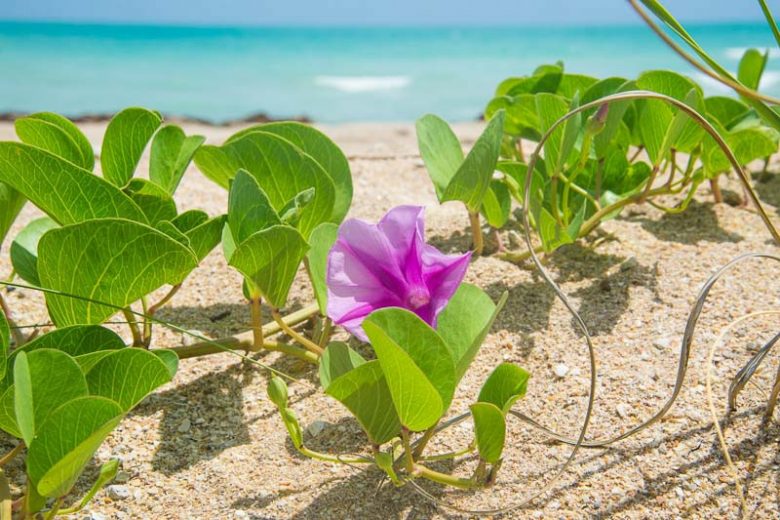
  • Coastal dunes and beach fronts – harsh sun, wind, and salt spray call for specialists like Ipomoea pes-caprae (Railroad Vine) and Ipomoea imperati (Beach Morning Glory) that naturally stabilize dunes.
  • Evening seating areas and patios – if you enjoy your garden most at dusk, plant fragrant night bloomers like Ipomoea alba (Moonflower) where you can see and smell the flowers up close.
  • Containers and smaller spaces – compact supports in large pots work beautifully with Coral Honeysuckle, Maypop passionvine, or our native Wisteria frutescens (American Wisteria).

Spend a day watching how sun and shade shift through your yard. A spot that looks shady at noon might get bright morning light that suits many of these vines.

Guide Information

Hardiness 9
Plant Type Climbers
Native Plants United States, Southeast, Florida

Recommended Native Vines for Central Florida

Ampelaster carolinianus (Climbing Aster)
Bignonia capreolata (Crossvine)
Campsis radicans (Trumpet Vine)
Centrosema virginianum (Spurred Butterfly Pea)
Clematis crispa (Viorna Group)
Clematis virginiana (Virgin’s Bower)
Gelsemium sempervirens (Carolina Jessamine)
Ipomoea alba (Moonflower)
Ipomoea imperati (Beach Morning Glory)
Ipomoea pes-caprae (Railroad Vine)
Lonicera sempervirens (Coral Honeysuckle)
Mimosa quadrivalvis (Sensitive Briar)
Parthenocissus quinquefolia (Virginia Creeper)
Passiflora incarnata (Maypop)
Wisteria frutescens (American Wisteria)

Why Choose Native Vines in Central Florida

There are plenty of flashy non native vines sold in garden centers, but many are invasive or high maintenance in Florida. Native vines offer beauty plus benefits.

  • Perfectly adaptedFlorida native vines evolved in the same sandy, often acidic soils and humid summers that your landscape experiences. They handle heavy summer rains, brief droughts, and the occasional cold snap better than many exotics.
  • Lower water and fertilizer needs – once established, most native vines need far less pampering. Moderate mulch and rainfall usually keep them happy.
  • Wildlife friendly – these vines provide nectar for hummingbirds, pollen for bees, berries for songbirds, and leaves for butterfly caterpillars. Exotic vines often look pretty but do very little for native wildlife.
  • Non invasive options – carefully selected natives are far less likely to escape into natural areas and smother trees or wetlands. Choosing American Wisteria instead of Asian wisteria is a perfect example.
  • Year round interest – with thoughtful planning you can enjoy spring and summer flowers, fall berries and foliage color, and evergreen leaves that soften fences through winter in zones 9a and 9b.

Best Native Vines for Central Florida Gardens

Use this list as a menu of dependable native vines for Central Florida sun, shade, and coastal conditions. Always double check mature size and growth habit so you give each vine the right amount of room and support.

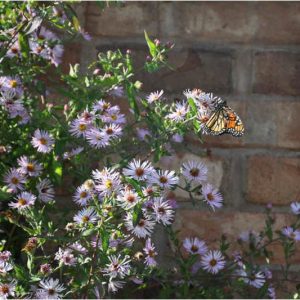
  • Ampelaster carolinianus (Climbing Aster) – technically a shrubby vine or sprawling subshrub, Climbing Aster twines and leans through neighboring plants, producing clouds of lavender daisy like blooms in late summer and fall. It loves moist to average soil in sun to light shade and is a late season magnet for butterflies and native bees. Perfect along fences, lake edges, or at the back of a mixed native border.
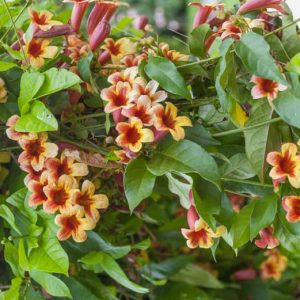
  • Bignonia capreolata (Crossvine) – one of the best large scale native evergreen vines for Central Florida. Crossvine clings with small tendrils tipped with suction cups and quickly covers arbors, pergolas, and sturdy fences. In spring it explodes with orange to red tubular flowers that hummingbirds adore. Grow it in full sun for the heaviest bloom. It tolerates occasional drought once established and handles a surprising range of soils.
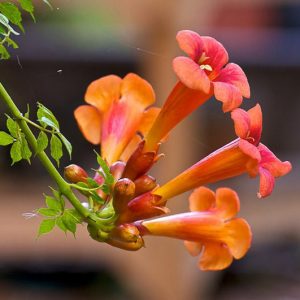
  • Campsis radicans (Trumpet Vine) – bold and vigorous, Trumpet Vine is a powerhouse hummingbird magnet with large clusters of orange trumpet shaped flowers in summer. It needs a strong support and regular pruning to keep in bounds. Plant it where you can let it romp – on a distant fence, over a sturdy arbor, or on a separate trellis rather than on your house. Full sun, average to moist soil, and room to stretch make this a spectacular wildlife plant.
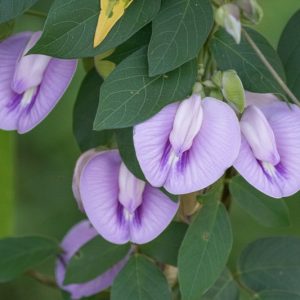
  • Centrosema virginianum (Spurred Butterfly Pea) – a delicate, twining vine with orchid like lavender to purple flowers that resemble tiny butterflies. It prefers well drained, sandy soil in full sun to part shade and works beautifully in naturalistic meadows, along wire fences, or tumbling through native grasses. The flowers attract bees and small pollinators while the plant itself stays relatively modest in size compared with some stronger vines.
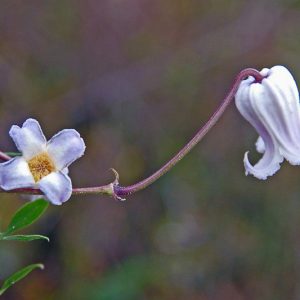
  • Clematis crispa (Viorna Group) – a charming native clematis with nodding, bell shaped flowers in soft shades of lavender and white, often with slightly twisted petals. It climbs by twining petioles and prefers bright shade to morning sun with afternoon shade, plus consistently moist but well drained soil enriched with organic matter. Beautiful weaving through small shrubs, on obelisks, or on a lattice panel near a seating area.
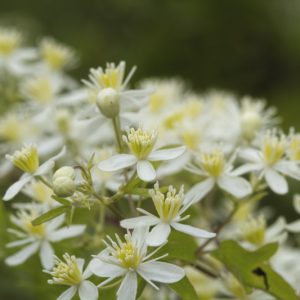
  • Clematis virginiana (Virgin’s Bower) – a vigorous, frothy clematis that produces masses of small white starry flowers in late summer, followed by silky seed heads that catch the light. It thrives in sun or part shade with average to moist soil and is a great choice for softening fences, scrambling over old stumps, or filling a naturalistic trellis. Pollinators flock to the blooms and birds use the dense foliage for cover.
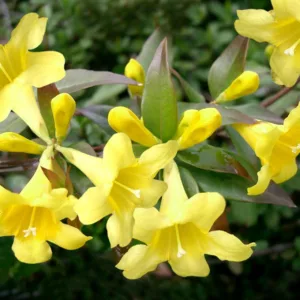
  • Gelsemium sempervirens (Carolina Jessamine) – a classic Southeastern vine with glossy evergreen leaves and fragrant yellow trumpet flowers in late winter and early spring. In Central Florida it provides welcome color at the tail end of the cool season. Plant it on a fence, arbor, or mail post in full sun to light shade. It handles sandy soils well and, once established, is quite drought tolerant. Note that all parts are poisonous if ingested, so site with care around pets and children.
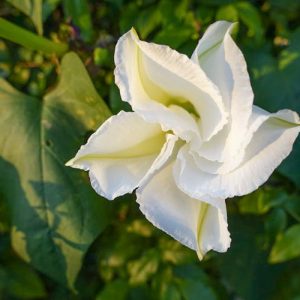
  • Ipomoea alba (Moonflower) – a fast growing, twining annual or tender perennial in Central Florida that bears huge, luminous white flowers that open at dusk and release a sweet fragrance. Moonflower is ideal near porches and patios where you relax in the evening. Give it full sun, regular water, and a trellis or fence to climb. Combine it with day blooming companions for around the clock color.
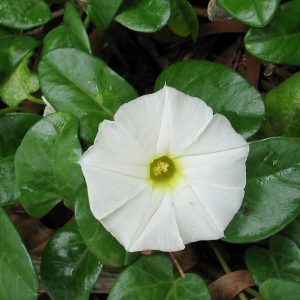
  • Ipomoea imperati (Beach Morning Glory) – a tough, low growing vine native to coastal dunes. Thick, succulent leaves and white funnel shaped flowers help it shrug off heat, wind, and salt spray. It spreads along the ground more than it climbs and is invaluable for stabilizing sandy slopes and dunes in coastal Central Florida landscapes. Perfect for seaside gardens, beach walkovers, and naturalized dune restoration projects.
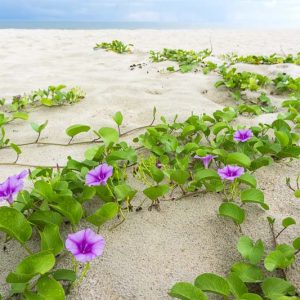
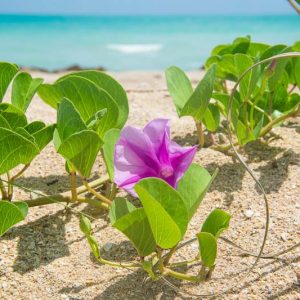
  • Ipomoea pes-caprae (Railroad Vine, Bayhops) – another excellent dune stabilizer, Railroad Vine forms long, trailing stems with paired, hoof shaped leaves and showy pink to magenta morning glory flowers. It thrives in blazing sun and salty sand, making it one of the best salt tolerant native vines for Central Florida beaches. Allow room for its running habit and pair it with other dune natives like sea oats and beach sunflower.
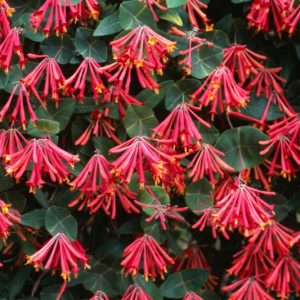
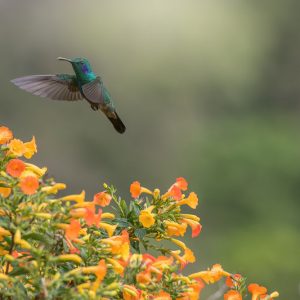
  • Lonicera sempervirens (Coral Honeysuckle) – a beloved hummingbird vine with slender, coral red tubular flowers almost year round in warm Central Florida microclimates. Unlike invasive Japanese honeysuckle, this native is well behaved and non aggressive. It prefers full sun to light shade and average moisture. Coral Honeysuckle shines on mailboxes, small trellises, and arbors where you can enjoy its blooms up close.
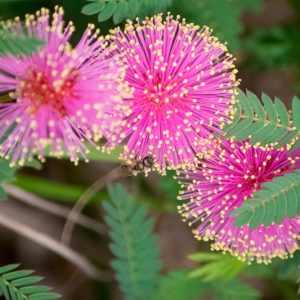
  • Mimosa quadrivalvis (Sensitive Briar) – a quirky, low trailing vine with ferny leaves that fold when touched and globes of pink puffball flowers. Native to dry, sandy sites, it is a fun addition to naturalistic plantings, pollinator meadows, and informal borders. Provide full sun, good drainage, and space for its prickly stems to sprawl where they will not snag passersby.
  • Parthenocissus quinquefolia (Virginia Creeper) – a vigorous, self clinging vine with five part leaves that turn rich red in fall in cooler parts of its range. In Central Florida the color may be more muted, but it still provides a handsome green wall during the growing season. It attaches with adhesive pads and can climb masonry, fences, and large trees. Use with care and avoid letting it reach into rooflines. The berries feed birds but are not edible for people.
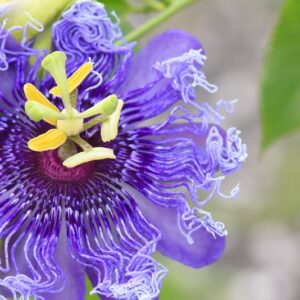
  • Passiflora incarnata (Maypop) – one of the most charismatic Florida native vines. Maypop bears intricate lavender passion flowers followed by egg sized fruit with a tropical fragrance. It is a larval host plant for Gulf Fritillary and Zebra Longwing butterflies, making it essential for wildlife gardens. Plant in full sun for best bloom, give it a fence or trellis, and be prepared for some spreading by underground runners.
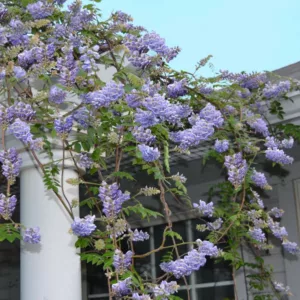
  • Wisteria frutescens (American Wisteria) – a twining vine with fragrant clusters of lavender to purple flowers in late spring and sometimes again in summer. Compared with invasive Chinese and Japanese wisterias, our native American Wisteria is more restrained and far better behaved, making it the right choice for eco friendly gardens. It prefers sun to part shade and regular moisture, especially in its early years, plus a sturdy pergola or arbor for support.

Easy Design Recipes With Native Vines

Hummingbird Highway Arbor – Train Bignonia capreolata (Crossvine) up one side of a sturdy arbor and Lonicera sempervirens (Coral Honeysuckle) up the other. Underplant with salvias, firebush, and native milkweeds. From late winter through fall, hummingbirds and butterflies will treat your arbor like a rest stop.

Coastal Fence Cover – In a beachside yard, combine Ipomoea pes-caprae (Railroad Vine) and Ipomoea imperati (Beach Morning Glory) along the base of a dune fence, allowing them to spill and weave. Add clumps of sea oats and dune sunflower for height. This mix handles wind, sand, and salt while providing erosion control and wildlife habitat.

Evening Moon Garden – Near a patio, plant Ipomoea alba (Moonflower) with Passiflora incarnata (Maypop) on a trellis or railing. Surround the base with white flowering natives like dune sunflower, white plumbago, or gaillardia cultivars. As the sun sets, Moonflower blossoms open and glow while passionflowers add exotic detail.

Lake Edge Wildlife Screen – Along a moist fence near a pond or retention area, blend Ampelaster carolinianus (Climbing Aster) and Clematis virginiana (Virgin’s Bower). Their combined flowers and seed heads attract butterflies, bees, and birds, while the foliage creates a soft, wildlife friendly screen.

Planting and Caring for Native Vines in Central Florida

Most Florida native vines for zones 9a and 9b are forgiving once established, but good planting practices make a big difference in how quickly they take off.

  • Prep the site – remove invasive plants and weedy grass, then loosen the top 6 to 8 inches of soil. In pure sand, work in compost, pine fines, or leaf mold around the planting area to help hold moisture.
  • Install supports first – set posts, arbors, trellises, or wires before planting so roots are not disturbed later. Make sure structures for strong growers like Crossvine and Trumpet Vine are anchored securely.
  • Plant at the right depth – keep the top of the root ball level with or slightly above surrounding soil. Planting too deep can cause stress and rot, especially in heavier or periodically wet soils.
  • Mulch wisely – spread a 2 to 3 inch layer of pine straw, shredded leaves, or other organic mulch around the base, keeping it a couple of inches away from the stems. Mulch moderates soil temperature and reduces watering needs.
  • Water deeply the first season – give new vines a slow, thorough soak once or twice a week during dry periods their first year. After establishment, coastal and upland species often need water only in extended droughts.
  • Fertilize lightly or not at all – many native Central Florida vines are happiest with modest nutrition. If growth seems weak in very poor soil, apply a light, slow release, low nitrogen fertilizer once in spring or simply topdress with compost.
  • Prune for structure – in late winter, remove dead or tangled stems and guide young vines along the support. For strong growers like Trumpet Vine, annual pruning keeps plants from overwhelming their space.

Blending Native Vines Into Your Landscape Design

Think of vines as the vertical threads that tie your garden together. They connect ground level plantings with trees, arbors, and architecture, creating a sense of enclosure and lushness.

  • Frame views and entries – let Coral Honeysuckle arch over a mailbox, Crossvine climb an entry arbor, or American Wisteria drape from a pergola to create welcoming gateways.
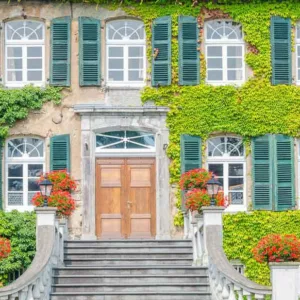
  • Soften hard edges – dress up chain link fences, utility areas, and blank walls with well chosen vines. Virginia Creeper and Carolina Jessamine are especially good at turning stark structures into green backdrops.
  • Layer with shrubs and perennials – weave vines through native shrubs like yaupon holly, Walter’s viburnum, and beautyberry, and pair them with perennials such as blanketflower, coreopsis, and blazing star for long season color.
  • Create wildlife corridors – continuous stretches of native vines and shrubs allow birds, pollinators, and beneficial insects to move safely through your yard. Aim to connect trees, hedges, and flower beds with vine covered fences or trellises.
  • Mix evergreen and deciduous species – pair evergreen Carolina Jessamine with deciduous Maypop, or Crossvine with Virginia Creeper, for year round coverage plus seasonal flowers and berries.

Over time your Central Florida yard can evolve from scattered ornamental plants to a connected, wildlife rich landscape filled with the color and movement of native vines.

Discover More Florida Native Plants

Florida Native Plant Guides – Design, Soil and Wildlife

Frequently Asked Questions

What are the best native vines for Central Florida home gardens?

Some of the most reliable native vines for Central Florida (USDA zones 9a–9b) are Bignonia capreolata (Crossvine), Campsis radicans (Trumpet Vine), Gelsemium sempervirens (Carolina Jessamine), Lonicera sempervirens (Coral Honeysuckle), Passiflora incarnata (Maypop), Ampelaster carolinianus (Climbing Aster), Clematis virginiana (Virgin’s Bower), Clematis crispa, Parthenocissus quinquefolia (Virginia Creeper), Ipomoea alba (Moonflower), Ipomoea pes-caprae (Railroad Vine), Ipomoea imperati (Beach Morning Glory), Mimosa quadrivalvis (Sensitive Briar), and Wisteria frutescens (American Wisteria). Together they cover hot sun, light shade, and coastal sites while supporting pollinators, birds, and other wildlife.

Which native vines are best for full sun in Central Florida?

For hot, open exposures, choose sun-loving species that tolerate sandy soil and reflected heat. Crossvine, Trumpet Vine, Coral Honeysuckle, Carolina Jessamine, Maypop, Butterfly Pea (Centrosema virginianum), Railroad Vine, and Beach Morning Glory all perform well in full sun once established. These species are especially effective on fences, arbors, mailboxes, and pergolas.

Which native vines can handle part shade or woodland edges?

In bright or dappled shade, especially along hammock edges or under tall pines and oaks, look to Clematis crispa, Clematis virginiana, Climbing Aster, and Virginia Creeper. Coral Honeysuckle and Carolina Jessamine also flower well in high, filtered shade. These vines are good choices for the east or north side of a house, lattice screens under tree canopies, or mixed shrub borders.

What native vines are suitable for coastal and salt-exposed sites?

Ipomoea pes-caprae (Railroad Vine) and Ipomoea imperati (Beach Morning Glory) are two of the best native vines for Central Florida beaches and coastal dunes. Both are naturally adapted to sandy, nutrient-poor soils, intense sun, wind, and salt spray, and they help stabilize dunes. Carolina Jessamine and Coral Honeysuckle can tolerate light salt exposure in more sheltered coastal landscapes but are less suited to direct dune conditions.

Which native vines attract hummingbirds, butterflies, and other pollinators?

Coral Honeysuckle and Crossvine are top nectar sources for hummingbirds due to their tubular red and orange flowers. Trumpet Vine is another powerful hummingbird magnet where space allows. Passionvine (Passiflora incarnata) is a key larval host plant for Gulf Fritillary and Zebra Longwing butterflies, while Climbing Aster and Virgin’s Bower provide late-season nectar and pollen for butterflies, native bees, and other pollinators.

Are there native vines that stay relatively well behaved in small yards?

Yes. Coral Honeysuckle, Carolina Jessamine, Maypop, Butterfly Pea, and Clematis species (C. crispa and C. virginiana) are generally easier to manage on modest trellises, mail posts, or small arbors. They still require occasional pruning but are less likely to overwhelm nearby structures compared with very vigorous vines like Trumpet Vine, Virginia Creeper, or wisteria.

Which native vines are considered vigorous or aggressive, and how should they be managed?

Trumpet Vine, Virginia Creeper, Crossvine, and American Wisteria are naturally vigorous and can spread widely if not controlled. They are best planted on sturdy, dedicated supports or along out-of-the-way fences where their size will not be a problem. Annual structural pruning in late winter, removal of unwanted suckers, and keeping vines away from rooflines or gutters are standard management practices.

Why is American Wisteria preferred over Asian wisteria in Florida landscapes?

Wisteria frutescens (American Wisteria) is native to the southeastern United States and is significantly less aggressive than Chinese and Japanese wisterias (Wisteria sinensis and Wisteria floribunda). While it still needs a strong support and periodic pruning, it is far less likely to escape cultivation, girdle trees, or become invasive in natural areas. It provides fragrant lavender flower clusters with a growth habit that is more compatible with residential and ecological goals.

Can native vines damage buildings, trees, or fences?

Any vigorous vine can cause problems if allowed to grow unchecked. Self-clinging vines like Virginia Creeper can adhere to masonry and may be difficult to remove from painted surfaces, and heavy vines such as Trumpet Vine or wisteria can stress weak structures. On trees, very dense growth may shade branches or add weight during storms. The best practice is to provide intentional supports, keep vines pruned below rooflines and gutters, and periodically reassess whether the structure or host plant is still healthy and stable.


References

Updated: November 2025 • Reviewed by Gardenia Editors

Recommended Guides

Shade-Loving Native Shrubs for Central Florida
Sun-Loving Native Trees for Central Florida
Shade-Loving Native Trees for Central Florida
Native Groundcovers for Central Florida
Shade-Loving Native Perennials for Central Florida
Native Aquatic Plants for Central Florida
Native Grasses for Central Florida
Native Ferns for Central Florida
Native Vines for Central Florida
Sun-Loving Native Shrubs for Central Florida
Sun-Loving Native Perennials for Central Florida
Highly Drought Tolerant plants for your Florida Native Garden
Native Plants that Attract Hummingbirds in Florida
Highly Salt Tolerant plants for your Florida Native Garden
Great Pollinator Plants for Florida
Monarch Nectar Plants for Florida
Explore Great Plant Combination Ideas
Coastal South
Guides with
Coastal South Florida
While every effort has been made to describe these plants accurately, please keep in mind that height, bloom time, and color may differ in various climates. The description of these plants has been written based on numerous outside resources.

Guide Information

Hardiness 9
Plant Type Climbers
Native Plants United States, Southeast, Florida
Explore Great Plant Combination Ideas
Coastal South
Guides with
Coastal South Florida

Related Items

Please Login to Proceed

You Have Reached The Free Limit, Please Subscribe to Proceed

Subscribe to Gardenia

To create additional collections, you must be a paid member of Gardenia
  • Add as many plants as you wish
  • Create and save up to 25 garden collections
Become a Member

Plant Added Successfully

Your garden is taking shape. Unlock full planning.

You’ve reached the free limit. Upgrade for $25/year to add as many plants as you wish and save up to 25 garden collections. Unlock Annual Membership

Update Your Credit
Card Information

Cancel

Create a New Collection

Sign Up to Our Newsletter

    You have been subscribed successfully

    Join Gardenia.net

    Create a membership account to save your garden designs and to view them on any device.

    Becoming a contributing member of Gardenia is easy and can be done in just a few minutes. If you provide us with your name, email address and the payment of a modest $25 annual membership fee, you will become a full member, enabling you to design and save up to 25 of your garden design ideas.

    Join now and start creating your dream garden!

    Join Gardenia.net

    Create a membership account to save your garden designs and to view them on any device.

    Becoming a contributing member of Gardenia is easy and can be done in just a few minutes. If you provide us with your name, email address and the payment of a modest $25 annual membership fee, you will become a full member, enabling you to design and save up to 25 of your garden design ideas.

    Join now and start creating your dream garden!
    Find your Hardiness Zone

    Find your Heat Zone

    Find your Climate Zone