Coral Honeysuckle, Trumpet Honeysuckle, Scarlet Honeysuckle, Woodbine, Phenianthus sempervirens
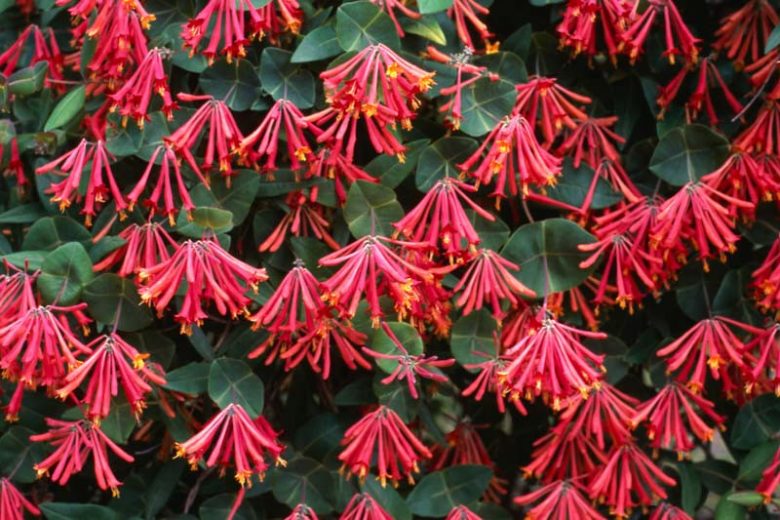
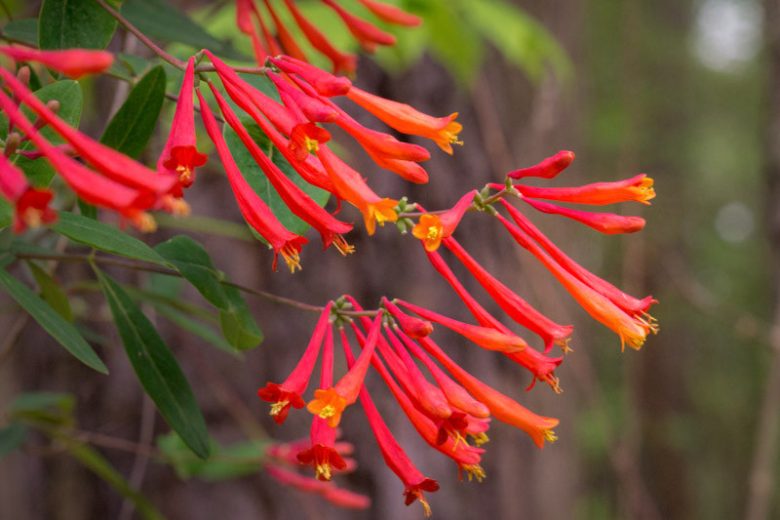


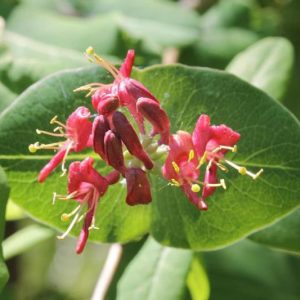
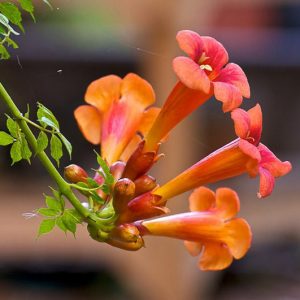
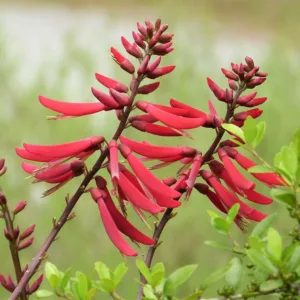
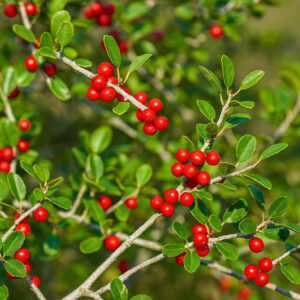
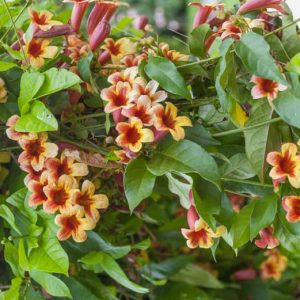
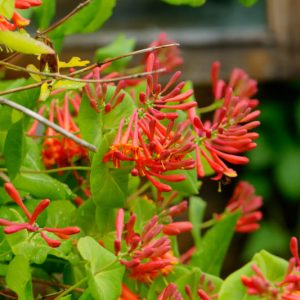
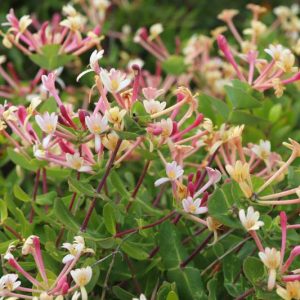
Lonicera sempervirens, commonly called trumpet honeysuckle or coral honeysuckle, is that friendly climbing vine that seems to invite you and every passing hummingbird in for a visit. Its clusters of scarlet to coral red tubular flowers with bright yellow throats glow at the tips of the stems from early spring into summer, then often repeat in late season. When the blossoms fade, they are followed by strings of shiny red berries that catch the eye and feed birds.
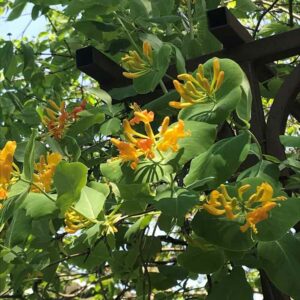
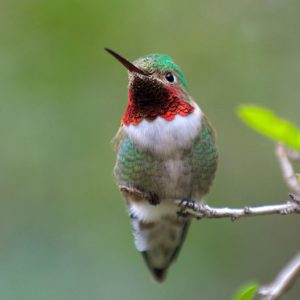
This native, semi evergreen vine is a perfect choice if you want a pollinator friendly climber that is non invasive and easy to live with. Coral honeysuckle twines gracefully up trellises, fences, arbors, and pergolas, bringing vertical color without taking over the garden. Its nectar rich flowers are beloved by bees, butterflies, and especially hummingbirds, making it a natural star in wildlife friendly garden plans and native planting schemes.
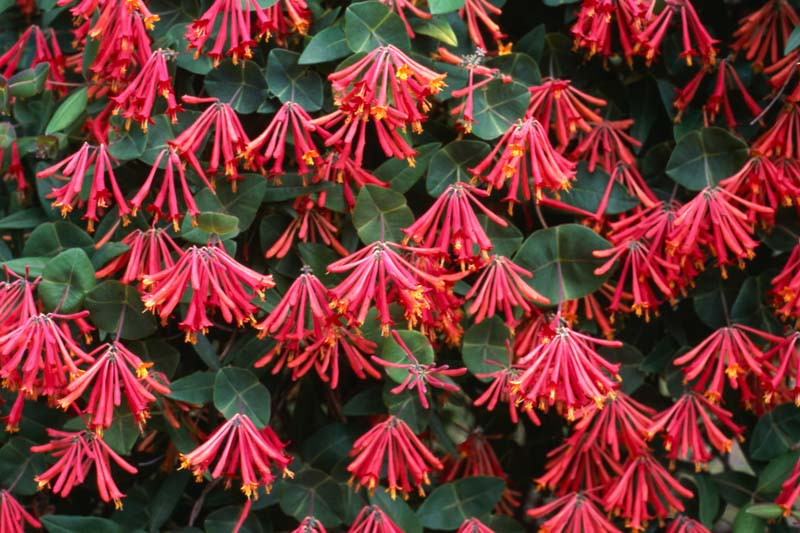
Summary: Showy twining, semi evergreen vine with clusters of scarlet to coral red tubular flowers that reveal bright yellow throats from spring to early summer, often with scattered rebloom. Followed by ornamental red berries loved by birds.
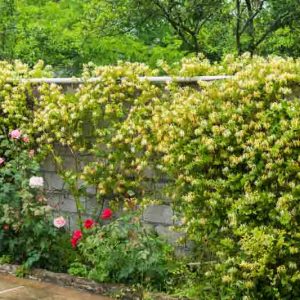
Use: Ideal for fences, walls, trellises, pergolas, mailboxes, entry arbors, wildlife gardens, and native plant landscapes.
Highlight: A non invasive native honeysuckle that attracts hummingbirds, bees, and butterflies, tolerates a range of soils, and offers year round interest in mild climates.
Note: Excellent alternative to invasive non native honeysuckles and a top choice for Texas and southern gardens, including challenging clay soils and sandy sites.
| Botanical Name | Lonicera sempervirens |
|---|---|
| Family | Caprifoliaceae (honeysuckle family) |
| Common Names | Trumpet honeysuckle, coral honeysuckle, woodbine honeysuckle, trumpet coral honeysuckle |
| Native Range | Native to the southern and eastern United States, where it grows in open woodlands, thickets, fencerows, and along woodland edges. |
| Plant Type and Habit | Deciduous to semi evergreen twining vine with slender stems that wrap around supports and create soft vertical screens. |
| Hardiness (USDA) | Typically hardy in USDA Zones 4 to 9, semi evergreen to evergreen in the warmest zones. |
| Size | Grows about 8 to 15 ft tall (240 to 450 cm) and 3 to 6 ft wide (90 to 180 cm), depending on support and pruning. |
| Sun and Exposure | Full sun produces the heaviest flowering, though the plant tolerates light shade with fewer blooms. |
| Soil | Prefers average, medium moisture, well drained soils. Adapts to clay, loam, or sandy soils, including sites highlighted in Texas clay soil guides and sandy soil plant lists. |
| Seasonal Interest | Showy flowers in spring and early summer, often repeating lightly, followed by clusters of bright red berries in late summer and fall. |
| Primary Uses | Excellent for vertical accents, wildlife gardens, native plantings, cottage gardens, porch railings, and hummingbird focused designs, including compositions from Texas hummingbird plant guides and native plant collections. |
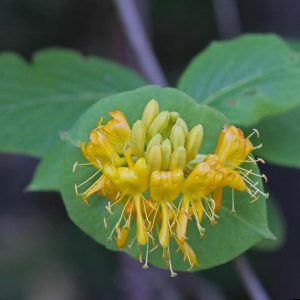
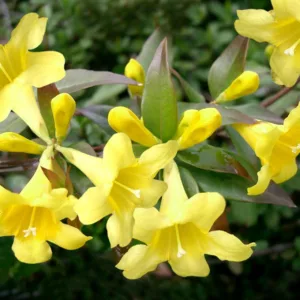
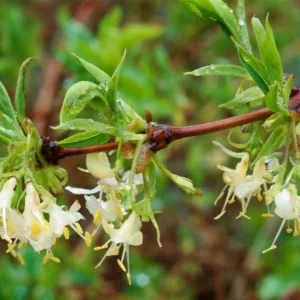
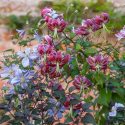
Lonicera sempervirens is a medium-sized, twining vine that climbs by wrapping its stems around whatever support you provide. The flower clusters form at the tips of the shoots and can be two inches long or more, packed with slim tubular flowers in shades of scarlet, coral, or orange red. When the tubular blooms open, they reveal golden yellow interiors that glow in the sunlight and guide pollinators right to the nectar.
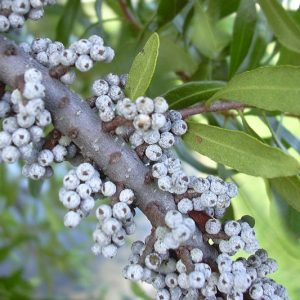
Flowering typically starts in early spring and runs into early summer, with the heaviest flush in late spring, then light rebloom later in the season if the plant is happy. After bloom, coral honeysuckle forms clusters of small, shiny red berries in late summer and fall. These fruits are an important resource for birds and add a cheerful accent against the green foliage.
Coral honeysuckle is native to the southern and eastern United States and has a long history in regional gardens. In the wild you may find it in:
This native heritage makes Lonicera sempervirens a smart anchor for ecologically minded gardens, including designs built around native plant collections, wildlife friendly plantings, Texas hummingbird gardens, arbors and walls in North Florida, Central Florida
Coral honeysuckle has a medium growth rate. Young plants spend their first season settling in, then put on more vigorous growth in subsequent years. Stems are slender, flexible, and twining, easily trained along wires, lattice, or other supports. The vine can be kept compact with regular pruning or allowed to stretch to its full 12 to 15 ft potential for a lush vertical screen.
Because the stems do not cling or root into walls, Lonicera sempervirens is gentle on wooden structures, railings, and masonry. It simply wraps and weaves, so you can guide it where you want it and prune away anything that wanders too far.
The flowers and berries are the main attraction for both gardeners and wildlife.
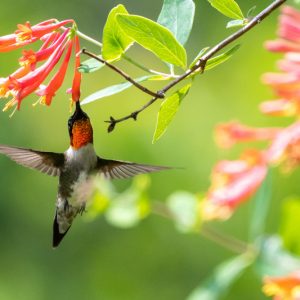
The elongated blooms are perfectly shaped for hummingbirds, and you will often see them visiting repeatedly through the day. Bees and butterflies also work the flowers for nectar and pollen, making this vine a natural part of pollinator plantings anchored by resources such as bee friendly plant guides and butterfly garden collections.
Lonicera sempervirens is adapted to a wide range of climates but truly thrives where summers are warm and sunny. It is hardy through much of the United States and especially at home in southern and Texas gardens, including challenging sites addressed in Texas clay soil guides and sandy soil plant lists.
Coral honeysuckle is one of the classic vines for a pollinator friendly, wildlife rich garden.
Coral honeysuckle is generally regarded as deer-resistant. While hungry deer may sample almost any plant at times, the foliage of Lonicera sempervirens is usually less appealing than many other ornamentals, making it a useful vertical element in deer prone landscapes.
Once established, Lonicera sempervirens is moderately drought-tolerant, especially when roots are allowed to grow deep in well prepared soil.
The berries of Lonicera sempervirens are valued by birds but are generally considered mildly toxic to humans and pets if eaten. They may cause stomach upset, so treat them as ornamental only rather than edible. Enjoy the showy fruit for its wildlife value and color, and teach children not to sample the berries.
Unlike aggressive non native honeysuckles, coral honeysuckle is usually a well behaved native garden vine. It does not spread by underground runners and is easy to manage with routine pruning and training. In rich soil and very warm climates it can grow vigorously, so simply monitor growth and trim as needed. Use it as a native alternative to invasive honeysuckle species when you want color, hummingbird friendly flowers, and berries for birds without introducing a truly invasive vine.
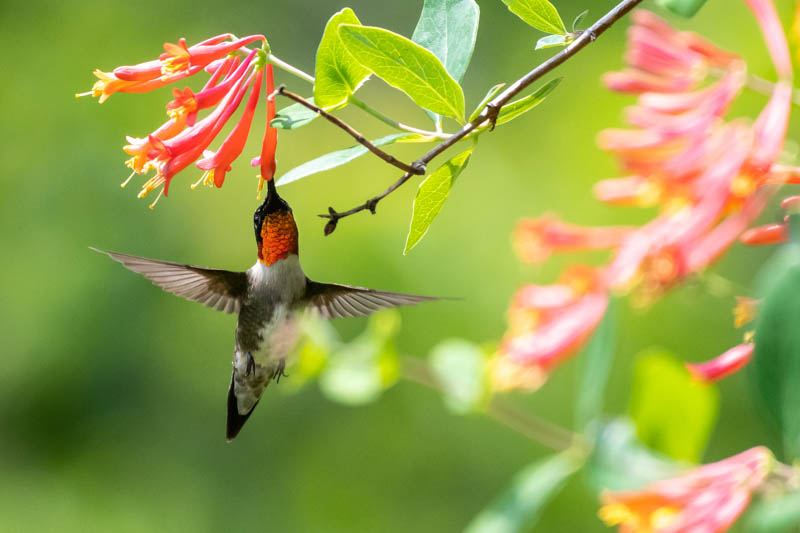
Successful coral honeysuckle care revolves around sun, support, and reasonable moisture.
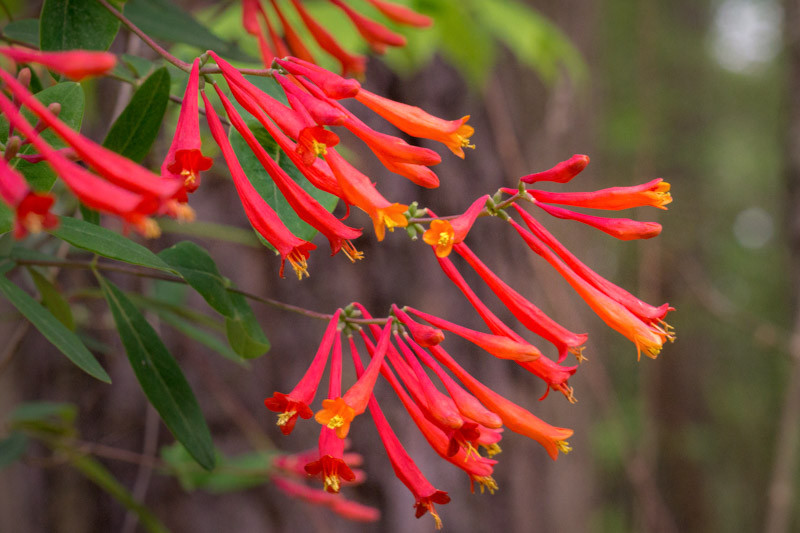
Coral honeysuckle is generally a low maintenance, pest and disease resistant vine when grown in suitable conditions.
Lonicera sempervirens is a native North American honeysuckle vine known for its clusters of red tubular flowers and bright red berries. It is a twining climber used on fences, trellises, and arbors, valued for its wildlife benefits and non invasive habit.
Trumpet honeysuckle typically grows about 8 to 15 ft tall and 3 to 6 ft wide, depending on the support and pruning. It can be kept smaller with regular trimming or allowed to cover a larger structure.
Lonicera sempervirens blooms best in full sun. It can tolerate light shade, especially in hot climates, but plants in shade will generally produce fewer flowers.
Trumpet honeysuckle thrives in average, medium moisture, well drained soil. It adapts to a range of textures, from clay to sand, making it suitable for gardens described in Texas clay soil guides and sandy soil recommendations.
Lonicera sempervirens is semi evergreen to evergreen in warm winter climates and more deciduous in colder regions. Even where it loses leaves, it leafs out again in spring and quickly covers its support.
Yes. The bright tubular flowers are favorites of hummingbirds and also attract bees and butterflies. It is frequently included in hummingbird plant lists and other wildlife friendly garden guides.
No. Trumpet honeysuckle is considered a well behaved native vine and is often recommended as a non invasive alternative to more aggressive honeysuckle species. It can be kept easily in bounds with routine pruning.
Prune trumpet honeysuckle after the main flush of flowering. Remove dead or weak stems, trim back overly long growth, and thin older stems occasionally to encourage fresh shoots and better flowering.
Trumpet honeysuckle is generally deer resistant. While no plant is completely deer proof, its foliage is usually browsed less than many other ornamentals, which makes it a good choice in deer visited gardens.
Yes. Grow Lonicera sempervirens in a large container with a trellis or obelisk and use a high quality, well drained potting mix. Water regularly and feed lightly to keep the vine vigorous and blooming.
Lady Bird Johnson Wildflower Center – Trumpet honeysuckle: https://www.wildflower.org/plants/result.php?id_plant=LOSE
Updated: November 2025 • Reviewed by Gardenia Editors
| Hardiness |
4 - 9 |
|---|---|
| Heat Zones |
1 - 9 |
| Climate Zones | 2, 2A, 2B, 3, 3A, 3B, 4, 5, 6, 7, 8, 9, 10, 11, 12, 13, 14, 15, 16, 17, 18, 19, 20, 21, 22, 23, 24 |
| Plant Type | Climbers |
| Plant Family | Caprifoliaceae |
| Genus | Lonicera |
| Common names | Coral Honeysuckle, Honeysuckle, Trumpet Honeysuckle, Woodbine |
| Exposure | Full Sun, Partial Sun |
| Season of Interest | Spring (Early, Mid, Late), Summer (Early), Fall |
| Height | 8' - 15' (240cm - 4.6m) |
| Spread | 3' - 6' (90cm - 180cm) |
| Spacing | 72" (180cm) |
| Maintenance | Low |
| Water Needs | Low, Average |
| Soil Type | Chalk, Clay, Loam, Sand |
| Soil pH | Acid, Alkaline, Neutral |
| Soil Drainage | Moist but Well-Drained |
| Characteristics | Showy, Semi-Evergreen, Fruit & Berries |
| Native Plants | United States, Pennsylvania, Rhode Island, Vermont, Connecticut, Delaware, Maine, Massachusetts, Maryland, New Hampshire, New Jersey, New York, Northeast, Midwest, Southeast, Southwest, Indiana, Iowa, Kansas, Michigan, Missouri, Ohio, Louisiana, Mississippi, North Carolina, South Carolina, Tennessee, Virginia, West Virginia, Alabama, Arkansas, Florida, Georgia, Kentucky, Texas, Oklahoma |
| Tolerances | Deer, Dry Soil, Clay Soil, Heat, Black Walnut, Fire |
| Attracts | Bees, Birds, Butterflies, Hummingbirds |
| Garden Uses | Arbors, Pergolas, Trellises, Wall-Side Borders, Walls And Fences |
| Garden Styles | City and Courtyard, Coastal Garden, Informal and Cottage |
| Toxic to Humans | No known toxicity |
| Toxic to Cats | No known toxicity |
| Toxic to Dogs | No known toxicity |
| Toxic to Horses | No known toxicity |


| Hardiness |
4 - 9 |
|---|---|
| Heat Zones |
1 - 9 |
| Climate Zones | 2, 2A, 2B, 3, 3A, 3B, 4, 5, 6, 7, 8, 9, 10, 11, 12, 13, 14, 15, 16, 17, 18, 19, 20, 21, 22, 23, 24 |
| Plant Type | Climbers |
| Plant Family | Caprifoliaceae |
| Genus | Lonicera |
| Common names | Coral Honeysuckle, Honeysuckle, Trumpet Honeysuckle, Woodbine |
| Exposure | Full Sun, Partial Sun |
| Season of Interest | Spring (Early, Mid, Late), Summer (Early), Fall |
| Height | 8' - 15' (240cm - 4.6m) |
| Spread | 3' - 6' (90cm - 180cm) |
| Spacing | 72" (180cm) |
| Maintenance | Low |
| Water Needs | Low, Average |
| Soil Type | Chalk, Clay, Loam, Sand |
| Soil pH | Acid, Alkaline, Neutral |
| Soil Drainage | Moist but Well-Drained |
| Characteristics | Showy, Semi-Evergreen, Fruit & Berries |
| Native Plants | United States, Pennsylvania, Rhode Island, Vermont, Connecticut, Delaware, Maine, Massachusetts, Maryland, New Hampshire, New Jersey, New York, Northeast, Midwest, Southeast, Southwest, Indiana, Iowa, Kansas, Michigan, Missouri, Ohio, Louisiana, Mississippi, North Carolina, South Carolina, Tennessee, Virginia, West Virginia, Alabama, Arkansas, Florida, Georgia, Kentucky, Texas, Oklahoma |
| Tolerances | Deer, Dry Soil, Clay Soil, Heat, Black Walnut, Fire |
| Attracts | Bees, Birds, Butterflies, Hummingbirds |
| Garden Uses | Arbors, Pergolas, Trellises, Wall-Side Borders, Walls And Fences |
| Garden Styles | City and Courtyard, Coastal Garden, Informal and Cottage |
| Toxic to Humans | No known toxicity |
| Toxic to Cats | No known toxicity |
| Toxic to Dogs | No known toxicity |
| Toxic to Horses | No known toxicity |
How many Lonicera sempervirens (Coral Honeysuckle) do I need for my garden?
| Plant | Quantity | |
|---|---|---|
| Lonicera sempervirens (Coral Honeysuckle) | N/A | Buy Plants |
Create a membership account to save your garden designs and to view them on any device.
Becoming a contributing member of Gardenia is easy and can be done in just a few minutes. If you provide us with your name, email address and the payment of a modest $25 annual membership fee, you will become a full member, enabling you to design and save up to 25 of your garden design ideas.
Join now and start creating your dream garden!
Create a membership account to save your garden designs and to view them on any device.
Becoming a contributing member of Gardenia is easy and can be done in just a few minutes. If you provide us with your name, email address and the payment of a modest $25 annual membership fee, you will become a full member, enabling you to design and save up to 25 of your garden design ideas.
Join now and start creating your dream garden!