Why Choose Sun-Loving Native Trees in Central Florida
Planting native trees for full sun in Central Florida is about more than just surviving the heat. It is a way to build beauty, resilience, and habitat right where you live.
- Perfectly adapted – Central Florida natives evolved with sandy, often acidic soils, long growing seasons, and a mix of torrential summer rain and periodic drought. Once established, many require little more than occasional supplemental water in severe dry spells.
- Lower maintenance – most native trees need less fertilizer, fewer pesticides, and less pruning than many exotic species. They are already tuned to local pests and diseases.
- Wildlife friendly – native trees feed and shelter songbirds, butterflies, pollinators, and mammals. Acorns, berries, nectar, and caterpillar food plants all come built in.
- Storm smart – many Florida native trees have deep or flexible root systems and strong wood structure that help them ride out tropical storms and high winds better than shallow rooted exotics.
- Defensive against invasives – healthy native tree canopy and understory can help resist invasion by aggressive non native plants by shading soil, stabilizing slopes, and occupying ecological niches.
Tip – whenever possible, choose plants grown from local or regional seed sources. These trees are often better matched to your microclimate and help conserve Florida genetic diversity.
Best Sun-Loving Native Trees for Central Florida Gardens
Use this list as a menu of reliable Central Florida native trees for full sun. Mix and match by height, moisture needs, and wildlife value.
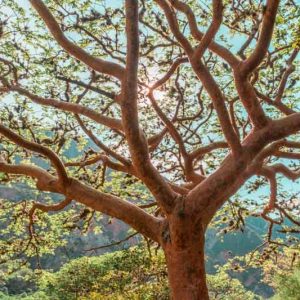
- Bursera simaruba (Gumbo Limbo) – a charismatic South Florida native that also performs in warmer parts of Central Florida. Gumbo Limbo is known for its peeling, coppery bark and graceful branching. It loves full sun, heat, and sandy to limestone based soils. Plant it where its sculptural trunk can be appreciated. It is moderately salt tolerant, making it a good choice for coastal gardens and windy sites.
- Carya glabra (Pignut Hickory) – a handsome shade tree with strong fall color in cooler parts of Central Florida. Pignut Hickory prefers well drained soils and full sun and eventually forms a tall, upright crown. Its nuts feed wildlife, especially squirrels and birds. Great for large yards, naturalistic plantings, and mixed hardwood groves.
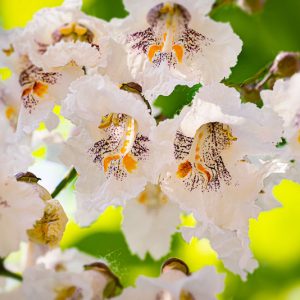
- Catalpa bignonioides (Southern Catalpa) – known for its big heart shaped leaves and showy white, orchid like flower clusters in late spring. Southern Catalpa grows quickly in full sun and average moisture, tolerating both heat and short droughts once established. Long slender seed pods add winter interest and its flowers are excellent for pollinators.
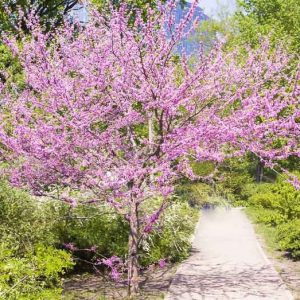
- Cercis canadensis (Eastern Redbud) – a beloved small flowering tree for Central Florida. In late winter to early spring, bare branches are smothered in magenta pink blossoms that feed early pollinators. Heart shaped leaves follow, creating a soft summer canopy. Eastern Redbud thrives in full sun to light shade with well drained soil and makes a beautiful focus near patios, entries, and mixed borders.
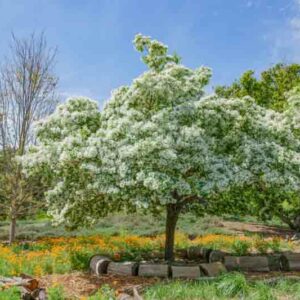
- Chionanthus virginicus (Fringe Tree) – one of the prettiest native trees for sunny Central Florida yards. In late spring, Fringe Tree produces clouds of fragrant, fringe like white flowers, followed by blue black fruits loved by birds. It prefers full sun to part sun and moderately moist, well drained soil. Works wonderfully as a specimen tree or layered with native shrubs and perennials.
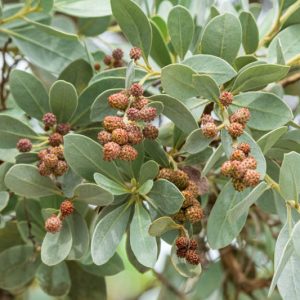
- Conocarpus erectus (Buttonwood) – a tough coastal native that tolerates salt spray, alkaline soils, and strong sunlight. Buttonwood can be trained as a small tree or large shrub and is often used in seaside landscapes and along retention pond banks. Its silver leaf form is particularly striking in modern gardens. Deep roots and dense foliage make it excellent for erosion control and windbreaks.
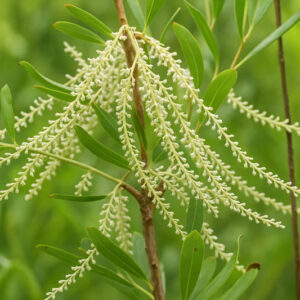
- Cyrilla racemiflora (Titi) – a multi stemmed small tree or large shrub that thrives in moist to wet, sunny locations. Titi bears long, dangling racemes of white flowers in late spring that attract bees and butterflies, followed by persistent seed clusters. Use it along pond edges, in rain gardens, or in naturalized wetland borders that still receive plenty of sun.
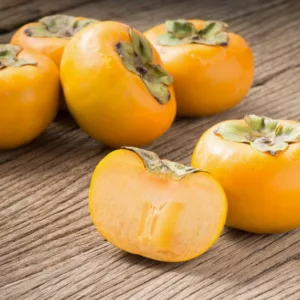
- Diospyros virginiana (American Persimmon) – a wildlife and edible favorite. American Persimmon is a medium sized tree with fragrant spring flowers, glossy green leaves, and drooping branches. In fall, its orange fruits ripen and are relished by people, birds, and other wildlife. It performs best in full sun with average to dry soil and makes a great addition to food forests and habitat plantings.
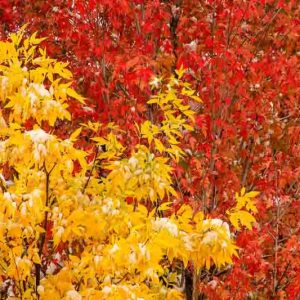
- Fraxinus pennsylvanica (Green Ash) – a fast growing tree suited to moist alluvial soils and sunny sites. Green Ash develops a broad, oval crown and provides excellent shade over patios and play areas. It tolerates short periods of flooding as well as seasonal dryness, making it a good candidate for larger Central Florida yards with variable moisture.
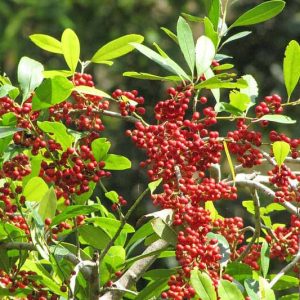
- Ilex cassine (Dahoon) – a native holly that can handle full sun where soil stays consistently moist. Dahoon Holly produces red berries on female plants when a male is nearby, feeding migratory and resident birds. Slender, upright trunks and glossy evergreen foliage make it ideal for screening, rain gardens, and lakefront plantings.
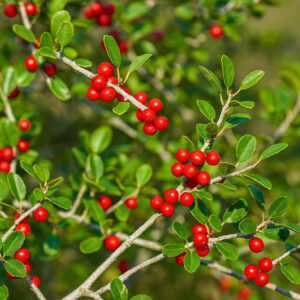
- Ilex vomitoria (Yaupon) – one of the most versatile evergreen trees and shrubs in Florida. In full sun, Yaupon can be limbed up into a small tree with a graceful, twisting trunk. Tiny white flowers support pollinators and red berries are beloved by birds. Yaupon tolerates drought, salty breezes, and pruning, so it works well as a hedge, specimen, or multi trunked accent in coastal and inland landscapes.
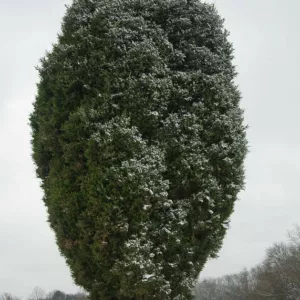
- Juniperus virginiana (Eastern Red Cedar) – a dense, evergreen tree that provides year round cover for birds and a strong vertical accent in sunny sites. Eastern Red Cedar handles dry, sandy soils, wind, and salt spray. Its blue berry like cones feed wildlife, and its fragrant wood is naturally rot resistant. Use it for windbreaks, privacy screens, or as a bold focal point.
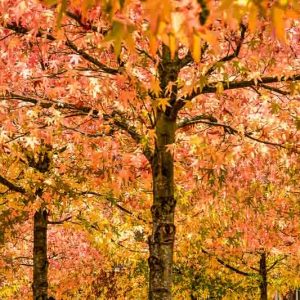
- Liquidambar styraciflua (Sweet Gum) – a tall, straight trunked tree with star shaped leaves that often color nicely in fall in cooler parts of Central Florida. Sweet Gum likes full sun and moist, deep soils but will adapt to average garden conditions. Spiky seed balls provide winter interest and wildlife food. Best suited for larger properties and naturalized areas.
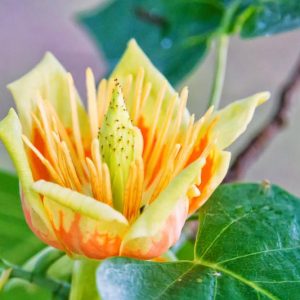
- Liriodendron tulipifera (Tulip Tree) – a stately native shade tree with distinctive tulip shaped leaves and spring flowers that resemble yellow and orange tulips. Tulip Tree grows quickly in full sun where soil is reasonably moist and fertile. It is excellent for creating a high canopy over lawns and patios, though it needs plenty of vertical and horizontal space.
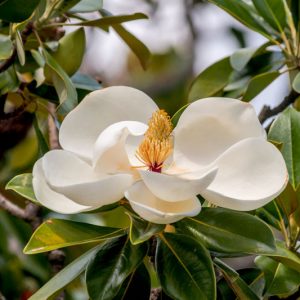
- Magnolia grandiflora (Southern Magnolia) – a classic Southern evergreen tree and a natural fit for Central Florida. Large, glossy leaves and huge, fragrant white flowers make this a showstopper in sunny front yards and as a focal specimen. Southern Magnolia prefers full sun to light shade and evenly moist, well drained soil, though established trees are fairly drought tolerant.
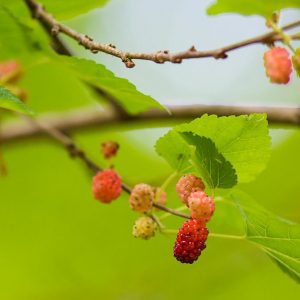
- Morus rubra (Red Mulberry) – a fast growing, wildlife rich tree that bears sweet, dark purple fruits in late spring to early summer. Red Mulberry thrives in full sun with average moisture and is excellent for food forests, informal edges, and bird gardens. Fruits can be messy near hardscape, so place it where birds and people can enjoy the bounty without staining patios.
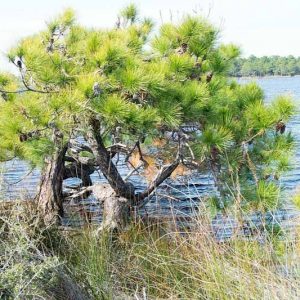
- Pinus elliottii (Slash Pine) – a tall, long lived pine common in Florida flatwoods. Slash Pine prefers full sun and acidic, sandy soils. Its open canopy lets light reach the understory, making it a good overstory tree for native grasses and wildflowers. Pine cones and seeds support numerous wildlife species.
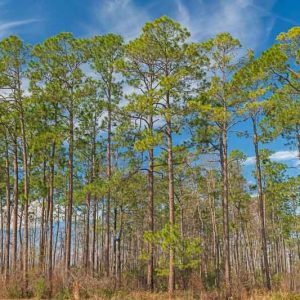
- Pinus palustris (Longleaf Pine) – once dominant across the Southeast, Longleaf Pine is a keystone of many native ecosystems. It tolerates fire, drought, and poor sandy soils, thriving in hot full sun. In the landscape, it provides dappled shade, tall trunks for visual drama, and habitat for birds and pollinators that depend on pine savannas.
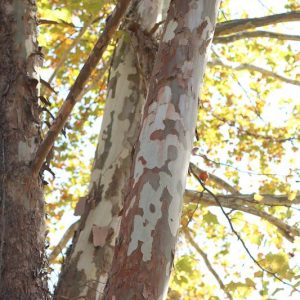
- Platanus occidentalis (American Sycamore) – a bold, fast growing tree with striking mottled bark and large leaves. American Sycamore prefers moist bottomland soils and sunny sites but adapts to many Central Florida yards with sufficient moisture. It casts deep shade and is best used where there is ample room for its broad canopy.
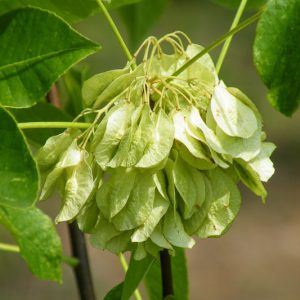
- Ptelea trifoliata (Hop Tree) – a smaller tree or large shrub that is perfect for more modest lots. Hop Tree has trifoliate leaves, fragrant spring flowers, and papery winged fruits that linger into fall. It thrives in full sun to light shade with average moisture and serves as a host plant for native swallowtail butterflies.
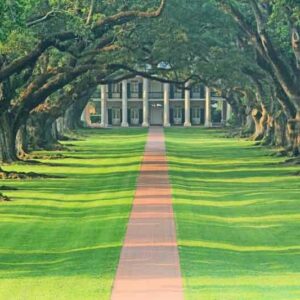
- Quercus virginiana (Live Oak) – the iconic spreading oak of the coastal South. Live Oak loves full sun, wind, and sandy soils and is extremely long lived. Its broad, evergreen canopy creates cool shade, while its acorns feed countless birds and mammals. Plant Live Oak where it has room to stretch its limbs and become a legacy tree.
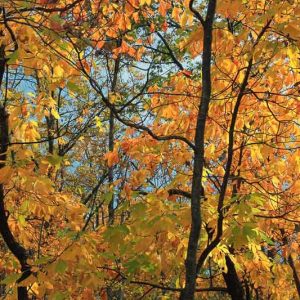
- Sassafras albidum (Sassafras) – a charming medium sized tree with mitten shaped leaves and good fall color in cooler parts of Central Florida. Sassafras prefers full sun to light shade and well drained soils. It spreads slowly by suckers to form small groves and is an important host for several swallowtail butterflies.
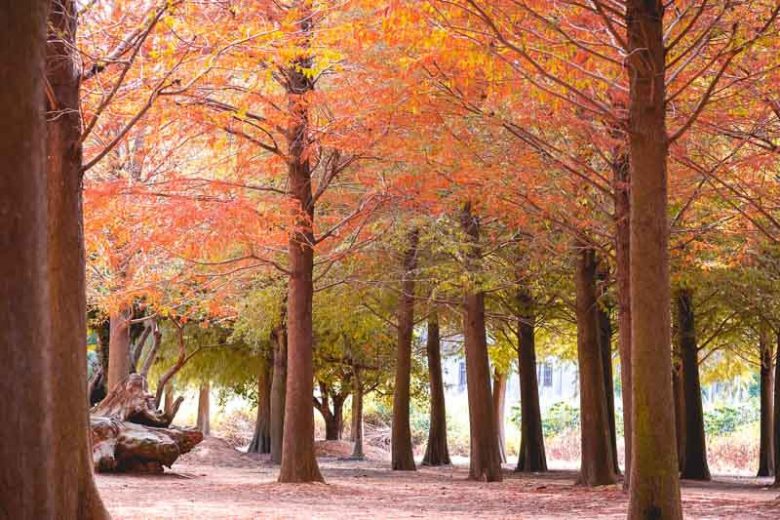
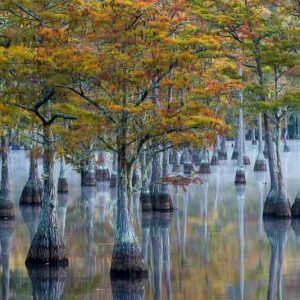
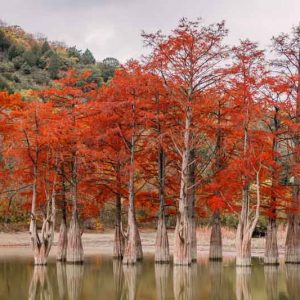
- Taxodium ascendens (Pond Cypress) – a fine textured conifer that thrives along pond edges and in low, periodically flooded areas that still receive plenty of sun. Pond Cypress sports soft, feathery foliage that turns rusty orange in fall before dropping. It tolerates standing water and makes a striking vertical statement in wetland inspired gardens.
- Taxodium distichum (Bald Cypress) – cousin to Pond Cypress and equally at home in sunny, wet spots, retention ponds, and lake edges. Bald Cypress develops distinctive buttressed trunks and sometimes knees in wetter sites. It tolerates both flooding and seasonal dryness once established and adds a strong sense of place to Central Florida water landscapes.
Easy Design Recipes With Sun-Loving Native Trees
Pollinator Friendly Front Yard Grove – Near the street, plant a loose cluster of Cercis canadensis (Eastern Redbud), Chionanthus virginicus (Fringe Tree), and Ilex vomitoria (Yaupon). Underplant with native grasses and wildflowers. Spring blossoms feed early pollinators, while evergreen Yaupon gives year round structure without needing constant pruning.
Lakefront Cypress and Titi Border – Along the sunny edge of a pond or retention basin, mix Taxodium distichum (Bald Cypress), Taxodium ascendens (Pond Cypress), and Cyrilla racemiflora (Titi). Add native rushes, sedges, and moisture loving wildflowers at the water line. This planting slows runoff, stabilizes soil, and creates a dramatic wetland edge alive with birds and dragonflies.
Food Forest Corner – In a sunny back corner, combine Diospyros virginiana (American Persimmon), Morus rubra (Red Mulberry), and Ptelea trifoliata (Hop Tree). Beneath them, grow native blueberries, beautyberry, and perennial herbs. You get fruit, butterflies, and a layered edible habitat that fits right into a Central Florida yard.
Coastal Windbreak With Character – On exposed sites, plant staggered rows of Juniperus virginiana (Eastern Red Cedar), Conocarpus erectus (Buttonwood), and Bursera simaruba (Gumbo Limbo). These tough natives handle wind, salt, and blazing sun while sheltering your house and inner garden spaces.
Planting and Caring for Sun-Loving Native Trees in Central Florida
Most Central Florida native sun trees are forgiving once their roots are established, but good planting practices give them the best start.
- Prep the planting area – remove invasive plants and struggling turf in a wide circle. Loosen the top 8 to 12 inches of soil, especially in heavily compacted yards, and mix in compost or pine fines if soil is extremely sandy.
- Dig wide, not deep – make the planting hole two to three times as wide as the root ball but no deeper. The top of the root ball should sit at or slightly above the surrounding soil surface to prevent settling and root rot.
- Backfill carefully – use the native soil you removed, breaking up clods and pressing gently as you go to remove air pockets. Avoid burying the trunk flare.
- Water deeply and regularly the first year – give new trees a slow trickle of water that soaks the entire root zone. In hot, dry weather, this may mean watering two to three times per week until roots grow into surrounding soil.
- Mulch like Florida woods – apply a 2 to 3 inch layer of shredded leaves, pine straw, or other organic mulch in a wide ring, keeping mulch several inches away from the trunk. This keeps roots cool, conserves moisture, and gradually improves soil health.
- Go easy on fertilizer – most native trees need little to no synthetic fertilizer. If growth seems weak, a light application of slow release, low nitrogen fertilizer in early spring or a yearly topdressing of compost is usually enough.
- Prune for structure, not perfection – during the first few years, focus on developing a strong central leader or well spaced main branches. Remove rubbing, broken, or badly angled limbs, but avoid heavy pruning that stresses young trees.
Once established, your sun loving native trees should require only occasional watering during extreme drought, periodic mulching, and light pruning to maintain safe clearance over paths and roofs.
Blending Native Sun Trees Into Your Landscape Design
Think of native trees as the framework of your Central Florida landscape. They set the tone for everything underneath and around them.
- Create layers – use tall species like Live Oak, Longleaf Pine, and Southern Magnolia as the high canopy. Beneath them, add mid sized trees like Fringe Tree, Redbud, Persimmon, and Yaupon, then finish with native shrubs and groundcovers.
- Use trees to define outdoor rooms – position shade trees where they will eventually cool patios, play areas, and south or west facing walls. Small flowering trees near entries and windows create welcoming views.
- Plan for views and roots – give large species plenty of space away from foundations, septic lines, and overhead wires. Take advantage of their eventual height to frame glimpses of lakes, sky, or distant tree lines.
- Pair with the right understory – under pines and oaks, plant native grasses, wildflowers, and groundcovers instead of thirsty turf. Around moisture loving species like Bald Cypress and Dahoon, use rain garden plants that can handle periodic flooding.
- Leave room for change – as native trees mature, shade patterns will shift. Be ready to gradually transition sun loving perennials into part shade species under the growing canopy.
Over time, your Central Florida yard can transform from bare lawn into a layered, living landscape. Birds will nest in your trees, butterflies will visit your flowers, and you will enjoy cooler shade and a stronger sense of place every season.
Frequently Asked Questions
What are the best sun-loving native trees for Central Florida home landscapes?
Dependable, widely used native trees for sunny Central Florida yards include Bursera simaruba (Gumbo Limbo), Carya glabra (Pignut Hickory), Catalpa bignonioides (Southern Catalpa), Cercis canadensis (Eastern Redbud), Chionanthus virginicus (Fringe Tree), Conocarpus erectus (Buttonwood), Cyrilla racemiflora (Titi), Diospyros virginiana (American Persimmon), Fraxinus pennsylvanica (Green Ash), Ilex cassine (Dahoon), Ilex vomitoria (Yaupon), Juniperus virginiana (Eastern Red Cedar), Liquidambar styraciflua (Sweet Gum), Liriodendron tulipifera (Tulip Tree), Magnolia grandiflora (Southern Magnolia), Morus rubra (Red Mulberry), Pinus elliottii (Slash Pine), Pinus palustris (Longleaf Pine), Platanus occidentalis (American Sycamore), Ptelea trifoliata (Hop Tree), Quercus virginiana (Live Oak), Sassafras albidum (Sassafras), Taxodium ascendens (Pond Cypress), and Taxodium distichum (Bald Cypress). Together they cover dry uplands, average garden soils, and moist lakefront sites in USDA zones 9a and 9b.
Which native trees are most drought tolerant in full sun?
For hot, dry, sandy Central Florida sites, look to Quercus virginiana (Live Oak), Pinus palustris (Longleaf Pine), Pinus elliottii (Slash Pine), Juniperus virginiana (Eastern Red Cedar), Ilex vomitoria (Yaupon), and Diospyros virginiana (American Persimmon). Once established, these trees can usually coast on rainfall except in extreme drought, especially when mulched and paired with drought tolerant understory plants.
What native trees thrive in sunny, moist or wet areas, rain gardens, and pond edges?
For consistently moist to wet soils that still receive plenty of sun, choose Taxodium distichum (Bald Cypress), Taxodium ascendens (Pond Cypress), Liquidambar styraciflua (Sweet Gum), Fraxinus pennsylvanica (Green Ash), Cyrilla racemiflora (Titi), and Ilex cassine (Dahoon). These species naturally occur in floodplains, wet flatwoods, and swamp margins and are well suited to rain gardens, bioswales, and lakefront plantings.
Are there smaller native trees suitable for modest Central Florida lots?
Yes. Smaller sun-loving native trees include Cercis canadensis (Eastern Redbud), Chionanthus virginicus (Fringe Tree), Ptelea trifoliata (Hop Tree), Conocarpus erectus (Buttonwood, kept pruned), and Ilex vomitoria (Yaupon, limbed up into a small tree). These typically mature at 12 to 25 feet or can be maintained at that size, making them ideal for front yards, side yards, and under utility lines.
Do native trees need fertilizer or special soil amendments?
Most Central Florida native trees grow well in local soils without heavy fertilization. Before planting, loosen compacted soil and, if it is extremely sandy, mix in compost or pine fines to help retain moisture. Once planted, maintain a wide mulch ring and use only light, occasional fertilizer if growth is very slow. Overfertilization can encourage weak, storm-prone growth.
Can I mix native trees with existing non-native landscape plants?
Absolutely. Many gardeners gradually transition to more native plantings by tucking native trees among their existing shrubs and perennials. Live Oaks, Southern Magnolias, Redbuds, Fringe Trees, and Yaupon Hollies blend beautifully with camellias, crape myrtles, and other ornamental plants while adding habitat value. Over time you can replace high maintenance or invasive species with additional natives.
References
Updated: December 2025 • Reviewed by Gardenia Editors