Cross Vine, Crossvine, Cross-Vine, Trumpet Flower
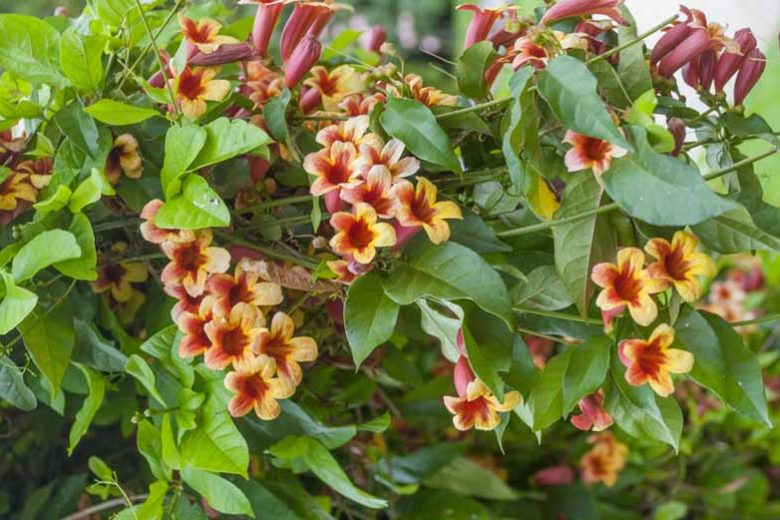


If you want a native flowering vine that explodes with color in spring, draws in hummingbirds, and quickly covers fences, arbors, or walls, Bignonia capreolata, commonly known as Crossvine, is hard to beat. This fast growing, self clinging woody vine produces masses of fragrant, trumpet shaped flowers in warm shades of red, orange, and yellow that brighten the garden just as spring really gets going.
Despite its tropical look, Crossvine is tough, adaptable, and surprisingly low maintenance. Give it full sun or light shade, well drained but reasonably fertile soil, and a sturdy support, and it will reward you with a dramatic vertical curtain of glossy foliage and colorful blooms. Native to the southeastern United States, this long lived vine is a great choice for wildlife friendly, cottage, naturalistic, and woodland edge gardens.
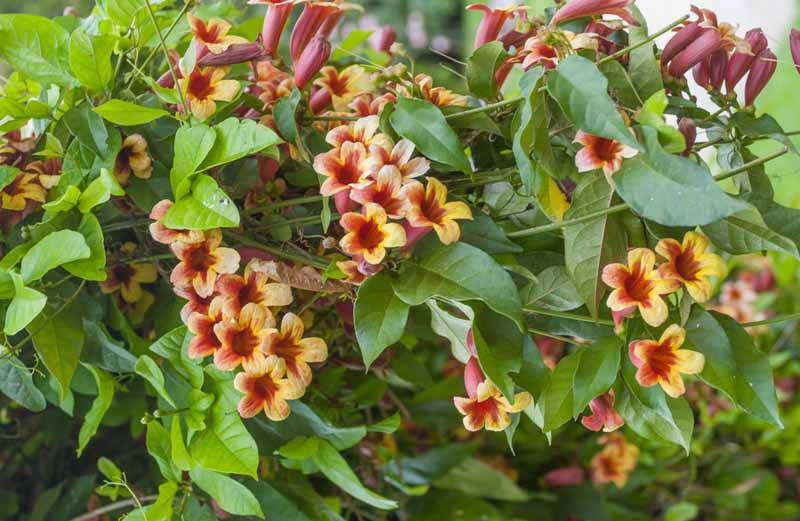
Summary: Vigorous, self clinging woody vine with semi evergreen to evergreen foliage and clusters of fragrant, trumpet shaped flowers in red, orange, and yellow in mid spring, with scattered rebloom in summer.
Use: Covering fences, trellises, arbors, pergolas, walls, mailboxes, large posts, and as a ground cover for slopes.
Highlight: One of the most floriferous native vines, adored by hummingbirds and other pollinators, while being generally deer resistant and tolerant of heat, humidity, and a range of soils.
Note: Very vigorous and spreads by both seed and root suckers, so it needs space and occasional control to keep it where you want it.
| Botanical Name | Bignonia capreolata |
|---|---|
| Family | Bignonia or trumpet vine family (Bignoniaceae) |
| Common Names | Crossvine, cross vine, trumpet flower vine, climbing trumpet vine |
| Native Range | Native to the southeastern United States, often found in woodlands, along stream banks, and climbing trees at forest edges. |
| Plant Type and Habit | Woody, semi evergreen vine with a vigorous, clinging habit that climbs by branched tendrils ending in small adhesive disks. |
| Hardiness (approx. USDA) | Typically hardy in about USDA Zones 5 to 9, evergreen in milder climates and semi evergreen to deciduous in colder areas. |
| Size | Can quickly reach 30 to 50 ft. long (9 to 15 m) when given support, with a spread determined by how and where it is trained. |
| Sun and Exposure | Full sun for maximum flowering, but part shade is tolerated, especially in hot summer climates. |
| Soil | Thrives in organically rich, well drained soils but adapts to a wide range, including clays and sands. Prefers slightly acidic to neutral conditions. |
| Seasonal Interest | Showy trumpet shaped flowers in mid spring lasting up to 4 weeks, followed by green pod like fruits that mature in late summer and can persist into fall. Foliage is evergreen in mild climates and turns reddish purple before dropping in colder regions. |
| Primary Uses | Trellises, fences, walls, arbors, pergolas, mailboxes, large trees, and as a ground cover to stabilize slopes. Excellent for wildlife friendly and native plant gardens. |
Bignonia capreolata is a vigorous, woody, semi evergreen vine prized for its dramatic spring display and tough, adaptable nature. It climbs using branched tendrils with small adhesive disks at their tips, allowing the plant to cling to masonry, tree bark, wood, or other rough surfaces without needing wires or ties.
The foliage consists of opposite, compound leaves with glossy, dark green leaflets that create a dense, leafy screen. In colder regions, the leaves often turn striking reddish purple before they drop, adding an extra season of color.
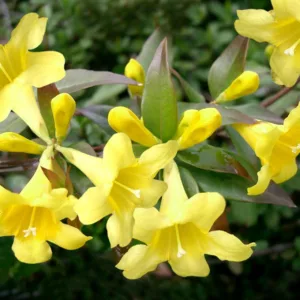
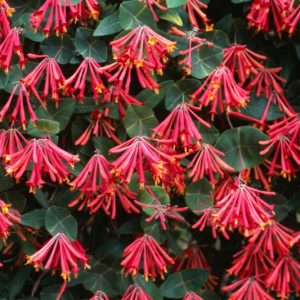
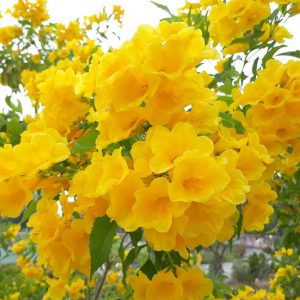
The real show begins in mid spring, when the vine is nearly smothered in clusters of trumpet shaped flowers about 2 in. long (5 cm). Colors range from yellow and orange to red, often with contrasting throats that glow in the sun and draw hummingbirds from far and wide.
Crossvine is native to the southeastern United States, where it naturally scrambles and climbs through forests, along stream banks, and at woodland edges. Its adaptation to warm, humid summers and variable soils makes it an excellent choice for gardens in similar climates.
As a member of the Bignoniaceae, it shares its family heritage with other bold, trumpet flowered ornamentals such as Tecoma stans (Yellow Bells), Chilopsis linearis (Desert Willow), Jacaranda mimosifolia (Jacaranda Tree), and Campsis radicans (Trumpet Vine).
Plant Type and Habit: Crossvine is a fast growing, self clinging vine that can quickly reach 30 to 50 ft. (9 to 15 m) when given something to climb. It can also be allowed to scramble as a ground cover over banks or rough ground.
Because it spreads by both seeds and root suckers, it can travel beyond its original planting spot if not monitored. In the right place, this vigor is a big advantage, but in small gardens you will want to keep it under fairly tight control by pulling or cutting suckers as they appear.
Crossvine is beloved for its profuse, trumpet shaped flowers that burst into bloom in mid spring, usually lasting up to four weeks. The bloom clusters typically hold 2 to 5 flowers, and on a mature plant they can almost hide the foliage beneath a wash of color.
The primary flowering season is in spring, but in warm climates you may also see intermittent rebloom through summer. After flowering, elongated green seed pods form, maturing in late summer and often persisting into fall to add extra texture and interest.
The leaves of Crossvine are typically evergreen in mild climates, providing year round cover for structures and screening unwanted views. In regions with colder winters, the foliage may turn shades of red and purple before dropping, giving you a brief but welcome splash of fall color.
The glossy, dark green leaflets form a dense curtain that is attractive even when the plant is not in bloom, helping Crossvine earn its place as a valuable structural plant in the garden.
Crossvine is generally hardy in about USDA Zones 5 to 9. In the colder parts of its range, stems may experience some winter dieback, but established plants usually resprout from surviving wood and roots in spring.
In warmer regions, it can remain evergreen and continue to grow slowly during mild spells, giving it a strong presence even outside of the flowering season.
You can use Crossvine in many garden settings:
The tubular, nectar rich flowers of Crossvine are especially attractive to hummingbirds, but bees and other pollinating insects also visit. Planting Crossvine near patios, decks, or windows lets you enjoy close up views of visiting wildlife in spring.
Crossvine is often described as deer-resistant, thanks to its tough, somewhat leathery foliage, which is typically not a favorite browse. While no plant is completely deer proof, this vine is usually passed over in favor of more palatable options, making it a good choice for gardens with browsing pressure.
Once established, Crossvine is fairly drought-tolerant and well suited to low to moderate water landscapes in warm regions. Deep, infrequent watering encourages deep roots and better resilience during dry spells.
Its adaptability to both clay and sandy soils makes it a strong candidate for challenging sites. For more native options in tough soils, explore:
Crossvine is not commonly listed among the most toxic garden plants, but as with many ornamentals, it is best treated as for ornamental use only. Discourage pets and children from chewing on stems, leaves, or seed pods, and consult reliable local resources if you have specific toxicity concerns for your region or animals.
Invasiveness: Within its native range, Crossvine is usually considered a welcome, wildlife supporting plant rather than a serious invasive threat. However, it is a very vigorous grower that can spread by root suckers and seed, so it may wander beyond its initial planting area.
To keep Crossvine in bounds, remove unwanted suckers, prune promptly after flowering, and avoid planting it where it can easily climb into trees or neighboring properties without supervision.
The main benefits of growing Crossvine include its spectacular spring display, native origin, value for hummingbirds and other pollinators, evergreen or semi evergreen foliage, and ability to quickly cover vertical structures. It delivers a lot of impact for relatively little effort.
For more ideas on building a garden that supports wildlife, explore:
Crossvine prefers:
If you garden on very heavy or compacted clay, loosen the soil and mix in organic matter at planting time. In sandy soils, organic matter helps improve moisture retention.
Crossvine is relatively easy to care for but benefits from occasional pruning to keep it tidy and in bounds.
Crossvine can be propagated in several ways:
Crossvine is generally a robust, low maintenance native vine with few serious problems, but minor issues can occasionally appear.
Most of the time, insect problems are minor. You may occasionally see sap sucking insects such as aphids or leaf chewing caterpillars on tender growth. These are often kept in check by natural predators.
If populations become noticeable, start with the least disruptive solutions: spray with a strong jet of water, or use insecticidal soap or neem oil according to label directions.
Root and stem problems: Overly wet or poorly drained soils can lead to root issues and general decline. Ensure good drainage and avoid overwatering, especially in heavy soils.
Leaf spot or powdery mildew: In very humid conditions or where air circulation is poor, occasional foliar diseases may appear. Improve spacing, avoid frequent overhead watering, and remove heavily affected leaves if needed.
Excessive growth: Crossvine can sometimes grow more vigorously than expected. Regular pruning after flowering and prompt removal of unwanted shoots keeps it manageable.
Poor flowering: Insufficient sun, heavy shade, or excessive nitrogen fertilizer can reduce bloom. Move plants to a sunnier location if possible and ease back on feeding.
Leaf drop or winter damage: In colder climates, some stem and leaf loss over winter is normal. Remove dead growth in spring and allow new shoots to replace it.
Crossvine is a vigorous, woody, climbing vine in the trumpet-vine family (Bignoniaceae), grown for its clusters of tubular, orange-red to reddish-yellow flowers and its ability to quickly cover fences, arbors, and walls. It climbs using branched tendrils with adhesive disks that can cling to brick, wood, and bark without twining. The common name “crossvine” comes from the cross-shaped pattern seen in the stem when it is cut in cross-section.
Crossvine is native to the central and southeastern United States, occurring from Maryland and Virginia south through Florida and west to Texas and Oklahoma, and into parts of the Midwest such as Missouri and Illinois. It is hardy in approximately USDA Zones 5–9, though it performs best in the warmer end of that range.
In favorable conditions, crossvine can reach 30–50 feet (9–15 m) tall as it climbs up trees or structures, and it can spread aggressively by stolons at the base. It is considered a fast-growing vine and can cover a trellis, fence, or wall in just a few seasons. Regular pruning and site choice are important if you want to keep it within bounds.
Crossvine is semi-evergreen to evergreen in mild climates and more deciduous in colder parts of its range. In the Deep South it often keeps much of its foliage through winter, while in colder Zone 5–6 climates it may lose most or all leaves and then resprout in spring. In cool weather the foliage can take on bronze or reddish-purple tones.
Crossvine will tolerate partial shade, but it flowers most heavily in full sun. In sites that are too shady, you may get vigorous leafy growth but few blooms. For the best floral display and hummingbird activity, choose a spot with at least six hours of direct sun.
Crossvine typically blooms in mid- to late spring, with some cultivars producing scattered flowers again later in the season in warm climates. The flowers are 1.5–2 inches (about 4–5 cm) long, trumpet-shaped, and usually orange-red or brick red on the outside with yellow to golden throats, sometimes with a noticeable fragrance. They are borne in clusters and are highly attractive to hummingbirds and pollinators.
Plant crossvine near a sturdy support such as an arbor, pergola, fence, or masonry wall, spacing plants several feet apart to allow for mature spread. Because it climbs by tendrils with adhesive pads rather than by twining, it can adhere directly to rough brick, wood, or tree bark; on smoother surfaces, add wires or lattice for the tendrils to grab. Avoid planting it at the base of small or weak trees that could be overwhelmed by the vine’s weight over time.
Crossvine blooms primarily on old wood, so major pruning is best done shortly after flowering, before new flower buds set for the following year. You can shorten long shoots, remove unwanted stems at the base, and thin congested growth to improve air circulation. Light pruning for tidiness can be done at any time, but hard cuts in late summer, fall, or winter may reduce the next spring’s bloom.
Within its native range, crossvine is not usually classified as an invasive exotic, but it can be vigorous and somewhat aggressive in gardens. It can spread by underground stolons and send up shoots away from the original planting, and it can climb high into trees if not managed. Gardeners should be prepared to prune regularly and remove unwanted suckers, particularly in small spaces.
Crossvine is not widely documented as a common poisoning plant in home landscapes, and some horticultural references list no known toxicity. However, other sources note that parts of the plant contain alkaloids, including reserpine, and flag potential toxicity if ingested in quantity. Because of these mixed reports, it is prudent to treat crossvine as potentially mildly toxic and avoid allowing children, pets, or livestock to chew on it, and to consult a poison control center or veterinarian if ingestion occurs.
Crossvine climbs with branched tendrils that end in adhesive disks, which can cling firmly to rough masonry, wood, or bark. On brick or stone, the pads can be difficult to remove cleanly and may leave marks when pulled off, though they are generally less intrusive than large, penetrating roots. On painted or soft wood, the pads may pull up paint or fibers if stripped away. If you are concerned about surface damage, provide a freestanding trellis or wire framework for the vine to climb instead of letting it adhere directly to a wall.
Crossvine can be grown in a large, sturdy container if you provide a trellis or other strong support and are willing to prune to control size. Use a high-quality potting mix with good drainage, and water more frequently than you would for in-ground plants, since containers dry out faster. In colder climates, containerized plants may need winter protection for their roots, such as moving them to a sheltered location or wrapping the pot.
Several ornamental cultivars of crossvine are available, selected mainly for flower color, size, and cold hardiness. Named forms include ‘Tangerine Beauty’, ‘Atrosanguinea’, ‘Dragon Lady’, ‘Helen Fredel’, ‘Jekyll’, and ‘Shalimar Red’, among others. These cultivars generally share the same cultural requirements as the species but may differ slightly in vigor, mature size, or bloom intensity.
Updated: December 2025 • Reviewed by Gardenia Editors
| Hardiness |
5 - 9 |
|---|---|
| Heat Zones |
5 - 9 |
| Climate Zones | 4, 5, 6, 7, 8, 9, 14, 15, 16, 17, 18, 19, 20, 21, 22, 23, 24 |
| Plant Type | Climbers |
| Plant Family | Bignoniaceae |
| Common names | Crossvine, Trumpet Flower |
| Exposure | Full Sun, Partial Sun |
| Season of Interest | Spring (Mid, Late), Summer (Early, Mid, Late) |
| Height | 30' - 50' (9.1m - 15.2m) |
| Spread | 6' - 9' (180cm - 270cm) |
| Maintenance | Average |
| Water Needs | Low, Average |
| Soil Type | Chalk, Clay, Loam, Sand |
| Soil pH | Acid, Alkaline, Neutral |
| Soil Drainage | Moist but Well-Drained, Well-Drained |
| Characteristics | Showy, Semi-Evergreen |
| Native Plants | United States, Northeast, Maryland, Illinois, Indiana, Midwest, Missouri, Ohio, Southeast, Louisiana, Mississippi, North Carolina, South Carolina, Tennessee, Virginia, West Virginia, Alabama, Arkansas, Florida, Georgia, Kentucky, Southwest, Texas, Oklahoma |
| Tolerances | Drought, Deer, Heat |
| Attracts | Hummingbirds |
| Garden Uses | Arbors, Pergolas, Trellises, Banks And Slopes, Ground Covers, Wall-Side Borders, Walls And Fences |
| Garden Styles | Coastal Garden, Informal and Cottage, Mediterranean Garden |
| Toxic to Humans | No known toxicity |
| Toxic to Cats | No known toxicity |
| Toxic to Dogs | No known toxicity |
| Toxic to Horses | No known toxicity |


| Hardiness |
5 - 9 |
|---|---|
| Heat Zones |
5 - 9 |
| Climate Zones | 4, 5, 6, 7, 8, 9, 14, 15, 16, 17, 18, 19, 20, 21, 22, 23, 24 |
| Plant Type | Climbers |
| Plant Family | Bignoniaceae |
| Common names | Crossvine, Trumpet Flower |
| Exposure | Full Sun, Partial Sun |
| Season of Interest | Spring (Mid, Late), Summer (Early, Mid, Late) |
| Height | 30' - 50' (9.1m - 15.2m) |
| Spread | 6' - 9' (180cm - 270cm) |
| Maintenance | Average |
| Water Needs | Low, Average |
| Soil Type | Chalk, Clay, Loam, Sand |
| Soil pH | Acid, Alkaline, Neutral |
| Soil Drainage | Moist but Well-Drained, Well-Drained |
| Characteristics | Showy, Semi-Evergreen |
| Native Plants | United States, Northeast, Maryland, Illinois, Indiana, Midwest, Missouri, Ohio, Southeast, Louisiana, Mississippi, North Carolina, South Carolina, Tennessee, Virginia, West Virginia, Alabama, Arkansas, Florida, Georgia, Kentucky, Southwest, Texas, Oklahoma |
| Tolerances | Drought, Deer, Heat |
| Attracts | Hummingbirds |
| Garden Uses | Arbors, Pergolas, Trellises, Banks And Slopes, Ground Covers, Wall-Side Borders, Walls And Fences |
| Garden Styles | Coastal Garden, Informal and Cottage, Mediterranean Garden |
| Toxic to Humans | No known toxicity |
| Toxic to Cats | No known toxicity |
| Toxic to Dogs | No known toxicity |
| Toxic to Horses | No known toxicity |
How many Bignonia capreolata (Crossvine) do I need for my garden?
| Plant | Quantity | |
|---|---|---|
| Bignonia capreolata (Crossvine) | N/A | Buy Plants |
Create a membership account to save your garden designs and to view them on any device.
Becoming a contributing member of Gardenia is easy and can be done in just a few minutes. If you provide us with your name, email address and the payment of a modest $25 annual membership fee, you will become a full member, enabling you to design and save up to 25 of your garden design ideas.
Join now and start creating your dream garden!
Create a membership account to save your garden designs and to view them on any device.
Becoming a contributing member of Gardenia is easy and can be done in just a few minutes. If you provide us with your name, email address and the payment of a modest $25 annual membership fee, you will become a full member, enabling you to design and save up to 25 of your garden design ideas.
Join now and start creating your dream garden!