Cherry Plum – A Friendly Guide to Trees, Fruit, and Everyday Enjoyment
Quick Facts – Prunus cerasifera (Cherry Plum)
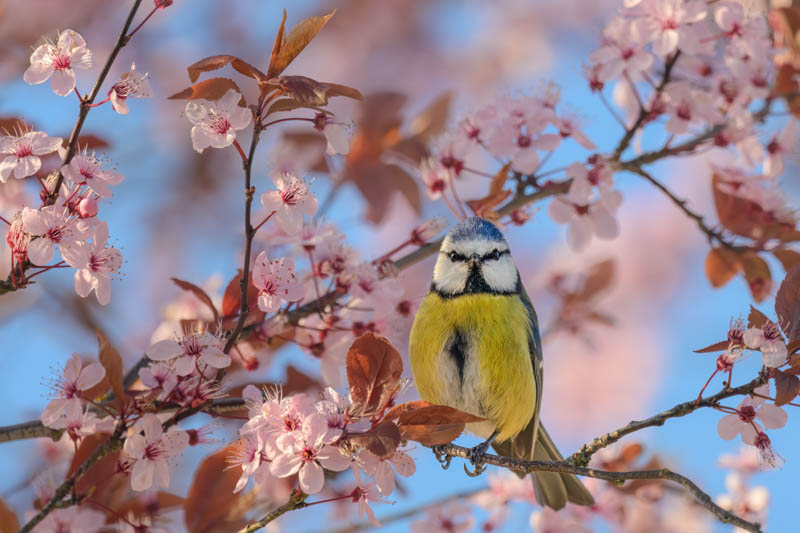
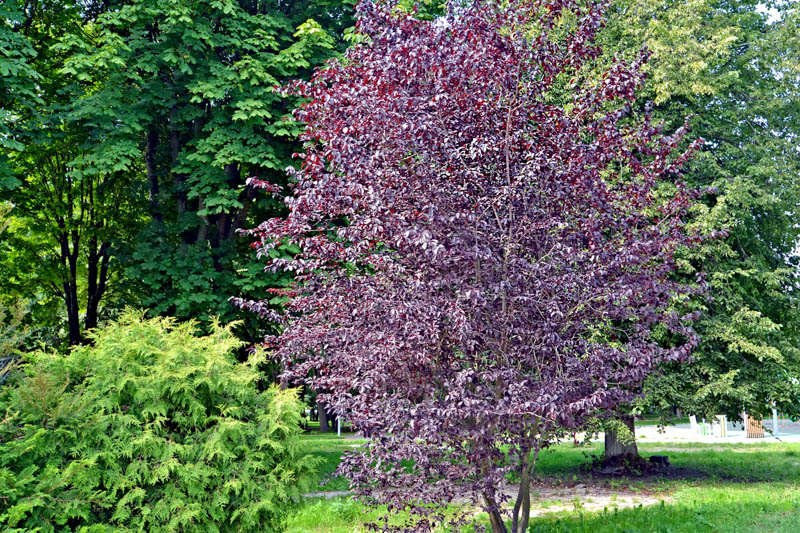
Cherry plum is a small, fast-growing tree loved for two things: earliest spring blossom and snackable plums that vary from yellow to garnet red to nearly black. You will meet it as the classic purple-leaf street tree and as vigorous hedgerow seedlings that fruit like champions. Easy care, generous bloom, and a friendly size make it a great fit for home gardens and urban spaces.
| Topic |
Details |
| Botanical name |
Prunus cerasifera — also sold as myrobalan plum. Popular purple-leaf forms are selections or hybrids, often labeled P. cerasifera f. atropurpurea. |
| Habit and size |
Rounded, spreading small tree. Typically 12–25 ft tall and 12–20 ft wide. Some hedge forms stay smaller with pruning. |
| USDA zones |
Usually hardy in zones 5–8. Performs in cool summer climates. Some selections manage 9 with adequate water. |
| Blossom and fruit |
Very early white to blush pink flowers on bare twigs. Fruit from late spring to mid summer depending on climate. Skin and flesh colors vary by cultivar. |
| Soil and exposure |
Average, well-drained soil. Full sun for best foliage color and fruit. Adapts to many textures from sandy loam to clay if drainage is decent. |
| Landscape uses |
Street tree, courtyard specimen, wildlife-friendly fruit tree, edible ornamental, flowering hedge, bonsai subject. |
Care (Quick)
- Plant in full sun with good drainage and mulch the root zone.
- Water deeply the first two summers, then weekly in dry spells.
- Light winter pruning for shape. Remove watersprouts and crossing wood.
- Thin heavy fruit sets to improve size and reduce limb strain.
- Net fruit if birds arrive first. Harvest when fully colored and fragrant.
Have you ever walked down a late winter street and seen a little tree glittering with pale blossoms while everything else is still asleep? That cheerful tree was probably a cherry plum. Gardeners love it because it wakes up the neighborhood, keeps a polite size, and can reward you with handfuls of sweet-sour little plums that taste like summer in a single bite. This friendly guide covers what cherry plum is, how to choose a good cultivar, how to grow it without fuss, and what to do with the fruit when branches are suddenly full.
What Is a Cherry Plum Tree?
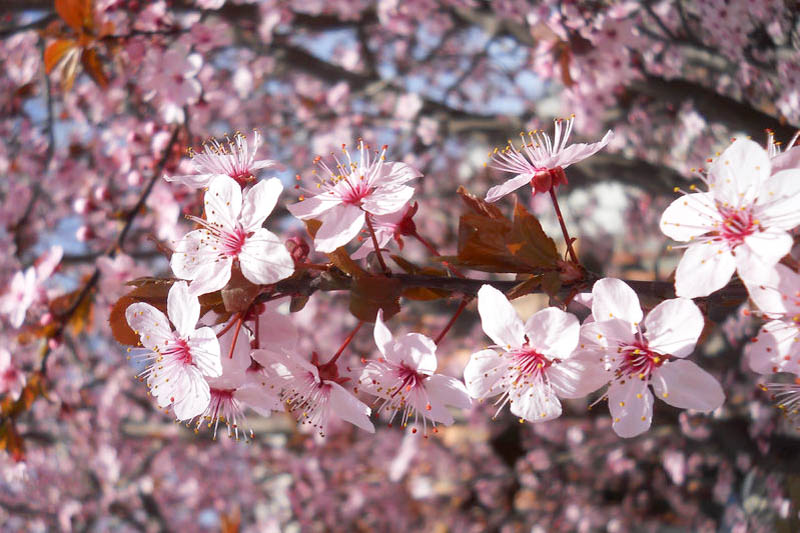
Description: A compact, deciduous plum (Prunus cerasifera) prized for very early blossom on bare twigs and small, snackable fruit that colors from yellow to deep purple. Often seen in two roles: purple-leaf ornamentals for vivid foliage and green-leaf selections grown for abundant, early fruit.
Native range: Originates from the Balkans and Turkey across the Caucasus into western Asia, then spread widely through cultivation. Now naturalized in many temperate regions and common in towns and gardens.
Plant type and habit: Small tree or large multi-stem shrub with a naturally rounded crown. Takes training well as a single-leader street tree, a loose flowering hedge, or a column in narrow spaces through columnar cultivars like Crimson Pointe.
Growth rate and lifespan: Fast to moderate when young (about 12–24 in of extension yearly). Flowers and often fruits within 2–3 seasons. Landscape lifespan is typically 20–30 years; on good sites with steady moisture and light annual pruning, 35–40+ years is achievable.
Popular Cultivars and What Makes Them Special
| Cultivar or Type |
Leaf Color |
Habit & Size |
Flowers |
Fruit |
Best For |
Notes |
| Thundercloud |
Purple through the season |
Rounded crown, small tree, typically 15–20 ft |
Light pink on bare twigs in early spring |
Red to red-purple, moderate crops |
Street and front yard color, four-season interest |
Reliable foliage color in full sun, easy to shape |
| Krauter Vesuvius |
Deep purple |
Upright to oval, a bit narrower, 15–20 ft |
Soft pink in early spring |
Red to burgundy, light to moderate |
Tighter spaces, sidewalks, allees |
Good silhouette where width is limited |
| Nigra |
Very dark purple, nearly black in strong sun |
Rounded to oval, 15–20 ft |
Pale pink that contrasts strongly with foliage |
Dusky red, usually modest crops |
Bold foliage color, ornamental focus |
Choose full sun for darkest leaves and best show |
| Green-leaf seedlings and hedgerow types |
Green |
Vigorous, variable size, often 12–18 ft with pruning |
White to blush pink, very early bloom |
Yellow, orange, or red, often very abundant and early |
Kitchen fruit, jams, sauces, fresh snacking |
Often ripen weeks before Japanese plums, flavor varies by seedling |
| Hollywood |
Purple to bronzy purple |
Rounded, 12–18 ft, manageable with light pruning |
Pink in early spring |
Larger, tasty fruit, good for fresh use and preserves |
Edible ornamental that balances looks and flavor |
Often listed with cherry plums, great bridge between ornamental and dessert types |
| Pissardi |
Rich purple to red-purple all season |
Rounded to broadly oval, ~15–25 ft |
Pale pink, very early on bare wood |
Small red-purple plums, light to moderate |
Classic purple-leaf street or specimen tree |
Often listed as ‘Pissardii’ or ‘Atropurpurea’; best color in full sun |
| Newport |
Purple with bronze spring flush; holds color well |
Rounded, ~15–20 ft; balanced canopy |
Light pink to blush white in early spring |
Small reddish fruit; ornamental with some dessert use |
Ornamental color in cooler or variable climates |
Known as a cold-tolerant purple-leaf selection; low-maintenance shape |
| Crimson Pointe |
Deep burgundy to purple foliage |
Very columnar, ~20–25 ft tall × 6-8 ft wide |
White to soft pink, early and showy |
Small dark fruit; usually light cropping |
Tight spaces, narrow screens, formal allees |
Upright pillar form; minimal pruning; often marketed as ‘Cripoizam’ |
Note: Purple-leaf street selections often fruit lightly. Green-leaf seedlings and dessert-leaning picks (e.g., ‘Hollywood’) are usually more productive.
If your heart is set on fruit for the kitchen, choose green-leaf types or named selections known for dessert quality. If showy foliage is the goal, pick a purple-leaf cultivar that fits your space and sun. You can also mix one of each for cross-pollination and a longer, more satisfying harvest.
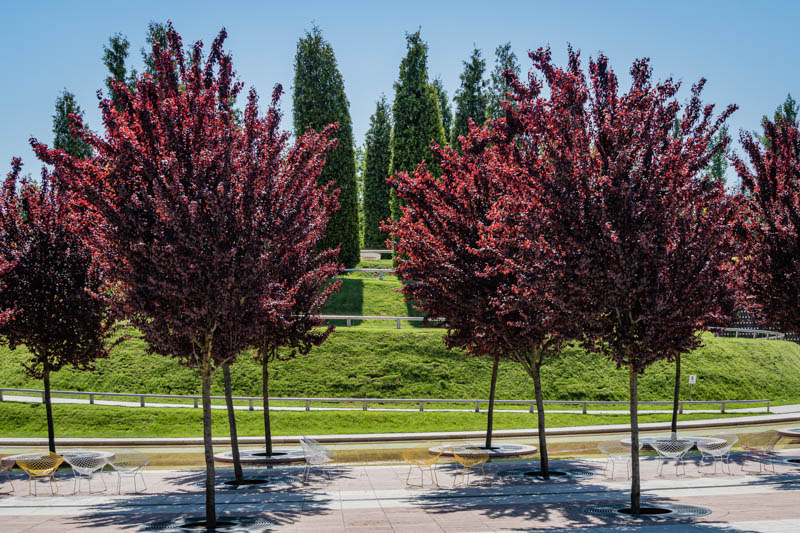
Where Cherry Plum Shines in the Landscape
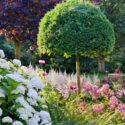
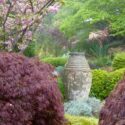
Asian Garden
- Best picks: Nigra for inky foliage. Pissardi for classic purple. Crimson Pointe for slim, upright accents by gates.
- Place it: Set a tree 8–10 ft off a path so spring blossom arches into view.
- Companions: Japanese maple, Hakone grass, mondo grass, azalea, pieris.
- Palette: Soft pink, white, green, purple. Add a water basin or stone lantern for calm focus.
- Care: Lightly prune after bloom to show branch tracery. Keep mulch tidy so fruit does not stain paving.
Butterfly Garden
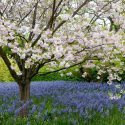
Cottage Garden
- Best picks: Green-leaf seedling or Hollywood for dessert fruit. Nigra if drama leads.
- Place it: Centered behind a low picket or woven fence with a 6–10 ft deep, overflowing border.
- Layers: Roses, delphinium, foxglove, peony, phlox, lavender, geum, sweet peas on twig teepees.
- Season bridge: Spring bulbs under the canopy, alliums for early summer, asters and salvias for the finale.
- Care: Thin fruit clusters so branches do not collapse into flowers. Stake tall perennials leaning toward the tree.
Hedge and Privacy Screen
- Best picks: Green-leaf seedlings for fruiting hedges. Thundercloud or Newport for color hedges. Crimson Pointe for narrow lines along drives and side yards. Krauter Vesuvius for upright ovals with modest width. Mix two cultivars for pollination and texture.
- Spacing: Rounded forms 8 to 10 ft on center. Columnar Crimson Pointe 4 to 6 ft on center for a near solid line.
- Care: Each winter remove one of the five oldest stems near the base to renew growth. Keep trunks 4 to 5 ft from fences or walls. Use deep, infrequent watering. Light canopy thinning after harvest improves airflow. Net a section if birds take most of the crop.
Cherry plum contains cyanogenic glycosides, mainly in leaves, stems, and pits. Hazard for cats, dogs, and horses. For humans, poison severity is medium. Whole fruit is safe to eat after pitting; swallowing one or two whole pits is unlikely to poison, but chewed or ground pits release cyanide. Never blend unpitted fruit. Symptoms can be rapid: gasping, weakness, agitation, dilated pupils, spasms, convulsions, coma, and respiratory failure. Effects are typically short lived if exposure stops. Does not cause contact dermatitis.
How to Grow and Care for a Cherry Plum Tree
Timing
- Bareroot trees: plant in late winter to very early spring while fully dormant. Aim for soil that is workable and not waterlogged.
- Container trees: plant any time the ground is workable. Avoid heat waves and hard freezes.
Site and soil
- Sun: Prefers full sun. Tolerates partial shade, especially in hot regions. Aim for 6–8 hours for best color and fruit. 4–5 hours works with some loss in bloom and yield.
- Soil: well drained loam is ideal. Target pH 6.0 to 7.5. In heavy clay, raise the planting area 4 to 6 inches and improve surface drainage rather than digging a deep hole.
- Quick drainage test: fill the hole with water. If water remains after 24 hours, switch to a raised mound 6 to 12 inches high.
- Competition: keep a grass free circle at least 3 feet wide. Turf robs young trees of water and nutrients.
Spacing
- Rounded types such as Thundercloud or Nigra: 12 to 18 ft apart center to center.
- Upright oval types such as Krauter Vesuvius: 10 to 12 ft apart.
- Columnar types such as Crimson Pointe: 4 to 6 ft apart for a tight row or 6 to 8 ft for individual pillars.
Planting steps for bareroot trees
- Keep roots damp and shaded until planting. Soak in clean water for 1 to 2 hours before planting.
- Trim only broken or dead root tips. Do not shorten healthy roots.
- Form a small soil cone in the hole. Spread roots evenly over the cone at natural angles.
- Set the tree so the root flare is at grade and the graft union is 2 to 3 inches above grade.
- Backfill with native soil in layers, firming as you go. Water halfway through backfilling to settle soil around roots.
- Finish backfilling, water with 3 to 5 gallons, then mulch 2 to 3 inches deep, pulled back from the trunk.
- Head the central stem to 30 to 36 inches if training a vase form. If training a single leader, select one strong leader and head competing shoots.
Watering schedule
- Weeks 1 to 4: 2 to 3 gallons two to three times per week in mild weather. In hot or windy weather, three to four times per week.
- Months 2 to 6: 5 to 8 gallons once or twice weekly depending on heat and soil. Aim for deep moisture to 12 to 18 inches.
- Months 7 to 24: 8 to 12 gallons once weekly in summer, every 2 to 3 weeks in spring and fall if rainfall is low.
- Drip guide: two 2 gph emitters per tree. Run 60 to 120 minutes per session, adjust to keep soil moist but not soggy.
Feeding
- Year 1: skip granular fertilizer at planting. Instead, top dress each spring with 1 to 2 inches of compost under the canopy.
- Year 2 and 3: apply a balanced organic fertilizer such as 5-5-5 at 2 to 4 cups per tree in early spring. Broadcast from 6 inches off the trunk to just beyond the drip line, then water in.
- Established trees: repeat a lighter dose after harvest only if growth is weak. Overfeeding pushes lush growth that attracts pests.
Mulch and weed control
- Maintain a 3 to 4 foot mulch ring that is 2 to 3 inches deep. Renew each spring.
- Keep mulch off the trunk to prevent rot and pests.
- Hand pull weeds or use a sharp hoe. Avoid landscape fabric under the mulch. It restricts air and water movement.
Protection and early fruiting care
- Frost: cover the canopy with frost cloth on nights near 28°F. Anchor the cloth to the ground to trap soil warmth. Remove covers in the morning.
- Wildlife: use a 18 to 24 inch trunk guard where rabbits or deer browse. Net a section of canopy as fruit colors if birds claim everything.
- Fruit thinning: when fruit reaches pea size, leave spacing of 2 to 3 inches between plums. This improves size and reduces limb strain.
First two years checklist
- Water deeply and consistently. Adjust to weather rather than the calendar.
- Keep a clean mulch ring and a grass free zone.
- Light spring shaping, heavier cuts only after the coldest weather has passed.
- Add a pollination partner within 25 to 50 feet if yield matters in your garden.
- Walk the tree monthly. Look for aphids, scale, leaf spot, or cankers. Early action is easy action.
Growing a Cherry Plum Tree in a Container
- Pot size: 20–30 gallons with large drainage holes; elevate on feet for airflow.
- Mix: High-quality potting mix with 20–30% composted bark for structure.
- Water: Expect 2–4 times per week in summer; water to runoff; let top 1 in dry slightly between sessions.
- Feed: Slow-release fertilizer in spring plus monthly liquid feed at half strength during active growth.
- Size control: Summer prune to keep height under 8–10 ft. Root-prune and repot every ~3 years.
Planting steps for container trees
- Water the nursery pot so the root ball is evenly moist; slide the plant out without pulling on the trunk.
- Tease circling roots gently; make 3–4 shallow vertical slices if pot-bound.
- Select a container with 4+ large drainage holes; add a shallow layer of mix (no stones at the bottom).
- Set the tree with the root flare level with the finished mix; if grafted, keep the graft union 2–3 in above the mix.
- Backfill with potting mix; tamp lightly; water to settle; top with ~2 in mulch, kept off the trunk.
- Stake only in windy sites; remove stakes after one year.
- Bottom line: plant at grade, water deeply, keep the root zone mulched and weed free, prune with a light hand, and site the tree in full sun. Do these well and cherry plum will reward you quickly with color and fruit.
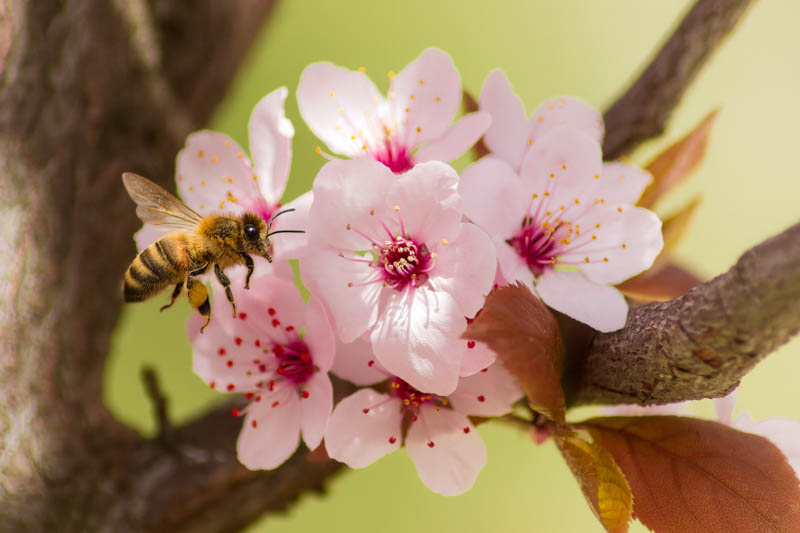
Pollination, Chill, and Fruit Set
- Plant a partner: One cherry plum can fruit, but two nearby is a feast. Add a second tree that overlaps bloom for 7–10 days.
- Keep it close: Space partners 12–20 ft in a yard and no farther than 25–50 ft so bees shuttle pollen easily.
- Winning pairs: Thundercloud, Krauter Vesuvius, Nigra, Newport, Pissardi, Crimson Pointe. Early Japanese plums like Methley often overlap in zones 7–9. Santa Rosa may overlap in zones 6–8 depending on spring.
- Invite pollinators: Bees work best above about 55°F on calm, dry mornings. Ring the drip line with thyme, oregano, borage, and lavender to keep them on site.
- Know your chill: Most selections set well with roughly 200–600 chill hours below 45°F (7°C). In mild winters, weak set is usually rain at bloom or poor overlap, not low chill.
- Beat the frost: Blossoms are nipped near 28°F (-2°C) and tiny fruit near 30°F (-1°C). Plant on a slight slope, avoid low pockets, water soil the afternoon before a cold night, and use frost cloth to the ground. Old-style holiday lights under the cover add a degree or two.
- After the party: When fruit hits pea size, thin to 2–3 inches apart. You will get bigger, sweeter plums and fewer bent branches.
Training and Pruning Made Simple
| Focus |
What to do |
When |
Why |
| Choose a form |
Pick central leader (small shade tree), vase/open center (light-filled canopy for easy picking), or multi-stem (ornamental mass). |
At planting & Year 1 |
Sets the tree’s long-term look and workload |
| Scaffolds |
Select 3–5 main branches at 45–60°, spaced 6–10 in vertically and around the trunk like spokes. |
Years 1–3 |
Builds a strong, balanced frame |
| Dormant prune |
Remove dead, damaged, crossing wood first; then thin crowded shoots lightly. Keep cuts small. |
Late winter (after coldest spell) |
Airflow, health, and structure |
| Summer prune |
Shorten overly vigorous shoots and watersprouts by ~1/3; tip back to outward buds to maintain size. |
After harvest |
Controls height, encourages fruiting spurs |
| Fruit thinning |
Space fruit to 2–3 in apart on clusters when marble-size; support bending limbs if needed. |
Late spring |
Bigger, sweeter fruit; less limb strain |
| Annual limit |
Avoid removing more than ⅓ of the canopy in a single year; step big changes over 2–3 seasons. |
Every year |
Prevents stress and suckering |
Tip: For purple-leaf forms grown mainly for looks, favor light, frequent touch-ups over heavy winter cuts to keep the canopy dense and colorful.
Care Calendar
| Season |
Tasks |
| Late winter |
Shape lightly, remove crossing wood, top-dress with compost, refresh mulch |
| Spring |
Enjoy bloom, watch for aphids, water during dry spells, thin developing fruit if branches overload |
| Early to midsummer |
Harvest in waves, net if needed, prune watersprouts after picking |
| Fall |
Deep water before winter in dry climates, clean up fallen fruit and leaves |
| Winter |
Check stakes, inspect for cankers, plan any structure tweaks for next season |
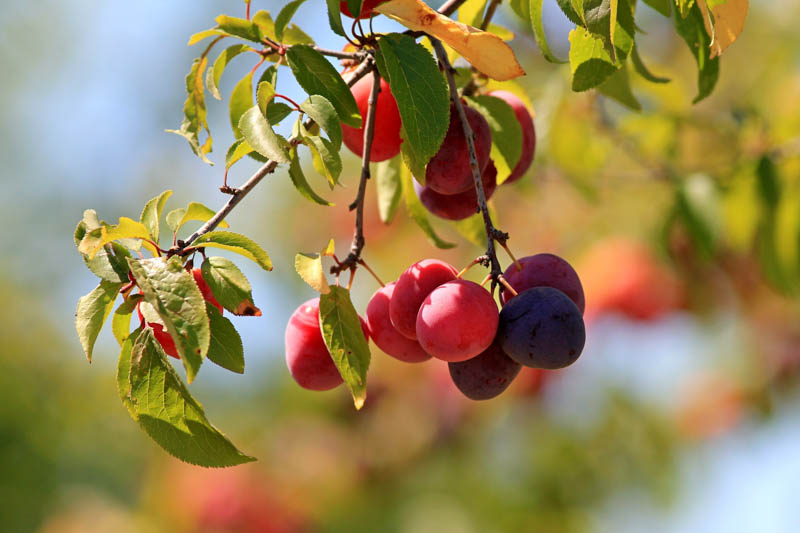
Harvest at a glance
| Step |
What to do |
Why |
| 1 |
Pick when ready. Even color with a light bloom. Soft spring to the touch. Bright and sweet with a tart edge |
Peak flavor and juice without bitterness |
| 2 |
Harvest in the morning while fruit is cool. Twist and lift gently. Snip tight clusters with clean pruners |
Cool fruit bruises less and keeps longer |
| 3 |
Sort as you go into two shallow trays. One for soft fruit. One for slightly firm fruit |
Prevents pressure bruising and controls ripening |
| 4 |
Do not wash yet. Refrigerate within one hour or process the same day |
Water on skins shortens storage life. Fast cooling slows mold |
| 5 |
Keep ripe fruit separate from firm fruit |
Ethylene from ripe fruit accelerates softening |
Storage at a glance
| Method |
How |
Shelf life |
Notes |
| Counter ripening |
Single layer in a cool room |
1 to 3 days to soften |
Check twice daily |
| Refrigerator |
Unwashed in a vented box or paper bag |
3 to 7 days at 32 to 36°F (0 to 2°C) |
High humidity preserves quality |
| Freezing |
Halve, pit, tray freeze, then bag |
8 to 12 months |
Add a little lemon to keep color |
| Drying |
Halves in a dehydrator at 125 to 135°F |
Up to 6 to 12 months airtight |
Fully dry, then condition for 1 week |
| Canning |
Use a tested recipe for syrups, jams, chutneys |
Up to 1 year sealed |
Follow current safety guidelines |
Recipes at a glance
| Recipe |
How |
Time and storage |
| Roasted cherry plums |
Halve and pit. Toss with a pinch of sugar and salt. Roast at 400°F until edges caramelize |
15 to 20 minutes. Best same day |
| Skillet compote |
4 cups fruit, 2 to 4 tbsp sugar, 1 tbsp lemon. Simmer until saucy. Optional vanilla or cardamom |
5 to 8 minutes. Refrigerate 1 week |
| Quick jam |
2 lb fruit, 1.3 lb sugar, lemon juice. Cook to 220°F or until a sheet on a spoon |
30 to 40 minutes. 3 weeks in fridge or freeze |
| Sparkling syrup |
Simmer 4 cups fruit with 1 cup water. Strain. Sweeten 1 to 1 with sugar. Add 1 tbsp lemon per cup |
20 minutes. 3 to 4 weeks chilled |
| Freezer packs |
Toss halves with 2 tbsp sugar and 1 tsp lemon per pound. Tray freeze, then bag |
Active 10 minutes. Keeps 8 to 12 months |
| Chutney starter |
Sauté onion and ginger. Add plums, brown sugar, cider vinegar, raisins, mustard seed, chili. Simmer glossy |
30 to 45 minutes. 2 to 3 weeks chilled |
| Simple shrub |
Mash equal parts fruit and sugar. Rest 12 to 24 hours cold. Strain. Add equal vinegar and bottle |
Overnight. 2 to 3 months chilled |
Pests and Diseases
Cherry plums are spirited but, like most stone fruits, they have a known cast of pests and a short list of diseases. Good culture wins most battles. Give full sun, moving air, steady moisture during fruit swell, and prompt cleanup of fallen fruit and leaves.
Common pests
- Aphids: Curling new leaves and sticky honeydew. Blast with water, pinch out worst tips, support predators with diverse flowers.
- Scale: Hard bumps on twigs that sap vigor. Prune out heavy spots. Apply dormant horticultural oil in late winter when appropriate.
- Spider mites: Fine stippling and dusty webs in heat. Hose foliage, increase humidity with mulch, use horticultural oil or insecticidal soap if needed.
- Leafhoppers: Speckled leaves and minor tip damage. Usually cosmetic. Reduce weeds, encourage predators, treat only if injury is significant.
- Caterpillars and tent caterpillars: Chewed clusters and webbed tents. Remove tents by hand in early morning, prune small infested twigs, use Bacillus thuringiensis kurstaki on young larvae.
- Japanese beetles: Lacy leaves in midsummer. Hand pick in early morning into soapy water, protect priority trees with row cover during peak flights, consider beneficial nematodes for nearby turf grubs where suited.
- borers such as peach tree borer or shot hole borer: Sawdust-like frass or oozing gum at the trunk. Keep trees vigorous, avoid trunk wounds, mulch properly. Consult a certified arborist if frass persists.
- Birds: Harvest prompt and often, or net a section of the canopy as fruit colors.
- Deer: Tender shoots and flowers are favorites. Use cages or repellents on young trees and during spring flush.
Diseases
- Brown rot: Fruit rots on the branch near harvest. Thin for airflow, harvest quickly, remove mummified fruit, avoid overhead water near ripening.
- Leaf spot and shot hole: Small spots or holes after spring rains. Rake leaves in fall, keep canopy open, consider a labeled copper program if problems repeat.
- Canker: Sunken, oozy lesions on twigs and limbs. Prune back to clean wood during dry weather, sanitize tools between cuts, avoid large pruning wounds.
- Black knot: Charcoal warty swellings on branches. Prune at least 6 to 8 inches below the knot during dormancy, bag and trash prunings, disinfect tools each cut.
- Leaf curl: Distorted, thickened spring leaves. Remove affected leaves, keep trees vigorous, consider dormant copper where curl recurs.
- Powdery mildew: White film on young leaves and shoots. Improve sun and airflow, water soil not foliage, use sulfur or oil products labeled for mildew if needed.
- Root rot: Waterlogged sites cause decline. Plant high on heavy soils, improve drainage, water deeply but infrequently.
- Bacterial blights including fire blight reports in some regions: Sudden blackened shoots and blossom blight. Prune 8 to 12 inches below symptoms in dry weather, sanitize tools, avoid high nitrogen in spring, consider copper at bud swell where advised.
Simple IPM game plan
- Late winter: Prune out black knot and canker to clean wood. Apply dormant oil for scale where history exists.
- Spring: Thin fruit for airflow. Water at the root zone. Scout for aphids and tents and act early.
- Early summer: Watch for mites and beetles. Hand pick and hose before damage builds.
- Harvest window: Pick promptly, remove mummies, keep the ground clean. Net a portion if birds dominate.
- Fall: Rake and compost leaves away from the tree, refresh mulch, mark any limbs to remove next dormant season.
Call a pro: Repeated borer frass, large structural cankers, or significant dieback deserve a certified arborist. Early help preserves form and fruiting for years to come.
Rootstocks, Suckers, and Seedlings
Many nursery cherry plums are grafted to myrobalan seedling or similar rootstocks because they establish quickly and tolerate various soils. You may see energetic shoots from the base. If those come from below the graft union, they are rootstock suckers and should be removed flush to the origin. If the tree is grown on its own roots, those shoots are part of the tree and can be trained or thinned as you prefer.
Seedlings that appear in hedgerows are often delicious producers. If you have space, transplant a promising one to a sunny spot and see what it can do. Fruit quality varies, which is half the fun.
Frequently Asked Questions
What is a cherry plum? A small deciduous plum, Prunus cerasifera, known for very early blossom and bite-size fruit. Many forms have purple foliage.
How big does it get? Typically 12 to 25 feet tall and 10 to 20 feet wide, depending on cultivar and pruning.
Which USDA zones suit cherry plum? Usually hardy in zones 5 to 8 with best performance in full sun and well-drained soil.
Do I need two trees for fruit? Often partially self-fruitful, but yields improve with a compatible cherry plum or early Japanese plum blooming nearby.
When does it flower and fruit? Flowers very early in spring on bare twigs. Fruit ripens from late spring to mid summer, timing varies by climate and cultivar.
Are cherry plums edible? Yes. Skin can be yellow, orange, red, or deep purple. Flavor is sweet to sweet-tart. Remove pits before cooking.
Is it safe for pets and livestock? Leaves, stems, and pits can be hazardous to cats, dogs, and horses if chewed. Keep prunings and windfall away from animals.
How fast does cherry plum grow? Fast to moderate while young, often 12 to 24 inches per year. Expect flowers and some fruit within 2 to 3 seasons
How long does it live? Commonly 20 to 30 years in landscapes, longer with good soil, steady moisture, and light annual pruning.
Messy fruit near sidewalks? Fruit can drop and stain. Harvest promptly, net a section if birds get there first, and avoid planting over paving.
Will deer eat it? New growth and flowers are often browsed. Protect young trees where deer pressure is high.
Is it invasive? It can self-seed and naturalize in some regions. Check local guidance and deadhead or harvest fruit to limit spread.
References
Updated: October 2025 • Reviewed by Gardenia Editors
While every effort has been made to describe these plants accurately, please keep in mind that height, bloom time, and color may differ in various climates. The description of these plants has been written based on numerous outside resources.