Trumpet Vine, Trumpet Climber, Trumpet Creeper, Trumpet Honeysuckle, Virginian Trumpet Flower, Cow Vine, Foxglove Vine, Hellvine, Devil's Shoestring, Bignonia radicans, Tecoma radicans
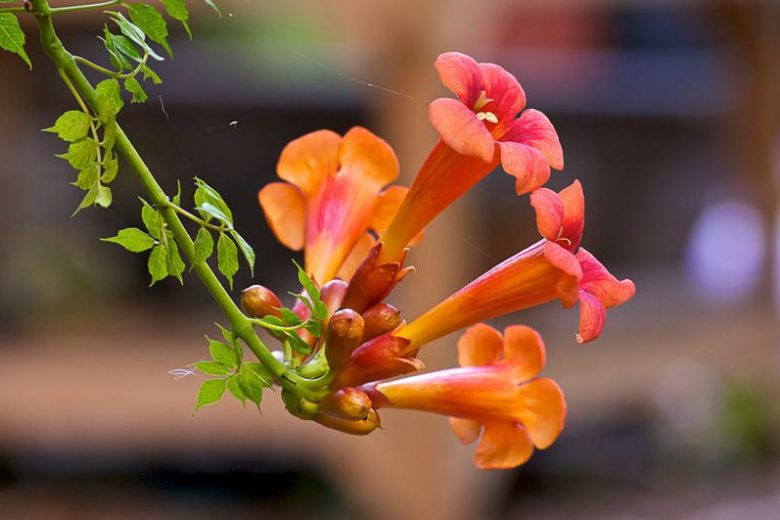
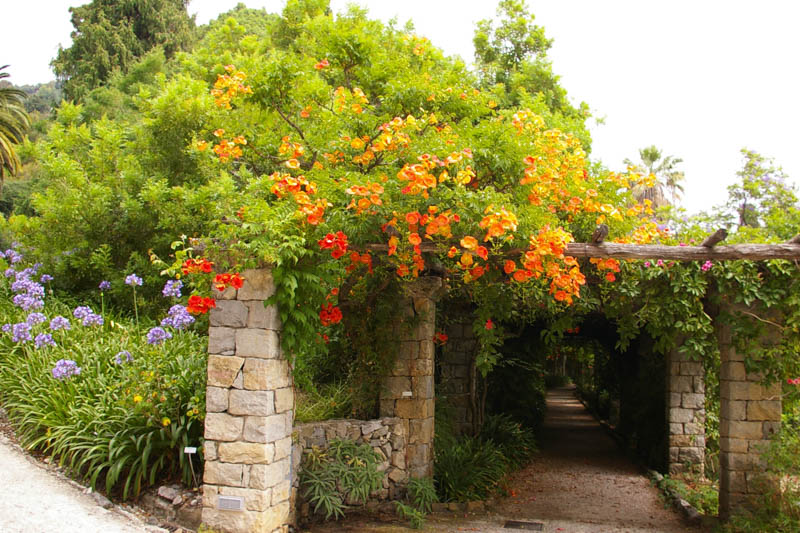
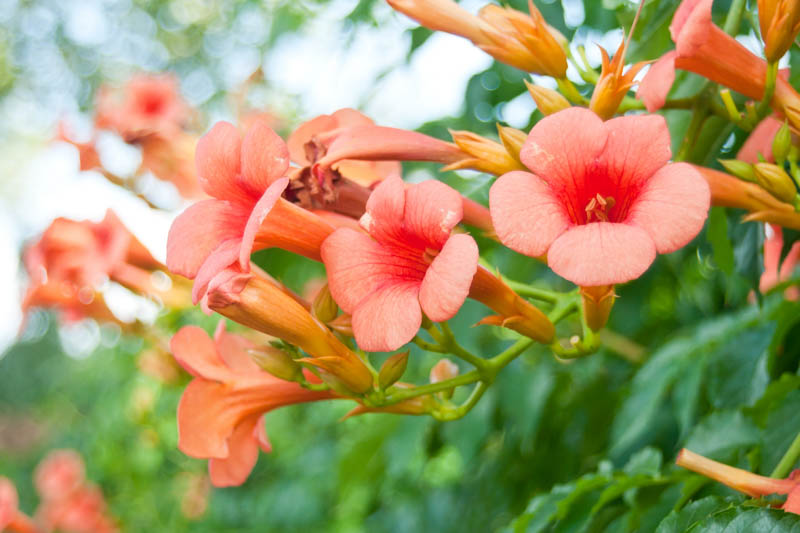


If you want a vine that brings dramatic color, wildlife excitement, and true summer spectacle, Campsis radicans – commonly known as Trumpet Vine, Trumpet Creeper, or Cow-Itch Vine – is a standout choice. This vigorous North American native is famous for its huge, trumpet-shaped flowers in glowing shades of orange, red, and deep coral. Blooming through summer and often into fall, it creates an unforgettable display that hummingbirds simply cannot resist.
Although it is stunning, this vine is also tough, adaptable, heat loving, and drought tolerant. It thrives in full sun, clings to surfaces with aerial rootlets, and can quickly cover arbors, fences, and trellises. But make no mistake – Campsis radicans is powerful. It spreads by runners and can pop up several feet from the original plant, so gardeners should be ready to prune and manage its enthusiasm. With proper placement and care, this bold vine can be one of the most rewarding native plants in the landscape.
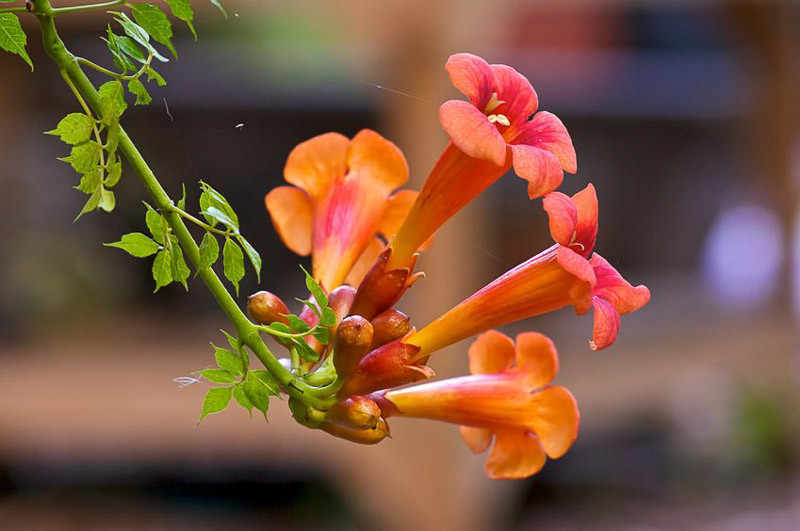
Summary: A vigorous, self-clinging deciduous woody vine with brilliant trumpet-shaped flowers in orange to red tones, loved by hummingbirds and thriving in heat and sun.
Use: Excellent for walls, fences, pergolas, arbors, erosion control, wildlife gardens, native plantings.
Highlight: Incredibly showy flowers, long bloom season, and strong pollinator appeal. Extremely tough and fast-growing.
Note: Can be aggressive; requires thoughtful placement and consistent management to prevent unwanted spread.
| Botanical Name | Campsis radicans |
|---|---|
| Family | Bignoniaceae – the trumpet vine family, also home to Desert Willow and Jacaranda. |
| Common Names | Trumpet Vine, Trumpet Creeper, Cow-Itch Vine, Hummingbird Vine |
| Native Range | Eastern and southeastern North America from New Jersey to Florida, west to Texas, and north to South Dakota. |
| Plant Type and Habit | Woody, deciduous perennial vine with a vigorous, clinging, scrambling habit. |
| Hardiness (approx. USDA) | Zones 4 to 10, extremely cold hardy once established. |
| Size | A rapid grower up to 20 to 40 ft. (6 to 12 m) long, and often just as wide if not controlled. |
| Sun and Exposure | Full sun is best for flower production; tolerates part shade. |
| Soil | Adaptable to moist, lean, average, or dry soils with good drainage. Tolerates clay, sand, and poor soils. |
| Seasonal Interest | Vibrant tubular flowers from early summer to fall; decorative bean-like seed pods. |
| Primary Uses | Arbors, walls, fences, pergolas, erosion control, naturalized areas, wildlife gardens. |
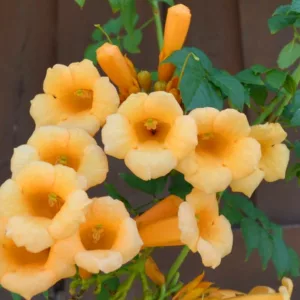
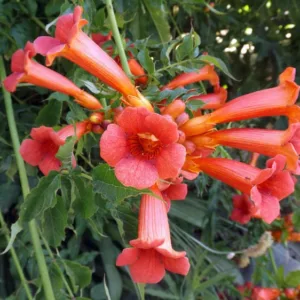
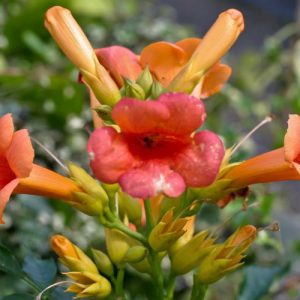
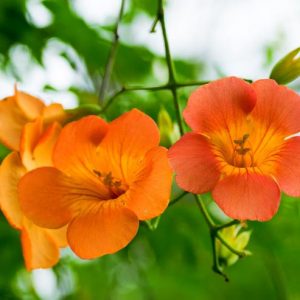
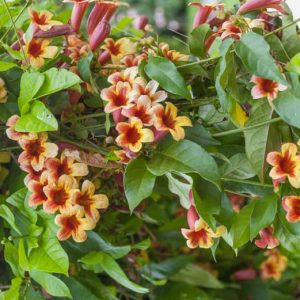
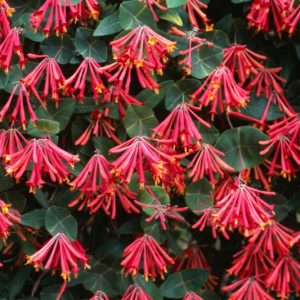
Campsis radicans is a deciduous woody vine known for its bold, trumpet-shaped flowers that can reach 3 inches (8 cm) long. These blossoms appear in clusters at the ends of branches and glow in shades of orange, scarlet, or red, creating irresistible signals for hummingbirds. Its leaves are pinnate, glossy dark green above and matte green beneath, contributing a lush, tropical look.
The vine climbs using aerial rootlets, similar to English ivy, which allow it to cling tightly to surfaces. Because of this, it should not be planted directly on delicate wood, brick, or stone unless you are comfortable with potential staining or attachment marks.
Trumpet Vine is native to much of eastern North America, from New Jersey and Indiana down to Florida and west to Texas. In these regions, it naturally grows in forest edges, thickets, streambanks, and disturbed soils. Its adaptability to both rich and poor soils makes it a reliable performer in diverse landscapes.
This vine is known for its explosive vigor. Growing 20 to 40 feet or more, it can take over structures quickly if not pruned. Underground runners can spread widely and produce new shoots several feet away from the parent plant.
Because of this, proper placement is key. Many gardeners choose spots where spread is welcome, such as naturalized areas, or they confine the vine with root barriers.
The spectacular tubular flowers are the hallmark of Trumpet Vine. They bloom from early summer through fall, often attracting hummingbirds daily. Each flower cluster can hold dozens of blooms at once, and new clusters form on the current season’s growth, especially when the vine receives ample sun.
The compound foliage gives the vine a lush, almost tropical look. Leaves drop in winter, revealing the vine’s twisting, woody structure. After flowering, Trumpet Vine produces long, bean-like seed pods that add interest well into fall.
This species is incredibly hardy, performing well in USDA Zones 4 to 10. It withstands winter cold, heat, humidity, and drought better than almost any ornamental vine. In ideal conditions, it may retain some semi-woody stems through winter.
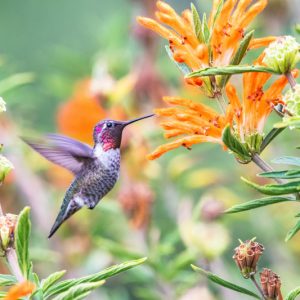
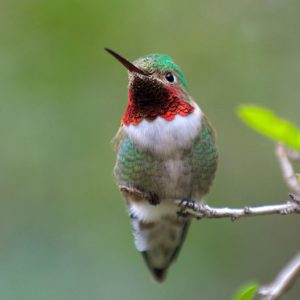
Hummingbirds absolutely adore Campsis radicans. They visit frequently throughout the day, drawn to the deep, tubular flowers. Bees and butterflies also use the nectar, and birds will perch among the sturdy stems.
Trumpet Vine is generally deer-resistant. Its foliage is typically ignored by deer and rabbits, though young shoots may occasionally be nibbled.
Once established, this vine is highly drought-tolerant, thriving even in dry, sandy, or lean soils. It prefers deep, intermittent watering rather than constant moisture.
While not considered highly toxic, contact with the sap of Trumpet Vine can cause skin irritation in some individuals, giving rise to the nickname Cow-Itch Vine. Wear gloves when pruning if you have sensitive skin.
Yes – Campsis radicans can be invasive in garden settings due to rapid shoot growth and underground runners. Regular pruning, root pruning, and containment strategies are recommended. In natural areas, however, it’s considered an important native species.
Trumpet Vine offers:
Trumpet Vine thrives in a wide range of soils:
Flowering is strongest in soil that is not overly rich.
Trumpet Vine is easy to grow but benefits from consistent management.
Trumpet Vine has few serious pest issues. Occasional problems may include:
Aphids: Can distort young growth; wash off with water or use insecticidal soap.
Spider mites: Thrive in drought conditions; rinse foliage and increase humidity.
Root rot occurs in poorly drained soils; ensure good drainage.
Powdery mildew: Rare but possible in shade or high humidity; improve airflow.
Overgrowth: This vine grows vigorously and must be pruned regularly.
Damage to structures: Aerial rootlets adhere strongly; avoid using it on delicate surfaces.
Unwanted spread: Remove suckers promptly to prevent colonizing new areas.
Trumpet vine is a vigorous, deciduous woody vine botanically known as Campsis radicans. It belongs to the Bignoniaceae, or trumpet vine family. It produces large clusters of trumpet-shaped flowers in shades of orange to red and climbs using aerial rootlets that cling to surfaces.
Campsis radicans is native to eastern and parts of central North America. Its natural range runs from the Mid-Atlantic and eastern Midwest south through the Southeast and into eastern Texas and Oklahoma, with outlying populations into the central Plains. It is widely naturalized beyond this native range.
In suitable conditions, trumpet vine can easily grow 20 to 40 feet (6 to 12 meters) long, and it can spread just as widely if allowed to roam. It grows quickly, often putting on several feet of growth in a single season once established.
Trumpet vine is a fast-growing plant. After its first year or two of establishment, it can extend several feet of new growth each year and rapidly cover fences, walls, arbors, and pergolas.
Trumpet vine typically grows well in USDA hardiness zones 4 through 10. It is quite cold-hardy and also tolerates heat and humidity once established.
Trumpet vine blooms best in full sun, which means at least 6 hours of direct sunlight per day. It can tolerate partial shade, but plants in shade tend to bloom less and may become more lanky.
Trumpet vine usually blooms from early or mid-summer into late summer and sometimes into early fall. Flowering is heaviest in full sun on established plants that are not over-fertilized.
Common reasons include the plant being too young (it may take a few years to bloom), lack of full sun, excess nitrogen fertilizer, or heavy pruning at the wrong time. Because trumpet vine blooms on new growth, hard pruning in late winter is fine, but frequent cutting back during the growing season can reduce flower production.
Trumpet vine is deciduous. It drops its leaves in fall and remains bare over winter. In spring, it resprouts vigorously from its woody framework and root system.
Trumpet vine is not invasive in the sense of a non-native species in its home range, but it is unquestionably aggressive in gardens. It spreads by underground runners and self-seeds readily, forming thickets if not controlled. In some regions where it is introduced, it is considered invasive or weedy.
Strategies include planting it in a controlled area away from foundations and delicate beds, installing root barriers, promptly removing suckers, and pruning regularly. Some gardeners grow it in large containers with sturdy supports to help limit underground spread, though its vigor still requires attention.
Trumpet vine climbs with aerial rootlets that adhere strongly to surfaces. On wood, painted surfaces, soft mortar, and some masonry, these rootlets can cause staining, trapping of moisture, or minor surface damage when removed. It is safer to grow it on freestanding supports such as pergolas, strong trellises, and wire or lattice panels set away from buildings.
Updated: December 2025 • Reviewed by Gardenia Editors
| Hardiness |
4 - 10 |
|---|---|
| Heat Zones |
3 - 9 |
| Climate Zones | 1, 1A, 1B, 2, 2A, 2B, 3, 3A, 3B, 4, 5, 6, 7, 8, 9, 10, 11, 12, 13, 14, 15, 16, 17, 18, 19, 20, 21 |
| Plant Type | Climbers |
| Plant Family | Bignoniaceae |
| Genus | Campsis |
| Common names | Trumpet Creeper, Trumpet Honeysuckle, Trumpet Vine, Virginian Trumpet Flower |
| Exposure | Full Sun, Partial Sun |
| Season of Interest | Summer (Early, Mid, Late), Fall |
| Height | 20' - 40' (6.1m - 12.2m) |
| Spread | 5' - 10' (150cm - 3m) |
| Maintenance | High |
| Water Needs | Low, Average |
| Soil Type | Chalk, Clay, Loam, Sand |
| Soil pH | Acid, Alkaline, Neutral |
| Soil Drainage | Moist but Well-Drained, Well-Drained |
| Characteristics | Showy |
| Native Plants | United States, Delaware, Maryland, New Jersey, Northeast, Midwest, Southeast, Southwest, Illinois, Indiana, Iowa, Kansas, Missouri, Nebraska, Ohio, South Dakota, Louisiana, Mississippi, North Carolina, South Carolina, Tennessee, Virginia, West Virginia, Alabama, Arkansas, Florida, Georgia, Kentucky, Texas, Oklahoma |
| Tolerances | Drought, Deer, Dry Soil, Clay Soil, Heat, Poor Soil, Fire |
| Attracts | Hummingbirds |
| Garden Uses | Arbors, Pergolas, Trellises, Wall-Side Borders, Walls And Fences |
| Garden Styles | Informal and Cottage, Mediterranean Garden |
| Toxic to Humans | No known toxicity |
| Toxic to Cats | No known toxicity |
| Toxic to Dogs | No known toxicity |
| Toxic to Horses | No known toxicity |


| Hardiness |
4 - 10 |
|---|---|
| Heat Zones |
3 - 9 |
| Climate Zones | 1, 1A, 1B, 2, 2A, 2B, 3, 3A, 3B, 4, 5, 6, 7, 8, 9, 10, 11, 12, 13, 14, 15, 16, 17, 18, 19, 20, 21 |
| Plant Type | Climbers |
| Plant Family | Bignoniaceae |
| Genus | Campsis |
| Common names | Trumpet Creeper, Trumpet Honeysuckle, Trumpet Vine, Virginian Trumpet Flower |
| Exposure | Full Sun, Partial Sun |
| Season of Interest | Summer (Early, Mid, Late), Fall |
| Height | 20' - 40' (6.1m - 12.2m) |
| Spread | 5' - 10' (150cm - 3m) |
| Maintenance | High |
| Water Needs | Low, Average |
| Soil Type | Chalk, Clay, Loam, Sand |
| Soil pH | Acid, Alkaline, Neutral |
| Soil Drainage | Moist but Well-Drained, Well-Drained |
| Characteristics | Showy |
| Native Plants | United States, Delaware, Maryland, New Jersey, Northeast, Midwest, Southeast, Southwest, Illinois, Indiana, Iowa, Kansas, Missouri, Nebraska, Ohio, South Dakota, Louisiana, Mississippi, North Carolina, South Carolina, Tennessee, Virginia, West Virginia, Alabama, Arkansas, Florida, Georgia, Kentucky, Texas, Oklahoma |
| Tolerances | Drought, Deer, Dry Soil, Clay Soil, Heat, Poor Soil, Fire |
| Attracts | Hummingbirds |
| Garden Uses | Arbors, Pergolas, Trellises, Wall-Side Borders, Walls And Fences |
| Garden Styles | Informal and Cottage, Mediterranean Garden |
| Toxic to Humans | No known toxicity |
| Toxic to Cats | No known toxicity |
| Toxic to Dogs | No known toxicity |
| Toxic to Horses | No known toxicity |
How many Campsis radicans (Trumpet Vine) do I need for my garden?
| Plant | Quantity | |
|---|---|---|
| Campsis radicans (Trumpet Vine) | N/A | Buy Plants |
Create a membership account to save your garden designs and to view them on any device.
Becoming a contributing member of Gardenia is easy and can be done in just a few minutes. If you provide us with your name, email address and the payment of a modest $25 annual membership fee, you will become a full member, enabling you to design and save up to 25 of your garden design ideas.
Join now and start creating your dream garden!
Create a membership account to save your garden designs and to view them on any device.
Becoming a contributing member of Gardenia is easy and can be done in just a few minutes. If you provide us with your name, email address and the payment of a modest $25 annual membership fee, you will become a full member, enabling you to design and save up to 25 of your garden design ideas.
Join now and start creating your dream garden!