Peach, Peach Tree, Common Peach, Garden Peach, White Peach, Yellow Peach, Flat Peach, Donut Peach, Saturn Peach, Clingstone Peach, Freestone Peach, Nectarine, Amygdalus persica, Persica vulgaris, Prunus persica var. nucipersica, Prunus persica var. laevis, Prunus persica var. platycarpa
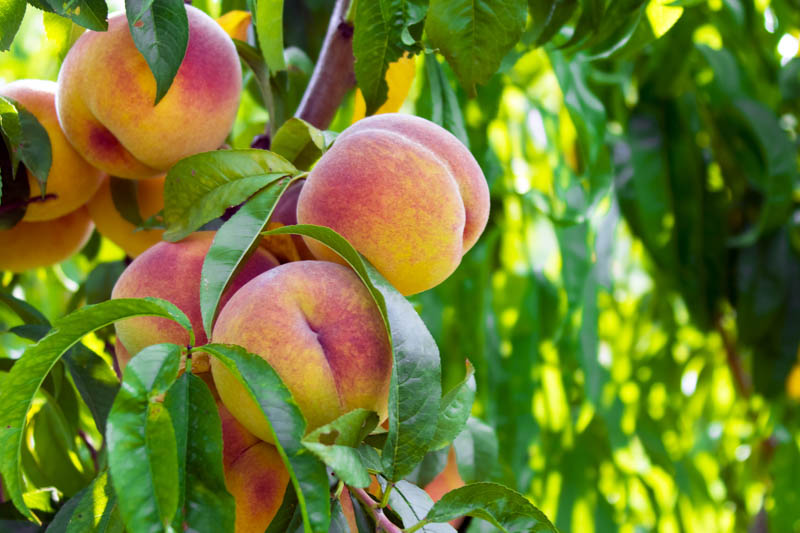


Summary: Beloved summer fruit tree with fragrant blossoms and sun-sweetened fruit. Peaches are prized for juicy flesh, perfumed aroma, and versatility in the kitchen—from cobblers to cocktails.
Taste: Sweet, tangy, and floral, with melting or firm textures depending on type.
Use: Fresh eating, pies, jams, preserves, smoothies, grilling, and canning.
Growing Note: Match cultivar to your chill hours and climate for reliable bloom and harvest.
| Botanical Name | Prunus persica |
|---|---|
| Family | Rosaceae (Rose family) |
| Common Names | Peach, White Peach, Donut/Flat Peach |
| Plant Type & Habit | Deciduous fruit tree; upright to spreading, often trained to open-center vase shape |
| Hardiness (USDA) | Zones 5–9 (some cultivars hardy to sheltered Zone 4) |
| Chill Requirement | Low 100–400 hrs · Mid 400–700 hrs · High 700–900+ hrs; choose cultivar to match your climate |
| Size | 12–25 ft tall & wide (standard); dwarf and semi-dwarf forms available |
| Sun & Exposure | Full sun (6–8+ hrs daily) for best flowering, fruit set, and sweetness |
| Soil | Fertile, well-drained loam; pH 6.0–7.0 |
| Bloom & Fruit | Showy pink blossoms in spring; fruit ripens early, mid, or late summer depending on cultivar |
| Pruning | Train to open-center vase form for airflow, light, and easy picking |
| Primary Uses | Fresh eating, desserts (pies, cobblers), jams, canning, grilling, beverages (smoothies, cocktails, tea) |
If you have ever stood over a sink with juice running down your wrist thinking this is summer, you already understand the power of peaches. Velvet skin, perfumed flesh, and that perfect sweet tang make this fruit a fixture in orchards, kitchens, and memories. Whether you spoon warm peach cobbler straight from the skillet, blitz a sunset-hued peach bellini for friends, or tuck slices into a flaky peach pie recipe, the peach tree pulls double duty as a beautiful landscape plant and a prolific producer.
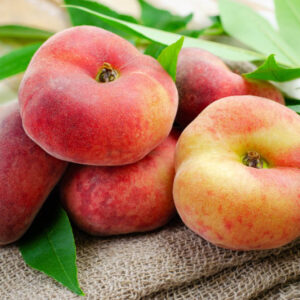
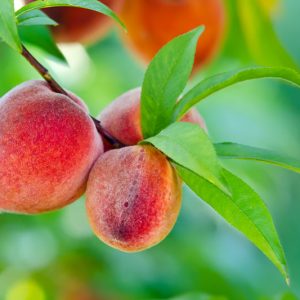
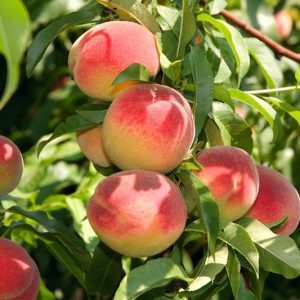
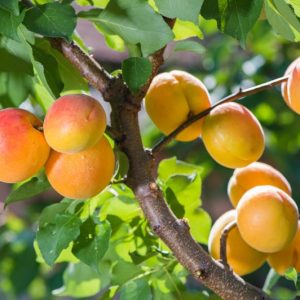
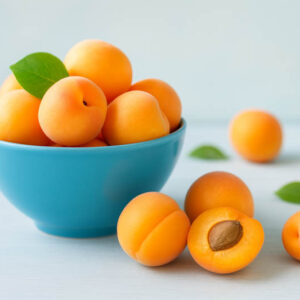
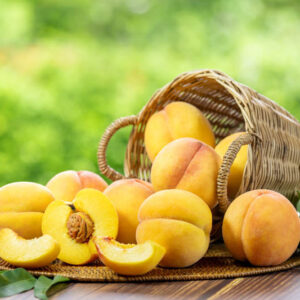
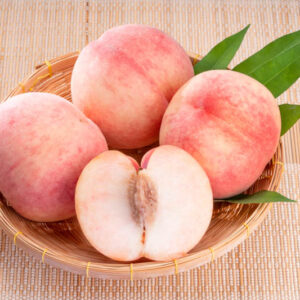
Peaches are the velvet-skinned stars of the stone fruit world, famous for their perfume, melting texture, and golden to blush-red flesh. Bite into a sun-warm fruit and you get a burst of nectar, a hint of floral, and a whisper of citrus. Flesh color ranges from deep yellow with sprightly acidity to alabaster white with a low-acid, candy-like sweetness. Shapes span classic round to the whimsical flattened donut peach. Textures run from melting and tender to firmer selections that hold shape on the grill. In short, there is a peach for every palate and every recipe box.
The species traces its cultivation to temperate Asia before traveling with traders along the Silk Road into Persia, Europe, North Africa, and the Americas. The peach settled in so completely that one US state, Georgia, proudly calls itself the Peach State. Today, you can grow these fruits across sunny temperate regions worldwide by matching the cultivar to your local winter chill and frost profile.
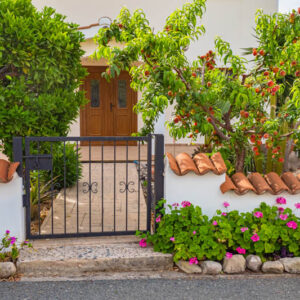
Peach trees are compact, rounded, and inherently well-suited to backyards and small orchards. Most home-garden selections mature to 12 to 20 feet tall and wide, though regular pruning keeps size very manageable. Dwarf forms and patio selections can be held under 10 feet. The classic open-center or vase training system bathes the canopy in light, boosts color and brix, and makes harvest a joy.
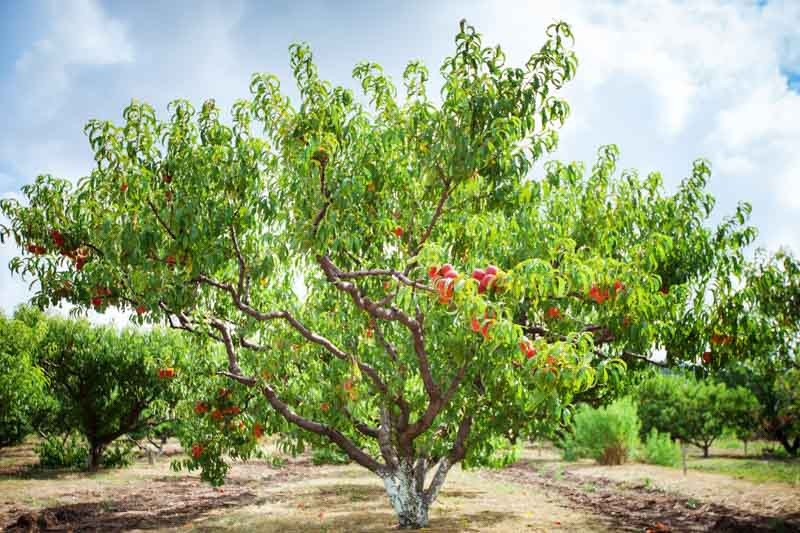
Young trees grow rapidly in the first two or three seasons, establishing a framework of evenly spaced scaffold limbs. Depending on cultivar and care, you can expect a grafted tree to produce a light crop in year two or three and hit its stride by year four or five. Annual pruning and fruit thinning are the levers that keep trees productive and the fruit sensational.
With attentive pruning, thinning, watering, and disease management, a backyard peach tree commonly produces well for 12 to 20 years. In commercial blocks, trees are often replaced sooner to maintain peak yields, but home growers can enjoy a long, delicious run from a single well-sited specimen.
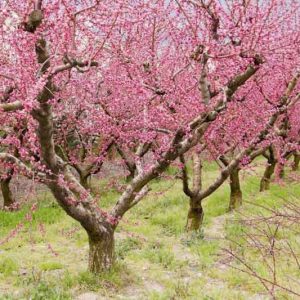
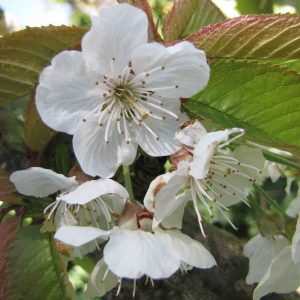
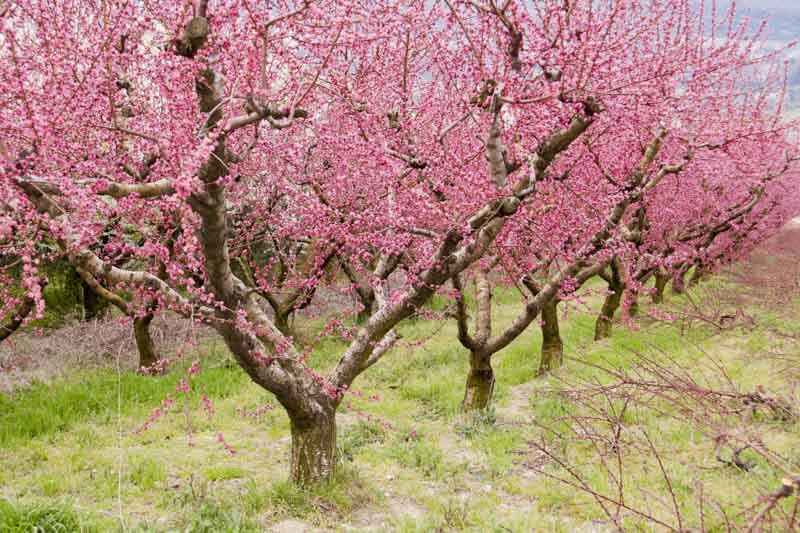
Peach blossom is spring’s fanfare. Clouds of pink flowers open early, drawing in pollinators and filling the garden with soft color. Most modern trees are self-fertile, so one tree can set fruit on its own. A nearby peach or nectarine may still boost set in poor bloom weather. Because bloom is early, late frost is the main hazard; wind-sheltered sites and simple frost cloth on risky nights are your best insurance.
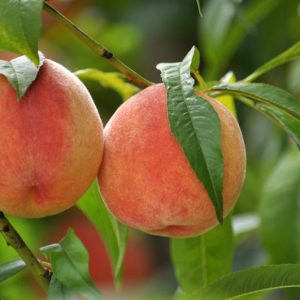
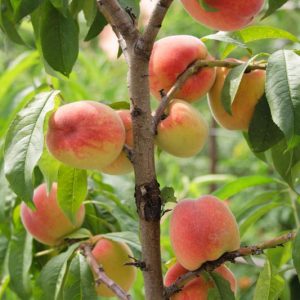
Fruit ripens in waves across the peach season depending on cultivar and climate. Yellow-fleshed peaches bring bright, balanced tang that sings in pies, crisps, and grilled desserts. White peach varieties tend toward lower acidity, tasting sweeter at comparable sugar levels, which makes them brilliant for fresh eating and delicate pastries. Stones may cling to flesh or release cleanly at full ripeness, which is where the terms clingstone and freestone come from.
| Typical fruit size | About 2.5–3.5 inches (6–9 cm) in diameter and roughly 3–7 ounces (85–200 g) each. Consistent thinning and full sun often push fruit to the larger end of the range. |
| When fruits ripen | Early, mid, or late season depending on variety and region. In warm areas, the first cultivars can ripen from late spring to early summer; most regions peak mid to late summer; cooler zones may extend into early fall with late selections. |
| Average yield per tree | A mature, well-managed backyard tree often produces ~50–150 lb, but yields vary with thinning, frost, pruning, rootstock, and site. Dwarf trees commonly yield 20–50 lb (9–23 kg). |
| Example cultivar | Harvest window | Freestone / Clingstone | Chill band | Notes |
|---|---|---|---|---|
| ‘Desert Gold’ | Very early | Clingstone | Low (~100–400) | Mild-winter regions |
| ‘Flordaprince’ | Early | Clingstone | Low (~100–400) | Low-chill coastal/low desert |
| ‘Saturn’ (Donut) | Early–mid | Semi-freestone (at full ripeness) | Low–mid (~300–500) | Flat “donut” type |
| ‘Redhaven’ | Midseason | Freestone | Mid–high (~700–900) | Widely adapted |
| ‘Elberta’ | Mid–late | Freestone | High (700–900+) | Classic canning type |
| ‘O’Henry’ | Late | Freestone | High (700–900+) | Bold flavor, dessert |
| ‘Reliance’ | Early–mid | Freestone | High (~800–1,000+) | Cold-hardy selection |
| ‘June Gold’ | Early | Clingstone | Mid (~400–700) | Good fresh eating |
| ‘Bonanza’ | Early–mid | Freestone | Low (~100–400) | Genetic dwarf (patio); container-friendly |
| ‘Contender’ | Midseason | Freestone | High (~800–1,000+) | Cold-hardy; reliable set in northern climates |
| ‘Golden Jubilee’ | Midseason | Freestone | High (700–900+) | Heirloom; excellent for canning/freezing |
| ‘Hale Haven’ | Midseason | Freestone | High (700–900+) | Classic dessert peach; aromatic |
| ‘Belle of Georgia’ | Mid–late | Freestone | High (700–900+) | White-fleshed heirloom; showy blossoms |
| ‘Harvester’ | Early–mid | Freestone | High (700–900+) | Heavy cropping; Southeastern favorite |
Chill bands are typical ranges; always confirm local recommendations with your extension office.
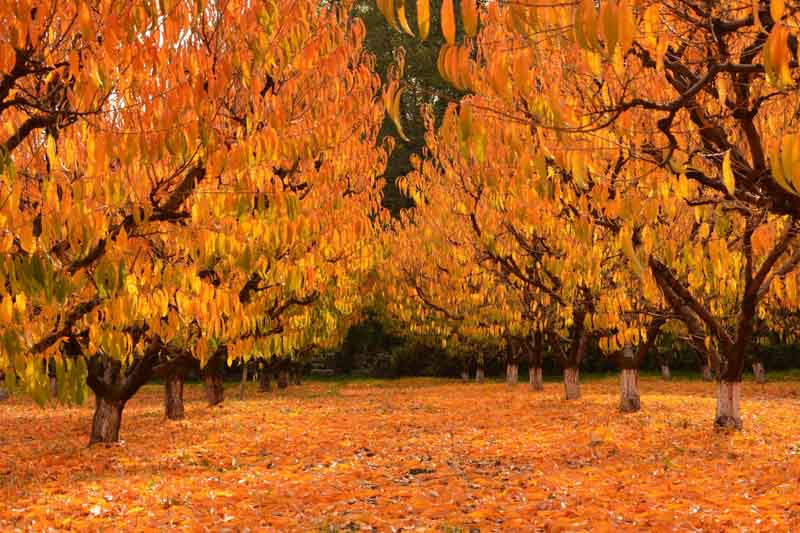
Glossy, lance-shaped leaves cloak the summer canopy in green. As days shorten, the canopy puts on a fall show—clear yellow to apricot-gold, often flushing coral, orange, and crimson in full sun. Best color comes with warm days and crisp nights, moderate late-summer irrigation (not drought), and no heavy nitrogen after midsummer; early frosts or leaf diseases can cut the display short.
Peaches thrive in USDA Zones 5–9 when cultivars are matched to local chill hours (~100–1,000, commonly 400–900). A few hardy selections can succeed in sheltered Zone 4 sites.
Spring flowers invite bees and hoverflies. Ripening fruit lures birds and the occasional opportunist like squirrels. Netting before peak ripeness and picking promptly are simple ways to keep most of the harvest for yourself.
The edible flesh is widely enjoyed, but the pit contains the cyanogenic glycoside amygdalin. Accidentally swallowing one or two intact pits is unlikely to cause poisoning; chewing or crushing the seeds can release cyanide. Signs of significant exposure include gasping, weakness, pupil dilation, spasms, convulsions, and respiratory failure. The seeds are a problem for cats, dogs, and horses. Keep pits and processing waste away from children, pets, and livestock.
Dogs + Peaches: What’s Unsafe, What’s Safer, When to Call the Vet
Peach trees are not considered invasive in gardens. They do not spread aggressively by themselves. Remove any rootstock suckers that appear near the base to keep the canopy true to variety.
Grower Story Our first backyard tree seemed shy, offering only a handful of fruit. Year two we thinned hard at marble size, and the difference was night and day. Big, sunlit fruits with heady fragrance. We ate them over the sink, froze wedges for smoothies, and still had enough for a fruit crumble recipe that disappeared within minutes. Tip Thin fruit to one every four to six inches of branch for size and sweetness, and always let sun kiss the fruit for color.
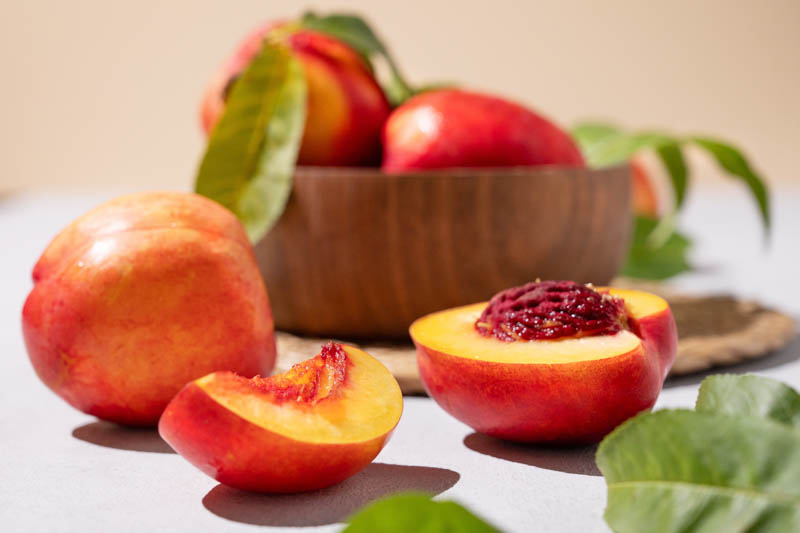
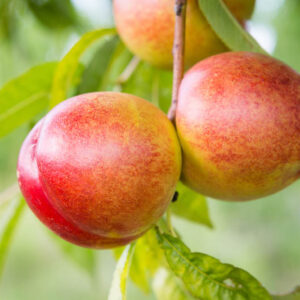
Both fruits are the same species, Prunus persica. The visual difference is skin. Nectarines have a naturally fuzzless skin due to a recessive gene; peaches wear a fine velvety coat. In the kitchen, nectarines can feel slightly firmer at the same ripeness and sometimes taste more aromatic, while peaches bring a classic floral perfume and a pillowy bite. In the orchard, pruning, thinning, and general care are nearly identical.
Peaches shine from brunch to nightcap. Here are road-tested ideas to celebrate the season and beyond.
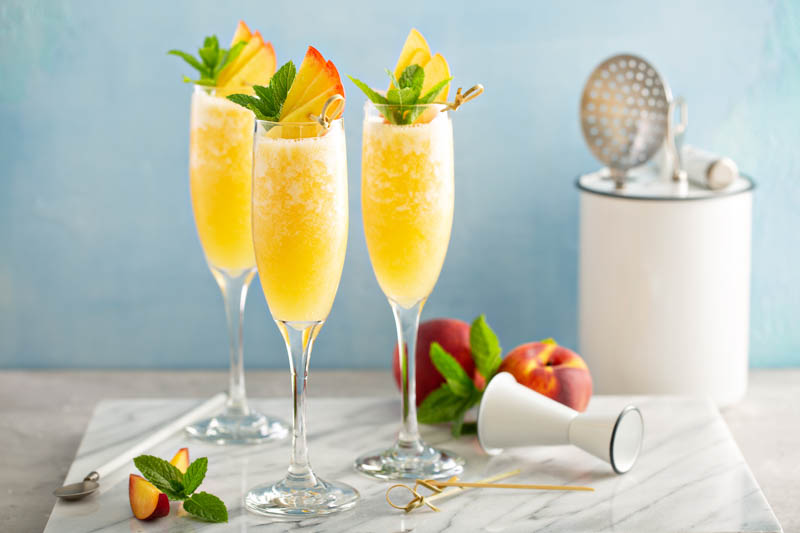
Peaches deliver hydration, flavor, and a bouquet of vitamins and phytonutrients with remarkably modest calories. If you are counting, peach calories are as friendly as they taste.
| Nutrient | Amount |
|---|---|
| Calories | About 39 |
| Carbohydrates | About 9 to 10 g |
| Fiber | About 1 to 2 g |
| Protein | About 0.9 g |
| Fat | Trace |
| Vitamin C | About 6 to 10 mg |
| Potassium | About 150 to 200 mg |
| Vitamin A carotenoids | Present, generally higher in yellow-fleshed types |
Portion note A typical medium peach weighs around one hundred fifty grams and lands near sixty calories, which makes daily peach snacking an easy yes.
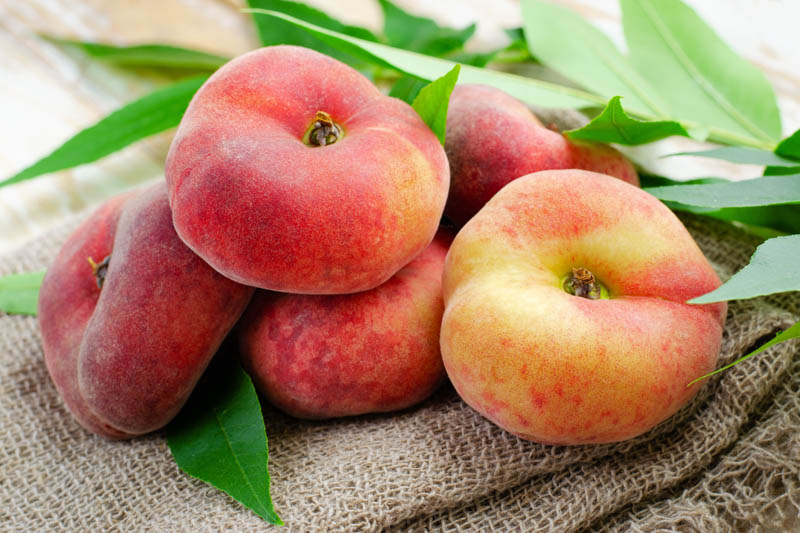
Peaches are often grouped by flesh color and by the way the pit behaves at ripeness. Your local climate, especially winter chill, will steer you toward reliable winners. Ask regional nurseries or your county extension for cultivars that love your conditions.
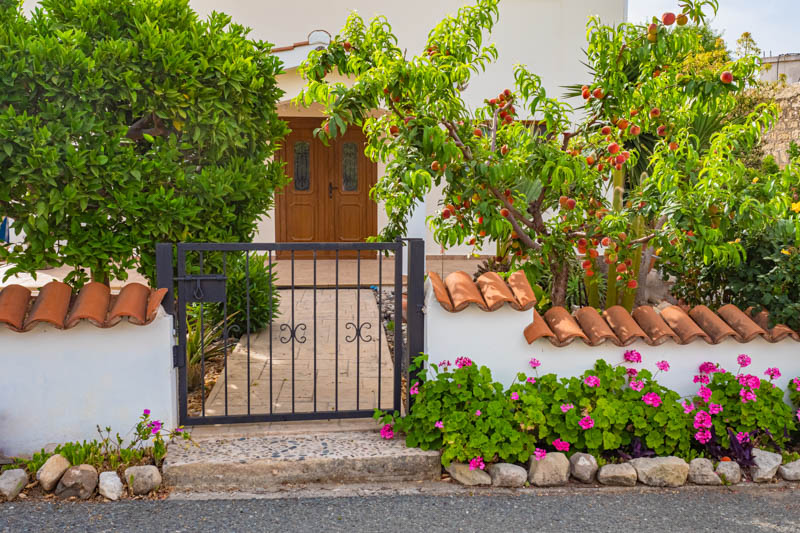
Success is a rhythm of sunlight, pruning, and timely thinning. Treat them with the same approach you would a high-performance nectarine and you will be set.
Dwarf peaches can thrive in large containers on patios and balconies, letting you harvest sun-warmed fruit within arm’s reach.
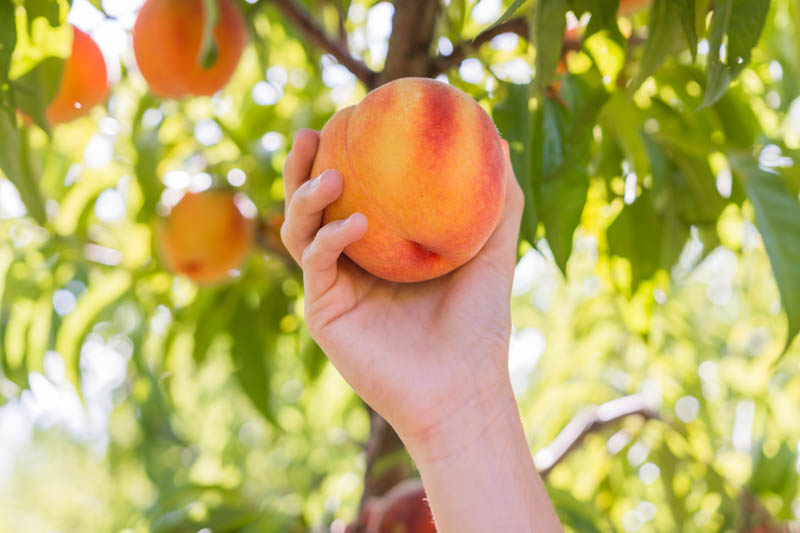
Flavor peaks on the tree. A day can make the difference between good and unforgettable.
Handle ripe fruit like treasure and you will taste the difference all week and all winter.
Home growers usually start with a grafted tree from a nursery. Seed-grown peaches will not come true to type and can take years to bear. Budding and grafting onto regionally suitable rootstocks provide vigor and size control. Common rootstocks include Lovell for wide adaptation and Nemaguard for nematode resistance in warm soils.
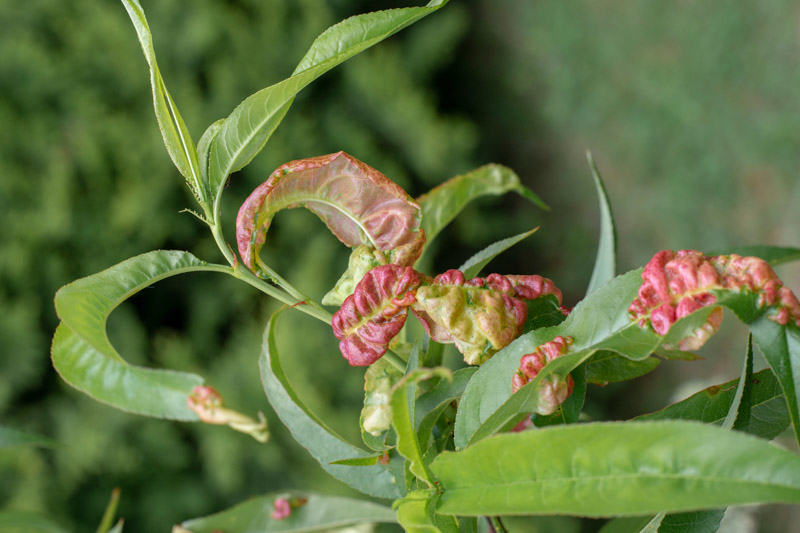
Peaches share issues with nectarines, but a rhythm of sanitation, pruning, and timing solves most of them.
Where allowed and recommended by your local extension, a single dormant copper or chlorothalonil spray can reduce leaf curl pressure.
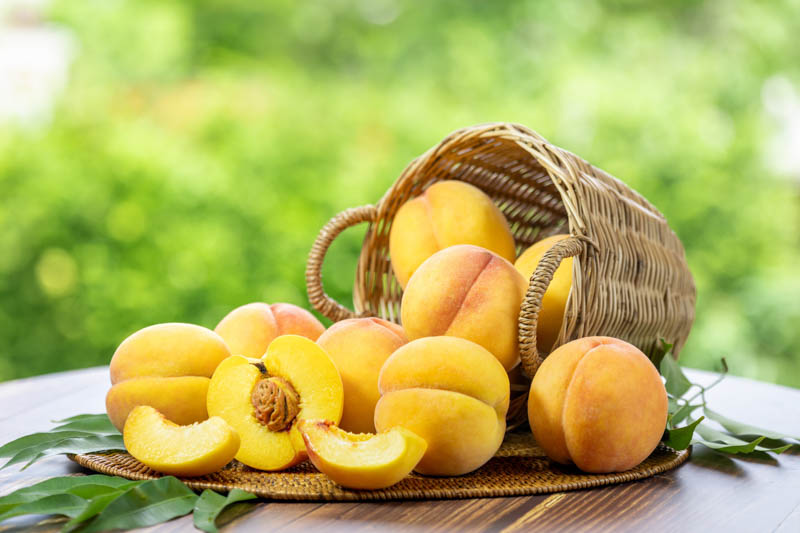
In warm climates and low-elevation valleys, peach season can begin as early as late spring and roll through late summer. Cooler zones and higher elevations often peak in midsummer. Roadside stands and farmers markets are your best bet for tree-ripened fruits picked at their fragrant best. If you miss a weekend due to travel, canned peaches and frozen slices stand in beautifully for crisp and cobbler cravings.
From brunch to campfire, here are quick ideas to make this sun-kissed fruit the star.
No. A nectarine is a fuzzless form of the peach. The difference is a single natural gene that removes fuzz from the skin. Pruning, thinning, and most kitchen uses are the same.
Most modern peaches are self-fertile. One tree will bear, though a pollinator nearby can help in poor bloom weather.
About thirty nine calories per one hundred grams. A typical medium peach lands near sixty calories. Pair with yogurt or nuts for a satisfying snack.
Use the open center vase form with three or four main scaffolds. It maximizes sunlight, simplifies thinning and picking, and helps manage disease.
Common reasons include late frost, drought stress during fruit swell, lack of thinning, or nutrient imbalance. Keep moisture steady and thin fruit to one every four to six inches.
For baking and grilling, pick when background color shifts and fruit just begins to soften. For fresh eating, wait for a gentle give and deep fragrance.
White peaches taste sweeter due to lower acidity and a floral profile, even when sugars match a yellow peach. Both are delicious with different personalities.
You can sprout a pit, but seedlings rarely match the parent and can take years to bear. For reliable results, buy a grafted tree suited to your climate.
Deer may browse young shoots and fallen fruit can attract wildlife. Use fencing where needed and harvest promptly to keep fruit for your kitchen.
Yes, the flesh in small amounts. Wash, remove the pit, stem, and leaves, and cut into bite-size pieces. Avoid canned peaches in heavy syrup. Never let pets chew pits (choking and cyanide risk). If your dog has diabetes or GI issues, ask your vet first.
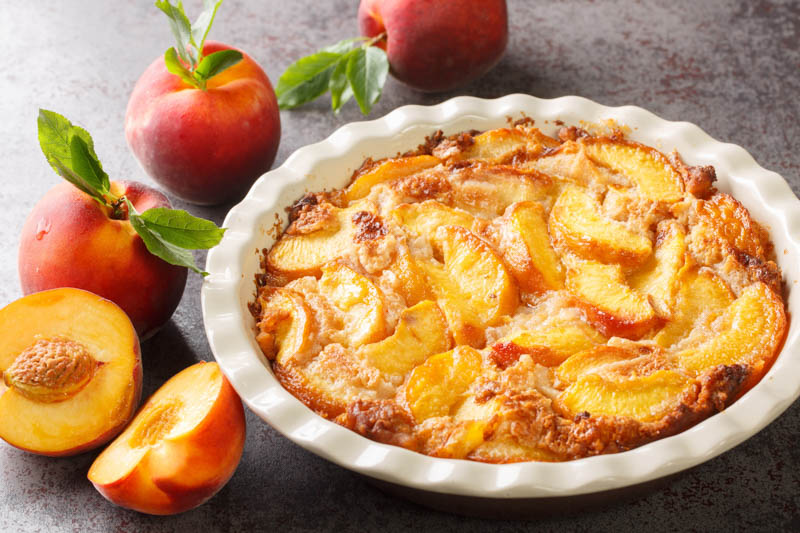
Heat oven to 375°F. Toss sliced peaches with lemon, a little sugar, and cornstarch; pour into a buttered skillet. Stir together flour, sugar, baking powder, salt, milk, and melted butter for a quick drop-biscuit topping. Dollop over fruit and bake until bubbly and golden, 35–45 minutes.
Yes. Peaches are hydrating and light in calories, with vitamin C, potassium, fiber, and colorful carotenoids. The skin adds extra fiber and antioxidants. Cautions: do not eat pits; choose fruit packed in juice or water if buying canned; people with oral-allergy syndrome may be sensitive.
Peel or leave skins on. Slice and toss with lemon juice or ascorbic acid to prevent browning. Arrange on a parchment-lined sheet to pre-freeze, then pack into freezer bags or containers (dry pack) or cover with light syrup/juice (wet pack). Label and freeze for up to 8–12 months.
Timing varies by region and variety. Warm areas can see the first fruit in late spring; most places peak from mid to late summer; cooler regions and higher elevations may run into early fall with late-season cultivars. Check local farm stands for the best, tree-ripened flavor.
Choose ripe-firm freestone peaches. Blanch, slip skins, halve, and pit. Hot-pack in light syrup, apple juice, or water, leaving proper headspace. Remove bubbles, wipe rims, apply lids, and process in a boiling-water canner per an up-to-date, altitude-adjusted guide. Let cool 12–24 hours; check seals and label.
Keep firm peaches at room temperature out of direct sun. To speed ripening, place in a paper bag with a ripe banana or apple. Check daily for a gentle give and fragrance. Refrigerate only after ripe, and bring back to room temperature before serving for fullest aroma.
Absolutely. Peach skin is edible and nutritious; just rinse well. For pies, jams, or ultra-silky desserts, many cooks peel for texture. For grilling and snacking, the skin helps fruit hold its shape and adds color and fiber.
Clean and dry a pit, then cold-stratify the seed 8–12 weeks in moist peat or sand in the refrigerator. Plant in spring 1–2 inches deep in well-drained soil and full sun. Seedlings won’t be true to the parent and may take several years to fruit; grafted trees are more reliable.
| Hardiness |
5 - 9 |
|---|---|
| Heat Zones |
1 - 8 |
| Climate Zones | 3, 3A, 3B, 4, 5, 6, 7, 8, 9, 10, 11, 12, 13, 14, 15, 16, 17, 18, 19, 20, 21, 22, 23, 24 |
| Plant Type | Fruits, Trees |
| Plant Family | Rosaceae |
| Genus | Peaches, Prunus - Fruit Tree |
| Common names | Nectarine, Peach |
| Exposure | Full Sun |
| Season of Interest | Spring (Early, Mid), Summer (Early, Mid, Late), Fall |
| Height | 12' - 25' (3.7m - 7.6m) |
| Spread | 12' - 25' (3.7m - 7.6m) |
| Maintenance | High |
| Water Needs | Average |
| Soil Type | Chalk, Clay, Loam, Sand |
| Soil pH | Acid, Neutral |
| Soil Drainage | Moist but Well-Drained |
| Characteristics | Fragrant, Showy, Fruit & Berries |
| Tolerances | Heat |
| Attracts | Bees, Butterflies, Birds |
| Garden Uses | Wall-Side Borders |
| Garden Styles | Informal and Cottage |
| Toxic to Humans | Medium severity |
| Toxic to Cats | Toxic |
| Toxic to Dogs | Toxic |
| Toxic to Horses | Toxic |


| Hardiness |
5 - 9 |
|---|---|
| Heat Zones |
1 - 8 |
| Climate Zones | 3, 3A, 3B, 4, 5, 6, 7, 8, 9, 10, 11, 12, 13, 14, 15, 16, 17, 18, 19, 20, 21, 22, 23, 24 |
| Plant Type | Fruits, Trees |
| Plant Family | Rosaceae |
| Genus | Peaches, Prunus - Fruit Tree |
| Common names | Nectarine, Peach |
| Exposure | Full Sun |
| Season of Interest | Spring (Early, Mid), Summer (Early, Mid, Late), Fall |
| Height | 12' - 25' (3.7m - 7.6m) |
| Spread | 12' - 25' (3.7m - 7.6m) |
| Maintenance | High |
| Water Needs | Average |
| Soil Type | Chalk, Clay, Loam, Sand |
| Soil pH | Acid, Neutral |
| Soil Drainage | Moist but Well-Drained |
| Characteristics | Fragrant, Showy, Fruit & Berries |
| Tolerances | Heat |
| Attracts | Bees, Butterflies, Birds |
| Garden Uses | Wall-Side Borders |
| Garden Styles | Informal and Cottage |
| Toxic to Humans | Medium severity |
| Toxic to Cats | Toxic |
| Toxic to Dogs | Toxic |
| Toxic to Horses | Toxic |
How many Prunus persica (Peach) do I need for my garden?
| Plant | Quantity | |
|---|---|---|
| Prunus persica (Peach) | N/A | Buy Plants |
Create a membership account to save your garden designs and to view them on any device.
Becoming a contributing member of Gardenia is easy and can be done in just a few minutes. If you provide us with your name, email address and the payment of a modest $25 annual membership fee, you will become a full member, enabling you to design and save up to 25 of your garden design ideas.
Join now and start creating your dream garden!
Create a membership account to save your garden designs and to view them on any device.
Becoming a contributing member of Gardenia is easy and can be done in just a few minutes. If you provide us with your name, email address and the payment of a modest $25 annual membership fee, you will become a full member, enabling you to design and save up to 25 of your garden design ideas.
Join now and start creating your dream garden!