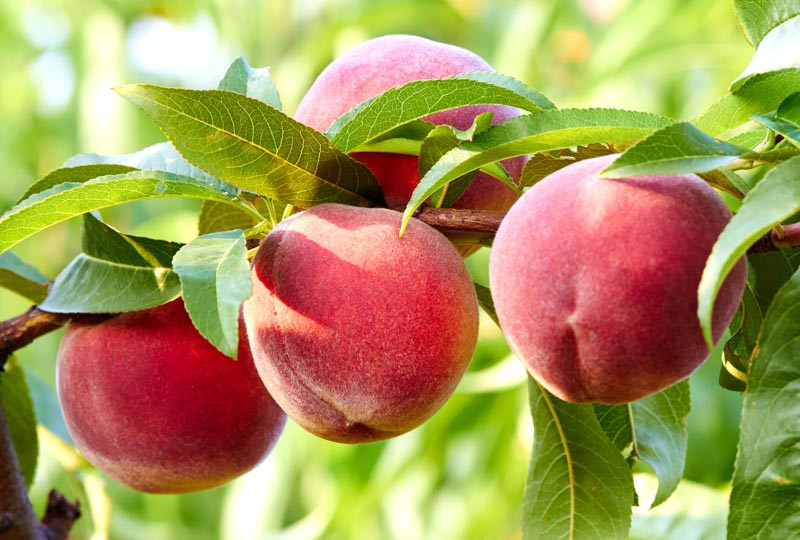
Prunus persica (Peaches)
Peaches and nectarines are the same species, Prunus persica. The difference is wardrobe: nectarines wear smooth skin because of a natural recessive gene, while peaches keep their soft fuzz. Meet the plant basics here: Peach and Nectarine. You’ll also meet their charming flat cousin, the Donut Peach (a.k.a. Saturn or flat peach)—same species, saucer-shaped fruit with a sweet, low-acid bite (flat nectarines exist too, but they’re fuzz-free).
Flavor and texture vary by type. White flesh tends to be super aromatic and low acid, a gentle sweetness that tastes like perfume in fruit form. Yellow flesh brings that classic sweet-tart pop. Donut Peaches are often white-fleshed and low-acid (dessert-sweet), while yellow-fleshed flat peaches add brighter tang for grilling and baking. Explore dependable choices for your climate in these roundups: White peach varieties and Yellow peach varieties. You will also see freestone and clingstone on labels. Freestone pits release easily and slice like a dream, while clingstone is juicier and great for canning or eating over the sink—many Donut Peaches are cling or semi-freestone, though some yellow types loosen at full ripeness.
Site and climate matter. Most peaches and nectarines love full sun, well-drained soil, and regular moisture during fruit swell. Choose a variety with chill hours that match your winters and you will skip the heartbreak of poor bloom. Many are self-fertile, but a second tree can improve yields. Train young trees to an open center for light and airflow, and thin fruits to a fist apart for size and branch safety.
Companions help. Underplant with pollinator friendly herbs and groundcovers to keep moisture and beneficial insects around your trees, and steer clear of known bullies. See smart pairings and no-gos in Best peach companion plants and ones to avoid.
Harvest with your nose. Ignore background color; sniff for perfume and check for a gentle give near the stem. Let fruit finish on the counter, then chill only after ripening. From jam to grilled halves, cobblers to smoothies, Prunus persica turns backyards into dessert.