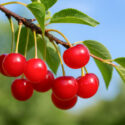
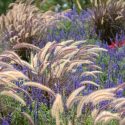
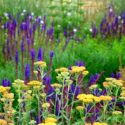
Plant a thriving cherry guild that buzzes with bees and shrugs off pests. Ring the trunk with wood chips, weave clover, thyme, and chives, then light up the dripline with yarrow, dill, and calendula. Add comfrey for free mulch.
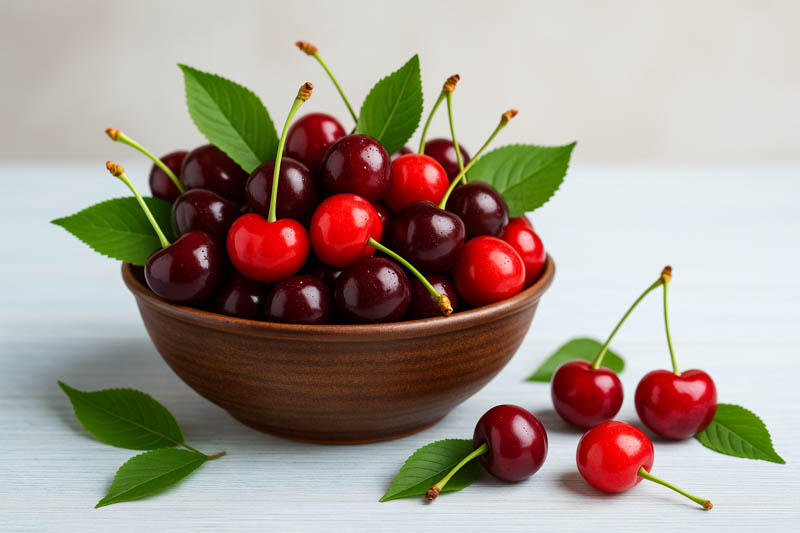


Cherry trees are spring fireworks with summer payoffs, but what you grow around them decides how much fruit you harvest and how much fuss you face. The right companions draw pollinators, invite beneficial insects that keep pests in check, cycle nutrients, soften soil, and reduce disease splash. Below you will find practical, field-tested allies for sour and sweet cherries, plus a few plants to stash elsewhere.
Summary: Surround cherries with a living understory that blooms from early spring to late summer. Mix pollinator flowers (phacelia, alyssum, yarrow), deterrent herbs (chives, garlic chives, thyme), nitrogen fixers (white clover, vetch, lupines), and dynamic accumulators used as chop-and-drop mulch (comfrey, borage). Use integrated pest management for aphids, fruit fly, and brown rot, and keep trunk mulch wood-chip only. Avoid tall, thirsty competitors, juglone trees like black walnut, and root-invaders that steal moisture at the dripline.
| Goals | Pollination, natural pest control, nutrient cycling, soil cover without trunk crowding |
|---|---|
| Top Allies | White clover, crimson clover, vetch, lupines, borage, comfrey, yarrow, sweet alyssum, calendula, phacelia, dill, coriander, thyme, oregano, chives, garlic chives, daffodils, nasturtiums, marigolds |
| Avoid | Black walnut and other high-juglone trees, tall sunflowers and corn at the dripline, water-hogging brambles, invasive mint, deep turf right up to the trunk, fennel in the guild, nightshades in recently diseased soils, plants that block airflow |
| Layout Tip | Keep a mulch-only “donut” 6 to 12 in. from the trunk. Build low companions in rings out to the dripline. Taller flowers belong beyond the dripline or on the north side. |
Companion planting for cherries is applied ecology at knee height. You are stacking flower nectar for spring pollinators, low herbs that confuse pests, and soft-rooted groundcovers that feed soil life without stealing the tree’s lunch.

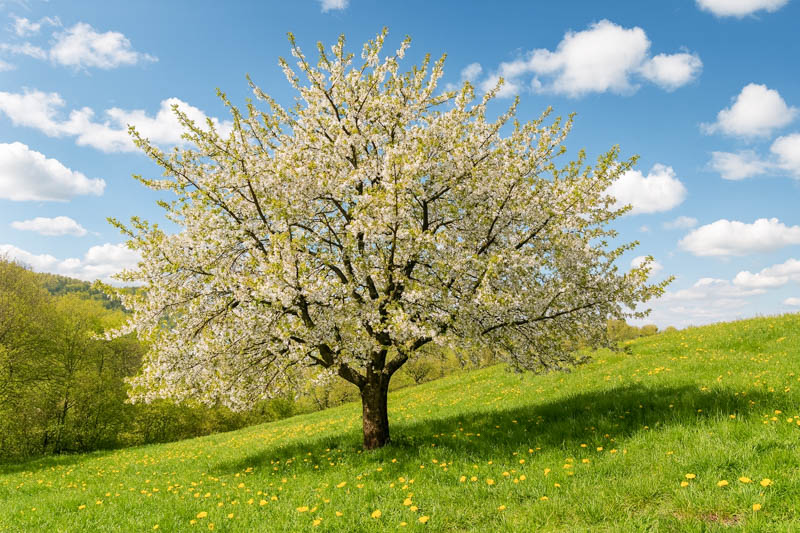
It is the practice of selecting understory plants that actively support the health and productivity of your tree. In a cherry guild, companions can:
Mix low growers inside the dripline and reserve taller flowers for the outer ring or beyond. Keep a 6 to 12 inch mulch-only buffer around the trunk for trunk health.
| Companion Plant | Type / Role | Height / Spread | Key Benefit | Notes |
|---|---|---|---|---|
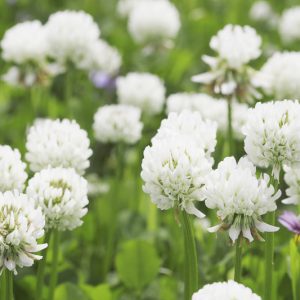
| White Clover (Trifolium repens) | Perennial legume – living mulch | 4–8 in. H – spreading mat | Fixes nitrogen, feeds bees, suppresses weeds | Sow in rings between mulch bands. |
| Comfrey (Symphytum) |
Perennial herb – nutrient pump | 18–36 in. H – clumps | Deep roots mine K and Ca – great chop-and-drop mulch | Use sterile Bocking 14 to avoid spreading. |
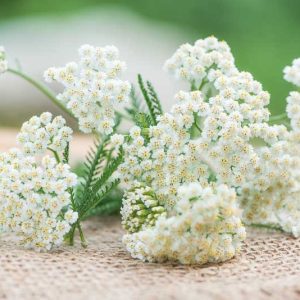
| Yarrow (Achillea) |
Perennial flower – insectary | 18–30 in. H – clumps | Feeds parasitoid wasps, hoverflies, lacewings | Place outside inner ring to avoid shade. |
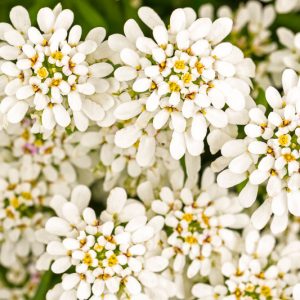
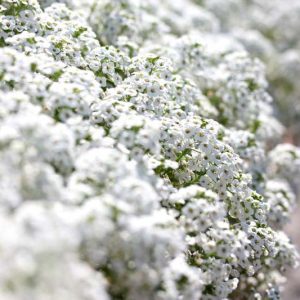
| Sweet Alyssum (Lobularia maritima) | Annual flower – predator support | 4–8 in. H – low mats | Hoverfly magnet for aphid control | Edge the bed – shear for rebloom. |
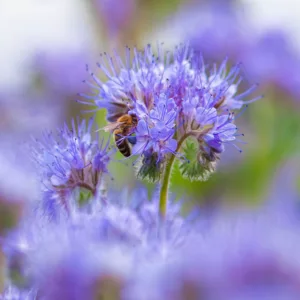
| Phacelia (Phacelia tanacetifolia) |
Annual – pollinator strip | 12–36 in. H – airy | Feeds bees during and after cherry bloom | Grow just beyond dripline or in an adjacent strip. |
| Borage (Borago officinalis) |
Annual herb – bee plant, mulch source | 18–36 in. H – 18–24 in. W | Blue flowers attract bees, leaves for chop-and-drop | Set on north side or just outside dripline. |
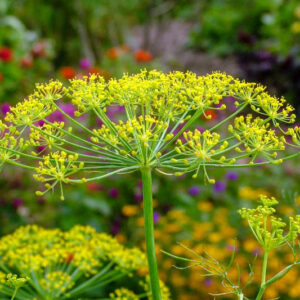
| Dill and Coriander | Annual umbels – beneficial insect fuel | 18–36 in. H – airy | Umbel nectar for parasitoids of aphids and moth larvae | Succession sow just beyond dripline. |
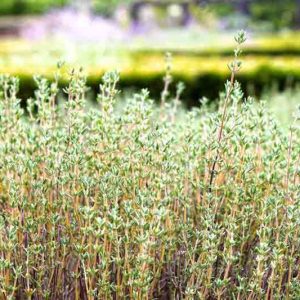
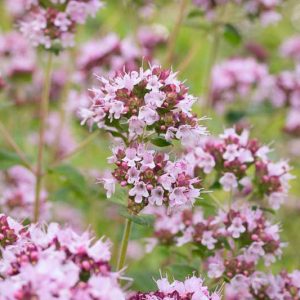
| Thyme and Oregano | Perennial herbs – living mulch, aroma barrier | 4–12 in. H – mats | Dense cover that suppresses weeds, sustains bees | Plant in small islands to keep airflow. |
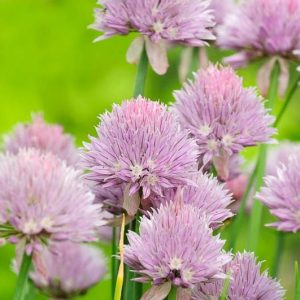
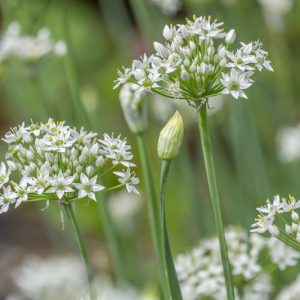
| Chives and Garlic Chives | Alliums – pest confusion, bee bloom | 10–20 in. H – clumps | Aromatic foliage may deter some pests, flowers feed pollinators | Plant in small clumps – easy to divide. |
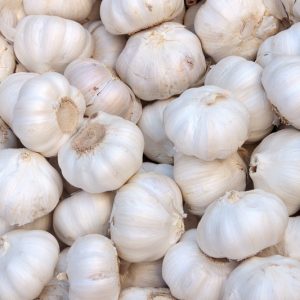
| Garlic (Allium sativum) | Bulb / clumping allium | 8–24 in | Light pest deterrence, flowers feed pollinators. | Plant cloves in fall (4–6 in. apart). |
| Daffodils | Bulb – rodent deterrence, spring color | 8–18 in. H – clumps | Unpalatable to deer and rodents, roots stay out of summer water race | Ring bulbs at the outer edge of the donut mulch. |
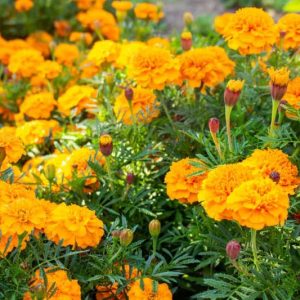
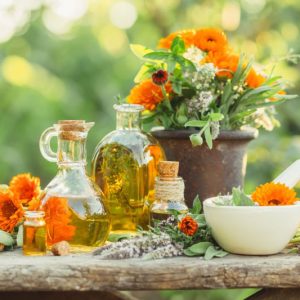
| Marigolds and Calendula | Annuals – color, nematode suppression, predator support | 8–20 in. H – compact clumps | Extended nectar and possible soil benefits | Use in sunny rings – deadhead for bloom. |
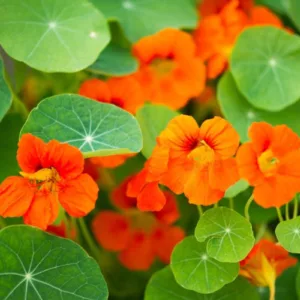
| Nasturtium | Annual vine – trap crop and groundcover | 6–12 in. H – trailing | Attracts aphids away from tender cherry shoots | Pull and compost if overrun with aphids. |
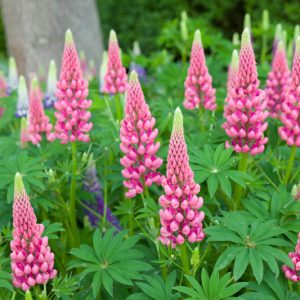
| Lupines | Perennial legume – nitrogen plus habitat | 18–36 in. H – upright | Nitrogen fixation and diverse pollinator support | Keep to the outer ring for light. |
Tip: Think rings, not a carpet. Keep the inner ring near the trunk free of plants, just wood chips. Build plant islands from mid radius outward to the dripline.
Some plants compete, secrete growth inhibitors, or set up a damp, pest friendly microclimate. Give these some distance.
| Plant | Type / Category | Reason to Avoid (or Keep Far Away) |
|---|---|---|
| Black Walnut (Juglans nigra) and other juglone heavy trees | Allelopathic trees | Juglone inhibits many fruit trees, including cherry. Keep cherries outside walnut root zones. |
| Tall Sunflowers and Corn at the dripline | Tall annuals | Compete for water, shade the understory, and reduce airflow right where you want it most. |
| Fennel (Foeniculum vulgare) | Allelopathic herb | Exudes compounds that suppress neighbors. Plant it well away from the guild. |
| Invasive mint and aggressive brambles | Running groundcovers | Steal water, tangle roots, and make orchard sanitation difficult. Containerize mint or skip it. |
| Dense turf right to the trunk | Grass competition | Competes for moisture and fertilizers and invites voles. Maintain a mulch-only donut around the trunk. |
| Nightshades in recently diseased soils | Tomato, potato, eggplant, pepper | Share several soil diseases with stone fruit. If Verticillium or other wilt issues were present, rotate those beds and keep annual nightshades elsewhere for several years. |
| Season / Timing | Tasks & Companion Actions |
|---|---|
| Late Winter – Early Spring | Prune for airflow and remove mummified fruit. Refresh wood-chip mulch donut. Sow alyssum and phacelia in adjacent strips. Topdress compost at dripline. Install sticky cards if monitoring fruit fly is part of your IPM plan. |
| Mid – Late Spring | Plant chive clumps and thyme islands. Interseed white clover between stepping stones. Protect bloom with bee friendly practices. Scout weekly for aphids and rinse colonies early. |
| Early Summer | Succession sow dill and coriander for continuous umbels. Start bird netting as fruit colors. Keep sprinkler irrigation off foliage – water at the soil line. |
| Mid – Late Summer | Chop-and-drop comfrey and borage for mulch after harvest. Maintain clover at a low mow height. Remove fallen fruit quickly to reduce pests and brown rot inoculum. |
| Fall | Clean up leaves and any mummies. Plant daffodils along the outer ring. Top up wood chips before winter storms. Plant lupines and vetch in mild climates. |
| Winter | Check guards for rodent damage. Keep mulch pulled back from the trunk a hand width. Plan next season’s insectary sequence. |
Yes, if they are low and not water hogs. Lettuces and spinach work early in the season before canopy fill, then give way to thyme, oregano, and clover. Avoid tall crops at the dripline that block airflow.
Yes. Chives and garlic chives are excellent clump formers that flower for pollinators and fit easily between other companions. They do not crowd roots and are simple to divide.
For biomass and mulch, yes. Choose a sterile cultivar like Bocking 14 and site it where you want it to live for years. Cut several times per season and spread leaves under the canopy, keeping stems off the trunk.
Strawberries can be a charming groundcover under open canopies in sunny climates. Keep crowns clear and do not let a dense mat trap moisture around the cherry trunk. Water from the dripline, not overhead.
No. Companions reduce pest pressure and improve resilience, but diseases like brown rot may still require targeted sprays or organic products depending on your region and cultivar. Follow local extension guidance.
Keep a hand width or more of bare wood-chip mulch around the trunk. Planting right at the crown can trap moisture, invite pests, and cause bark problems.
Imagine your cherry like a parasol. Closest to the handle is clean wood-chip mulch. From there, small islands of thyme and chive clumps stitch around the mid zone. Clover knits the floor and feeds bees. Yarrow, calendula, and dill mark the outer ring with months of nectar for your bodyguards on six legs. A few comfrey clumps stand ready to donate leaves for mulch. You water less, you mow less, and you set the stage for heavy bloom, solid fruit set, and sweet harvests with fewer pests.
Updated: October 2025 • Reviewed by Gardenia Editors
| Hardiness |
4 - 9 |
|---|---|
| Plant Type | Fruits, Trees |
| Plant Family | Rosaceae |
| Genus | Cherries, Prunus - Fruit Tree |
| Exposure | Full Sun |
| Season of Interest | Spring (Mid, Late), Summer (Early, Mid, Late) |
| Height | 8' - 30' (240cm - 9.1m) |
| Spread | 8' - 30' (240cm - 9.1m) |
| Maintenance | Average |
| Water Needs | Average |
| Soil Type | Chalk, Clay, Loam, Sand |
| Soil pH | Acid, Alkaline, Neutral |
| Soil Drainage | Moist but Well-Drained, Well-Drained |
| Attracts | Bees, Birds, Butterflies |
| Landscaping Ideas | Beds And Borders |
| Garden Styles | City and Courtyard, Informal and Cottage |
| Toxic to Humans | No known toxicity |
| Toxic to Cats | No known toxicity |
| Toxic to Dogs | No known toxicity |
| Toxic to Horses | No known toxicity |
| Hardiness |
4 - 9 |
|---|---|
| Plant Type | Fruits, Trees |
| Plant Family | Rosaceae |
| Genus | Cherries, Prunus - Fruit Tree |
| Exposure | Full Sun |
| Season of Interest | Spring (Mid, Late), Summer (Early, Mid, Late) |
| Height | 8' - 30' (240cm - 9.1m) |
| Spread | 8' - 30' (240cm - 9.1m) |
| Maintenance | Average |
| Water Needs | Average |
| Soil Type | Chalk, Clay, Loam, Sand |
| Soil pH | Acid, Alkaline, Neutral |
| Soil Drainage | Moist but Well-Drained, Well-Drained |
| Attracts | Bees, Birds, Butterflies |
| Landscaping Ideas | Beds And Borders |
| Garden Styles | City and Courtyard, Informal and Cottage |
| Toxic to Humans | No known toxicity |
| Toxic to Cats | No known toxicity |
| Toxic to Dogs | No known toxicity |
| Toxic to Horses | No known toxicity |
Create a membership account to save your garden designs and to view them on any device.
Becoming a contributing member of Gardenia is easy and can be done in just a few minutes. If you provide us with your name, email address and the payment of a modest $25 annual membership fee, you will become a full member, enabling you to design and save up to 25 of your garden design ideas.
Join now and start creating your dream garden!
Create a membership account to save your garden designs and to view them on any device.
Becoming a contributing member of Gardenia is easy and can be done in just a few minutes. If you provide us with your name, email address and the payment of a modest $25 annual membership fee, you will become a full member, enabling you to design and save up to 25 of your garden design ideas.
Join now and start creating your dream garden!