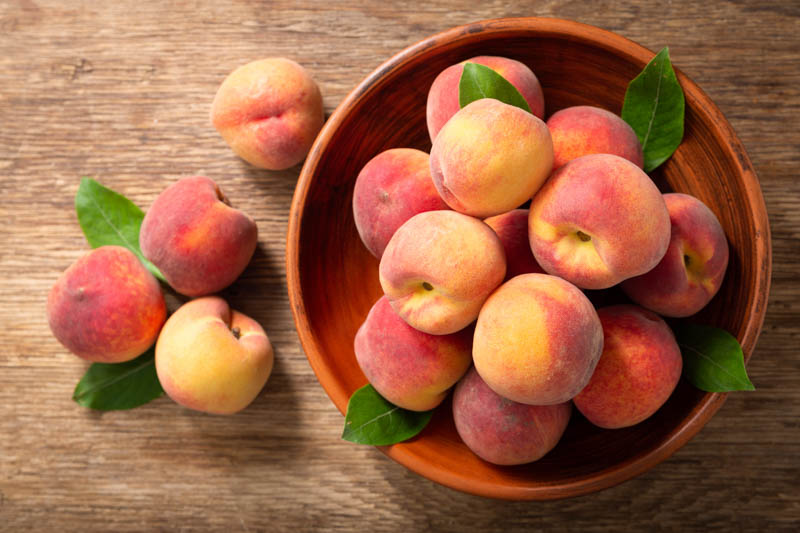
Peach
Peaches are the summer friend who always shows up with sunshine on their cheeks. Whether you eat them over the sink or bake them into cobblers, here are bite-size facts to make your next peach even sweeter.
Peach vs. nectarine? Same species, different outfits. Nectarines are simply fuzz-free peaches caused by a natural recessive gene—so yes, your smooth friend is just a peach in sleek pajamas. Meet both on their plant pages: Peach and Nectarine.
White or yellow flesh? White peaches tend to be extra aromatic and low-acid, while yellow peaches bring that classic tangy-sweet balance. Explore picks for every climate: White peaches and Yellow peaches.
Freestone vs. clingstone: In freestone fruit the pit pops out easily (great for slicing and grilling). Clingstone holds on tight—perfect for canning and slurpy eating.
How to choose a ripe peach: Ignore color; go by fragrance and a gentle give near the stem end. If it’s shy, let it ripen on the counter—never in the fridge.
Chill hours, hot flavor: Peaches come in low-, mid-, and high-chill types, so there’s likely a variety for your winter. Start with the general plant guide: Prunus persica.
Companion crowd: Pollinator-friendly herbs and groundcovers help with moisture and beneficial insects; some plants are better kept at a distance. See the handy guide: Companions & ones to avoid.
Origin story: Peaches trace back to China, where they symbolize longevity (and good snacks).
Kitchen tricks: For slip-off skins, score an X on the bottom, blanch 30 seconds, then chill. Grill halved freestones for caramelized magic.
Handle with care: Bruises happen fast—these are delicate drupes! Keep them single-layered.
Fun safety note: Skip snacking on the pit; it contains compounds you don’t want in your diet.