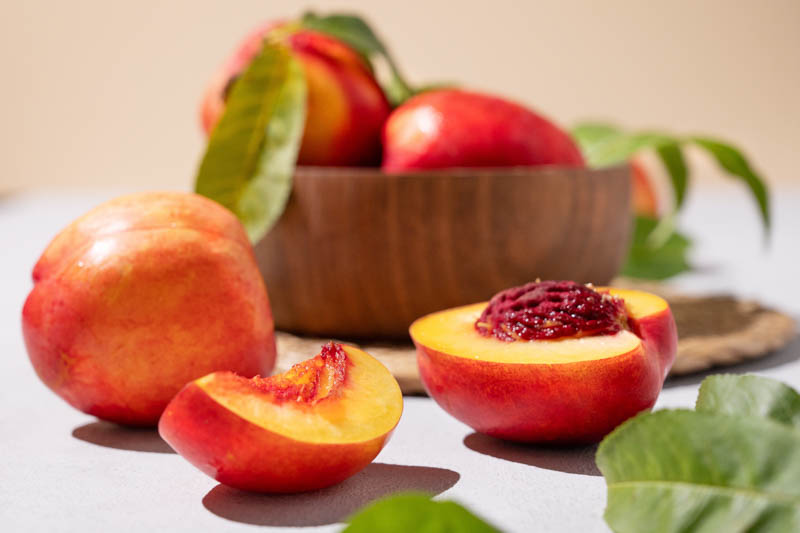
Nectarine
Love that sun-kissed, smooth-skinned stone fruit Enjoy these juicy tidbits about nectarines that you can drop at your next picnic.
Peach cousin, no fuzz A nectarine is simply a peach with a natural recessive gene that removes the fuzz from the skin. Learn more about the species here: Peaches and Nectarines.
Name with flair The word nectarine likely nods to nectar, hinting at the fruit’s fragrant sweetness and mouthwatering juice.
Yellow versus white Yellow-fleshed nectarines bring tangy zip, while white nectarine types taste dessert sweet thanks to lower acidity and floral aroma.
Freestone or clingstone In freestone varieties the pit pops out cleanly at full ripeness, while clingstones hang on and drip with juice.
Calorie friendly About forty four calories per one hundred grams means a medium nectarine lands near sixty calories yet feels wonderfully indulgent.
Container ready Dwarf trees thrive in large pots on patios and balconies, delivering backyard orchard flavor to compact spaces.
Chill matters Different cultivars need different winter chill hours, so matching your tree to local climate unlocks reliable bloom and fruiting.
Early bloomers Nectarines flower early in spring. Choose a spot with good air drainage to sidestep late frost trouble and keep an eye on common issues like peach leaf curl and brown rot.
Ripeness cues Watch background color shift from green to warm gold, breathe in the perfume, and look for a gentle give at the stem.
Grill hero Halved nectarines caramelize beautifully on a hot grate. A drizzle of honey or balsamic takes them from good to wow.
Nutrition boost Expect vitamin C, potassium, and carotenoids. Eat the skin after a rinse for extra fiber and antioxidants.
Safety note Never chew the pit. Nectarine seeds contain amygdalin, so keep pits out of smoothies and away from pets and kids.
Pollinator pals Spring blossoms draw friendly visitors. Invite them in with a bee-friendly garden plan: How to Support Bees.
Backyard sharing Ripe fruit tempts curious foragers. If needed, outsmart them with timing and netting. Meet one frequent visitor here: Squirrels.
Tiny troublemakers Keep tabs on sap-suckers like aphids and scale insects. Gentle washes and good hygiene go a long way.