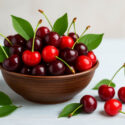
Grow tart cherries without fuss. Pick proven varieties, plant the right size tree, and master watering, pruning, and netting. Turn harvests into pies, freezer packs, and spritzers. Sip tart cherry juice or cherry juice for recovery or bedtime.
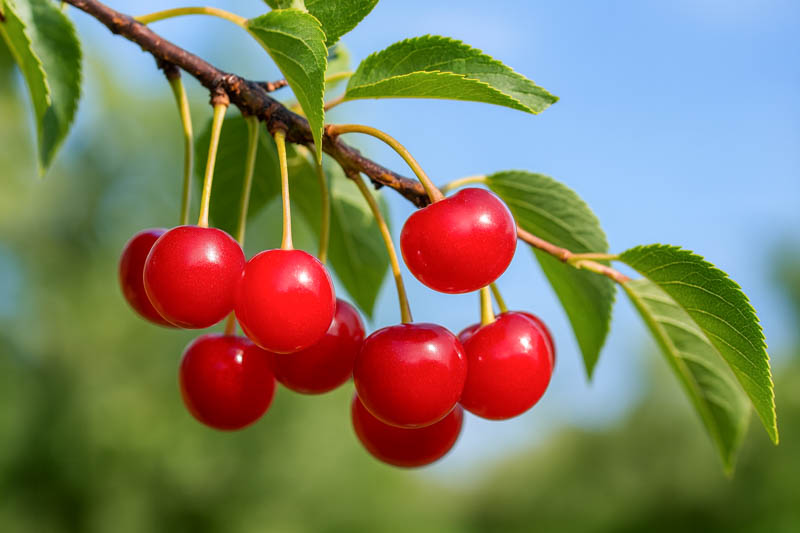


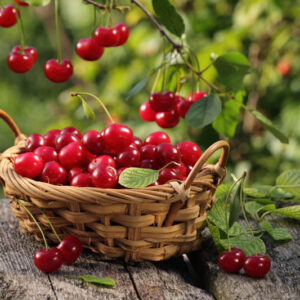
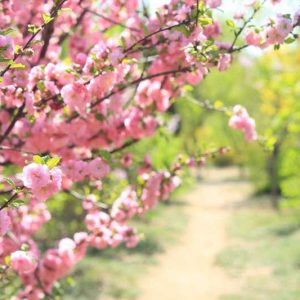
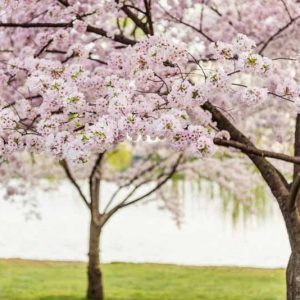
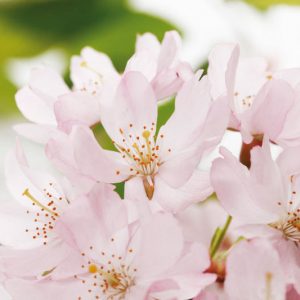
This is your friendly, no fuss guide to growing and enjoying tart cherries, also called sour cherries or pie cherries. If sweet cherries are for snacking, tart cherries are for pies, preserves, sauces, and that bright, tangy kick in smoothies and spritzers. Most tart cherry trees are compact, reliably self fertile, and cold hardy. They bloom with clouds of white in spring, then ripen into ruby bowls by early to mid summer.
Below you will find the best varieties for home gardens, how to plant and care for them, simple harvest tips, and a practical section on health and kitchen uses including tart cherry juice and cherry juice ideas.
Summary: Tart cherries are compact, cold hardy fruit trees grown for bright, tangy cherries that shine in bakes and preserves.
Choose varieties for flavor group Morello or Amarelle, ripening time, and tree size. Most are self fertile, which means one tree can fruit well.
Best for: Pies, jams, drying, freezing, sauces, smoothies, spritzers, and tart cherry juice at home.
Starter picks:
Montmorency (classic pie cherry),
Balaton (deep color, rich flavor),
North Star (dwarf, cold hardy),
Morello (inky juice, dessert sauces),
Meteor (compact, early),
Early Richmond (very early, bright).
| Botanical Group | Prunus cerasus (sour or tart cherry cultivars) |
|---|---|
| Family | Rosaceae |
| Hardiness (USDA) | Zones 4 to 7 or 8 depending on cultivar; excellent winter chill tolerance |
| Size by Rootstock | Dwarf 8 to 10 ft; semi dwarf 10 to 14 ft; standard 15 to 20 ft |
| Sun & Exposure | Full sun 6 to 8+ hours. Air flow helps keep foliage dry |
| Soil | Well-drained loam or sandy loam; target pH 6.2–7.2; avoid soggy sites |
| Bloom & Fruit | White blossoms in spring; red fruits from bright scarlet to deep maroon with lively acidity |
| Season | Early to mid summer depending on cultivar and climate |
| Chill Hours | Typically 700–1000 hours under 45°F, depending on cultivar and site. |
| Pollination | Many tart cherry cultivars are self fertile. One tree can bear. Yield can improve with a second cultivar |
| Primary Uses | Pies, cobblers, clafoutis, jams, chutneys, drying, freezing, sauces, tart cherry juice and cherry juice blends |
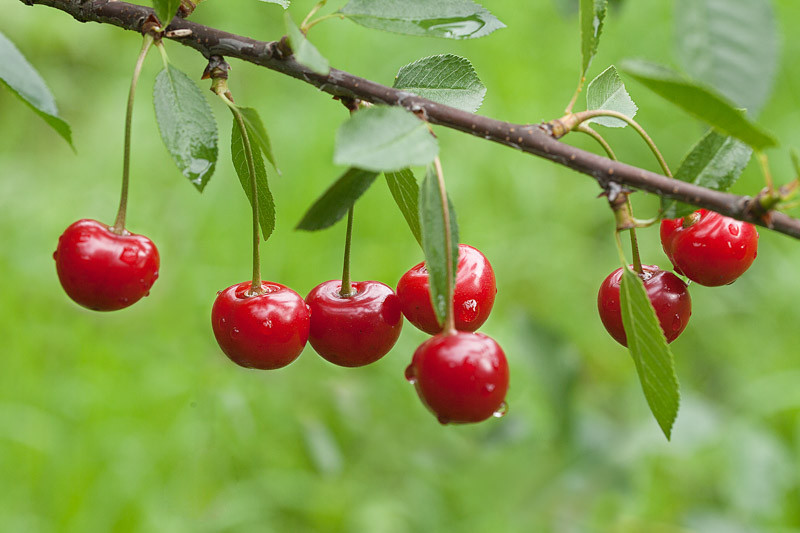
| USDA Hardiness | Zones 4 to 7 |
|---|---|
| Height & Spread | Standard 15-20 ft tall and wide, semi-dwarf 12-15 ft, dwarf 8-12 ft |
| Season | Mid season |
| Taste | Bright, classic pie cherry tang with clear juice |
| Pollination | Self fertile |
| Best Uses | Pies, cobblers, jam, dehydrating, freezing, homemade tart cherry juice |
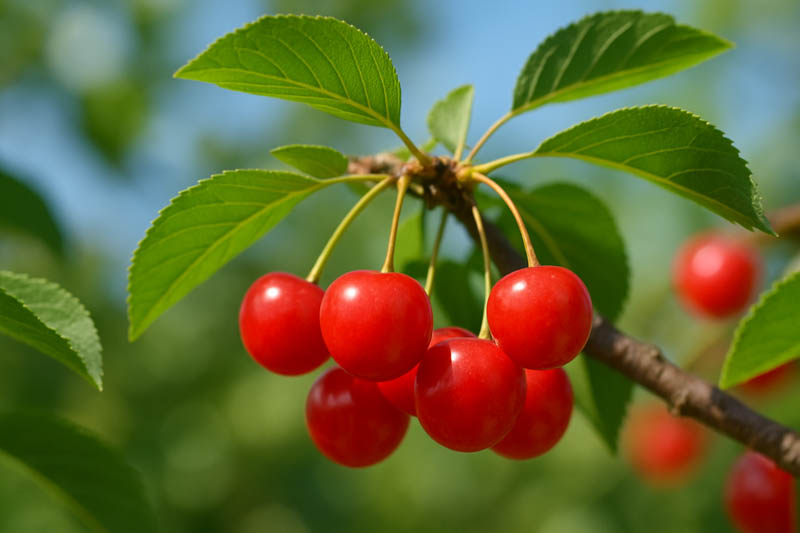
| USDA Hardiness | Zones 4 to 8 |
|---|---|
| Height & Spread | About 12 to 15 ft tall by 12 to 15 ft wide at maturity. Often 8 to 12 ft on dwarfing roots or with regular pruning and fan training. |
| Season | Mid to mid-late |
| Taste | Rich, wine like, deep red flesh and juice |
| Pollination | Self fertile. Some growers still plant a partner for yield |
| Best Uses | Jams, sauces, baking, intensely colored tart cherry juice |
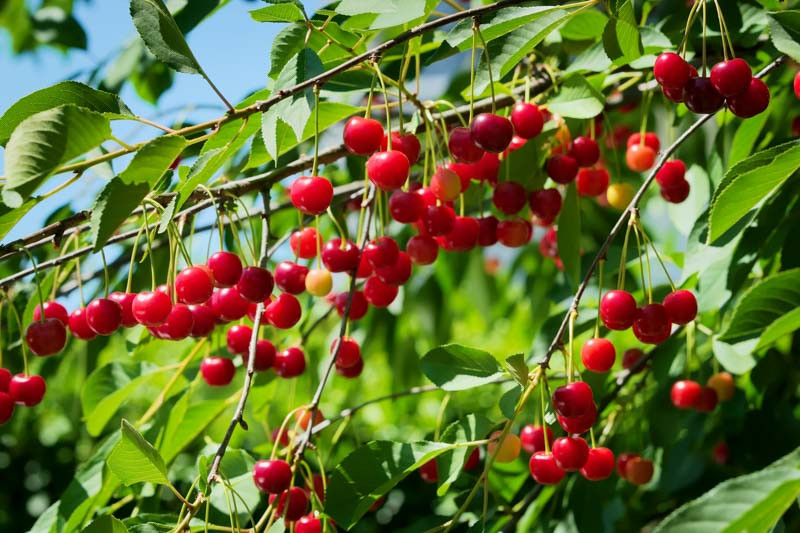
| USDA Hardiness | Zones 4 to 8, very cold hardy |
|---|---|
| Height & Spread | 8 to 10 ft, naturally dwarf |
| Season | Mid season |
| Taste | Classic tart cherry flavor with good sugar acid balance |
| Pollination | Self fertile |
| Best Uses | Small gardens, easy netting, pies, freezing, quick cherry juice blends |
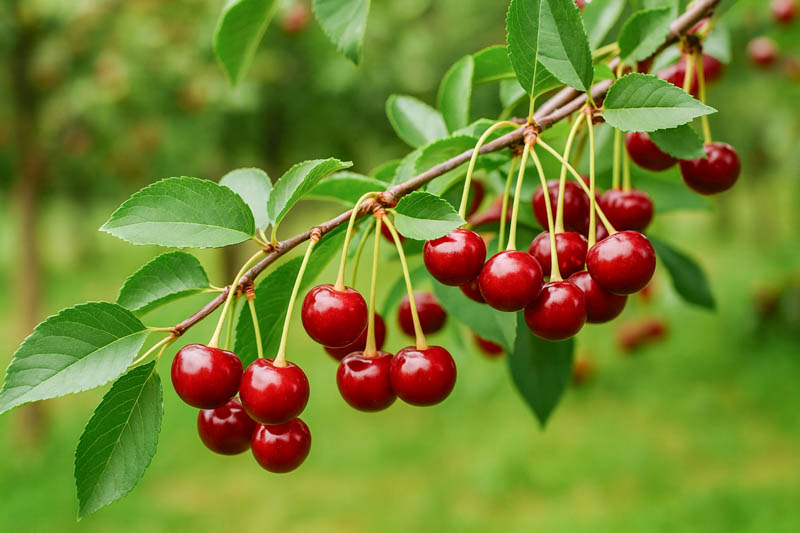
| USDA Hardiness | Zones 4 to 8 |
|---|---|
| Height & Spread | About 12 to 18 ft tall by 12 to 15 ft wide at maturity. Often 8 to 12 ft on dwarfing roots or with regular pruning and fan training. |
| Season | Late |
| Taste | Assertive, inky juice with complex flavor for sauces and baking |
| Pollination | Self fertile |
| Best Uses | Dessert sauces, preserves, deep colored tart cherry juice |
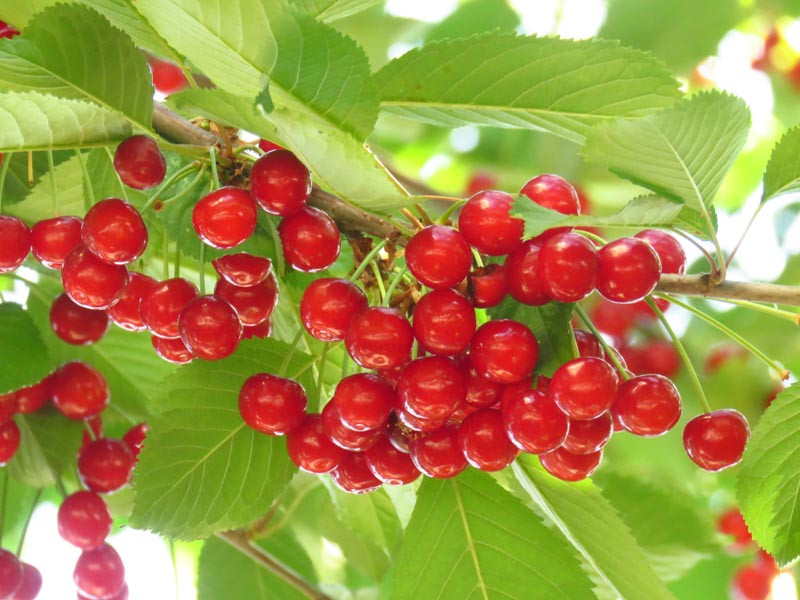
| USDA Hardiness | Zones 4 to 8 |
|---|---|
| Height & Spread | About 10–14 ft tall x 8–12 ft wide at maturity, depending on rootstock and pruning. |
| Season | Early to mid |
| Taste | Lively acidity with good cherry aromatics |
| Pollination | Self fertile |
| Best Uses | Small yards, quick harvests, pies, drying, freezer packs |
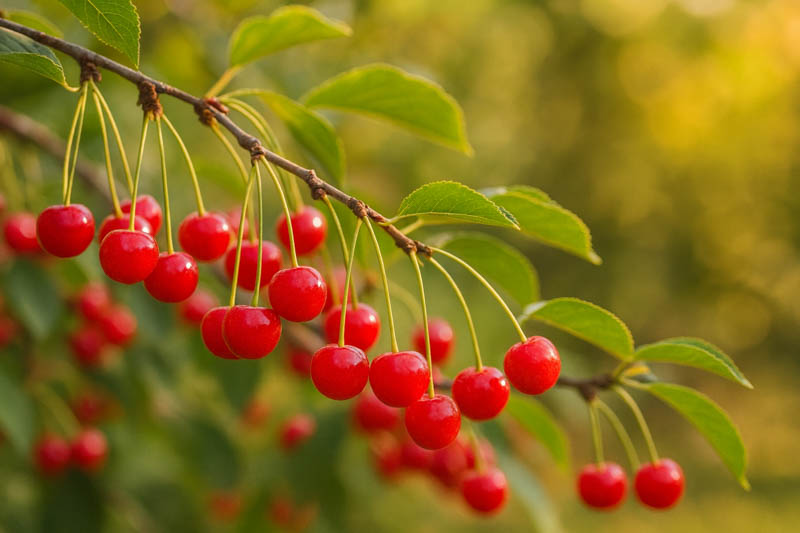
| USDA Hardiness | Zones 4 to 7 (marginal in 8 unless winter chill is reliable) |
|---|---|
| Height & Spread | About 12 to 18 ft tall by 12 to 15 ft wide at maturity. Often 8 to 12 ft on dwarfing roots or with regular pruning and fan training. |
| Season | Very early |
| Taste | Sharp, lemony tartness that sings in pies |
| Pollination | Self fertile |
| Best Uses | First pies of summer, quick jam, early season cherry juice |
Ripening and size vary with climate and rootstock. Trees listed as self fertile still benefit from a nearby partner for heavier crops.
| Cultivar | Group | Flavor | Juice Color | Season | Self Fertile | Notes |
|---|---|---|---|---|---|---|
| Montmorency | Amarelle | Bright, classic pie flavor | Clear to light red | Mid | Yes | Gold standard for baking |
| Balaton | Morello type | Rich, wine like | Deep red | Mid to late | Yes | Intense color for juice |
| North Star | Amarelle | Balanced tart | Red | Mid | Yes | Natural dwarf, easy to net |
| English Morello | Morello | Bold, complex | Very dark | Late | Yes | Great for sauces and drying |
| Meteor | Amarelle | Lively, bright | Red | Early to mid | Yes | Compact, reliable yields |
| Early Richmond | Amarelle | Sharp, lemony | Light red | Very early | Yes | Kick starts the season |
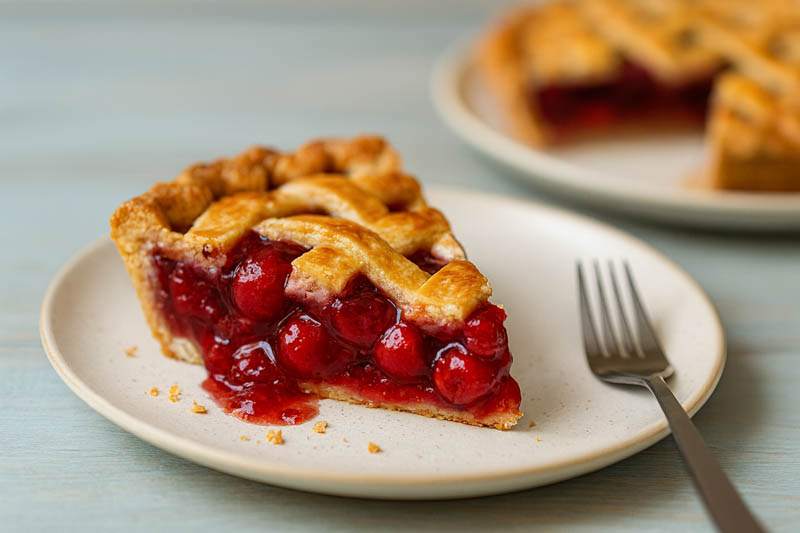
Cherries offer an impressive nutrient profile for relatively few calories. Tart cherries are famous for their pigments called anthocyanins. You will see them highlighted for exercise recovery, comfortable joints, and a relaxing evening routine. Whole fruit brings fiber, potassium, and vitamin C.
If you prefer to sip, a small glass of tart cherry juice can be a handy tool on training days or as part of a wind down hour before bed. Cherry juice on store shelves can also mean blends. If you want that classic tart profile, look for tart cherry on the label or choose not from concentrate versions. Concentrates are budget friendly and easy to dilute to taste.
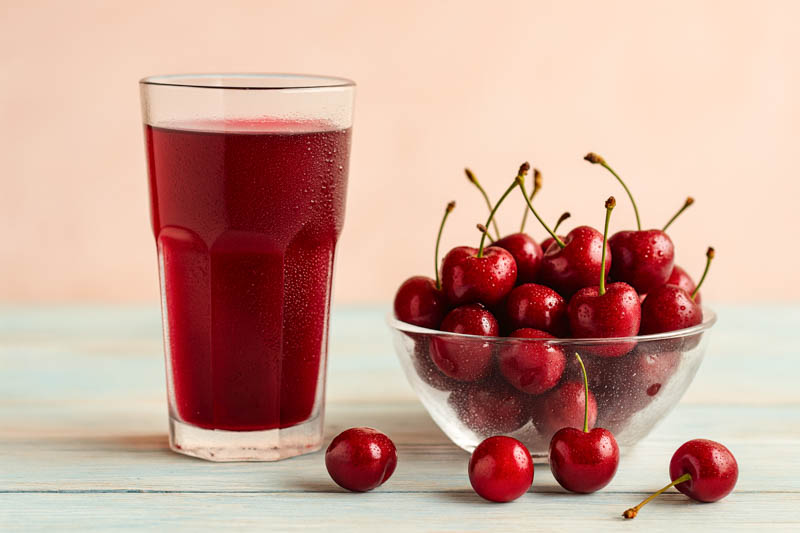
Deglaze a hot pan with 1/3 cup tart cherry juice after searing chicken or pork. Add a knob of butter, a sprig of rosemary, reduce to glossy, season, and serve.
Mix 4 oz tart cherry juice with cold seltzer and orange slice. Feet up, breathe, enjoy the pucker.
Pit and freeze 4 cup portions of cherries flat in bags. Add 2 tablespoons sugar, 1 tablespoon lemon, and a splash of cherry juice before sealing. Bake straight from frozen.
Simmer a quick compote with frozen cherries and a spoon of tart cherry juice. Cool, then swirl into thick yogurt with toasted almonds.
Prunus cerasus likely originated in Europe and Western Asia as a natural hybrid between sweet cherry (P. avium) and European dwarf cherry (P. fruticosa). It is widely cultivated in temperate regions and sometimes naturalizes near old homesteads, fence lines, and disturbed soils.
In North America, tart cherry is generally not considered invasive. It is an introduced species that is common in cultivation and only occasionally found outside gardens. Some counties or land managers place it on watch lists where local escape potential exists, yet it is not viewed as a major ecological threat across most regions. Status can vary by state or province, so check your local extension or invasive species council for the latest guidance.
If you prefer native, wildlife friendly options for hedgerows or restoration plantings, consider regionally appropriate species such as chokecherry (Prunus virginiana), American plum (Prunus americana), or pin cherry (Prunus pensylvanica). These offer nectar for pollinators and fruit for birds while supporting local ecosystems.
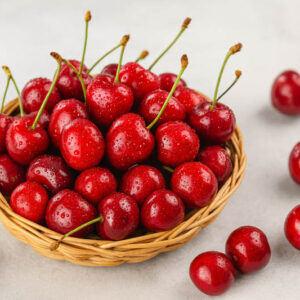
A tart cherry, also called a sour cherry, is a small red fruit known for its bright, tangy flavor. It’s often used in pies, jams, juices, and recovery drinks.
No. Tart cherries are more acidic and less sweet than sweet cherries. They’re used mainly for baking, cooking, and juicing, while sweet cherries are usually eaten fresh.
Tart cherries contain antioxidants and natural compounds that may help reduce muscle soreness, support better sleep, and promote joint comfort.
You can drink tart cherry juice after workouts, before bed, or mix it into smoothies, spritzers, and sauces. Some people use it daily for recovery or sleep support.
A common serving is 8 to 12 ounces of tart cherry juice, or about 1 to 2 tablespoons of concentrate mixed with water.
Tart cherry juice is made from sour cherries and tastes tangy. Cherry juice often blends sweet cherries, which are milder and less acidic.
Yes. Tart cherry trees like full sun, well-drained soil, and cold winters. Many types, such as Montmorency or North Star, are self-fertile and easy to grow.
Tart cherries ripen in early to mid-summer, depending on the variety and climate.
Yes. Tart cherries naturally contain melatonin and tryptophan, which may help support better sleep when consumed regularly.
Yes, for most people in moderate amounts. Those sensitive to acidic foods or managing blood sugar should check portions and consult a healthcare professional if needed.
Bottom line: Plant a compact, self-fertile sour cherry like North Star or Montmorency, keep moisture steady through fruit swell, and net early. Freeze extras for winter bakes and smoothies. Keep a bottle of tart cherry juice for busy training weeks or a cozy wind down. Simple, reliable, delicious.
| Hardiness |
4 - 8 |
|---|---|
| Plant Type | Fruits, Trees |
| Plant Family | Rosaceae |
| Genus | Cherries, Prunus - Fruit Tree |
| Exposure | Full Sun |
| Season of Interest | Spring (Mid, Late), Summer (Early, Mid) |
| Height | 8' - 20' (240cm - 6.1m) |
| Spread | 8' - 20' (240cm - 6.1m) |
| Maintenance | Average |
| Water Needs | Average |
| Soil Type | Chalk, Clay, Loam, Sand |
| Soil pH | Acid, Alkaline, Neutral |
| Soil Drainage | Moist but Well-Drained, Well-Drained |
| Attracts | Bees, Birds, Butterflies |
| Landscaping Ideas | Beds And Borders |
| Garden Styles | City and Courtyard, Informal and Cottage |
| Toxic to Humans | No known toxicity |
| Toxic to Cats | No known toxicity |
| Toxic to Dogs | No known toxicity |
| Toxic to Horses | No known toxicity |
| Hardiness |
4 - 8 |
|---|---|
| Plant Type | Fruits, Trees |
| Plant Family | Rosaceae |
| Genus | Cherries, Prunus - Fruit Tree |
| Exposure | Full Sun |
| Season of Interest | Spring (Mid, Late), Summer (Early, Mid) |
| Height | 8' - 20' (240cm - 6.1m) |
| Spread | 8' - 20' (240cm - 6.1m) |
| Maintenance | Average |
| Water Needs | Average |
| Soil Type | Chalk, Clay, Loam, Sand |
| Soil pH | Acid, Alkaline, Neutral |
| Soil Drainage | Moist but Well-Drained, Well-Drained |
| Attracts | Bees, Birds, Butterflies |
| Landscaping Ideas | Beds And Borders |
| Garden Styles | City and Courtyard, Informal and Cottage |
| Toxic to Humans | No known toxicity |
| Toxic to Cats | No known toxicity |
| Toxic to Dogs | No known toxicity |
| Toxic to Horses | No known toxicity |
Create a membership account to save your garden designs and to view them on any device.
Becoming a contributing member of Gardenia is easy and can be done in just a few minutes. If you provide us with your name, email address and the payment of a modest $25 annual membership fee, you will become a full member, enabling you to design and save up to 25 of your garden design ideas.
Join now and start creating your dream garden!
Create a membership account to save your garden designs and to view them on any device.
Becoming a contributing member of Gardenia is easy and can be done in just a few minutes. If you provide us with your name, email address and the payment of a modest $25 annual membership fee, you will become a full member, enabling you to design and save up to 25 of your garden design ideas.
Join now and start creating your dream garden!