American Persimmon, American Date Plum, Possum Wood, Virginian Date Plum, Common Persimmon, Eastern Persimmon, Winter Plum, Jove's Fruit


Summary: A resilient, native fruit tree prized for honey-sweet, jelly-soft fruit after frost or countertop ripening. Tough, low-care, and wildlife-friendly—ideal for edible landscaping from cold New England to the warm South.
Taste: Rich, spicy-sweet, caramel notes when fully soft; extremely astringent when unripe.
Use: Fresh (soft), classic puddings and breads, jams, pies, dehydrated snacks, small-batch wines/country beers; outstanding fall ornamental.
Safety: Ripe fruit is edible and nutritious. Avoid firm, astringent fruit; remove seeds. Pets/wildlife relish fallen fruit—offer only modest amounts to pets.
| Botanical Name | Diospyros virginiana |
|---|---|
| Family | Ebenaceae |
| Common Names | American, Common, or Wild Persimmon; Possumwood; Sugar Plum |
| Native Range | Eastern & Midwestern U.S. (CT–FL, west to KS/TX); long cultural & culinary history |
| Plant Type & Habit | Deciduous, upright tree with straight trunk; blocky “alligator” bark; moderate growth |
| Hardiness (USDA) | 4–9; notably tougher than Asian persimmon |
| Size | 30–60 ft (9–18 m) tall × 20–35 ft (6–10.5 m) wide (smaller with pruning/poor soils) |
| Sun & Exposure | Full sun for best crops; tolerates part shade |
| Soil | Adaptable—sandy, loamy, or clay—so long as well-drained; pH ~6.0–7.5 |
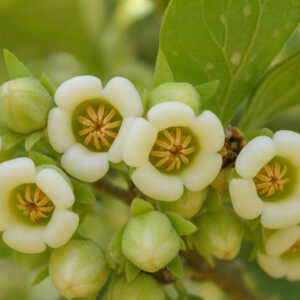
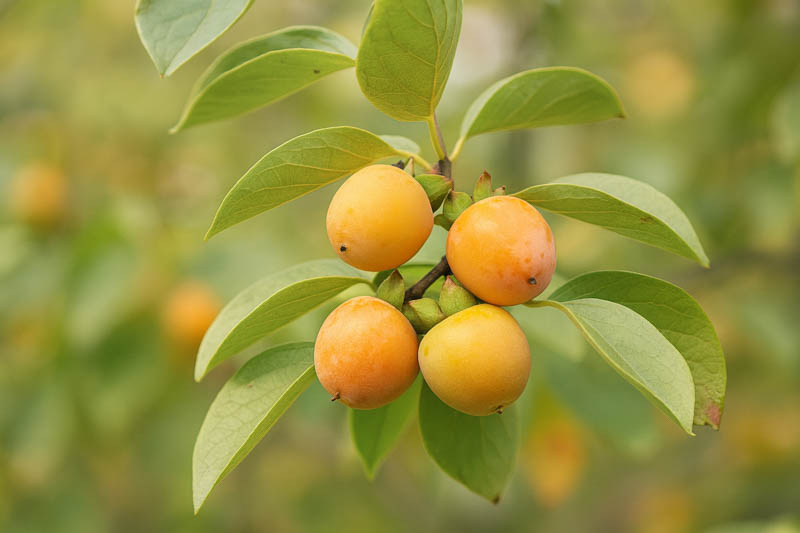
| Bloom & Fruit | Late-spring, fragrant, creamy flowers; orange 1–2 in. fruit ripen late summer–fall; astringent until fully soft (often best after light frost) |
| Wildlife | Feeds birds and mammals (deer, foxes, raccoons, opossums); flowers support bees & butterflies |
| Toxicity | Edible when ripe; unripe fruit is very tannic (avoid). Remove seeds; give pets only small, seedless amounts |
| Invasiveness | Not invasive in gardens; may sucker/spread by seed—easily managed |
| Primary Uses | Fresh (soft), baking & puddings, jams/jellies, drying, country wines; native, low-input edible landscaping |
There’s something magical about stepping outside in golden autumn, brushing aside glossy leaves, and plucking sun-warmed, golden-orange fruit from your own tree. The American persimmon (Diospyros virginiana) is that treasure—an underappreciated native gem brimming with honeyed flavor, natural beauty, and stories from centuries of gardens and wild forests. Whether you crave old-fashioned puddings, care-free fall color, or a new wild edible adventure, the American persimmon just might win your heart. Let’s dig into its history, appeal, and how you can grow this North American classic from backyard to big orchard.
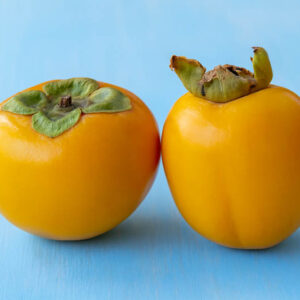
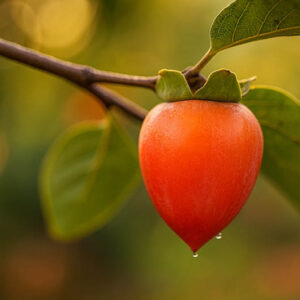
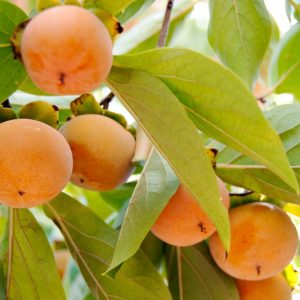
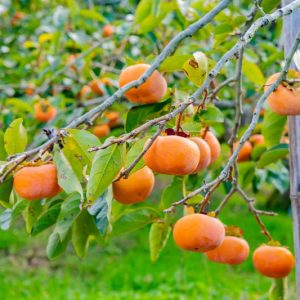
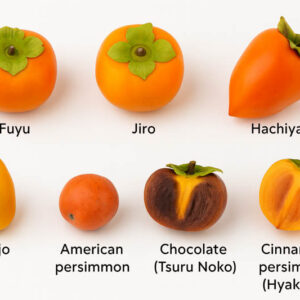
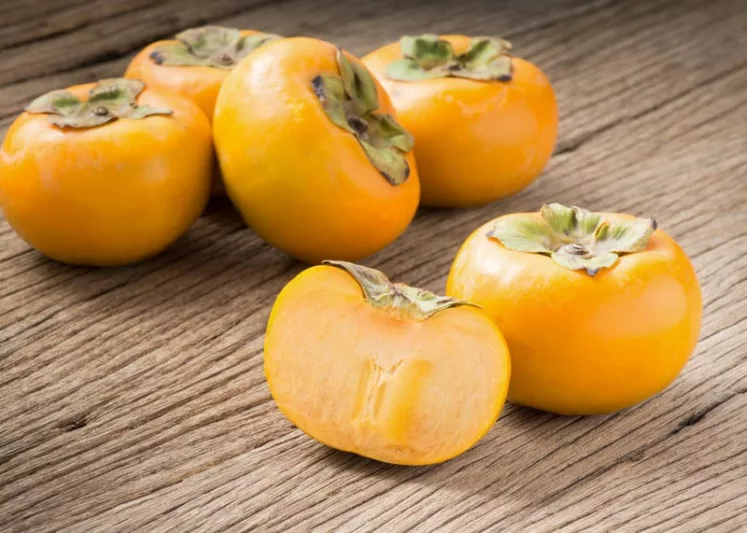
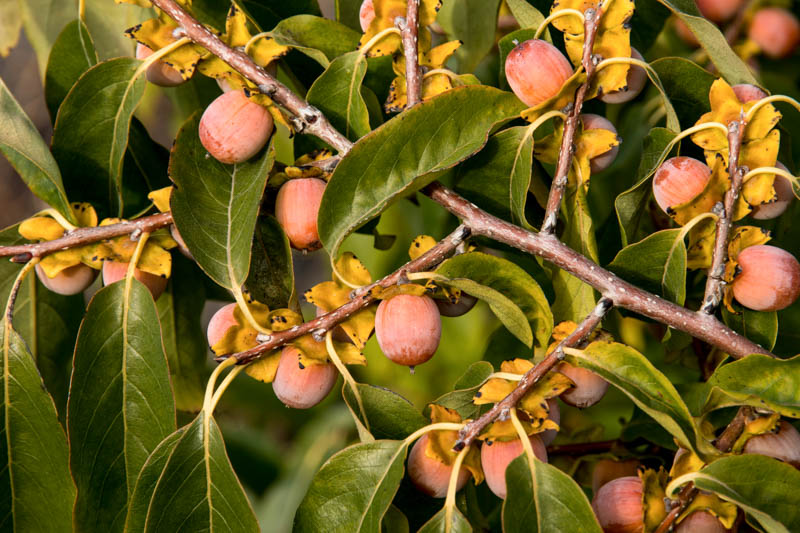
The American persimmon is a beautiful native tree that produces orange fruits with silky-smooth flesh and a honeyed, complex flavor when fully ripe. The fruit starts out mouth-puckering and astringent, but after autumn frosts or a few days’ counter ripening, it transforms into a sugary, jelly-like delight perfect for eating out of hand or baking. Each autumn, the branches are decorated with fruit that hang like jewels—an irresistible treat for people and wildlife alike.
Native all across the US East and Midwest, from Connecticut to Florida and west to Kansas and Texas, Diospyros virginiana is part of American culinary and cultural history. Early colonists, native peoples, and wild foragers have relished persimmons for millennia. Explorer William Bartram called it, “a delicious fruit;” early settlers dried, baked, or mashed it into “spoonbread” and sweet pies. Some native groves are hundreds of years old—true living legends in the wild and our gardens.
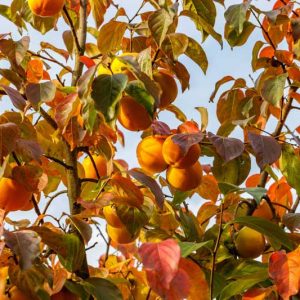
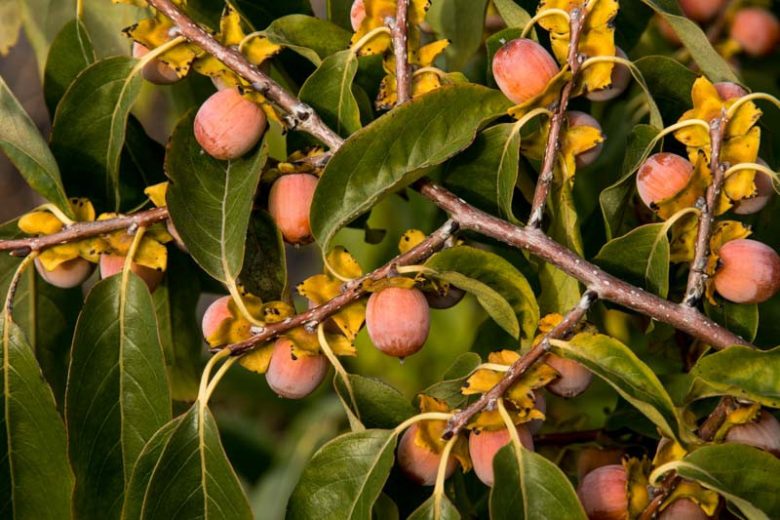
American persimmon trees are taller and more upright than their Asian cousins, typically reaching 30–60 ft. tall (9-18 m) and 20–35 ft. wide (6-10 m) at maturity, though pruned trees or those on poorer soils stay smaller. They form a straight trunk with picturesque, often gnarled branches and beautiful blocky bark reminiscent of alligator skin. Dense, dark green leaves fill the crown in summer, glowing golden to reddish-orange in autumn before they fall and reveal fruit hanging like orange-lit ornaments.
American persimmon grows moderately fast (1–2 ft/year in youth). Grafted trees can start producing in as little as 3–5 years, while wild seedlings take 8–10 years to fruit. Well-cared trees can produce for 50+ years—there are even century-old trees in the wild still bearing fruit. Once established, they require very little attention and can bear up to 30–50 lbs of fruit a year (older trees often produce even more).
Fragrant, creamy-white to yellowish flowers bloom in late spring. American persimmon is usually dioecious—meaning you need at least one male tree for pollination (some varieties are self-fertile, but most are not). Female trees produce the prized fruit, generally seedless if grown without a pollinizer, but more prolific and seeded if a male is nearby. A single male can pollinate several females within 50–100 feet.
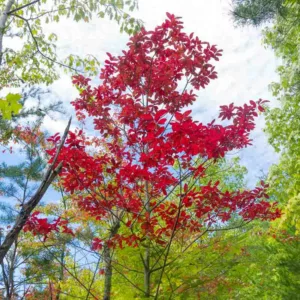
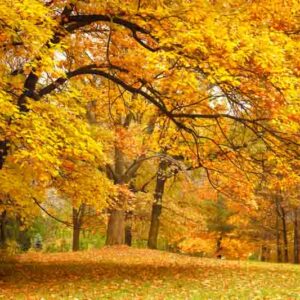
In spring, glossy leaves emerge, creating dense summer shade. Fall’s cool nights set leaves ablaze in yellow, gold, or rich orange hues, and after the leaves drop, the tree stands out against the landscape with its dark, blocky bark and clusters of fruit—a breathtaking sight across the seasons.
American persimmons are a feast for autumn’s wildlife—opossums, raccoons, foxes, and deer love the soft fruit, while songbirds enjoy the pulp and seeds. Blossoms provide spring nectar for native bees and butterflies. Plant one, and you’ll delight in observing your own mini-native food web every fall. Wildlife-Friendly Plants: Attract Bees, Butterflies & Birds
Exceptionally tough, American persimmon is hardy from USDA Zones 4–9 and will grow where Asian persimmons freeze out. It’s resilient to drought, summer heat, and poor soils, thriving on both sandy, thin soils and clay. Once established, it’s nearly care-free and an excellent survivor tree for low-maintenance landscapes.
Ripe American persimmon fruit is safe and incredibly nutritious for people, but unripe fruit (hard and astringent) will cause mouth-puckering and digestive upset. Pets (and wildlife) love the fallen, overripe fruit—just keep quantities modest.
Diospyros virginiana can sucker or spread by seeds in wild settings, but in gardens it is easy to manage with regular mowing or pruning. It’s valued by foragers and forest gardeners as a low-input, high-benefit edible and habitat tree.
| Nutrient | Amount per 100g |
|---|---|
| Calories | 81 kcal |
| Protein | 0.8 g |
| Carbohydrates | 21 g |
| Fiber | 6 g |
| Fat | 0.4 g |
| Vitamin A | 1627 IU (33% DV) |
| Vitamin C | 7.5 mg (8% DV) |
| Potassium | 161 mg |
| Manganese | 0.355 mg (15% DV) |
| Cultivar | Type | Best Traits | Notes |
|---|---|---|---|
| Meader | Self-fertile | Soft, seedless, reliable in coldest climates | Best for home growers, New England through South |
| Early Golden | Female | Early, sweet, medium fruit, high yield | Needs pollinator |
| Yates | Female | Large, rich flavor, late-ripening | Best for Midwest/South |
| John Rick | Male | Heavy pollinator, large fruit | Good as orchard partner |
| Lehman’s Delight, Geneva Long | Female, self-fertile | Big fruit, extra-honeyed, few seeds | Modern selections for highest quality |
🌳 “I planted a wild American persimmon years ago behind our chicken coop. Every fall, we walk out to find orange fruit glowing like lanterns. We eat them fresh, bake pudding, and make jam for gifts. Best of all, the tree feeds us, the birds, and every curious critter that wanders through.”
Most American persimmons require a male and female for fruit; only a few (like ‘Meader’ or ‘Yates’) are reliably self-fertile.
1–2 ft. per year when young, slowing as it matures.
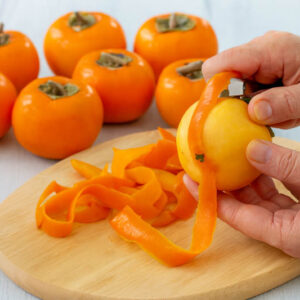
Scoop out the soft pulp, remove seeds, and use fresh, freeze, or cook for classic recipes.
They can cross-pollinate only in rare cases—grow both types for diversity, but choose your pollinators wisely.
They can sucker in wild spaces, but are unlikely to become a weed in gardens—mowing or pruning controls any unwanted shoots.
tyle=”font-size: 0.9em; color: #546e7a; margin: 8px 0;”>Updated: September 2025 • Reviewed by Gardenia Editors
| Hardiness |
4 - 9 |
|---|---|
| Heat Zones |
4 - 9 |
| Climate Zones | 3, 3A, 3B, 4, 5, 6, 7, 8, 9, 14, 15, 16, 18, 19, 20, 21, 22, 23 |
| Plant Type | Fruits, Trees |
| Plant Family | Ebenaceae |
| Genus | Diospyros |
| Common names | American Persimmon, Persimmon |
| Exposure | Full Sun, Partial Sun |
| Season of Interest | Spring (Late), Summer (Early), Fall, Winter |
| Height | 30' - 60' (9.1m - 18.3m) |
| Spread | 20' - 35' (6.1m - 10.7m) |
| Maintenance | Low |
| Water Needs | Average |
| Soil Type | Chalk, Clay, Loam, Sand |
| Soil pH | Acid, Alkaline, Neutral |
| Soil Drainage | Moist but Well-Drained, Well-Drained |
| Characteristics | Showy, Fruit & Berries |
| Native Plants | United States, Northeast, Pennsylvania, Connecticut, Delaware, Massachusetts, Maryland, New Jersey, Illinois, Indiana, Iowa, Kansas, Midwest, Missouri, Ohio, Southeast, Louisiana, Mississippi, North Carolina, South Carolina, Tennessee, Virginia, West Virginia, Alabama, Arkansas, Florida, Georgia, Kentucky, Southwest, Texas, Oklahoma |
| Tolerances | Drought, Dry Soil, Rocky Soil, Clay Soil, Heat, Wind, Poor Soil |
| Attracts | Bees, Butterflies, Birds |
| Garden Styles | Informal and Cottage |
| Toxic to Humans | No known toxicity |
| Toxic to Cats | No known toxicity |
| Toxic to Dogs | No known toxicity |
| Toxic to Horses | No known toxicity |


| Hardiness |
4 - 9 |
|---|---|
| Heat Zones |
4 - 9 |
| Climate Zones | 3, 3A, 3B, 4, 5, 6, 7, 8, 9, 14, 15, 16, 18, 19, 20, 21, 22, 23 |
| Plant Type | Fruits, Trees |
| Plant Family | Ebenaceae |
| Genus | Diospyros |
| Common names | American Persimmon, Persimmon |
| Exposure | Full Sun, Partial Sun |
| Season of Interest | Spring (Late), Summer (Early), Fall, Winter |
| Height | 30' - 60' (9.1m - 18.3m) |
| Spread | 20' - 35' (6.1m - 10.7m) |
| Maintenance | Low |
| Water Needs | Average |
| Soil Type | Chalk, Clay, Loam, Sand |
| Soil pH | Acid, Alkaline, Neutral |
| Soil Drainage | Moist but Well-Drained, Well-Drained |
| Characteristics | Showy, Fruit & Berries |
| Native Plants | United States, Northeast, Pennsylvania, Connecticut, Delaware, Massachusetts, Maryland, New Jersey, Illinois, Indiana, Iowa, Kansas, Midwest, Missouri, Ohio, Southeast, Louisiana, Mississippi, North Carolina, South Carolina, Tennessee, Virginia, West Virginia, Alabama, Arkansas, Florida, Georgia, Kentucky, Southwest, Texas, Oklahoma |
| Tolerances | Drought, Dry Soil, Rocky Soil, Clay Soil, Heat, Wind, Poor Soil |
| Attracts | Bees, Butterflies, Birds |
| Garden Styles | Informal and Cottage |
| Toxic to Humans | No known toxicity |
| Toxic to Cats | No known toxicity |
| Toxic to Dogs | No known toxicity |
| Toxic to Horses | No known toxicity |
How many Diospyros virginiana (American Persimmon) do I need for my garden?
| Plant | Quantity | |
|---|---|---|
| Diospyros virginiana (American Persimmon) | N/A | Buy Plants |
Create a membership account to save your garden designs and to view them on any device.
Becoming a contributing member of Gardenia is easy and can be done in just a few minutes. If you provide us with your name, email address and the payment of a modest $25 annual membership fee, you will become a full member, enabling you to design and save up to 25 of your garden design ideas.
Join now and start creating your dream garden!
Create a membership account to save your garden designs and to view them on any device.
Becoming a contributing member of Gardenia is easy and can be done in just a few minutes. If you provide us with your name, email address and the payment of a modest $25 annual membership fee, you will become a full member, enabling you to design and save up to 25 of your garden design ideas.
Join now and start creating your dream garden!