Meteor Cherry, Meteor Tart Cherry, Meteor Sour Cherry, Tart Cherry 'Meteor', Sour Cherry 'Meteor', Dwarf Cherry 'Meteor',Pie Cherry 'Meteor', Prunus cerasus Meteor.
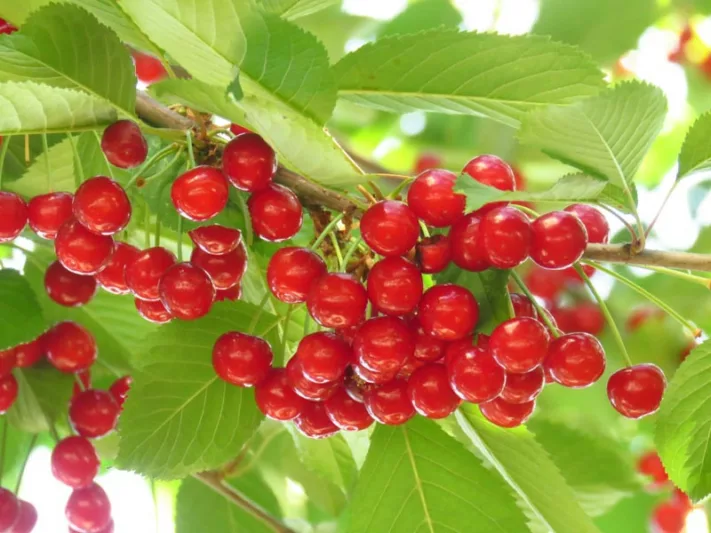


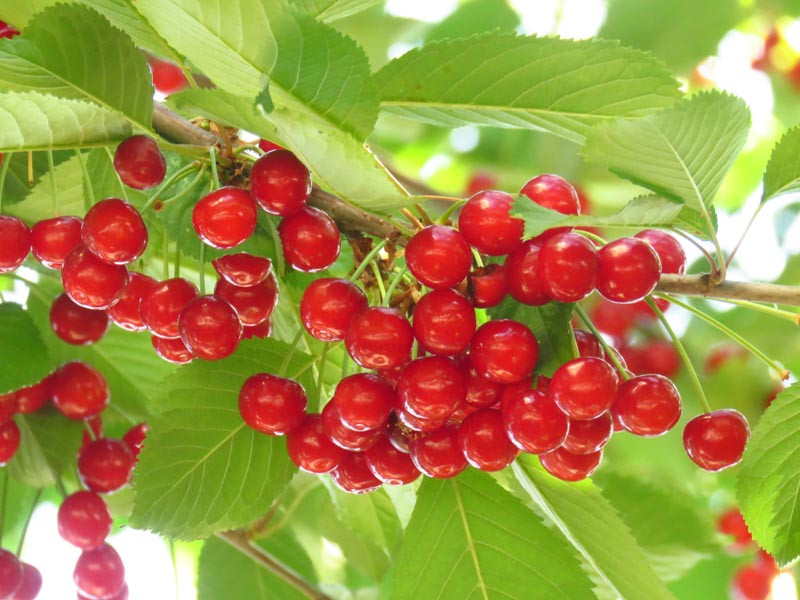
Summary: ‘Meteor’ is a compact, cold hardy tart cherry bred for northern gardens. It loads up with glossy red fruit on a small tree that fits most yards.
Taste: Lively tart with cherry aromatics. Great balance for baking, sauces, and juice.
Use: Excellent for pies, cobblers, preserves, dehydrating, and freezer packs.
Pollination: Self-fertile. A second tart cherry nearby can increase yield.
| Botanical Name | Prunus cerasus ‘Meteor’ |
|---|---|
| Family | Rosaceae (Rose family) |
| Common Names | Meteor tart cherry, sour cherry, pie cherry |
| Plant Type and Habit | Genetically compact, semi-dwarf tart cherry with rounded, spreading crown. |
| Hardiness (USDA) | Typically Zones 4 to 8; hardy selections often succeed in Zone 3 sites with good siting. |
| Size | About 10–14 ft tall x 8–12 ft wide at maturity, depending on rootstock and pruning. |
| Sun and Exposure | Full sun 6–8 hours or more. Morning sun helps dry blossoms and fruit. |
| Soil | Well-drained loam or sandy loam, slightly acidic to neutral. Avoid soggy sites; consider berms in heavy soils. |
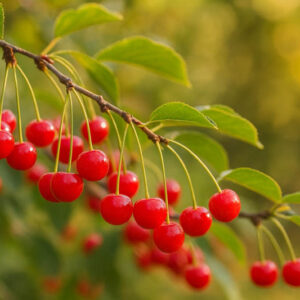
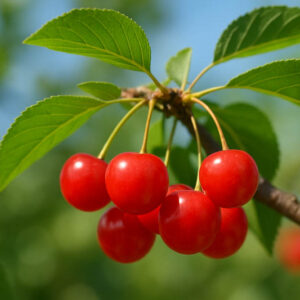
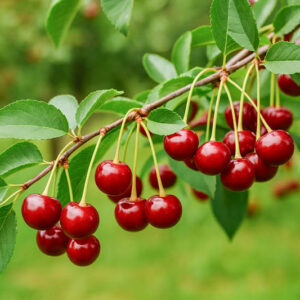
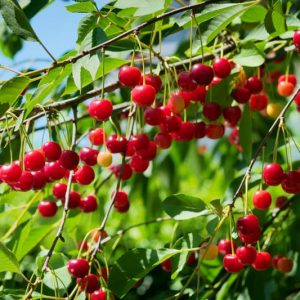
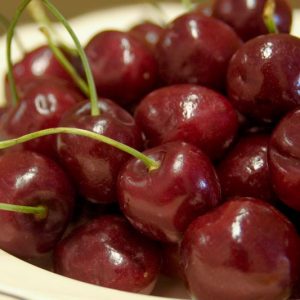
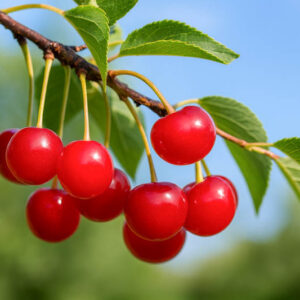
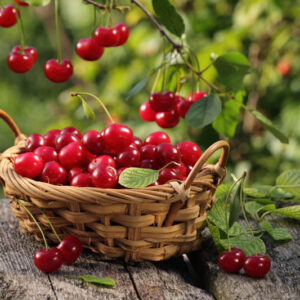
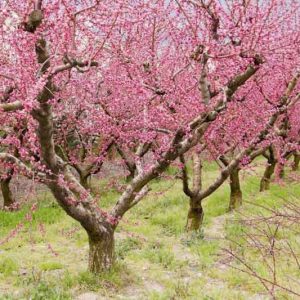
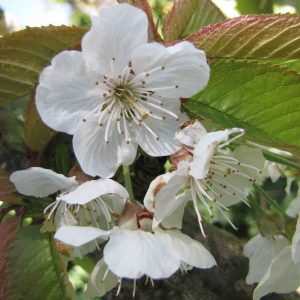
| Bloom and Fruit | Abundant white blossoms in late spring followed by heavy crops of bright red, mildly acid fruit with colorless juice for baking and sauce. |
| Season | Typically ripens mid July in many northern regions, about one week after ‘Montmorency’. |
| Chill Hours | Approx. 800 hours under 45°F for reliable bloom and set. |
| Pollination | Self-fertile; a nearby tart cherry can improve yield through overlapping bloom. |
| Primary Uses | Pies and galettes, cobblers, preserves, juice, dehydrating, freezing |
‘Meteor’ is a small tree with a big personality. It was bred to be tough, compact, and generous, so home gardeners could harvest armfuls of gleaming red cherries without needing an orchard ladder. Plant it where morning sun can dry petals after a spring shower, then enjoy pies, tarts, and jars of jewel-toned preserves all summer.
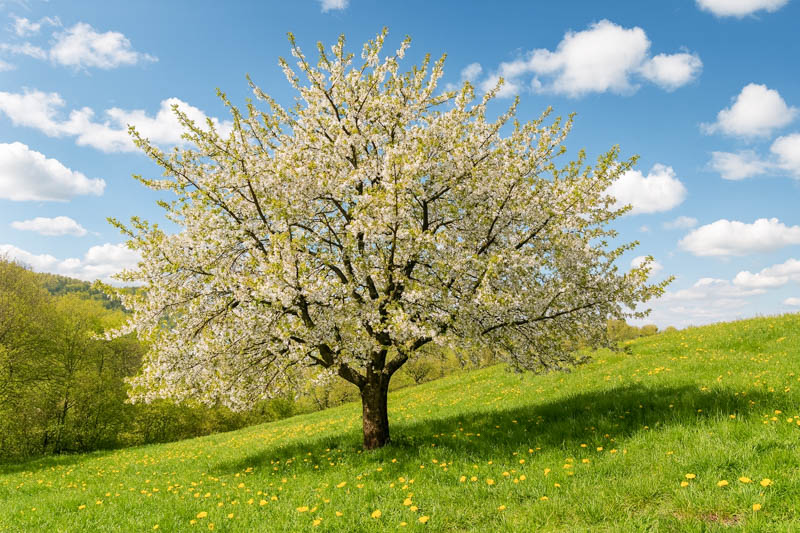
‘Meteor’ is a University of Minnesota release from 1952, selected for cold hardiness and reliable crops in short growing seasons. That pedigree shows in the tree’s toughness and its tidy habit that slides into modest yards without crowding patios or fences. In many regions it ripens about a week after ‘Montmorency’, which extends the sour cherry season in the home garden.
Notes: Seasons vary by climate and rootstock. Self-fertility is common in tart cherries, but nearby partners can increase yield.
| Cultivar | Color & Flesh | Flavor & Acidity | Texture/Firmness | Season* | Self-fertile? | Best Uses | Handling/Notes |
|---|---|---|---|---|---|---|---|
| Montmorency | Bright red skin, pale flesh | Lively tartness, aromatic | Juicy, medium firm | Early to mid | Yes | Pies, preserves, juice | Industry standard for pie filling |
| Balaton | Dark red skin and flesh | Tart with richer cherry depth | Firm for baking | Mid | Yes | Pies, drying, sauces | Deeper color in fillings |
| North Star | Red skin, light flesh | Tart-sweet balance | Compact tree fruit | Early | Yes | Small gardens, pies | Dwarf habit for easy netting |
| Early Richmond | Bright red skin, light flesh | Brisk tartness, higher acidity | Juicy, medium | Very early to early | Yes | Pies, preserves, sauce | Old American favorite, heavy cropper |
| Morello | Very dark red skin, dark red flesh | Bold tart, winey notes | Juicy | Late | Yes | Jams, desserts, liqueurs | Classic for Black Forest cake |
| Meteor | Bright red skin, light flesh | Lively tartness, good aromatics | Medium firm, compact-tree fruit | Early to mid | Yes | Pies, drying, freezer packs | Compact habit, reliable yields |
| Season | Tasks |
|---|---|
| Late winter | Prune to open the canopy. Remove dead or crossing wood. Avoid pruning in wet weather. |
| Spring bloom | Keep irrigation steady. Avoid spraying while pollinators are visiting. Enjoy the blossom show. |
| Fruit swell | Mulch, deep water, and thin clusters only where branches bend heavily. |
| Pre-harvest | Net trees as fruit turns bright red. Pick promptly at flavor peak to outsmart birds and cracking. |
| After harvest | Light shaping prune if needed. Remove mummified fruit. Top-dress with compost to feed soil life. |
| Fall | Deep water ahead of dry spells. Clean up leaf litter to lower disease pressure. |
Yield expectation: Mature trees produce commonly 30–50 lb per season in home orchards with good care.
Enjoy the flesh, but respect the plant. Pits, leaves, and stems contain cyanide releasing compounds and can be hazards for pets and children. See:
Prunus cerasus likely originated in Europe and Western Asia as a natural hybrid between sweet cherry (P. avium) and European dwarf cherry (P. fruticosa). It is widely cultivated in temperate regions and sometimes naturalizes near old homesteads, fence lines, and disturbed soils.
In North America, tart cherry is generally not considered invasive. It is an introduced species that is common in cultivation and only occasionally found outside gardens. Some counties or land managers place it on watch lists where local escape potential exists, yet it is not viewed as a major ecological threat across most regions. Status can vary by state or province, so check your local extension or invasive species council for the latest guidance.
A compact tart cherry cultivar of Prunus cerasus bred by the University of Minnesota for cold climates and home gardens.
Yes. It is typically self fruitful. Planting another tart cherry nearby can increase yield.
Usually mid season in cool climates, often about a week after Montmorency. In many northern areas that means around mid July.
Around 800 hours under 45°F is a common guideline for dependable bloom and set.
Plan for about 10–14 ft tall and 8–12 ft wide at maturity. Pruning and training can hold it smaller.
Bright, lively tartness with pleasant cherry aromatics. Excellent balance for pies, sauces, and juice.
Pies, cobblers, galettes, preserves, dehydrating, and freezer packs. Great for tart cherry syrup and mocktails.
Late winter structural pruning plus a light summer touch after harvest. Train to an open center or small modified central leader for light and airflow.
Yes for small yards. A true large container is possible with a dwarf root and regular pruning, but in ground planting is simpler.
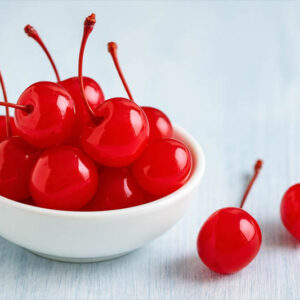
Yes, but expect a different result. Classic maraschinos are usually made from light sweet cherries like Royal Ann or Rainier that are firm and pale, then sweetened and flavored. Meteor is a tart cherry, naturally red and more acidic. Your homemade version will be deeper red, tangier, and a bit softer.
Plant ‘Meteor’ where you can see it from the kitchen window. Spring brings a cloud of white blossoms, midsummer brings bowls of ruby fruit, and the small stature makes care feel doable. Give it sun, drainage, steady water, and a thoughtful prune each year and you will have a tart cherry tradition worth repeating.
| Hardiness |
4 - 8 |
|---|---|
| Heat Zones |
1 - 8 |
| Plant Type | Fruits, Trees |
| Plant Family | Rosaceae |
| Genus | Cherries, Prunus - Fruit Tree |
| Common names | Cherry, Tart Cherry |
| Exposure | Full Sun |
| Season of Interest | Spring (Late), Summer (Early, Mid) |
| Height | 10' - 14' (3m - 4.3m) |
| Spread | 8' - 12' (240cm - 3.7m) |
| Maintenance | Low |
| Water Needs | Average |
| Soil Type | Chalk, Loam, Sand |
| Soil pH | Acid, Alkaline, Neutral |
| Soil Drainage | Moist but Well-Drained |
| Characteristics | Showy |
| Tolerances | Heat |
| Attracts | Bees, Birds, Butterflies |
| Garden Uses | Beds And Borders, Wall-Side Borders |
| Garden Styles | Informal and Cottage, Prairie and Meadow, Traditional Garden |
| Toxic to Humans | No known toxicity |
| Toxic to Cats | Toxic |
| Toxic to Dogs | Toxic |
| Toxic to Horses | Toxic |


| Hardiness |
4 - 8 |
|---|---|
| Heat Zones |
1 - 8 |
| Plant Type | Fruits, Trees |
| Plant Family | Rosaceae |
| Genus | Cherries, Prunus - Fruit Tree |
| Common names | Cherry, Tart Cherry |
| Exposure | Full Sun |
| Season of Interest | Spring (Late), Summer (Early, Mid) |
| Height | 10' - 14' (3m - 4.3m) |
| Spread | 8' - 12' (240cm - 3.7m) |
| Maintenance | Low |
| Water Needs | Average |
| Soil Type | Chalk, Loam, Sand |
| Soil pH | Acid, Alkaline, Neutral |
| Soil Drainage | Moist but Well-Drained |
| Characteristics | Showy |
| Tolerances | Heat |
| Attracts | Bees, Birds, Butterflies |
| Garden Uses | Beds And Borders, Wall-Side Borders |
| Garden Styles | Informal and Cottage, Prairie and Meadow, Traditional Garden |
| Toxic to Humans | No known toxicity |
| Toxic to Cats | Toxic |
| Toxic to Dogs | Toxic |
| Toxic to Horses | Toxic |
How many Prunus cerasus ‘Meteor’ (Tart Cherry) do I need for my garden?
| Plant | Quantity | |
|---|---|---|
| Prunus cerasus ‘Meteor’ (Tart Cherry) | N/A | Buy Plants |
Create a membership account to save your garden designs and to view them on any device.
Becoming a contributing member of Gardenia is easy and can be done in just a few minutes. If you provide us with your name, email address and the payment of a modest $25 annual membership fee, you will become a full member, enabling you to design and save up to 25 of your garden design ideas.
Join now and start creating your dream garden!
Create a membership account to save your garden designs and to view them on any device.
Becoming a contributing member of Gardenia is easy and can be done in just a few minutes. If you provide us with your name, email address and the payment of a modest $25 annual membership fee, you will become a full member, enabling you to design and save up to 25 of your garden design ideas.
Join now and start creating your dream garden!