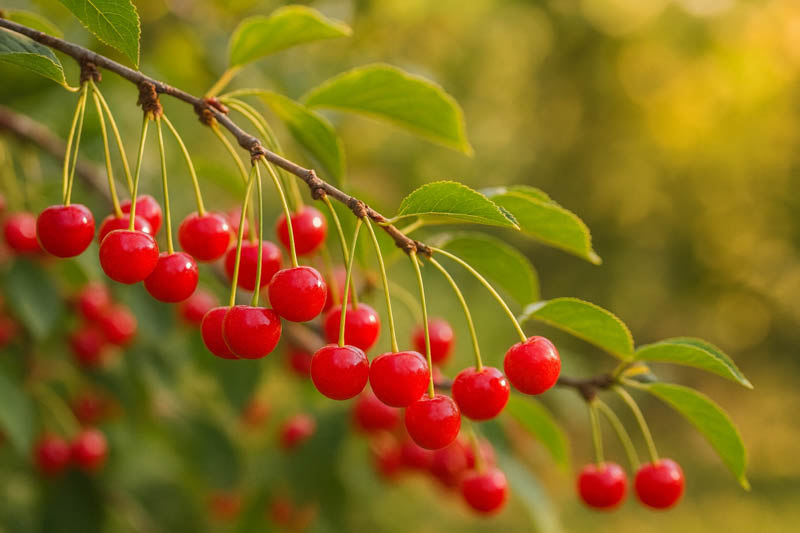
Cherry
Cherries pack a lot of charm into a small bite. A mature cherry tree can burst into clouds of blossoms in spring, then drip with jewel-toned fruit by early summer. If you love baking, discover why sour types concentrate beautifully in heat by exploring tart or sour cultivars. If your idea of perfection is a crisp, sweet snack, compare flavors, ripening windows, and pollination needs for dessert cherries with sweet cherry varieties.
Here is a fun planning twist. Many sweets are not self-fertile, so pairing compatible trees boosts yields. Get a big-picture look at ornamental bloomers, pie heroes, and everything in between with the cherry types guide, then choose neighbors that help your trees thrive using this list of best companion plants. Good companions draw pollinators, cool the soil, and can even confuse pests.
Nutrition gets a spotlight too. Cherries provide vitamin C, potassium, fiber, and polyphenols that support recovery after activity. Skim the highlights in this handy overview on cherry nutrition benefits. Shopping tip you can use today. Pick fruit that is firm with green stems, stash it unwashed in the fridge, and rinse just before eating. Frozen and dried cherries keep the season alive in smoothies and bakes.
Not all cherries are the same species. Black cherry is a North American native valued for timber and wildlife, and its fruit is usually processed rather than eaten fresh. Speaking of kitchen classics, maraschino began as a liqueur-soaked delicacy. Learn how modern versions differ and how to craft your own with this guide to maraschino cherries.
Pet parent tip. Keep pits, leaves, and stems away from animals. Read species-specific advice for cats and separate guidance for dogs. With a sunny spot, a little care, and the right partners in the garden, your cherry tree can turn spring into a fireworks show and summer into a bowl of bright, happy flavors.