Create Your Garden

North Carolina Native Shrubs with Showy Flowers or Fruits

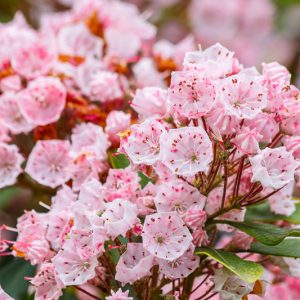
North Carolina is home to many native shrubs that offer stunning flowers and fruits. Notable examples include Mountain Laurel (Kalmia latifolia), which features beautiful clusters of pink blooms, and Beautyberry (Callicarpa americana), known for its vibrant purple berries.
Native Plants, Native Deciduous Shrubs, North Carolina Native Shrubs, Showy Flowers, Show Fruits,

North Carolina Native Shrubs with Showy Flowers or Fruits – Color, Fragrance, And Berries For Wildlife-Friendly Yards

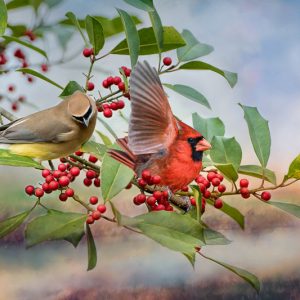
Want a front walk that glows with spring azalea blossoms, a patio edged in fragrant summer flowers, or fall berries that pull in bluebirds and cedar waxwings? North Carolina native shrubs with showy flowers or fruits are perfect for turning ordinary beds into four-season focal points. These shrubs thrive in our humid summers, handle real-world garden soils, and reward you with eye-catching blooms, colorful berries, and strong wildlife value.

North Carolina Showy Shrub Quick Start

  • Decide what “showy” means for you – big hydrangea flower heads, clouds of azalea blossoms, glowing fall berries, or all of the above. Choose shrubs that shine in the season you use your yard most.
  • Match shrub to light and moisture – many azaleas, mountain laurel, and honeycup like dappled woodland light, while beautyberry, chokeberry, and ninebark are happiest in full sun or light shade. Check whether your site is dry, average, or moist before planting.
  • Layer bloom times – aim for a sequence of spring azaleas and sweetspire, early summer hydrangeas and summersweet, and later color from beautyberry, chokeberry, winterberry, and mountain laurel.
  • Think in groups, not singles – repeating the same native shrub in drifts of 3, 5, or 7 looks more natural and gives a stronger splash of color than scattering one of everything.
  • Mulch and water the first 1 to 2 seasons – even tough native shrubs appreciate a 2 to 3 inch mulch layer and steady water while they are getting established. After that, most handle normal North Carolina summer dry spells with minimal fuss.

North Carolina Regions At A Glance For Showy Native Shrubs

From cool spruce-fir peaks to sandy coastal plains, North Carolina offers a wide range of native shrubs with showy flowers or fruits. Choose species and varieties that match your home landscape’s region and microclimate.

  • Mountains and high valleys – cool nights, sloping sites, and often acidic woodland soils. Classic native shrubs here include Kalmia latifolia (Mountain Laurel), Rhododendron maximum (Great Laurel), Rhododendron catawbiense (Catawba Rosebay), Rhododendron vaseyi (Pink-Shell Azalea), and spring-blooming azaleas like Rhododendron calendulaceum (Flame Azalea) and Rhododendron periclymenoides (Pinxterbloom Azalea).
  • Piedmont gardens and woodland edges – rolling clay soils, hot summers, and plenty of part-sun situations. Try Callicarpa americana (American Beautyberry), Aronia arbutifolia (Red Chokeberry), Physocarpus opulifolius (Common Ninebark), Itea virginica (Virginia Sweetspire), Fothergilla gardenii (Dwarf Fothergilla), and native hydrangeas such as Hydrangea arborescens (Smooth Hydrangea) and Hydrangea quercifolia (Oakleaf Hydrangea).
  • Sandhills and dry uplands – sandy, fast-draining soils that heat up quickly. Many azaleas shine here, including Rhododendron austrinum (Florida Flame Azalea), Rhododendron canescens (Mountain Azalea), and Rhododendron alabamense (Alabama Azalea). Beautyberry, chokeberry, and ninebark are also excellent choices for sunny, well-drained beds.
  • Coastal plain, wetlands, and low spots – higher humidity, acidic soils, and sometimes poorly drained ground. For moist, sunny to part-shade areas, choose Ilex verticillata (Winterberry), Clethra alnifolia (Summersweet), Itea virginica, Zenobia pulverulenta (Honeycup), and moisture-tolerant azaleas like Rhododendron atlanticum (Coastal Azalea) and Rhododendron viscosum (Swamp Azalea).

Walk your yard in spring and again in midsummer. Note which spaces get morning sun and afternoon shade, which stay moist after thunderstorms, and which dry quickly. Matching your North Carolina native shrubs to these conditions is the secret to big flower displays and heavy berry crops.

Best North Carolina Native Shrubs With Showy Flowers Or Fruits

Use this list as a menu of dependable native shrubs that shine with blossoms or berries in North Carolina landscapes. Mix early and late bloomers, evergreen structure, and fruiting powerhouses so your garden has something special happening from March through January.

Guide Information

Plant Type Shrubs
Native Plants North Carolina, Southeast, United States
Aronia arbutifolia (Red Chokeberry)
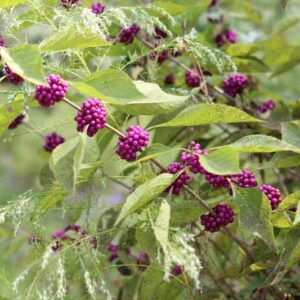
Callicarpa americana (American Beautyberry)
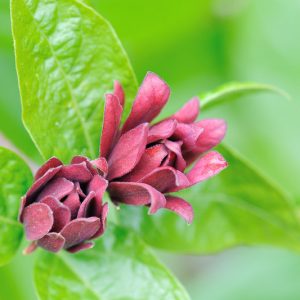
Calycanthus floridus (Carolina Allspice)
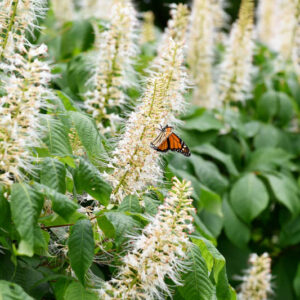
Clethra alnifolia (Summersweet)
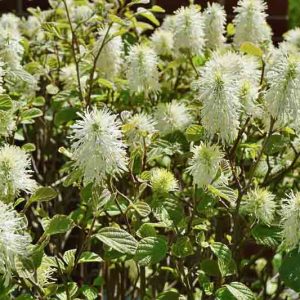
Fothergilla gardenii (Dwarf Fothergilla)
Hydrangea arborescens (Smooth Hydrangea)
Hydrangea quercifolia (Oakleaf Hydrangea)
Hypericum prolificum (Shrubby St. John’s Wort)
Ilex verticillata (Winterberry)
Itea virginica (Virginia Sweetspire)
Kalmia latifolia (Mountain Laurel)
Physocarpus opulifolius (Common Ninebark)
Rhododendron alabamense (Alabama Azalea)
Rhododendron atlanticum (Coastal Azalea)
Rhododendron austrinum (Florida Flame Azalea)
Rhododendron calendulaceum (Flame Azalea)
Rhododendron canescens (Mountain Azalea)
Rhododendron catawbiense (Catawba Rosebay)
Rhododendron maximum (Great Laurel)
Rhododendron periclymenoides (Pinxterbloom Azalea)
Rhododendron prinophyllum (Roseshell Azalea)
Rhododendron vaseyi (Pink-Shell Azalea)
Rhododendron viscosum (Swamp Azalea)
Zenobia pulverulenta (Honeycup)

Easy Pattern Recipes For Colorful Native Shrub Borders

Spring Azalea And Laurel Woodland Edge: Along a dappled woodland boundary, combine Rhododendron periclymenoides (Pinxterbloom Azalea), Rhododendron vaseyi (Pink-Shell Azalea), and Rhododendron calendulaceum (Flame Azalea) with evergreen Kalmia latifolia (Mountain Laurel) and Rhododendron maximum (Great Laurel). You get waves of pink, orange, and white flowers from early to late spring plus evergreen foliage all year.

Summer Fragrance And Pollinator Strip: Near a deck or patio, plant Clethra alnifolia (Summersweet), Calycanthus floridus (Carolina Allspice), Itea virginica (Virginia Sweetspire), and Hydrangea arborescens (Smooth Hydrangea). Add Fothergilla gardenii for early bottlebrush blooms. Bees, butterflies, and hummingbirds will work these shrubs all season.

Berry Buffet For Birds: Along a fence or property line in full sun to light shade, mix Callicarpa americana (American Beautyberry), Aronia arbutifolia (Red Chokeberry), Ilex verticillata (Winterberry), and Physocarpus opulifolius (Common Ninebark). Beautyberry’s purple clusters, chokeberry’s red fruit, and winterberry’s bright berries keep the border glowing and feed songbirds well into winter.

Moist Low-Spot Flower And Fruit Hedge: In a rain garden or low swale, combine Clethra alnifolia, Itea virginica, Zenobia pulverulenta (Honeycup), and Rhododendron viscosum (Swamp Azalea) for sweet fragrance and showy blooms even where soils stay damp. Add Ilex verticillata for brilliant red winter berries.

Why Choose Showy Native Shrubs In North Carolina?

Imported shrubs like burning bush, non-native forsythia, and many double-flowered hybrids may put on a show but often offer little for pollinators and birds. North Carolina native shrubs evolved with our climate and wildlife, so they deliver beauty and ecological benefits.

  • Climate adapted – native shrubs handle humid summers, variable rainfall, and the occasional cold snap in USDA zones 6 to 9 across the state.
  • Pollinator friendly flowers – sweetspire, summersweet, beautyberry, fothergilla, hydrangeas, mountain laurel, and azaleas support native bees, butterflies, and hummingbirds with nectar-rich blooms.
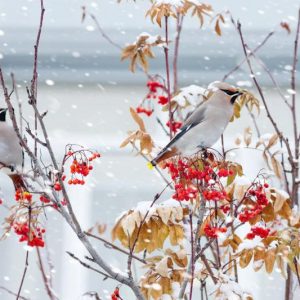
  • High wildlife value fruit – berries from chokeberry, beautyberry, winterberry, and ninebark are essential food sources for songbirds and small mammals through fall and winter.
  • Lower maintenance – once established in the right spot, most native shrubs need only occasional pruning to shape and light mulch renewal. They typically require less fertilizer, watering, and pest control than many non-native ornamentals.
  • Sense of place – azaleas in spring woods, beautyberries along paths, and winterberry glowing in low swales instantly connect your yard to the forests, wetlands, and hillsides of North Carolina.

Tip: When in doubt, plant native shrubs in mixed clusters with complementary bloom times and heights. Diversity creates better habitat, longer flowering seasons, and more resilience if one species has a tough year.

North Carolina Native Shrubs With Showy Flowers Or Fruits To Know

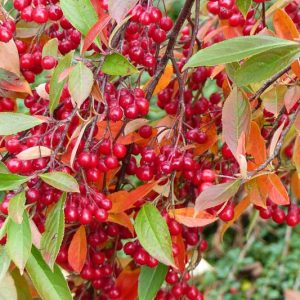
  • Aronia arbutifolia (Red Chokeberry) – upright shrub with white spring flowers, glossy red fall berries that persist into winter, and fiery red foliage.
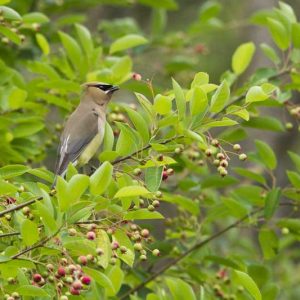
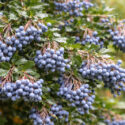
  • Callicarpa americana (American Beautyberry) – arching stems and glowing clusters of purple berries that ring the branches in late summer and fall, beloved by birds.
  • Calycanthus floridus (Carolina Allspice) – fragrant burgundy-brown spring flowers and aromatic bark and foliage, great near paths and seating areas.
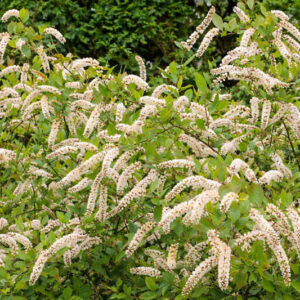
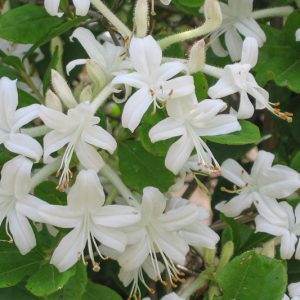
  • Clethra alnifolia (Summersweet) – mid to late summer spikes of white or pink fragrant flowers on a compact shrub that thrives in moist soils and part shade.
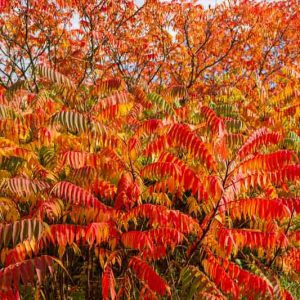
  • Fothergilla gardenii (Dwarf Fothergilla) – early spring bottlebrush flowers before the leaves emerge, followed by outstanding orange, red, and yellow fall color.
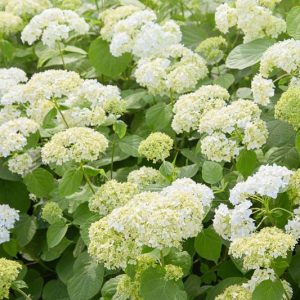
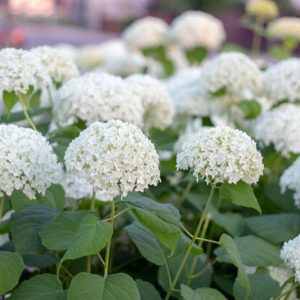
  • Hydrangea arborescens (Smooth Hydrangea) – broad, domed flower heads that bloom on new wood, reliable in part shade and average soils.
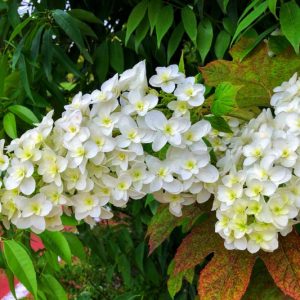
  • Hydrangea quercifolia (Oakleaf Hydrangea) – bold leaves, large white flower panicles that age to pink, and rich burgundy fall foliage, excellent as a focal shrub.
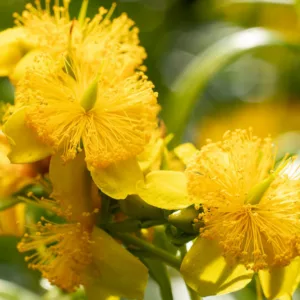
  • Hypericum prolificum (Shrubby St. John’s Wort) – compact, sun-loving shrub covered with bright yellow summer flowers that attract bees.
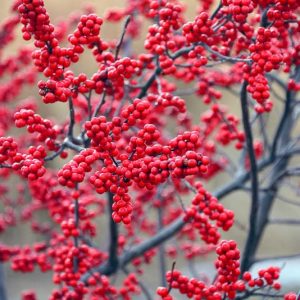
  • Ilex verticillata (Winterberry) – deciduous holly with bare winter stems studded with red berries, spectacular in wet or average soils. Plant a male pollinator for best fruit set.
  • Itea virginica (Virginia Sweetspire) – graceful arching shrub with white, fragrant flower tassels in late spring and outstanding red to purple fall foliage.
  • Kalmia latifolia (Mountain Laurel) – evergreen shrub with intricate pink or white flower clusters in late spring, ideal for cool, acidic, woodland sites.
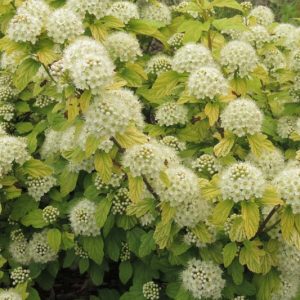
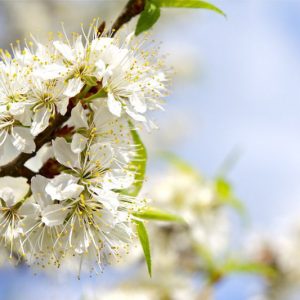
  • Physocarpus opulifolius (Common Ninebark) – tough shrub with white spring flowers, peeling bark, and decorative seed heads, available in several foliage colors.
  • Rhododendron alabamense (Alabama Azalea) – deciduous azalea with fragrant white flowers and yellow blotches that light up woodland edges.
  • Rhododendron atlanticum (Coastal Azalea) – low, spreading azalea with highly fragrant, pale flowers suited to sandy or coastal sites.
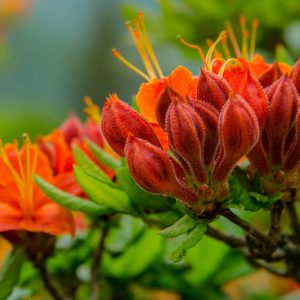
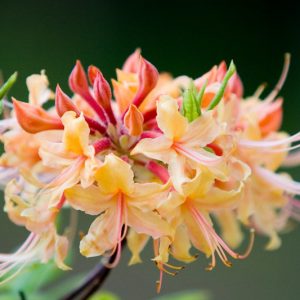
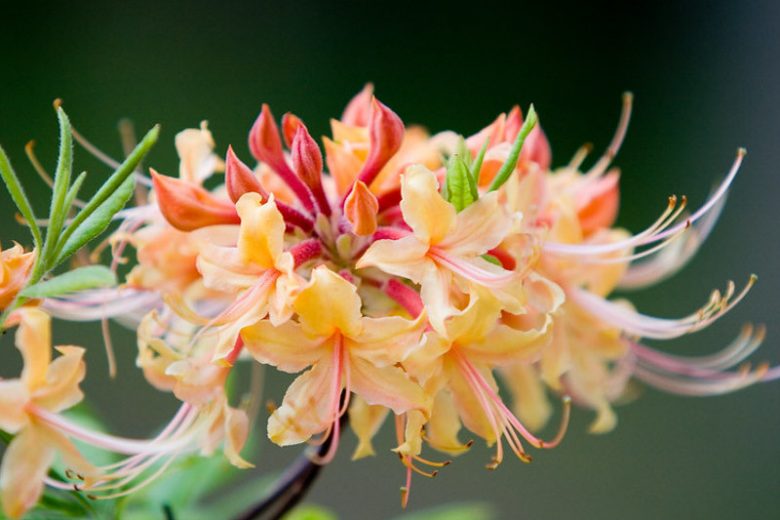
  • Rhododendron austrinum (Florida Flame Azalea) – show-stopping orange to yellow fragrant flowers that attract hummingbirds, great in bright woodland light.
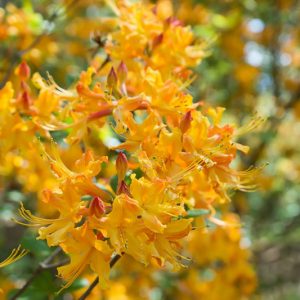
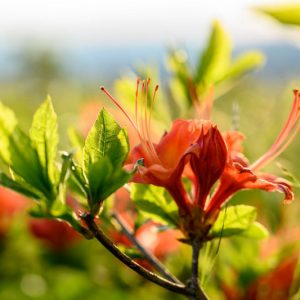
  • Rhododendron calendulaceum (Flame Azalea) – upright shrub with vivid orange, red, or yellow blossoms, a mountain classic that also works in many Piedmont gardens with acidic soil.
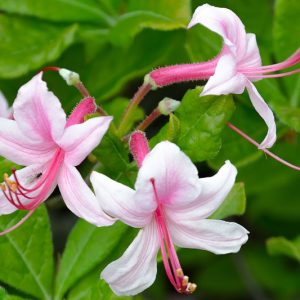
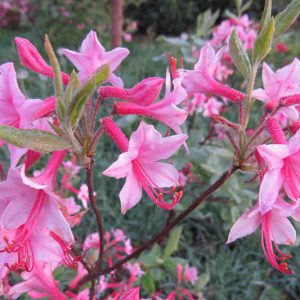
  • Rhododendron canescens (Mountain Azalea) – soft pink, fragrant flowers in spring on a graceful, upright shrub for part shade and well-drained soil.
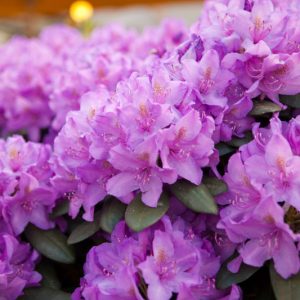
  • Rhododendron catawbiense (Catawba Rosebay) – broadleaf evergreen rhododendron with large purple or lavender flower trusses, ideal for cool, moist, acidic sites.
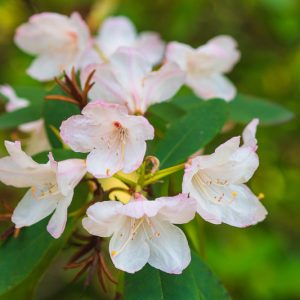
  • Rhododendron maximum (Great Laurel) – tall evergreen rhododendron with white to pinkish flower clusters, often forming dramatic thickets in mountain ravines.
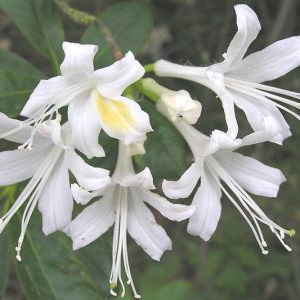
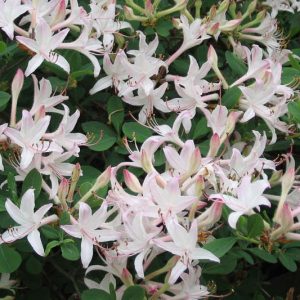
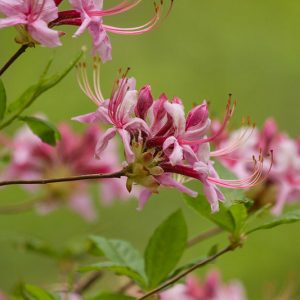
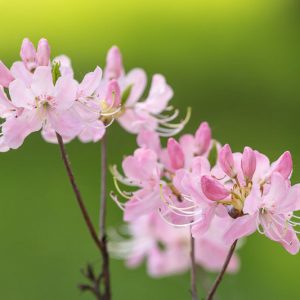
  • Rhododendron periclymenoides (Pinxterbloom Azalea) – early blooming azalea with light pink, spider-like flowers and excellent fragrance.
  • Rhododendron prinophyllum (Roseshell Azalea) – fragrant rose-pink flowers before or with the leaves, tolerant of cold and ideal for woodland borders.
  • Rhododendron vaseyi (Pink-Shell Azalea) – rare mountain shrub with shell-pink flowers on bare branches, stunning along streams or cool slopes.
  • Rhododendron viscosum (Swamp Azalea) – late-blooming white to pink flowers with a strong clove-like fragrance, well suited to moist or wet acidic soils.
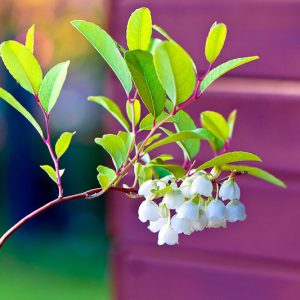
  • Zenobia pulverulenta (Honeycup) – compact evergreen to semi-evergreen shrub with nodding white bell flowers in late spring and glaucous blue-green foliage.

Bringing Showy North Carolina Native Shrubs Into Your Design

Sketch your property and mark key views – the mailbox, front walk, back patio, and the beds you see from favorite windows. Place high-impact shrubs like oakleaf hydrangea, mountain laurel, and big native azaleas where you want major seasonal drama. Use berry producers such as beautyberry, chokeberry, winterberry, and ninebark along fences and property lines to feed birds and extend color into fall and winter.

Layer tall shrubs toward the back, medium growers like sweetspire, summersweet, fothergilla, and hydrangeas in the middle, and smaller or spreading plants like honeycup or low azaleas near paths. Underplant with native ferns, woodland phlox, or warm-season grasses instead of thirsty lawn. In just a few seasons, your yard can transform into a vibrant, wildlife-friendly North Carolina native shrub garden bursting with showy flowers and fruits.

Discover More North Carolina Native Plants

Plant Finder

Frequently Asked Questions

What are some of the showiest flowering native shrubs for North Carolina gardens?

Several native shrubs are standouts for big, eye-catching blooms. Hydrangea arborescens (smooth hydrangea) and Hydrangea quercifolia (oakleaf hydrangea) offer large white flower clusters, with oakleaf hydrangea adding rich fall color. Native azaleas and rhododendrons such as Rhododendron calendulaceum (flame azalea), R. maximum (great laurel), R. canescens (mountain azalea), and R. austrinum (Florida flame azalea) provide clouds of pink, orange, yellow, or white spring flowers. Kalmia latifolia (mountain laurel) brings intricate, cup-shaped blooms, while Clethra alnifolia (summersweet) and Fothergilla gardenii (dwarf fothergilla) add fragrant summer flower spikes and bottlebrushes.

Which native shrubs have the most colorful or persistent fruits and berries?

For vivid fruit displays, Aronia arbutifolia (red chokeberry) and Ilex verticillata (winterberry holly) carry heavy crops of bright red berries that can last well into winter if birds do not eat them all at once. Callicarpa americana (American beautyberry) is famous for its electric purple berry clusters along the stems in late summer and fall. Some hydrangeas, especially oakleaf hydrangea, develop attractive dried flower heads and seed structures that add texture through winter. Many native azaleas set small seed capsules that are less showy but still provide seasonal interest.

Do these shrubs prefer sun or shade?

Most flowering and fruiting native shrubs perform best in part sun – roughly 4 to 6 hours of direct light – especially morning sun with afternoon shade. Smooth hydrangea, oakleaf hydrangea, mountain laurel, and most native rhododendrons prefer filtered light or bright shade and may scorch in hot, all-day sun. Clethra alnifolia, Itea virginica (Virginia sweetspire), and Fothergilla gardenii tolerate more sun if soil stays consistently moist. Hypericum prolificum (shrubby St. John’s wort), Physocarpus opulifolius (common ninebark), and Aronia arbutifolia will flower and color best in full sun but still grow in light shade.

Which native shrubs are best for attracting pollinators and songbirds?

Clethra alnifolia, Fothergilla gardenii, Hypericum prolificum, and Itea virginica produce nectar-rich flowers that draw bees, butterflies, and other pollinators. Native azaleas, mountain laurel, and hydrangeas also support a variety of pollinating insects. For birds, fruiting shrubs are key: American beautyberry, red chokeberry, winterberry holly, and Virginia sweetspire provide berries and cover for many songbirds. Dense rhododendron and azalea plantings offer valuable nesting and shelter habitat in woodland edges.

Which native shrubs with showy flowers or fruits can handle wet or heavy soils?

Itea virginica (Virginia sweetspire) and Clethra alnifolia (summersweet) naturally grow along streams and in moist thickets, making them excellent choices for rain gardens, swales, and low spots that stay damp. Ilex verticillata (winterberry) also prefers acidic, consistently moist soil and tolerates seasonal flooding. Smooth hydrangea can adapt to heavier soils if drainage is not completely stagnant. In contrast, mountain laurel and most rhododendrons demand well-drained, humus-rich, acidic soil and are poor choices for compacted or waterlogged sites.

Are any of these showy native shrubs suitable for smaller gardens or foundation beds?

Yes. Dwarf selections of Hydrangea arborescens and Hydrangea quercifolia, compact forms of Physocarpus opulifolius, and low-growing Hypericum prolificum fit well into smaller spaces. Clethra alnifolia and Itea virginica are naturally medium-sized shrubs that can be kept in scale with light pruning. Some native azaleas, such as Rhododendron atlanticum (coastal azalea) and Rhododendron alabamense (Alabama azalea), stay more modest in size compared to great laurel. Choosing named cultivars with known mature dimensions will help avoid overcrowding near walkways and windows.

What soil conditions do flowering and fruiting native shrubs prefer in North Carolina?

Most of these shrubs perform best in slightly acidic, well-drained but moisture-retentive soils rich in organic matter. Woodland species such as rhododendrons, mountain laurel, coastal azalea, and flame azalea thrive in leaf mold–rich, high-organic soils that mimic forest duff. Hydrangeas, sweetspire, winterberry, and summersweet appreciate steady moisture and benefit from compost and leaf mulch. Ninebark, shrubby St. John’s wort, and red chokeberry are more tolerant of average or slightly drier garden soils once established.

Are any of these native shrubs evergreen?

Many of the showiest berry producers, such as winterberry holly, sweetspire, and beautyberry, are deciduous and lose their leaves in winter, which actually makes the fruit more visible. However, Kalmia latifolia (mountain laurel) and several rhododendron species, including Rhododendron maximum (great laurel), are broadleaf evergreens that hold their foliage year-round. Their glossy green leaves provide structure and screening in winter and make a strong backdrop for flowering perennials and deciduous shrubs with colorful berries.

Which native shrubs with showy flowers or fruits are relatively low-maintenance for beginners?

Clethra alnifolia, Itea virginica, Hypericum prolificum, Physocarpus opulifolius, and Aronia arbutifolia generally require minimal pruning and tolerate typical garden conditions once established. Hydrangea arborescens is forgiving about soil and light compared to many rhododendrons. Winterberry holly is easy if you provide consistently moist, acidic soil and plant at least one male pollinator for a group of females. Native azaleas and mountain laurel are more particular but reward careful siting in part shade and acidic, organic soil with spectacular spring displays.

References

Updated: November 2025 • Reviewed by Gardenia Editors

Recommended Guides

Great Pollinator Plants for North Carolina
Monarch Nectar Plants for North Carolina
North Carolina Native Shrubs that Attract Wildlife
Shade-Loving Native Shrubs for North Carolina
Native Vines for North Carolina
Native Ferns for North Carolina
Native Grasses for North Carolina
50 Native Wildflowers for North Carolina
Native Groundcovers for North Carolina
36 North Carolina Wildflowers for Sunny Gardens
33 North Carolina Wildflowers for the Shade Garden
North Carolina Native Trees with Showy Flowers or Fruits
North Carolina Native Shrubs with Showy Flowers or Fruits
North Carolina Native Trees for Dry Sites
North Carolina Native Shrubs for Dry Sites
North Carolina Native Trees that Attract Wildlife
Native Evergreen Trees for North Carolina
Native Deciduous Trees for North Carolina
Invasive Plant Species in North Carolina
Sun-Loving Native Shrubs for North Carolina
Native Annuals and Perennials for North Carolina Mountain Region
Native Shrubs for North Carolina Mountain Region
Native Trees for North Carolina Mountain Region
Explore Great Plant Combination Ideas
Middle South Lower South
While every effort has been made to describe these plants accurately, please keep in mind that height, bloom time, and color may differ in various climates. The description of these plants has been written based on numerous outside resources.

Guide Information

Plant Type Shrubs
Native Plants North Carolina, Southeast, United States
Explore Great Plant Combination Ideas
Middle South Lower South

Related Items

Please Login to Proceed

You Have Reached The Free Limit, Please Subscribe to Proceed

Subscribe to Gardenia

To create additional collections, you must be a paid member of Gardenia
  • Add as many plants as you wish
  • Create and save up to 25 garden collections
Become a Member

Plant Added Successfully

Your garden is taking shape. Unlock full planning.

You’ve reached the free limit. Upgrade for $25/year to add as many plants as you wish and save up to 25 garden collections. Unlock Annual Membership

Update Your Credit
Card Information

Cancel

Create a New Collection

Sign Up to Our Newsletter

    You have been subscribed successfully

    Join Gardenia.net

    Create a membership account to save your garden designs and to view them on any device.

    Becoming a contributing member of Gardenia is easy and can be done in just a few minutes. If you provide us with your name, email address and the payment of a modest $25 annual membership fee, you will become a full member, enabling you to design and save up to 25 of your garden design ideas.

    Join now and start creating your dream garden!

    Join Gardenia.net

    Create a membership account to save your garden designs and to view them on any device.

    Becoming a contributing member of Gardenia is easy and can be done in just a few minutes. If you provide us with your name, email address and the payment of a modest $25 annual membership fee, you will become a full member, enabling you to design and save up to 25 of your garden design ideas.

    Join now and start creating your dream garden!
    Find your Hardiness Zone

    Find your Heat Zone

    Find your Climate Zone