Common Ninebark, Atlantic Ninebark
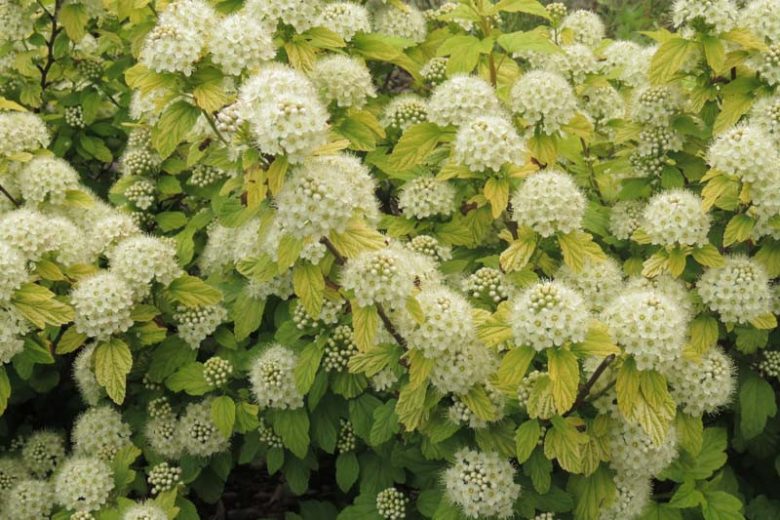


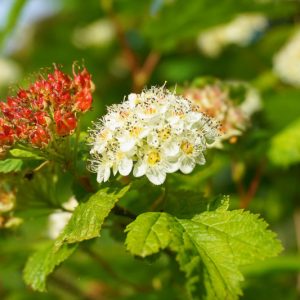
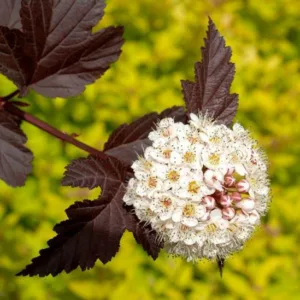
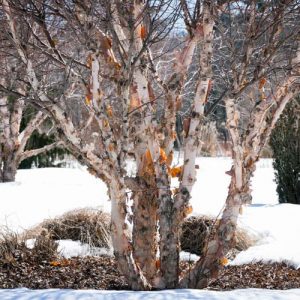
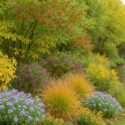
Physocarpus opulifolius (Common Ninebark) is a fast-growing, upright, spreading, deciduous shrub with an exquisite fountain shape and incredibly decorative exfoliating bark. Profuse creamy-white flowers, delicately pink-tinged, appear in dense, rounded clusters in late spring before they give way to drooping clusters of red fruit in fall. Rich in nectar, the blossoms attract plenty of beneficial insects. The flowers contrast beautifully with the interesting maple-like foliage of green lobed leaves, which turns yellow in the fall. Hidden by the foliage during the growing season, the bark is revealed in all its splendor later in the season, peeling in multiple strips to display layers of reddish to light brown inner bark, providing winter interest. Known for its strong hardiness, insect and disease resistance, and drought tolerance, Common Ninebark is a splendid screening and hedge plant.
| Hardiness |
2 - 8 |
|---|---|
| Heat Zones |
1 - 10 |
| Climate Zones | 1, 1A, 1B, 2, 2A, 2B, 3, 3A, 3B, 4, 5, 6, 7, 8, 9, 10, 14, 15, 16, 17, A1, A2, A3 |
| Plant Type | Shrubs |
| Plant Family | Rosaceae |
| Genus | Physocarpus |
| Common names | Common Ninebark, Ninebark |
| Exposure | Full Sun, Partial Sun |
| Season of Interest | Spring (Late), Summer (Early, Late), Fall |
| Height | 5' - 8' (150cm - 240cm) |
| Spread | 4' - 6' (120cm - 180cm) |
| Spacing | 48" - 72" (120cm - 180cm) |
| Maintenance | Low |
| Water Needs | Low, Average |
| Soil Type | Clay, Loam, Sand |
| Soil pH | Acid, Neutral |
| Soil Drainage | Moist but Well-Drained, Well-Drained |
| Characteristics | Showy |
| Native Plants | United States, Pennsylvania, Rhode Island, Vermont, Connecticut, Delaware, Maine, Massachusetts, Maryland, New Hampshire, New Jersey, New York, Northeast, Midwest, Southeast, Southwest, Rocky Mountains, Illinois, Indiana, Iowa, Kansas, Michigan, Minnesota, Missouri, Nebraska, North Dakota, Ohio, South Dakota, Wisconsin, North Carolina, South Carolina, Tennessee, Virginia, West Virginia, Alabama, Arkansas, Florida, Georgia, Kentucky, Oklahoma, Colorado |
| Tolerances | Drought, Dry Soil, Rocky Soil, Clay Soil, Wet Soil, Heat, Fire |
| Attracts | Birds |
| Garden Uses | Banks And Slopes, Beds And Borders, Hedges And Screens |
| Garden Styles | Informal and Cottage, Traditional Garden |
| Toxic to Humans | No known toxicity |
| Toxic to Cats | No known toxicity |
| Toxic to Dogs | No known toxicity |
| Toxic to Horses | No known toxicity |


| Hardiness |
2 - 8 |
|---|---|
| Heat Zones |
1 - 10 |
| Climate Zones | 1, 1A, 1B, 2, 2A, 2B, 3, 3A, 3B, 4, 5, 6, 7, 8, 9, 10, 14, 15, 16, 17, A1, A2, A3 |
| Plant Type | Shrubs |
| Plant Family | Rosaceae |
| Genus | Physocarpus |
| Common names | Common Ninebark, Ninebark |
| Exposure | Full Sun, Partial Sun |
| Season of Interest | Spring (Late), Summer (Early, Late), Fall |
| Height | 5' - 8' (150cm - 240cm) |
| Spread | 4' - 6' (120cm - 180cm) |
| Spacing | 48" - 72" (120cm - 180cm) |
| Maintenance | Low |
| Water Needs | Low, Average |
| Soil Type | Clay, Loam, Sand |
| Soil pH | Acid, Neutral |
| Soil Drainage | Moist but Well-Drained, Well-Drained |
| Characteristics | Showy |
| Native Plants | United States, Pennsylvania, Rhode Island, Vermont, Connecticut, Delaware, Maine, Massachusetts, Maryland, New Hampshire, New Jersey, New York, Northeast, Midwest, Southeast, Southwest, Rocky Mountains, Illinois, Indiana, Iowa, Kansas, Michigan, Minnesota, Missouri, Nebraska, North Dakota, Ohio, South Dakota, Wisconsin, North Carolina, South Carolina, Tennessee, Virginia, West Virginia, Alabama, Arkansas, Florida, Georgia, Kentucky, Oklahoma, Colorado |
| Tolerances | Drought, Dry Soil, Rocky Soil, Clay Soil, Wet Soil, Heat, Fire |
| Attracts | Birds |
| Garden Uses | Banks And Slopes, Beds And Borders, Hedges And Screens |
| Garden Styles | Informal and Cottage, Traditional Garden |
| Toxic to Humans | No known toxicity |
| Toxic to Cats | No known toxicity |
| Toxic to Dogs | No known toxicity |
| Toxic to Horses | No known toxicity |
How many Physocarpus opulifolius (Common Ninebark) do I need for my garden?
| Plant | Quantity | |
|---|---|---|
| Physocarpus opulifolius (Common Ninebark) | N/A | Buy Plants |
Create a membership account to save your garden designs and to view them on any device.
Becoming a contributing member of Gardenia is easy and can be done in just a few minutes. If you provide us with your name, email address and the payment of a modest $25 annual membership fee, you will become a full member, enabling you to design and save up to 25 of your garden design ideas.
Join now and start creating your dream garden!
Create a membership account to save your garden designs and to view them on any device.
Becoming a contributing member of Gardenia is easy and can be done in just a few minutes. If you provide us with your name, email address and the payment of a modest $25 annual membership fee, you will become a full member, enabling you to design and save up to 25 of your garden design ideas.
Join now and start creating your dream garden!