Virginia Sweetspire, Virginia Sweet Spire, Virginia Willow, Sweetspire, Sweet-spire, Tassel-white
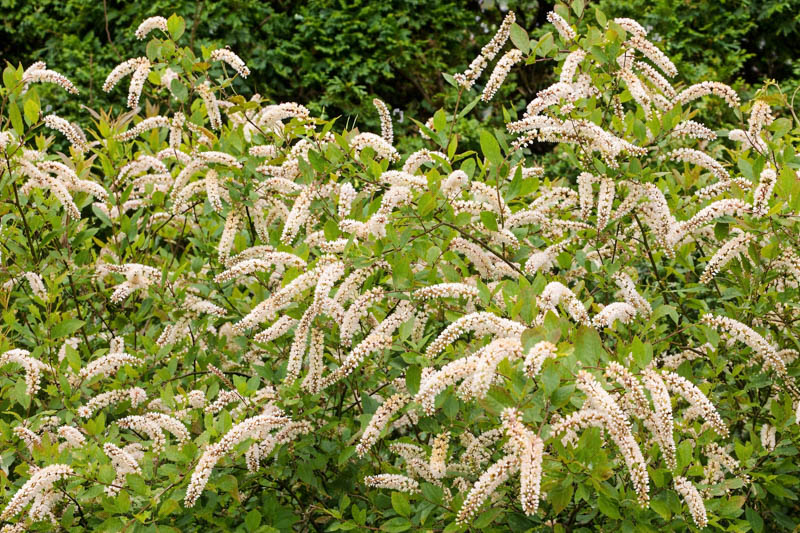


Itea virginica, commonly known as Virginia Sweetspire, is a graceful, deciduous shrub celebrated for its elegant arching habit, cascading white flower spikes, and spectacular fall foliage. Native to the eastern United States, it delivers lush texture, fragrance, and color from spring through winter – all while thriving in both full sun and deep shade.
A beloved staple in rain gardens, woodland borders, and naturalized plantings, Virginia Sweetspire attracts butterflies and pollinators with its nectar-rich blooms. Its tolerance for wet soils, clay, periodic flooding, or full shade makes it one of the most versatile native shrubs for home landscapes. Durable, deer-resistant, erosion-controlling, and remarkably low-maintenance, it’s a shrub that works hard but looks effortlessly beautiful.
Summary: A rounded, arching deciduous shrub with fragrant, bottlebrush-style flower spikes and glowing fall foliage.
Use: Rain gardens, woodland gardens, erosion control, shade borders, foundation plantings.
Highlight: Flowers so abundant they drape the shrub in white; unmatched fall color even in shade.
Note: Thrives in sun, part shade, or full shade and tolerates clay, wet soils, and periodic flooding.
| Botanical Name | Itea virginica |
|---|---|
| Family | Iteaceae |
| Common Names | Virginia Sweetspire, Sweetspire |
| Native Range | Eastern and Southeastern United States in moist woodlands, swamps, and stream margins. |
| Plant Type and Habit | Deciduous shrub with a strongly suckering, colony-forming habit. |
| Hardiness (approx. USDA) | Hardy in USDA Zones 5 to 9 |
| Size | Typically 3–10 ft. tall and wide (90–300 cm), depending on cultivar |
| Sun and Exposure | Thrives in full sun, part shade, or full shade. Best flowering in full sun. |
| Soil | Average to wet, acidic, well-drained soils; tolerant of clay and poor drainage. |
| Seasonal Interest | Spring-summer bloom, brilliant fall foliage, winter persistence in mild climates. |
| Primary Uses | Shade gardens, rain gardens, erosion control, woodland borders, foundations, mass plantings. |
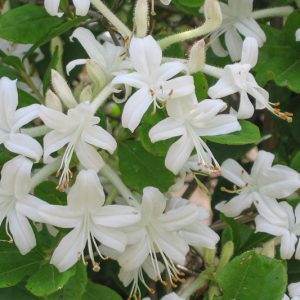
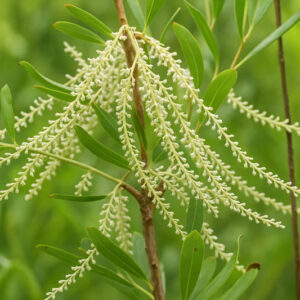
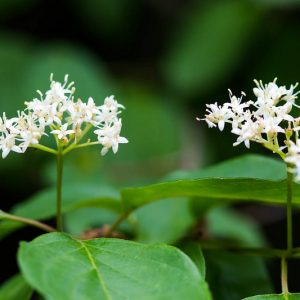
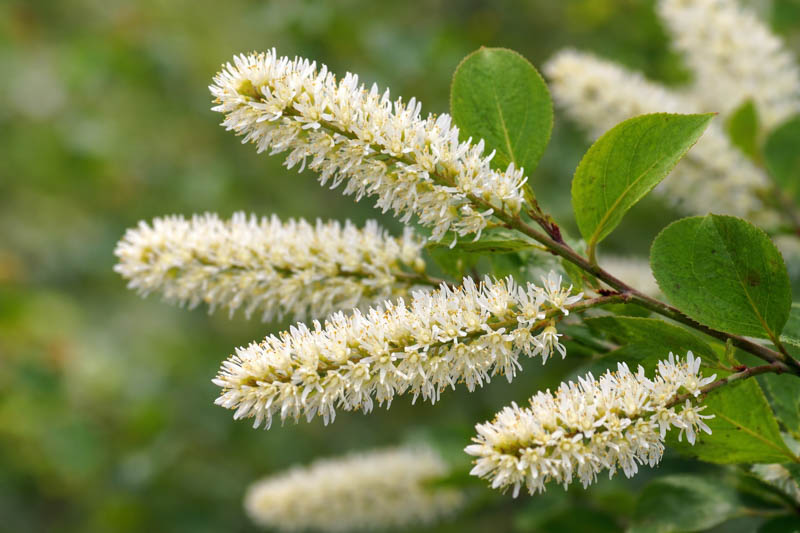
Itea virginica is a naturally elegant shrub known for its arching branches and long, fragrant, creamy-white flower spikes (4–6 in. / 10–15 cm). In mid-spring to early summer, the plant becomes draped in these bottlebrush-like blooms that open from the bottom up, offering a long-lasting floral display buzzing with pollinators. The blossoms are nectar-rich, lightly fragrant, and irresistible to butterflies and hummingbirds.
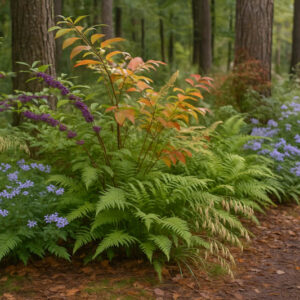
The foliage begins as lustrous deep green, then transforms into brilliant oranges and reds in fall – color that often lingers well into winter in mild climates. Its suckering habit allows it to form colonies, making it especially useful for erosion control along slopes, streambanks, or large naturalized spaces.
Virginia Sweetspire is native to the moist woodlands and swampy areas of the eastern United States. It naturally inhabits floodplains, wet forests, and along streams, where periodic inundation is common.
This shrub grows 3–10 ft. tall and wide, depending on moisture, sun exposure, and cultivar. Its suckering roots gradually expand to form dense thickets unless managed – a benefit for erosion control but easily maintained with occasional root-pruning.
Virginia Sweetspire flowers in mid-spring to early summer. The abundant flower racemes are so showy that the plant often appears snow-covered from a distance. These blooms remain attractive for weeks because they open gradually from base to tip.
While the fruits themselves are small and not showy, they provide modest food value for wildlife. The primary ecological contributions of Itea virginica are nectar for pollinators, habitat structure, and erosion stabilization.
One of Virginia Sweetspire’s standout features is its exceptional fall color – brilliant orange, burgundy, and red tones that rival more famous fall shrubs. It is one of the few shrubs that provides reliable fall color even in shade.
Hardy in USDA Zones 5–9, Itea virginica adapts to heat, humidity, and cold winters with ease.
The nectar-rich flowers support bees, butterflies, and hummingbirds. Its thicket-forming habit creates shelter for small wildlife, while its roots stabilize soil along wetlands and slopes.
Itea virginica is moderately regarded as deer resistant. While no plant is entirely deer-proof, Sweetspire is usually avoided due to its aromatic foliage.
Although naturally a wetland shrub, once established Sweetspire tolerates short dry periods surprisingly well, especially in part shade.
Virginia Sweetspire is considered non-toxic to humans and pets.
While it spreads readily by suckers, Itea virginica is not considered invasive. Its spread is gradual and easily controlled by removing unwanted shoots.
Minimal fertilizer is required; a spring layer of compost typically provides all the nutrients it needs.
Virginia Sweetspire is generally pest-free, but minor issues may include:
Yes. Itea virginica is generally deer resistant. Deer typically avoid the plant’s aromatic foliage, making it a reliable shrub in deer-prone landscapes, though light browsing is always possible.
Absolutely. Itea virginica is one of the few flowering shrubs that blooms and develops strong fall color in full shade. It performs best in part shade but adapts to nearly any light condition.
The shrub spreads gradually via root suckers, forming colonies over time. This makes it excellent for erosion control. Spread is easy to manage by removing unwanted suckers annually.
Prune immediately after flowering. If pruned in late summer, fall, or winter, you may remove next year’s flower buds, reducing bloom.
Yes. It naturally grows in swamps, floodplains, and streambanks. It tolerates clay, seasonal flooding, and poorly drained soils, making it ideal for rain gardens.
Depending on the cultivar and growing conditions, it typically reaches 3–10 ft. tall and wide.
Very much so. The fragrant white flower spikes are rich in nectar and attract bees, butterflies, hummingbirds, and early-season pollinators.
No. Although it suckers, it is not considered invasive. It remains well-behaved when suckers are managed.
Consistent moisture is ideal, especially during establishment. Mature plants tolerate both wet soils and brief drought.
In mild climates (Zones 8–9), it may be semi-evergreen. In colder regions, it loses foliage but maintains attractive structure.
Lady Bird Johnson Wildflower Center
USDA NRCS Plant Database
| Hardiness |
5 - 9 |
|---|---|
| Climate Zones | 2, 2B, 3, 4, 5, 6, 15, 16, 17 |
| Plant Type | Shrubs |
| Plant Family | Iteaceae |
| Common names | Sweetspire, Virginia Sweetspire |
| Exposure | Full Sun, Partial Sun, Shade |
| Season of Interest | Spring (Mid, Late), Summer (Early), Fall |
| Height | 3' - 10' (90cm - 3m) |
| Spread | 3' - 10' (90cm - 3m) |
| Maintenance | Low |
| Water Needs | Average |
| Soil Type | Clay, Loam |
| Soil pH | Acid |
| Soil Drainage | Moist but Well-Drained |
| Characteristics | Fragrant, Showy, Semi-Evergreen |
| Native Plants | United States, Northeast, Pennsylvania, Delaware, Maryland, New Jersey, Illinois, Indiana, Midwest, Missouri, Southeast, Louisiana, Mississippi, North Carolina, South Carolina, Tennessee, Virginia, Alabama, Arkansas, Florida, Georgia, Kentucky, Southwest, Texas, Oklahoma |
| Tolerances | Full Shade, Clay Soil, Wet Soil, Fire |
| Attracts | Bees, Butterflies, Hummingbirds, Birds |
| Garden Uses | Beds And Borders, Ground Covers, Hedges And Screens, Ponds And Streams, Rain Gardens, Wall-Side Borders |
| Toxic to Humans | No known toxicity |
| Toxic to Cats | No known toxicity |
| Toxic to Dogs | No known toxicity |
| Toxic to Horses | No known toxicity |


| Hardiness |
5 - 9 |
|---|---|
| Climate Zones | 2, 2B, 3, 4, 5, 6, 15, 16, 17 |
| Plant Type | Shrubs |
| Plant Family | Iteaceae |
| Common names | Sweetspire, Virginia Sweetspire |
| Exposure | Full Sun, Partial Sun, Shade |
| Season of Interest | Spring (Mid, Late), Summer (Early), Fall |
| Height | 3' - 10' (90cm - 3m) |
| Spread | 3' - 10' (90cm - 3m) |
| Maintenance | Low |
| Water Needs | Average |
| Soil Type | Clay, Loam |
| Soil pH | Acid |
| Soil Drainage | Moist but Well-Drained |
| Characteristics | Fragrant, Showy, Semi-Evergreen |
| Native Plants | United States, Northeast, Pennsylvania, Delaware, Maryland, New Jersey, Illinois, Indiana, Midwest, Missouri, Southeast, Louisiana, Mississippi, North Carolina, South Carolina, Tennessee, Virginia, Alabama, Arkansas, Florida, Georgia, Kentucky, Southwest, Texas, Oklahoma |
| Tolerances | Full Shade, Clay Soil, Wet Soil, Fire |
| Attracts | Bees, Butterflies, Hummingbirds, Birds |
| Garden Uses | Beds And Borders, Ground Covers, Hedges And Screens, Ponds And Streams, Rain Gardens, Wall-Side Borders |
| Toxic to Humans | No known toxicity |
| Toxic to Cats | No known toxicity |
| Toxic to Dogs | No known toxicity |
| Toxic to Horses | No known toxicity |
How many Itea virginica (Virginia Sweetspire) do I need for my garden?
| Plant | Quantity | |
|---|---|---|
| Itea virginica (Virginia Sweetspire) | N/A | Buy Plants |
Create a membership account to save your garden designs and to view them on any device.
Becoming a contributing member of Gardenia is easy and can be done in just a few minutes. If you provide us with your name, email address and the payment of a modest $25 annual membership fee, you will become a full member, enabling you to design and save up to 25 of your garden design ideas.
Join now and start creating your dream garden!
Create a membership account to save your garden designs and to view them on any device.
Becoming a contributing member of Gardenia is easy and can be done in just a few minutes. If you provide us with your name, email address and the payment of a modest $25 annual membership fee, you will become a full member, enabling you to design and save up to 25 of your garden design ideas.
Join now and start creating your dream garden!