Winterberry, Common Winterberry, Winterberry, Michigan Holly, Black Alder, Ilex bronxensis, Ilex fastigiata, Ilex verticillata var. cyclophylla, Ilex verticillata var. fastigiata, Ilex verticillata var. padifolia, Ilex verticillata var. tenuifolia
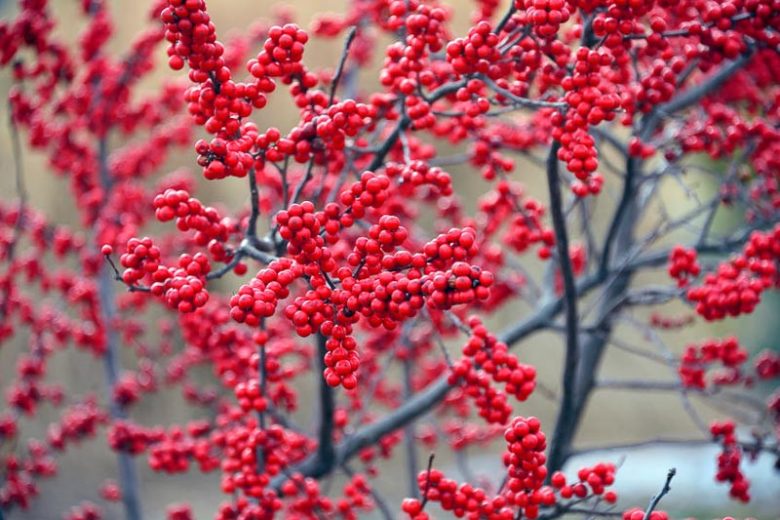


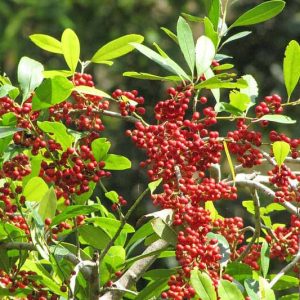
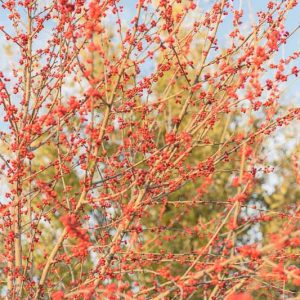
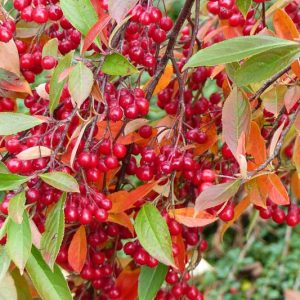
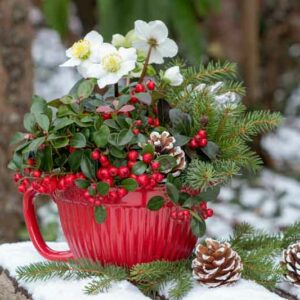
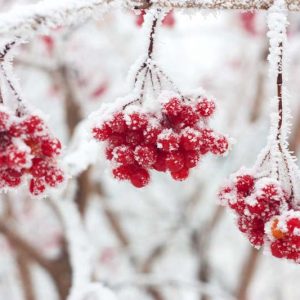
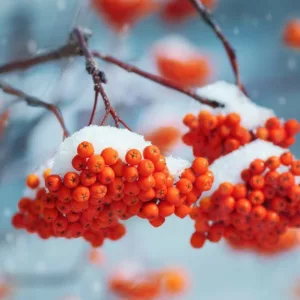
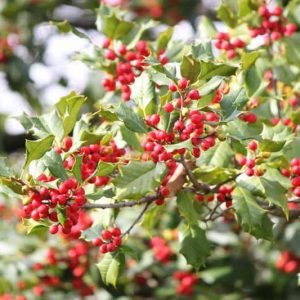
If you’re dreaming of a landscape that doesn’t fade into the background once temperatures drop, Ilex verticillata — better known as Winterberry holly — is a spectacular choice. This deciduous holly is famous for its bright red berries that cling to bare stems from fall through winter, transforming the garden into a festive, eye-catching scene when little else is in bloom.
Though its flowers are small and inconspicuous, Winterberry more than compensates with its dazzling fruit display. The key to success? Growing both male and female plants for pollination. Easy to grow, tolerant of wet soils, low maintenance, and beloved by birds, Winterberry is a must-have shrub for naturalistic borders, rain gardens, and winter-themed plantings. For even more seasonal inspiration, explore 30 enchanting Christmas flowers and plants to brighten your holiday season.
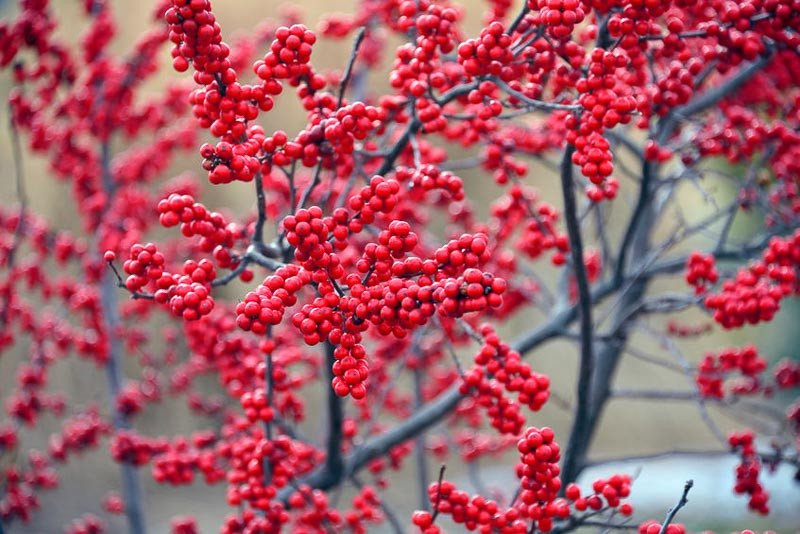
Summary: A deciduous holly shrub with upright-rounded form, glossy green summer foliage, and show-stopping clusters of bright red berries persisting well into winter.
Use: Mixed shrub borders, rain gardens, wetland edges, screens, wildlife gardens, foundation plantings.
Highlight: Exceptional winter interest, berries that support birds, and outstanding tolerance for wet, boggy, or poorly drained soils.
Note: Requires both male and female plants for berry production.
| Botanical Name | Ilex verticillata |
|---|---|
| Family | Holly family (Aquifoliaceae) |
| Common Names | Winterberry holly, Black alder, Swamp holly |
| Native Range | Native to Eastern North America, commonly found in wetlands, bogs, swamps, and along streams and ponds. |
| Plant Type and Habit | Deciduous shrub with a dense, upright-rounded habit and multiple stems. |
| Hardiness (approx. USDA) | Thrives in USDA Zones 3 to 9, making it adaptable to a wide range of climates. |
| Size | Typically reaches 6–10 ft. tall and wide (180–300 cm). |
| Sun and Exposure | Full sun to part shade; best fruiting occurs in full sun. |
| Soil | Prefers acidic, medium to wet, well drained soils. Handles boggy or poorly drained sites but performs poorly in alkaline soils. |
| Seasonal Interest | Green foliage in summer, yellow-purple fall color, and striking red berries from fall through winter. |
| Primary Uses | Hedges, wetland gardens, screens, wildlife gardens, rain gardens, winter interest plantings, foundation beds. |
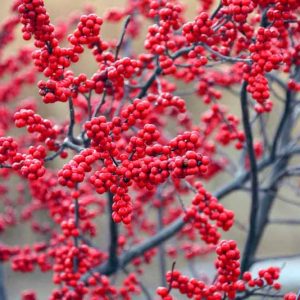
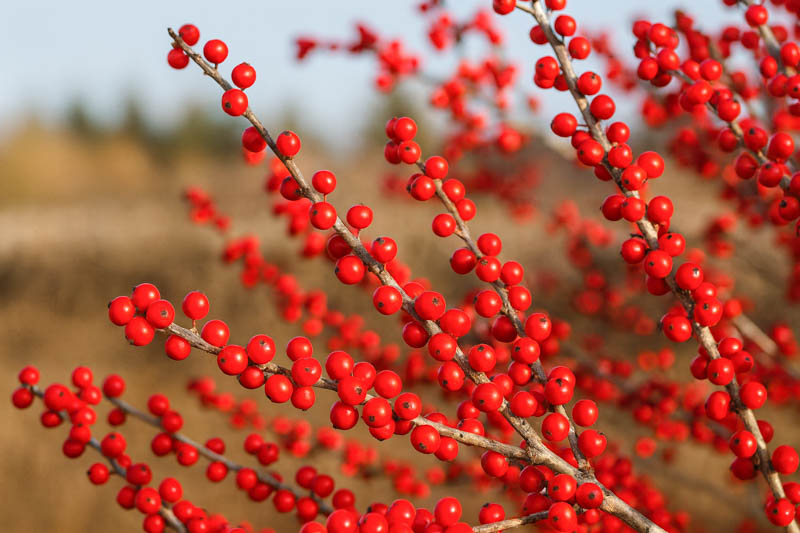
Ilex verticillata is a multi-stemmed deciduous holly known for its eye-catching winter display. While most hollies are evergreen, Winterberry drops its foliage in fall, revealing stems packed with vivid red berries that persist until late winter unless devoured by birds.
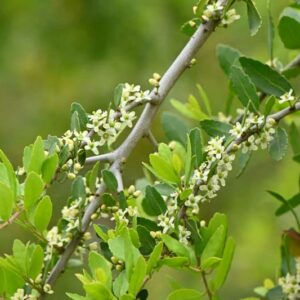
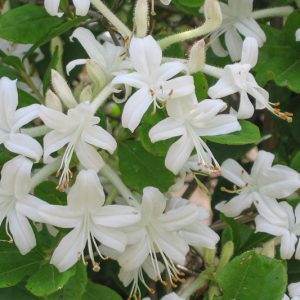
Its small greenish-white flowers appear in late spring or early summer. Though modest in appearance, they are crucial for berry formation — and because this species is dioecious, you need both male and female shrubs for pollination and fruit set.
Winterberry is native to Eastern North America, where it thrives in moist lowlands, swamps, bogs, and along waterways. Its natural affinity for wet conditions makes it invaluable for gardeners dealing with heavy soils or areas prone to seasonal standing water.
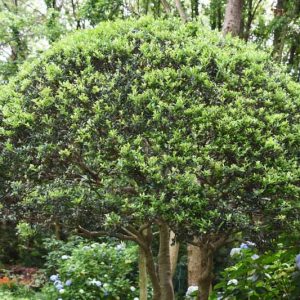
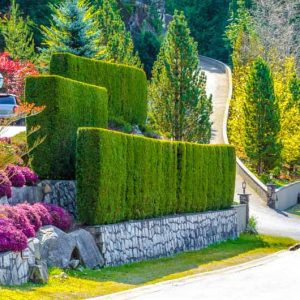
This shrub grows with an upright-rounded habit, reaching 6–10 feet tall and wide. Its branching structure is dense and well-suited for hedging or mass plantings.
New growth each season supports the flowering and berry display. Regular pruning in early spring can help maintain shape and encourage more productive shoots.
Winterberry’s flowers are small, greenish-white, and inconspicuous, opening in late spring or early summer. Their delicate appearance belies their importance — these blooms lead to the spectacular berry display that defines this species.
Males produce pollen; females produce berries. Both must bloom at the same time, so choose matching cultivars for successful pollination.
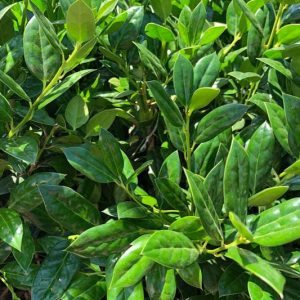
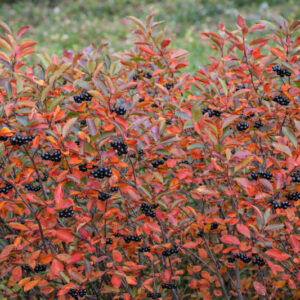
The shrub’s dark green, leathery foliage is attractive during spring and summer. As the season cools, leaves take on yellow to purple-tinged fall colors before dropping to reveal a dramatic silhouette dotted with red berries.
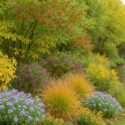
Even a single Winterberry can anchor a winter garden, but groups or hedges create a breathtaking ribbon of color.
Winterberry is hardy from USDA Zones 3 to 9, offering exceptional cold tolerance. Berries are particularly bright and persistent in colder climates, often lasting until late winter.
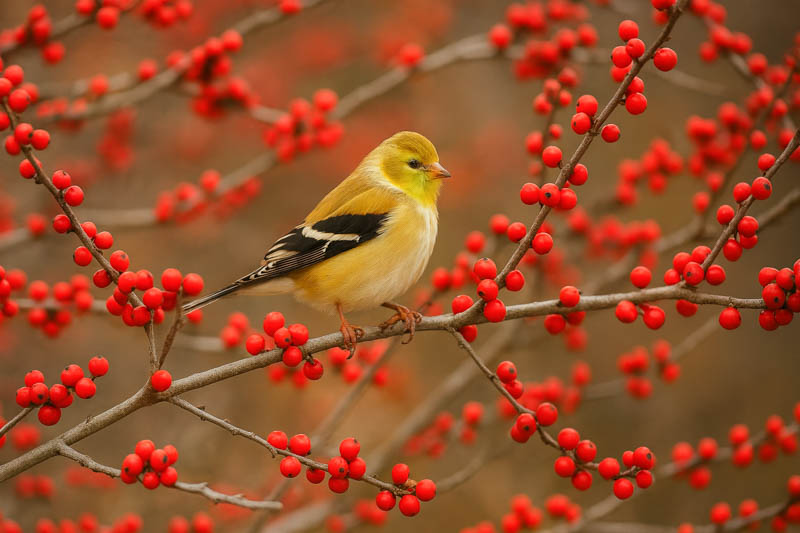
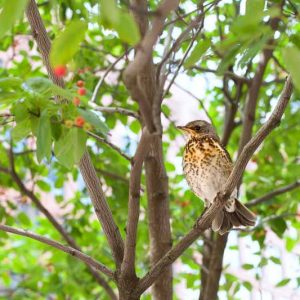
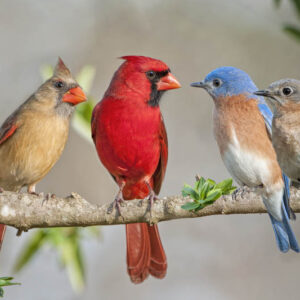
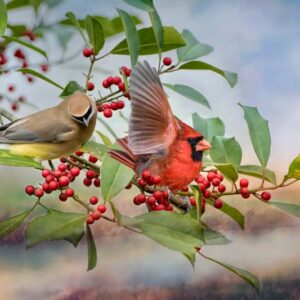
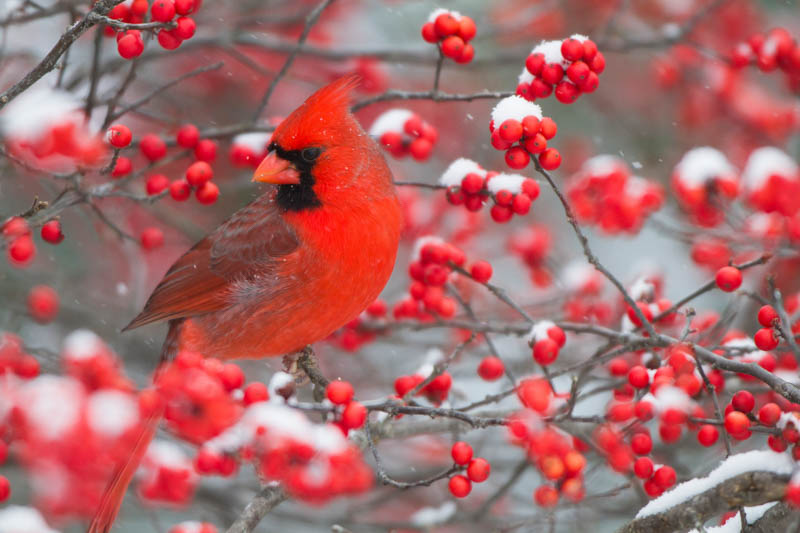
Winterberry berries are a magnet for birds — including American Robins, Cedar Waxwings, Bluebirds, Catbirds, and Mockingbirds. They play an essential ecological role, providing food when resources are scarce and aiding in seed dispersal.
Though foliage may be browsed in summer, Winterberry is generally resistant to serious deer or rabbit damage. Berries are the primary attraction, especially to wildlife.
Winterberry prefers moisture but adapts once established. However, prolonged drought reduces berry set. Wet, acidic soils produce the fullest fruiting displays.
Many Ilex species, including Winterberry, have berries that are mildly toxic if ingested and can cause stomach upset in people and pets.
Winterberry is not generally considered invasive. It spreads slowly and stays close to where it is planted, though occasional root suckers may appear.
Grow Winterberry for its:
Winterberry thrives in:
Avoid alkaline soils, which can stunt or kill the plant.
Winterberry is generally pest free. Occasional issues may include:
Aphids: Treat with water sprays or insecticidal soap.
Spider mites: Rare but possible in hot, dry conditions.
Root rot: Avoid overwatering in non-boggy sites.
Leaf spot: Usually cosmetic.
No berries: Often due to missing male pollinator or poor soil pH.
Weak fruiting: Caused by too much shade or alkaline soil.
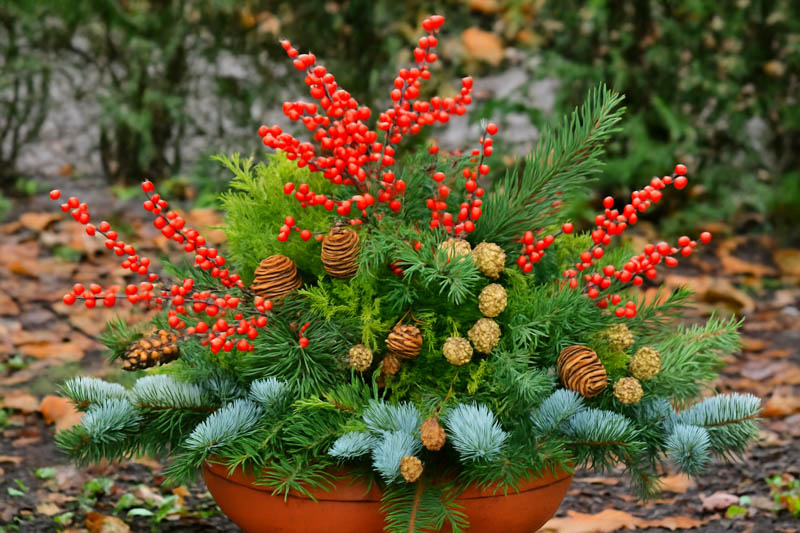
Winterberry comes in a wide range of sizes and berry colors, from compact dwarf shrubs perfect for small gardens to full-size, heavy-fruiting landscape anchors. Choosing the right mix of female berry-bearing cultivars and compatible male pollinators ensures a spectacular winter display.
| Variety | Approx. Size & Habit | Berry Color & Display | Notes & Uses | Pollination |
|---|---|---|---|---|
| Ilex verticillata ‘Red Sprite’ | Compact dwarf shrub, about 3–5 ft. tall and wide; dense, rounded habit. | Heavy crop of bright red berries that stand out on bare stems through fall and winter. | Excellent choice for small gardens, low hedges, and foundation plantings where strong winter color is desired. | Female – pair with a compatible male such as ‘Jim Dandy’ for best fruit set. |
| Ilex verticillata ‘Wildfire’ | Medium-sized shrub, about 6–7 ft. tall and 7–8 ft. wide; upright, rounded habit. | Showy clusters of bright red berries that persist into winter. | Great anchor shrub or informal hedge; particularly effective in naturalistic plantings and wildlife gardens. | Female – use a compatible male such as ‘Jim Dandy’ or another early-blooming pollinator. |
| Ilex verticillata ‘Winter Red’ | Vigorous shrub with a shapely oval form, typically 6–8+ ft. tall and wide. | Abundant cherry-red berries that are long-lasting, often persisting well into winter. | One of the most popular winterberries for large borders, screens, and cutting branches for holiday décor. | Female – typically pollinated by male cultivars such as ‘Southern Gentleman’ or ‘Jim Dandy’. |
| Ilex verticillata Berry Heavy® | Medium to large shrub, around 6–8 ft. tall and wide, with a full, rounded habit. | Exceptionally heavy crop of bright red berries densely lining the stems. | Bred for superior fruit set; ideal for dramatic winter displays and for cutting stems for arrangements. | Female – often paired with male ‘Mr. Poppins®’ for reliable pollination. |
| Ilex verticillata Berry Heavy® Gold | Medium to large shrub, usually 6–8 ft. tall and wide; upright-rounded habit. | Masses of big, bright golden berries that glow against winter skies and evergreens. | A colorful twist on the classic red winterberry, perfect for mixed berry borders and holiday cutting. | Female – commonly pollinated by ‘Mr. Poppins®’; ‘Jim Dandy’ can also be used. |
| Ilex verticillata Berry Poppins® | Dwarf, very compact shrub, about 3–4 ft. tall and wide. | Heavy clusters of bright red berries that cover the branches in fall and winter. | Perfect for small gardens, low hedges, and containers where space is limited but winter color is desired. | Female – specifically bred to be paired with male ‘Mr. Poppins®’ for best fruit set. |
| Ilex verticillata Little Goblin® Orange | Dwarf shrub, about 3–4 ft. tall and wide; compact, rounded habit. | Showy, extra-large orange berries that provide a striking color accent in fall and winter. | Great for small landscapes, mixed borders, and mass plantings where a non-red berry color is desired. | Female – pollinated by male Little Goblin® Guy, which can also serve other dwarf varieties. |
| Ilex verticillata Little Goblin® Red | Compact shrub, typically 3–5 ft. tall and wide; dense, rounded habit. | Extra-large, bright red berries packed along short stems for maximum impact on a small plant. | Excellent for small gardens, walkway borders, and foundation plantings where a tidy shape is important. | Female – pollinated by Little Goblin® Guy; plant one male for several female shrubs. |
| Ilex verticillata Mr. Poppins® | Dwarf, compact deciduous shrub, about 3–4 ft. tall and wide; dense, rounded habit. | No berries – this is a male winterberry selected specifically as a pollinator. | Ideal male companion for small-space plantings; unobtrusive shrub that blends into the background while enabling heavy fruiting on nearby females. | Male pollinator – commonly used for Berry Poppins®, Berry Heavy®, Berry Heavy® Gold, and other compatible female cultivars. |
Winterberry (Ilex verticillata) is a deciduous holly native to eastern North America. It is known for its bright red berries that persist through winter, providing strong seasonal color and valuable food for birds.
Unlike most hollies, Winterberry is deciduous. It loses its leaves in fall, which makes the bright red berries stand out dramatically on bare stems.
Yes. Winterberry is dioecious, meaning male and female flowers grow on separate plants. A compatible male cultivar must be planted near female plants for berries to form.
Generally, within 40–50 feet is sufficient for pollination. One male plant can pollinate several females if bloom times overlap.
Small, greenish-white flowers appear in late spring to early summer. Although not showy, they are essential for berry production.
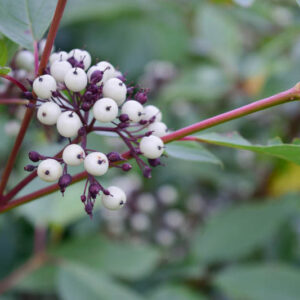
Berries form in late summer, turn bright red in fall, and typically persist into winter unless eaten by birds.
Many bird species feed on Winterberry, including American Robins, Cedar Waxwings, Eastern Bluebirds, Northern Mockingbirds, and Gray Catbirds.
Winterberry thrives in acidic, moist to wet soils and full sun to part shade. It tolerates boggy, poorly drained areas better than most shrubs.
No. Winterberry performs poorly in neutral to alkaline soils and may decline or die. Acidic soil is essential for long-term vigor.
Most cultivars reach 6–10 feet tall and wide, though dwarf or compact varieties exist for smaller spaces.
Yes. Winterberry is one of the best shrubs for rain gardens, wetlands, and areas with periodic standing water.
It prefers moist soils and is not strongly drought tolerant. Extended dryness reduces berry production and may stress the plant.
Winterberry is moderately resistant to deer and rabbits. Browsing may occur but is usually not severe.
Like many hollies, Winterberry berries are considered mildly toxic if eaten in large quantities. They should not be consumed by pets or humans.
Updated: December 2025 • Reviewed by Gardenia Editors
| Hardiness |
3 - 9 |
|---|---|
| Heat Zones |
5 - 8 |
| Climate Zones | 1, 1A, 1B, 2, 2A, 2B, 3, 3A, 3B, 4, 5, 6, 7, A2, A3 |
| Plant Type | Shrubs |
| Plant Family | Aquifoliaceae |
| Genus | Ilex |
| Common names | Holly, Winterberry |
| Exposure | Full Sun, Partial Sun |
| Season of Interest | Spring (Early, Late), Summer (Early, Mid, Late), Fall, Winter |
| Height | 6' - 10' (180cm - 3m) |
| Spread | 6' - 10' (180cm - 3m) |
| Spacing | 96" - 120" (240cm - 3m) |
| Maintenance | Low |
| Water Needs | Average, High |
| Soil Type | Clay, Loam |
| Soil pH | Acid, Neutral |
| Soil Drainage | Moist but Well-Drained, Poorly Drained |
| Characteristics | Cut Flowers, Showy, Fruit & Berries |
| Native Plants | United States, Pennsylvania, Rhode Island, Vermont, Connecticut, Delaware, Maine, Massachusetts, Maryland, New Hampshire, New Jersey, New York, Northeast, Midwest, Southeast, Southwest, Illinois, Indiana, Iowa, Michigan, Minnesota, Missouri, Nebraska, North Dakota, Ohio, South Dakota, Mississippi, North Carolina, South Carolina, Virginia, West Virginia, Alabama, Florida, Georgia, Texas |
| Tolerances | Dry Soil, Clay Soil, Wet Soil, Heat, Fire |
| Attracts | Birds, Butterflies |
| Garden Uses | Banks And Slopes, Beds And Borders, Bog Gardens, Hedges And Screens, Ponds And Streams, Rain Gardens |
| Garden Styles | Informal and Cottage |
| Toxic to Humans | Low severity |
| Toxic to Cats | No known toxicity |
| Toxic to Dogs | No known toxicity |
| Toxic to Horses | No known toxicity |


| Hardiness |
3 - 9 |
|---|---|
| Heat Zones |
5 - 8 |
| Climate Zones | 1, 1A, 1B, 2, 2A, 2B, 3, 3A, 3B, 4, 5, 6, 7, A2, A3 |
| Plant Type | Shrubs |
| Plant Family | Aquifoliaceae |
| Genus | Ilex |
| Common names | Holly, Winterberry |
| Exposure | Full Sun, Partial Sun |
| Season of Interest | Spring (Early, Late), Summer (Early, Mid, Late), Fall, Winter |
| Height | 6' - 10' (180cm - 3m) |
| Spread | 6' - 10' (180cm - 3m) |
| Spacing | 96" - 120" (240cm - 3m) |
| Maintenance | Low |
| Water Needs | Average, High |
| Soil Type | Clay, Loam |
| Soil pH | Acid, Neutral |
| Soil Drainage | Moist but Well-Drained, Poorly Drained |
| Characteristics | Cut Flowers, Showy, Fruit & Berries |
| Native Plants | United States, Pennsylvania, Rhode Island, Vermont, Connecticut, Delaware, Maine, Massachusetts, Maryland, New Hampshire, New Jersey, New York, Northeast, Midwest, Southeast, Southwest, Illinois, Indiana, Iowa, Michigan, Minnesota, Missouri, Nebraska, North Dakota, Ohio, South Dakota, Mississippi, North Carolina, South Carolina, Virginia, West Virginia, Alabama, Florida, Georgia, Texas |
| Tolerances | Dry Soil, Clay Soil, Wet Soil, Heat, Fire |
| Attracts | Birds, Butterflies |
| Garden Uses | Banks And Slopes, Beds And Borders, Bog Gardens, Hedges And Screens, Ponds And Streams, Rain Gardens |
| Garden Styles | Informal and Cottage |
| Toxic to Humans | Low severity |
| Toxic to Cats | No known toxicity |
| Toxic to Dogs | No known toxicity |
| Toxic to Horses | No known toxicity |
How many Ilex verticillata (Winterberry) do I need for my garden?
| Plant | Quantity | |
|---|---|---|
| Ilex verticillata (Winterberry) | N/A | Buy Plants |
Create a membership account to save your garden designs and to view them on any device.
Becoming a contributing member of Gardenia is easy and can be done in just a few minutes. If you provide us with your name, email address and the payment of a modest $25 annual membership fee, you will become a full member, enabling you to design and save up to 25 of your garden design ideas.
Join now and start creating your dream garden!
Create a membership account to save your garden designs and to view them on any device.
Becoming a contributing member of Gardenia is easy and can be done in just a few minutes. If you provide us with your name, email address and the payment of a modest $25 annual membership fee, you will become a full member, enabling you to design and save up to 25 of your garden design ideas.
Join now and start creating your dream garden!