American Beautyberry, French Mulberry
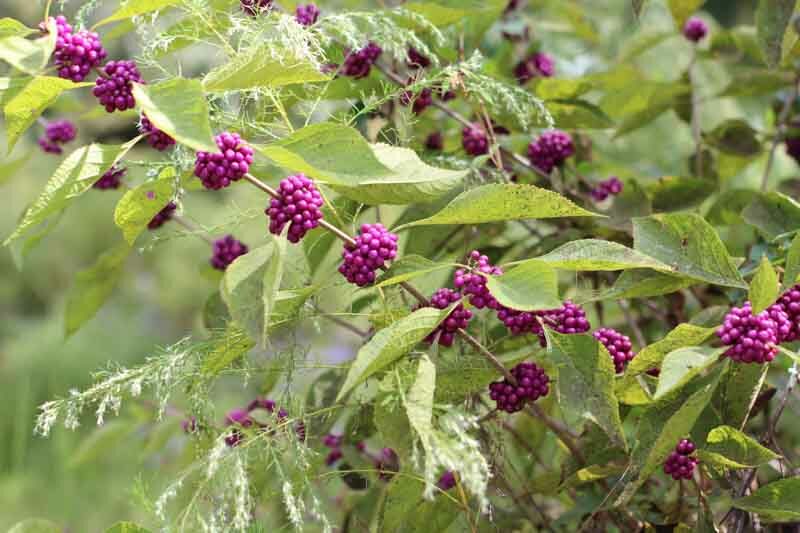
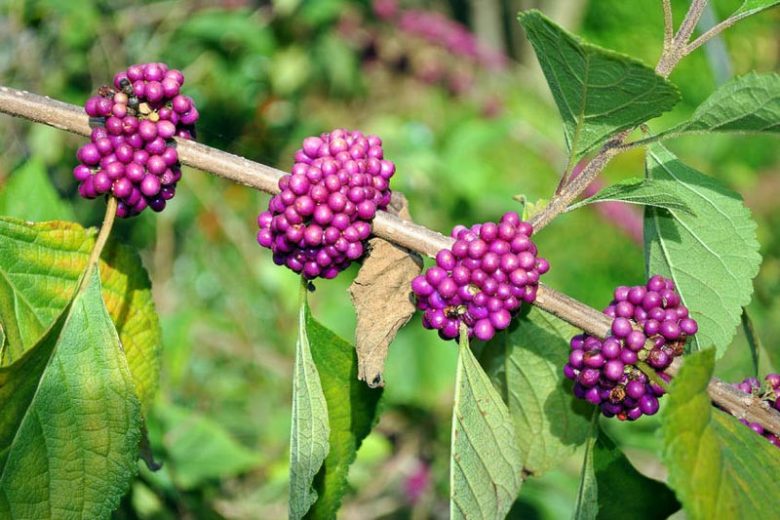


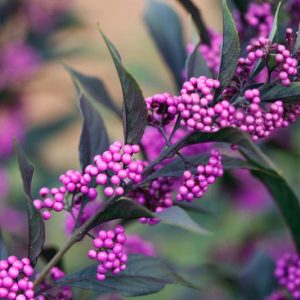
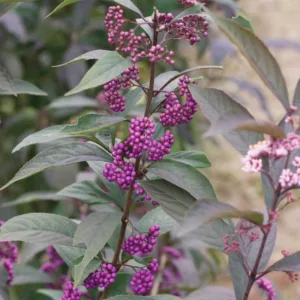
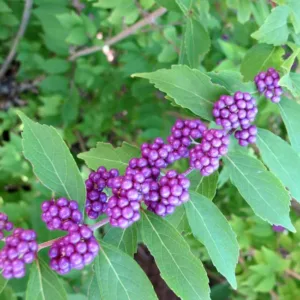
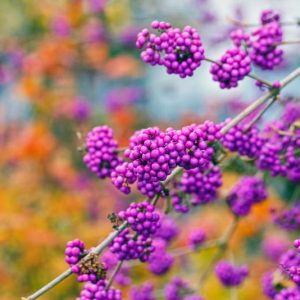
If you want a shrub that quietly blends into the summer garden, then suddenly explodes with color just when everything else is winding down, Callicarpa americana is your plant. Known as American beautyberry, this easy going native shrub lines its arching stems with glowing clusters of violet to magenta berries that look almost unreal in fall and early winter.
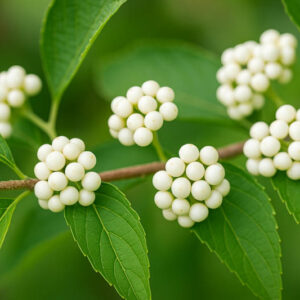
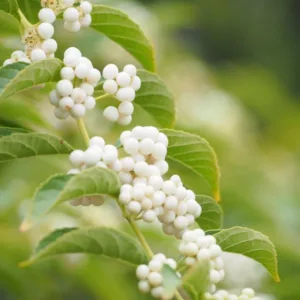
In flower, American beautyberry is modest – small pink, lavender, or white blooms tucked along the stems in early summer – but pollinators notice. Those flowers quickly turn into dense rings of fruit that birds feast on for months. Whether you tuck it at the back of a mixed border, use it as a loose hedge, or feature it in a Texas native shrub planting, this shrub delivers color, wildlife value, and low maintenance charm.
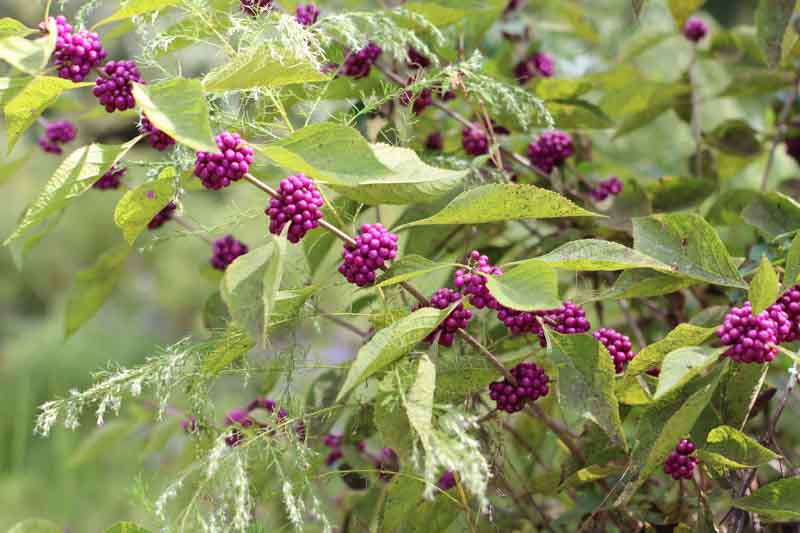
Summary: Deciduous native berry shrub with arching stems, light green foliage, and dramatic clusters of bright violet to magenta berries that line the branches in fall.
Use: Ideal for mixed borders, woodland edges, wildlife gardens, native plantings, naturalized screens, and informal hedges.
Highlight: Fast growing, drought tolerant once established, highly attractive to birds and pollinators, and surprisingly easy to prune and maintain.
Note: Best berry set occurs when beautyberry shrubs are planted in groups for cross pollination and when they receive plenty of sun.
| Botanical Name | Callicarpa americana |
|---|---|
| Family | Lamiaceae (mint family) |
| Common Names | American beautyberry, beautyberry, French mulberry, American mulberry |
| Native Range | Native to the southeastern United States, including much of the Gulf Coast and lower South, where it grows in open woods and thickets. |
| Plant Type and Habit | Deciduous shrub with a loose, arching habit and stems that often sweep toward the ground when loaded with berries. |
| Hardiness (USDA) | Generally hardy in USDA Zones 6 to 11, with stems sometimes dying back in cold winters and resprouting from the base. |
| Size | Typically 3 to 6 feet tall and wide (90 to 180 cm), occasionally larger in ideal conditions or when not pruned. |
| Sun and Exposure | Full sun to part shade. Berry production is heaviest in full sun. Too much shade can cause leggy growth and fewer fruits. |
| Soil | Thrives in average, dry to moist, well drained soils. Tolerates clay and sand when drainage is reasonable, making it useful in many Texas clay gardens and in sandy coastal soils. |
| Seasonal Interest | Summer flowers followed by spectacular fall and early winter berries. Foliage turns soft yellow before dropping, highlighting the fruit. |
| Primary Uses | Accent shrub, wildlife hedge, bird friendly garden plant, native woodland edge shrub, and bold fall focal point, especially in Texas shrub borders. |
Callicarpa americana is a loose, rounded shrub with elegant, arching stems and softly textured foliage. In late spring to early summer, small clusters of lavender, pink, or white flowers appear in the leaf axils along the stems. Up close they are charming and busy with pollinators, but from a distance the real show is the fruit that follows.
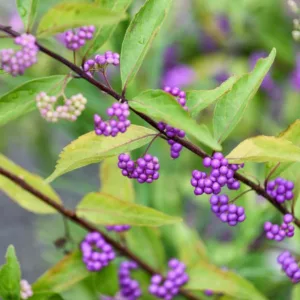
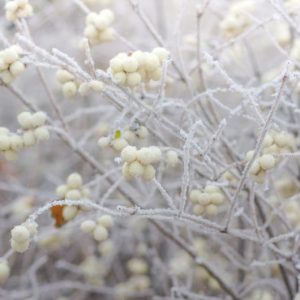
By late summer, the branches are ringed with tight clusters of glossy berries, each about the size of a small pea, packed along the stems in eye catching bands. In fall those berries turn brilliant violet to magenta, glowing against the yellowing leaves and later standing alone on bare stems for a high impact display in fall and winter landscapes.
American beautyberry is native to the southeastern United States, where it naturally occurs in:
This wide ecological tolerance makes beautyberry a standout choice for regionally appropriate plantings, from Texas native gardens to North Florida shade beds and other wildlife friendly southern landscapes. See also: Top Shade-Loving Native Shrubs for North Florida, Best Native Shrubs for Full Sun in North Florida.
Beautyberry grows at a moderate to fast rate. Young plants quickly send up new stems from the base, forming a loose vase shaped shrub. In climates with colder winters, top growth may die back, but vigorous new canes typically emerge each spring.
Because flowering and fruiting occur on current season growth, this shrub responds well to hard pruning. Cutting stems back to 12 to 18 inches in late winter encourages dense new growth and creates a compact, berry packed silhouette that tucks neatly into mixed borders and foundation plantings.
The flowers of Callicarpa americana are small but valuable, appearing in clusters that attract bees and butterflies. Each flower cluster matures into a tight ring of fruit that hugs the stems.
The combination of colorful berries and arching stems makes American beautyberry a favorite for cut branches in fall arrangements, porch displays, and holiday decorations.
Beautyberry foliage is softly textured and slightly rough, giving the shrub a relaxed woodland feel. Leaves are:
In fall the foliage shifts to a warm yellow, creating a striking contrast with the purple berries and adding another layer of seasonal interest to Texas and southern gardens.
Callicarpa americana is well suited to regions with:
In colder parts of its range, stems may be cut to the ground by winter cold, but plants usually resprout strongly. This makes beautyberry a dependable choice for resilient, climate tolerant plantings and for water wise Texas landscapes.
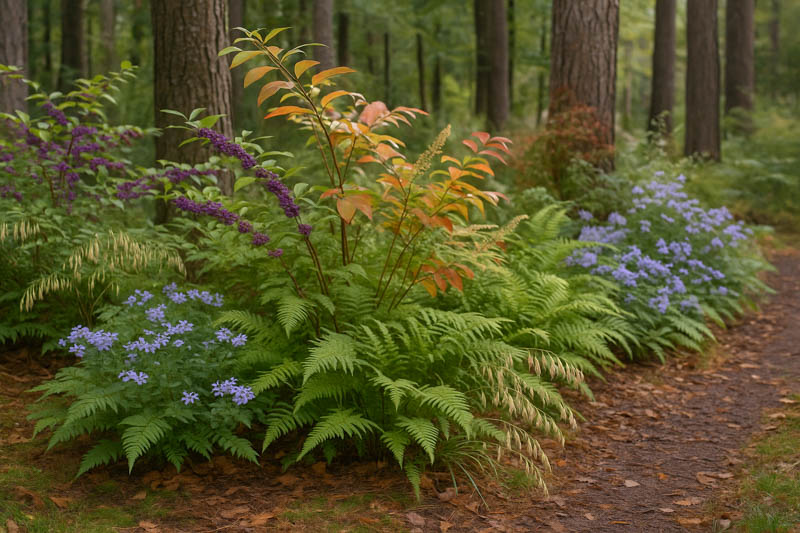
American beautyberry is versatile and easy to integrate into many garden styles:
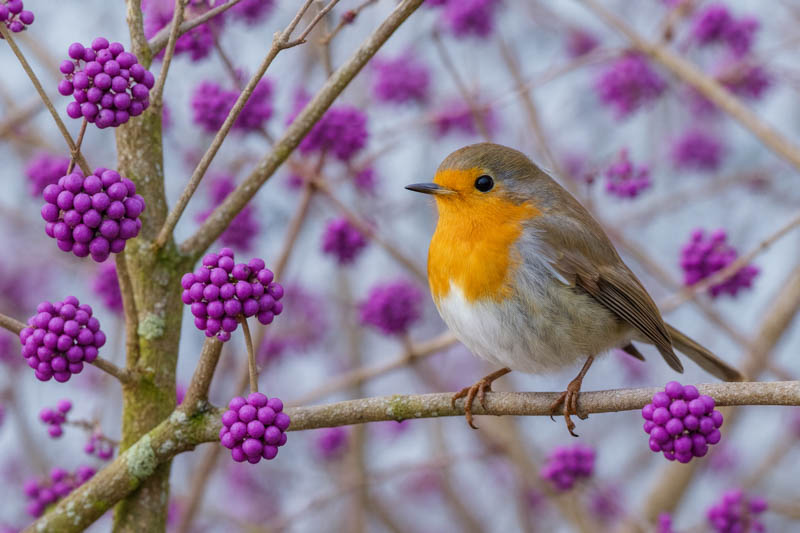
Beautyberry is a powerhouse for wildlife friendly landscaping:
Combine it with other nectar and berry plants from Texas bird friendly plant guides to build a landscape that supports wildlife year round.
Callicarpa americana is generally considered moderately deer resistant. Hungry deer may sample the foliage, but the plant usually recovers well and browsing is often lighter than on many traditional landscape shrubs.
Once established, beautyberry shows good drought tolerance, especially in partial shade and soils that are not constantly wet. It fits naturally into low irrigation gardens and informal xeriscapes, particularly when combined with companions from drought tolerant Texas plant lists.
Primarily grown as an ornamental shrub, though the berries are sometimes used for jelly. As with most ornamentals, discourage pets and children from eating large quantities.”
Within its native range, Callicarpa americana is usually a well behaved shrub. It may self sow lightly but rarely becomes aggressive in managed gardens. In naturalistic plantings and native restoration style beds, this gentle self seeding can help fill space and support wildlife.
Overall, American beautyberry care is straightforward: provide sun, reasonably well drained soil, and modest water after establishment.
Plant beautyberry where it receives:
Callicarpa americana adapts to many garden soils:
Fertilizing is rarely needed for beautyberry:
Mulch helps conserve moisture and protect roots:
American beautyberry maintenance is minimal:
In suitable conditions, Callicarpa americana is a reliable, low maintenance shrub with few serious issues.
Callicarpa americana, usually known as American beautyberry, is a deciduous native shrub from the southeastern United States. It has arching stems, light green leaves, and tight clusters of bright violet to magenta berries that line the branches in fall. Gardeners value it for its striking fruit display, wildlife benefits, and easy care in mixed borders, native gardens, and woodland edges.
In the wild, American beautyberry grows in open woods, thickets, and along woodland edges across much of the southeastern United States. It thrives in regions with warm or hot summers, mild to moderately cold winters, and soils that are reasonably well drained. It is well suited to many Texas and Gulf Coast climates where heat and humidity are common.
A typical Callicarpa americana shrub reaches about 3 to 6 feet tall and wide, though plants may be a bit larger in rich soils or warmer climates. Regular pruning in late winter keeps plants compact and encourages dense new growth covered in berries.
Callicarpa americana is fairly drought tolerant once established. During the first growing season, it benefits from regular deep watering to build strong roots. After that, most plants need only occasional supplemental water during extended dry spells, especially in sandy soils or very hot climates.
American beautyberry prefers full sun to light shade and average, well drained soil. It produces the most abundant berries with at least six hours of direct sun per day and grows well in loam, clay, or sandy soil that does not stay waterlogged.
Yes, Callicarpa americana is excellent for wildlife. Its small summer flowers offer nectar and pollen to bees and butterflies, while the showy purple berries provide an important fall and early winter food source for many songbirds and other animals.
Within its native and adapted ranges, American beautyberry is usually considered a well behaved shrub. It may self sow lightly but seldom becomes invasive in home gardens. Unwanted seedlings are easy to pull or transplant, and pruning keeps mature shrubs in bounds.
American beautyberry typically flowers in early summer and sets fruit shortly afterward. The berries begin to color in late summer, turn vivid purple in fall, and often remain on the branches into early winter unless birds eat them first.
Yes, Callicarpa americana is an outstanding choice for low maintenance, wildlife friendly gardens. It thrives in full sun to part shade, needs little fertilizer, tolerates heat and seasonal drought, and provides berries and shelter for birds and other wildlife with very modest care.
Lady Bird Johnson Wildflower Center – Callicarpa americana (American beautyberry)
Updated: November 2025 • Reviewed by Gardenia Editors
| Hardiness |
6 - 11 |
|---|---|
| Heat Zones |
1 - 12 |
| Climate Zones | 3A, 3B, 4, 5, 6, 7, 8, 9, 14, 15, 16, 17, 18, 19, 20, 21, 22, 23, 24 |
| Plant Type | Shrubs |
| Plant Family | Lamiaceae |
| Genus | Callicarpa |
| Common names | American Beautyberry, Beautyberry |
| Exposure | Full Sun, Partial Sun |
| Season of Interest | Summer (Early, Mid, Late), Fall |
| Height | 3' - 6' (90cm - 180cm) |
| Spread | 3' - 6' (90cm - 180cm) |
| Spacing | 36" - 72" (90cm - 180cm) |
| Maintenance | Low |
| Water Needs | Low, Average |
| Soil Type | Chalk, Clay, Loam, Sand |
| Soil pH | Acid, Alkaline, Neutral |
| Soil Drainage | Moist but Well-Drained, Well-Drained |
| Characteristics | Cut Flowers, Showy, Fruit & Berries |
| Native Plants | United States, Maryland, Northeast, Midwest, Southeast, Southwest, Missouri, Louisiana, Mississippi, North Carolina, South Carolina, Tennessee, Virginia, Alabama, Arkansas, Florida, Georgia, Texas, Oklahoma |
| Tolerances | Drought, Dry Soil, Clay Soil, Heat, Humidity |
| Attracts | Bees, Birds, Butterflies |
| Garden Uses | Beds And Borders, Hedges And Screens |
| Garden Styles | Informal and Cottage |
| Toxic to Humans | No known toxicity |
| Toxic to Cats | No known toxicity |
| Toxic to Dogs | No known toxicity |
| Toxic to Horses | No known toxicity |


| Hardiness |
6 - 11 |
|---|---|
| Heat Zones |
1 - 12 |
| Climate Zones | 3A, 3B, 4, 5, 6, 7, 8, 9, 14, 15, 16, 17, 18, 19, 20, 21, 22, 23, 24 |
| Plant Type | Shrubs |
| Plant Family | Lamiaceae |
| Genus | Callicarpa |
| Common names | American Beautyberry, Beautyberry |
| Exposure | Full Sun, Partial Sun |
| Season of Interest | Summer (Early, Mid, Late), Fall |
| Height | 3' - 6' (90cm - 180cm) |
| Spread | 3' - 6' (90cm - 180cm) |
| Spacing | 36" - 72" (90cm - 180cm) |
| Maintenance | Low |
| Water Needs | Low, Average |
| Soil Type | Chalk, Clay, Loam, Sand |
| Soil pH | Acid, Alkaline, Neutral |
| Soil Drainage | Moist but Well-Drained, Well-Drained |
| Characteristics | Cut Flowers, Showy, Fruit & Berries |
| Native Plants | United States, Maryland, Northeast, Midwest, Southeast, Southwest, Missouri, Louisiana, Mississippi, North Carolina, South Carolina, Tennessee, Virginia, Alabama, Arkansas, Florida, Georgia, Texas, Oklahoma |
| Tolerances | Drought, Dry Soil, Clay Soil, Heat, Humidity |
| Attracts | Bees, Birds, Butterflies |
| Garden Uses | Beds And Borders, Hedges And Screens |
| Garden Styles | Informal and Cottage |
| Toxic to Humans | No known toxicity |
| Toxic to Cats | No known toxicity |
| Toxic to Dogs | No known toxicity |
| Toxic to Horses | No known toxicity |
How many Callicarpa americana (American Beautyberry) do I need for my garden?
| Plant | Quantity | |
|---|---|---|
| Callicarpa americana (American Beautyberry) | N/A | Buy Plants |
Create a membership account to save your garden designs and to view them on any device.
Becoming a contributing member of Gardenia is easy and can be done in just a few minutes. If you provide us with your name, email address and the payment of a modest $25 annual membership fee, you will become a full member, enabling you to design and save up to 25 of your garden design ideas.
Join now and start creating your dream garden!
Create a membership account to save your garden designs and to view them on any device.
Becoming a contributing member of Gardenia is easy and can be done in just a few minutes. If you provide us with your name, email address and the payment of a modest $25 annual membership fee, you will become a full member, enabling you to design and save up to 25 of your garden design ideas.
Join now and start creating your dream garden!