Blenheim Apricot, Royal Blenheim, Blenheim Royal, Ansu Apricot, Common Apricot, Armenian Plum, Apricot Tree


Summary: ‘Blenheim’ is the classic, perfumed apricot of warm-summer orchards —
self-fertile — beloved for rich, honeyed, sweet-tart flavor that shines fresh, dried, or in jars.
It blooms early (protect from frost), ripens midseason, and rewards full sun and sharp drainage. Train to an open vase,
thin generously, and harvest at peak color and aroma for that quintessential “apricot” taste.
| Botanical Name | Prunus armeniaca ‘Blenheim’ (syn. ‘Royal’; sometimes marketed as “Blenheim Royal,” “Shipley’s Blenheim”) |
|---|---|
| Family | Rosaceae (Rose family) |
| Common Names | Blenheim apricot, Royal apricot |
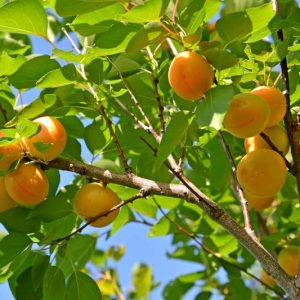
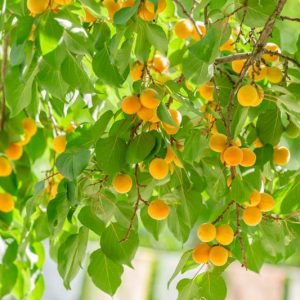
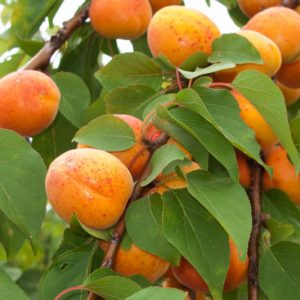
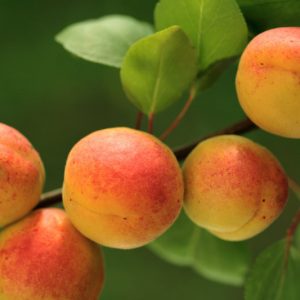
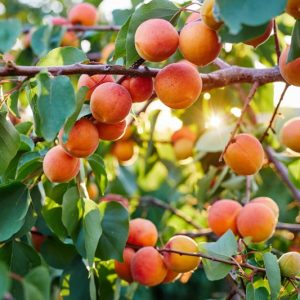
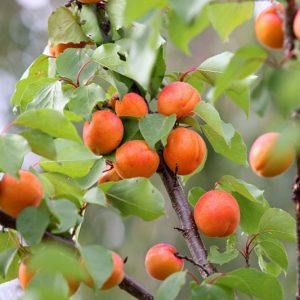
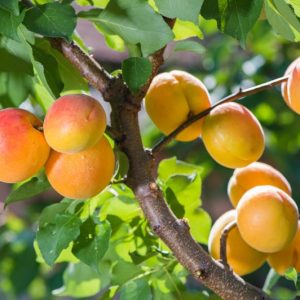
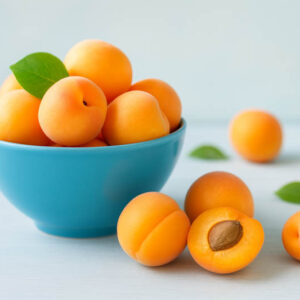
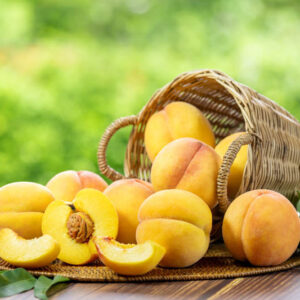
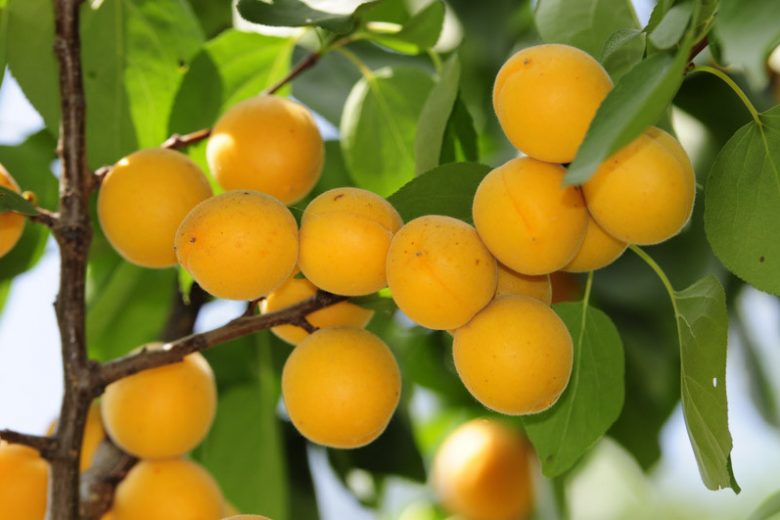
| Fruit & Flavor | Small to medium (≈2-5 cm) round-oval fruit with a smooth, lightly fuzzy skin that bruises easily. Rich golden yellow-orange with rosy blush and light speckling; a faint green tinge at the “shoulders” is common. Freestone pit. Flesh is firm, dense, and juicy; fragrance recalls honeysuckle. Flavor is honey-sweet, fruity, and floral with lively tangy/acid notes – why ‘Blenheim’ is prized for fresh eating, drying, and canning. |
| Ripening (typical) | Midseason; fruit ripens from the inside out – judge readiness by vivid, uniform coloring and aroma more than softness. |
| Season/Availability | Very short window, late spring to early summer (often ~10 days on the tree in suitable climates). |
| Chill Requirement | ~400-500 hours < 45°F (7°C), rootstock and site dependent |
| Hardiness (USDA) | Typically 7-8 (some success 5-8 where blooms are protected) |
| Tree Size | 15–20 ft tall and about 10–15 ft wide. |
| Pollination | Self-fertile; a second apricot that overlaps bloom can boost yield and size. |
| Sun & Exposure | Full sun (6-8+ hrs); shelter from cold spring winds |
| Soil | Fertile, well-drained loam/sandy loam; pH ~6.0-7.5; avoid waterlogging |
| Status | Heirloom; historically California’s signature apricot for drying; listed on Slow Food’s Ark of Taste due to scarcity. |
| Toxicity | Pits/kernels/leaves contain amygdalin (cyanogenic); keep pits and prunings away from kids, pets, livestock. |
Ask long-time orchardists their desert-island apricot and many will say ‘Blenheim’. It is the archetype – honeyed aroma, glowing orange flesh, and a flavor that makes you close your eyes for a second. Below, you will find how to site, plant, prune, thin, and harvest ‘Blenheim’ for that just-right balance of sugar and tang.
The genus Prunus is like nature’s dessert buffet. It brings us plums, cherries, peaches, nectarines, apricots, and almonds – all from one fascinating family of trees and shrubs.
Pick for chill-hour match, bloom time, and use in the kitchen. Where late frosts are common, prefer later-blooming, disease-tolerant selections.
| Cultivar | Chill (approx.) | USDA Zones* | Highlights & Uses |
|---|---|---|---|
| ‘Moorpark’ | 600-700 | 5-8 | Rich, classic flavor; superb for fresh eating and baking; early bloom – protect blossoms. |
| ‘Blenheim (Royal)’ | 400-500 | 7-8 | Beloved in warm-summer areas; aromatic; great for fresh, dried apricot, and canning. |
| ‘Goldcot’ | 800+ | 5-8 | Cold-hardy, later bloom; firm fruit for freezing, pies, and apricot jam. |
| ‘Harcot’ | 700-800 | 5-9 | Canadian-bred for cold; good crack resistance; balanced sweet-tart. |
| ‘Tomcot’ | 500-600 | 5-8 | Large, early; heavy producer; excellent for fresh use and dehydrating. |
| ‘Tilton’ | 600-700 | 5-8 | Classic for canning and halves; tangy flavor that shines in syrup and jam. |
| ‘Katy’ | 250-400 | 7-9 | Low-chill, very early; generous crops in mild winters; great for fresh eating. |
| ‘Chinese (Mormon)’ | 500-600 | 5-9 | Tough, later bloom; often sets in colder, higher-elevation gardens. |
| ‘Early Golden’ | ~400-500 | 5-8 | Early, richly flavored freestone; reliable in moderate winters; self-fruitful (≈300-450+ chill hrs reported). |
USDA zones and chill hours vary by rootstock and microclimate; confirm with local extension or nursery
Apricot pits, seeds, leaves, and young stems contain the cyanogenic glycoside amygdalin. Toxicity is medium for humans and a problem for cats, dogs, and horses. Risk rises if pits are crushed or kernels are chewed; never blend unpitted fruit. Swallowing one or two whole pits is unlikely to poison, but processed amounts can cause gasping, weakness, spasms or convulsions, and severe respiratory failure. Fruit flesh is safe; avoid kernels, and keep prunings and pits away from children, pets, and livestock.
Yes – choose a dwarf on a compact rootstock and a 20-30 gallon (75-115 L) pot with large drainage holes. Container trees warm early (good for flavor) but need vigilant watering in summer. Roll under cover if frost threatens at bloom.
Most gardeners buy grafted ‘Blenheim’ on a suitable rootstock (apricot, plum, or peach) to balance vigor, soil tolerance, and size. Budding/grafting keeps flavor true; seedlings will not match ‘Blenheim’ reliably and take longer to bear.
Underplant with shallow-rooted helpers: chives, thyme, and borage draw pollinators and can deter aphids. White clover or a living mulch feeds soil life (keep a weed-free ring near the trunk). Garlic and marigolds are classic orchard-floor allies. Apricot Companion Plants That Boost Harvests
| Season | Tasks |
|---|---|
| Late winter-early spring | Plant bareroot; set structure; prepare frost covers; begin aphid scouting. |
| Spring | Even moisture; light feed if needed; thin fruit at marble size. |
| Early-mid summer | Harvest gently at peak aroma/color; net against birds; summer-prune for light. |
| Late summer | Reduce water gradually; watch for cankers and twig borer strikes. |
| Fall | Remove mummies; refresh mulch; whitewash trunks where sunscald is a risk. |
| Winter | Light structural pruning in mild, dry windows; protect young bark from rodents. |
| Symptom | Likely Cause | Fix |
|---|---|---|
| Heavy bloom, little fruit | Frost at bloom; poor pollination; mismatch of chill hours | Frost covers; add a pollination partner; match cultivar to climate |
| Cracking or rot on fruit | Irregular watering; tight clusters; brown rot | Even moisture; thin fruit; improve airflow; remove mummies |
| Gumming & dieback | Canker; sunscald; borers | Prune to healthy wood; whitewash; reduce stress |
| Curled, sticky leaves | Aphids; sooty mold | Rinse undersides; encourage beneficials; dormant oil in winter |
| Small fruit & limb breakage | Overcropping; lack of thinning | Thin early and decisively; prop heavy limbs if needed |
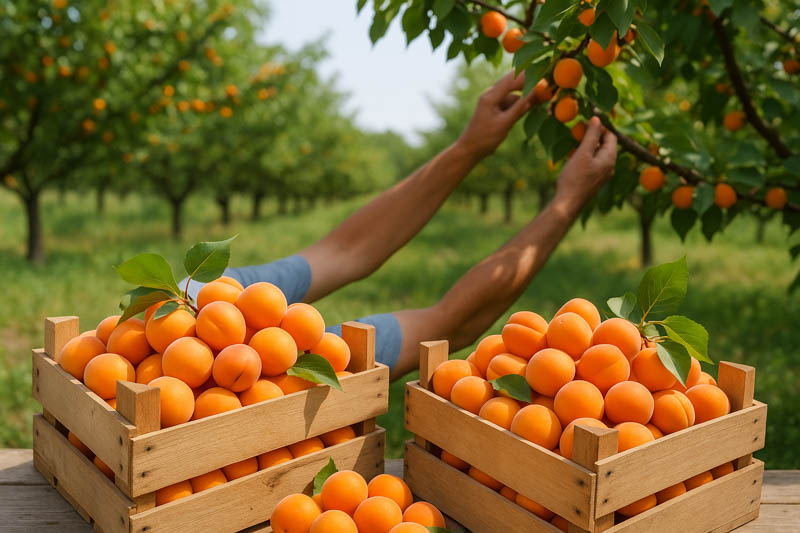
Fresh apricots deliver vitamin C, vitamin A (carotenoids), vitamin E, fiber, and potassium at ~40-50 kcal/100 g; dried fruit concentrates those nutrients (and sugars), ~240 kcal/100 g – great trail fuel in modest portions.
| Nutrient (typical) | Fresh (per 100 g) | Dried (per 100 g) |
|---|---|---|
| Calories | ~48 kcal | ~240 kcal |
| Carbohydrate | ~11 g (≈9 g sugars) | ~63 g |
| Dietary fiber | ~2 g | ~7 g |
| Potassium | ~260 mg | ~1100 mg |
| Vitamin A (RAE, carotenoids) | Present | Higher |
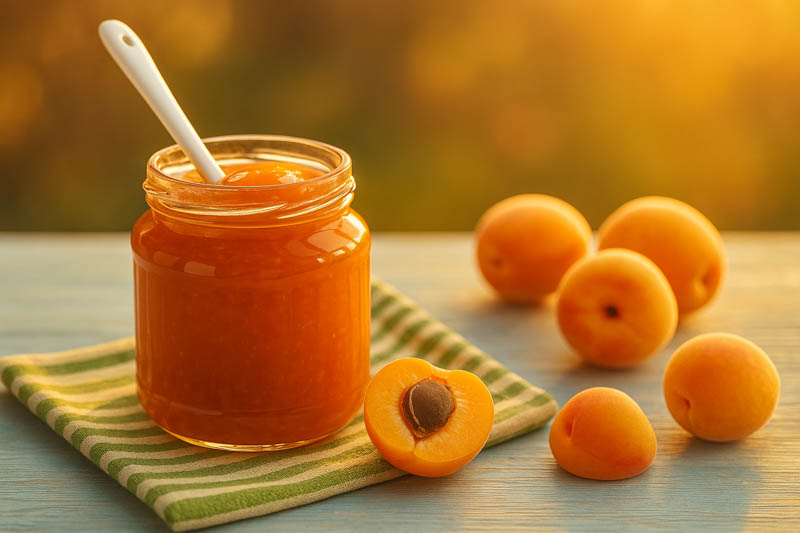
The pit holds a single “kernel.” Sweet kernels are used in some cuisines and pressed into a light oil. Always distinguish grades: cosmetic oil for skin/hair; culinary-grade for food. For health risks and pet/livestock guidance, see the Toxicity & Safety box.
Most modern apricot cultivars (like ‘Blenheim’, ‘Moorpark’, and ‘Tilton’) are self-fertile, meaning they don’t need another tree to set fruit. However, cross-pollination with a compatible variety can improve yield and fruit size.
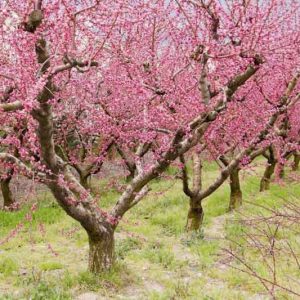
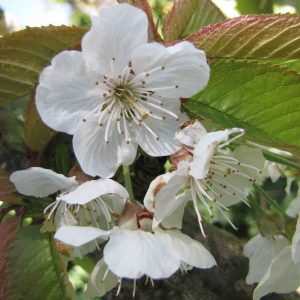
Apricots bloom very early in spring, often before leaves appear (late February to April in most temperate regions). This makes them vulnerable to late frosts, so site selection and protection matter.
Grafted trees usually bear in 3 to 4 years after planting. Seedlings can take 5 to 8 years and may not produce true-to-type fruit.
A healthy apricot tree lives 20 to 40 years, depending on variety, climate, and care. Productivity often declines after 25 years.
They thrive in well-drained loam or sandy loam with a pH of 6.0–7.5. Apricots dislike “wet feet” — avoid heavy clay or compacted soils.
Apricots need full sun (6–8+ hours per day) for good fruit set and flavor.
Likely frost damage to blossoms, poor pollination, or excessive nitrogen (too much vegetative growth). Protect flowers and ensure bee activity during bloom.
Yes. Use a dwarf or semi-dwarf rootstock in a 20–30 gallon (75–115 L) container with excellent drainage. Prune and water regularly.
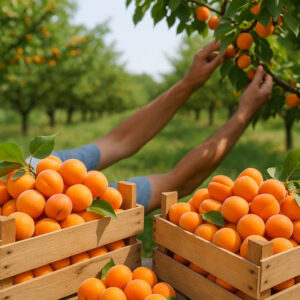
Pick when the fruit is fully colored, slightly soft, and fragrant. Apricots ripen from the inside out, so color and aroma are more reliable than feel.
Updated: October 2025 • Reviewed by Gardenia Editors.
| Hardiness |
7 - 8 |
|---|---|
| Heat Zones |
2 - 8 |
| Plant Type | Fruits, Trees |
| Plant Family | Rosaceae |
| Genus | Apricots, Prunus - Fruit Tree |
| Common names | Apricot |
| Exposure | Full Sun |
| Season of Interest | Spring (Early), Summer (Early, Mid) |
| Height | 15' - 20' (4.6m - 6.1m) |
| Spread | 10' - 15' (3m - 4.6m) |
| Maintenance | High |
| Water Needs | Average |
| Soil Type | Chalk, Loam, Sand |
| Soil pH | Acid, Alkaline, Neutral |
| Soil Drainage | Moist but Well-Drained |
| Characteristics | Showy, Fruit & Berries |
| Tolerances | Heat |
| Attracts | Birds |
| Toxic to Humans | Medium severity |
| Toxic to Cats | Toxic |
| Toxic to Dogs | Toxic |
| Toxic to Horses | Toxic |


| Hardiness |
7 - 8 |
|---|---|
| Heat Zones |
2 - 8 |
| Plant Type | Fruits, Trees |
| Plant Family | Rosaceae |
| Genus | Apricots, Prunus - Fruit Tree |
| Common names | Apricot |
| Exposure | Full Sun |
| Season of Interest | Spring (Early), Summer (Early, Mid) |
| Height | 15' - 20' (4.6m - 6.1m) |
| Spread | 10' - 15' (3m - 4.6m) |
| Maintenance | High |
| Water Needs | Average |
| Soil Type | Chalk, Loam, Sand |
| Soil pH | Acid, Alkaline, Neutral |
| Soil Drainage | Moist but Well-Drained |
| Characteristics | Showy, Fruit & Berries |
| Tolerances | Heat |
| Attracts | Birds |
| Toxic to Humans | Medium severity |
| Toxic to Cats | Toxic |
| Toxic to Dogs | Toxic |
| Toxic to Horses | Toxic |
How many Prunus armeniaca ‘Blenheim’ (Apricot) do I need for my garden?
| Plant | Quantity | |
|---|---|---|
| Prunus armeniaca ‘Blenheim’ (Apricot) | N/A | Buy Plants |
Create a membership account to save your garden designs and to view them on any device.
Becoming a contributing member of Gardenia is easy and can be done in just a few minutes. If you provide us with your name, email address and the payment of a modest $25 annual membership fee, you will become a full member, enabling you to design and save up to 25 of your garden design ideas.
Join now and start creating your dream garden!
Create a membership account to save your garden designs and to view them on any device.
Becoming a contributing member of Gardenia is easy and can be done in just a few minutes. If you provide us with your name, email address and the payment of a modest $25 annual membership fee, you will become a full member, enabling you to design and save up to 25 of your garden design ideas.
Join now and start creating your dream garden!