Top Full Sun Shrubs for Zone 7: Heat-Loving, Low-Maintenance Picks
Looking to transform your Zone 7 landscape with shrubs that love baking summer sun? This powerhouse list features some of the toughest, brightest, most reliable full-sun shrubs you can grow. From pollinator magnets to four-season showstoppers, these varieties thrive with minimal fuss and maximum visual impact.
Full Sun Shrubs for USDA Hardiness Zone 7 – Heat-Loving Plants Built for Sunshine
If you garden anywhere across USDA Zone 7 — from North Carolina and Tennessee to Virginia, Oklahoma, northern Georgia, and parts of the Mid-Atlantic — you already know one thing: full sun in Zone 7 means real summer heat. Long days, reflective soil, and periods of drought can stress the wrong shrubs quickly. The solution? Choose sun-loving shrubs that evolved or were selected for this exact climate.
Zone 7 spans regions with hot summers, chilly winters, and wide seasonal swings. When you plant shrubs adapted to these conditions, you’re choosing plants that know how to handle scorching sun, clay or sandy soils, summer drought, winter freezes, and fast-changing weather — while still delivering exceptional beauty, berries, blooms, or structure.
Quick reminder: Always buy shrubs from reputable nurseries and avoid known invasive varieties. Your landscape will look better, and local ecosystems will thank you.
Zone 7 Full Sun Shrub Quick Start
Group shrubs for visual impact – Plant in repeating drifts of 3–5 for cohesion and easier care.
Match shrubs to soil type – Clay, loam, and sand support different champions.
Respect mature size – Most sun shrubs prefer growing freely with minimal pruning.
Mix evergreen, deciduous, and structural types – Ensures year-round beauty.
Mulch deeply – Conserves water and protects roots from heat stress.
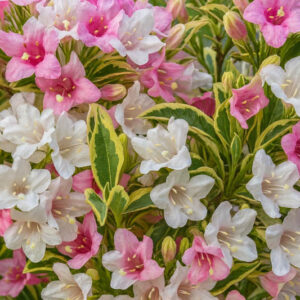
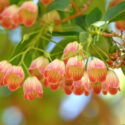
Weigela florida is a deciduous flowering shrub that covers itself in trumpet shaped blooms and hummingbirds each spring. Easygoing and sun loving, this colorful shrub adds reliable structure, bold foliage contrast, and dazzling multi season interest to borders, foundations, and low hedges in home gardens and stylish modern landscapes everywhere.
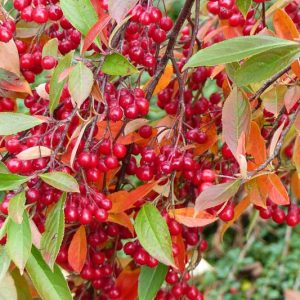
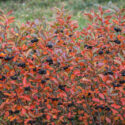
Aronia arbutifolia, or Red Chokeberry, is a tall, semi-evergreen shrub offering year-round interest. In spring, white to light pink flowers adorn its branches, followed by glossy dark green leaves turning brilliant red in fall. Abundant red berries persist into winter, providing food for songbirds and migrating species. It’s native to eastern North America, forming sizable colonies and enhancing naturalistic landscapes.
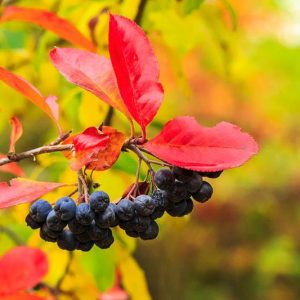
Aronia melanocarpa, or Black Chokeberry, is a spreading deciduous shrub prized for its black berries and purple-red foliage. Fragrant, whitish-pink flowers in spring yield glossy black berries by late summer, lasting into winter. The elliptic leaves transition from bright green to crimson to apricot in fall, adding beauty to shady spots.
Hardiness
3 - 8
Exposure
Full Sun, Partial Sun
Seasons
Spring (Mid, Late), Summer (Early, Mid, Late), Fall, Winter
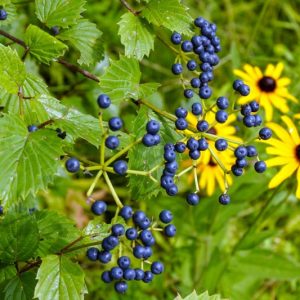
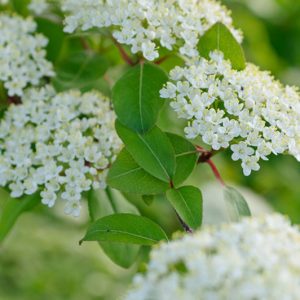
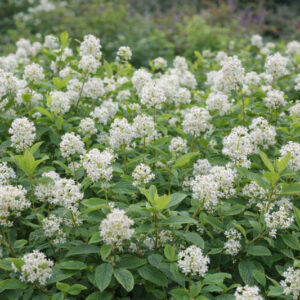
Viburnum dentatum, known as Arrowwood Viburnum, is a hardy, multi-stemmed deciduous shrub. It features creamy-white flower clusters from late spring to summer, attracting pollinators, and yields blue-black berries loved by birds. Its slender branches with dark green, coarse-edged leaves turn vibrant autumn colors. Native to Eastern North America, it’s perfect for wildlife habitats, landscaping, and as a decorative hedge or screen.
Viburnum prunifolium, or Blackhaw, is a striking deciduous shrub or small tree. Spring brings creamy-white flower clusters, drawing butterflies and pollinators. These flowers develop into pink-rose berries, ripening to blue-black in fall. Its plum-like leaves change to rich bronze and vibrant red, adding autumnal beauty. Blackhaw is not only visually appealing but also pest-resistant, making it a valuable addition to any landscape.
Hardiness
3 - 9
Exposure
Full Sun, Partial Sun
Seasons
Spring (Mid, Late), Summer (Early, Mid, Late), Fall, Winter
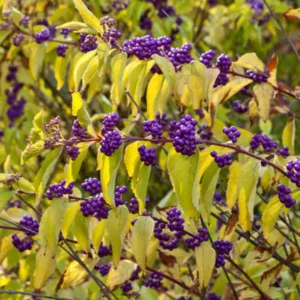
Purple Beautyberry (Callicarpa dichotoma) is a compact deciduous shrub known for its striking display of purple berries that persist from late summer through winter. With elegant arching branches and cascading tips, it also produces small pink to lavender flowers in summer. The berries add bold color and contrast to the garden, complementing the elliptic green leaves that turn golden-yellow in fall.
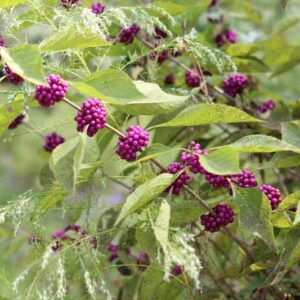
American Beautyberry (Callicarpa americana) is a stunning deciduous shrub grown for its clusters of spectacular berries that persist from fall into winter. With an elegant, arching habit, it features small flowers in violet, pink, or white in early summer, attracting bees and butterflies. The glossy, bright violet to magenta fruits encircle the woody stems, creating a rich display of color against the light green, fuzzy leaves that turn yellow in the fall.
Ceanothus americanus, or New Jersey Tea, is a deciduous shrub with fragrant white flowers in spring, attracting hummingbirds, butterflies, and native bees. Its glossy green leaves may turn yellow in the fall. Dried leaves were used as a tea substitute during the American Revolution. It’s adaptable to various conditions, making it suitable for groundcover and butterfly gardens.
Possumhaw (Ilex decidua) is a large multi-stemmed, deciduous shrub or small tree that lights up four seasons: silver-gray branchwork, glossy summer leaves, then fall color shifting to gold and plum. Spring brings tiny blooms; pollinated females drip with brilliant orange-red berries that persist into winter, feeding birds and opossums. Hardy, handsome, and versatile—plant in groups or as a standout specimen.
Hardiness
5 - 9
Exposure
Full Sun, Partial Sun
Seasons
Spring (Early, Mid, Late), Summer (Early, Mid, Late), Fall, Winter
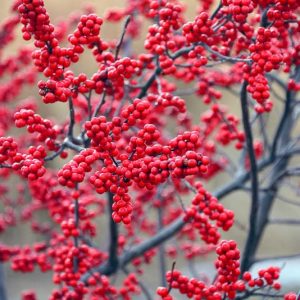
Ilex verticillata, or Winterberry holly, is a deciduous native shrub celebrated for its brilliant red berries that light up the winter landscape. Perfect for rain gardens and wildlife habitats, this moisture-loving plant adds bold seasonal interest while feeding birds through the coldest months.
Hardiness
3 - 9
Exposure
Full Sun, Partial Sun
Seasons
Spring (Early, Late), Summer (Early, Mid, Late), Fall, Winter
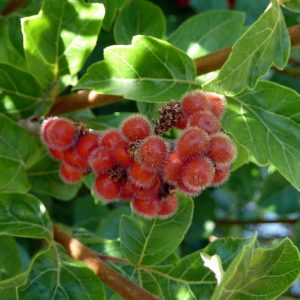
Deciduous shrub. Rhus aromatica (Fragrant Sumac) spreads densely, its crushed leaves aromatic. Male catkins and female yellow blooms open before foliage, feeding bees and butterflies. Pollinated flowers ripen into fuzzy red berries for birds and wildlife. Tough, drought-tolerant, and erosion-stopping, it blazes yellow, orange, purple, and red in fall—great groundcover.
Hardiness
2 - 8
Exposure
Full Sun, Partial Sun
Seasons
Spring (Mid, Late), Summer (Early, Mid, Late), Fall
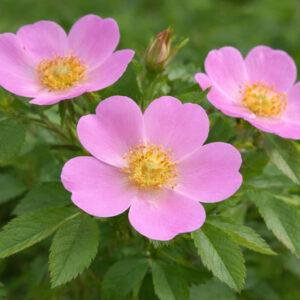
Carolina rose is a deciduous native shrub for full-sun wildlife gardens, pairing fragrant pink single flowers with fiery fall foliage and brilliant winter hips. Tough, heat- and drought-tolerant, this disease-resistant rose spreads gently into bird-filled thickets, perfect for naturalistic borders, meadows, and pollinator-friendly plantings that care for themselves.
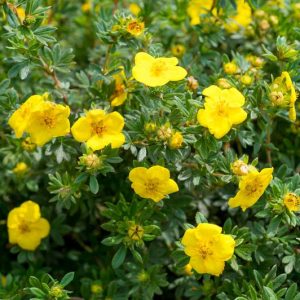
Potentilla fruticosa (Shrubby Cinquefoil) is a durable, compact shrub known for its abundant yellow flowers, blooming from late spring to frost. The blooms, covering the shrub, beautifully contrast with its blue-green, pinnate leaves. Renowned for its lengthy bloom time and resilience to drought and cold, it’s low-maintenance and ideal for informal hedging or sunny borders.
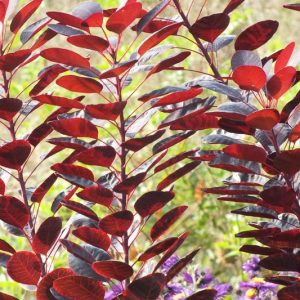
Cotinus coggygria, the beloved Smoke Tree, brings dramatic color, soft texture, and signature smoky plumes to sunny gardens. Hardy, drought-tolerant, and eye-catching from spring to fall, it excels as a specimen, hedge, or border statement shrub. A must-have for vibrant, low-maintenance landscape design.
Hardiness
4 - 8
Exposure
Full Sun, Partial Sun
Seasons
Spring (Early, Mid, Late), Summer (Early, Mid, Late), Fall
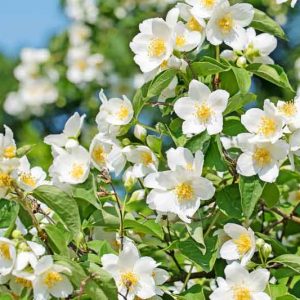
Philadelphus coronarius (Mock Orange) is a robust, rounded shrub known for its stiff, upward branches and dense growth. In late spring, it showcases fragrant, white, cup-shaped flowers in abundant clusters, set against dark green, serrated leaves. Its bark peels in strips, revealing pale brown underneath. While mainly noticeable during its blooming season, its delightful fragrance and profusion of blossoms make it a worthwhile addition, especially near patios for scent enjoyment.
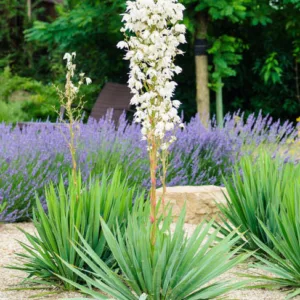
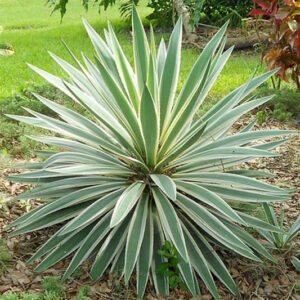
Native to the southeastern US, Yucca filamentosa (Adam’s Needle) is an ornamental evergreen shrub. It forms a basal rosette of rigid, sword-shaped leaves with curly filaments along the edges. In early to midsummer, it sends up a tall flower stalk with nodding, bell-shaped creamy white flowers. Some varieties have variegated foliage, adding year-round brightness to the garden.
Hardiness
4 - 11
Exposure
Full Sun
Seasons
Spring (Early, Mid, Late), Summer (Early, Mid, Late), Fall, Winter
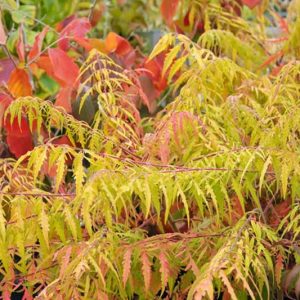
With its ever-changing foliage, Rhus typhina Tiger Eyes® is a remarkable shrub. Its cut-leaf foliage starts as chartreuse in spring, turns bright yellow in summer, and develops stunning orange and scarlet hues in fall. The foliage beautifully contrasts with the purplish branches. In early summer, green-yellow flowers appear in cone-shaped clusters, followed by dark red fruit on female plants in fall.
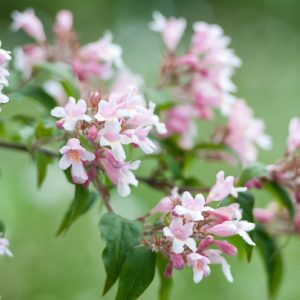
Beauty bush is a fountain-shaped deciduous shrub for sunny borders, exploding in late spring with clouds of baby-pink, yellow-throated flowers that drape arching branches. Blue-green foliage and peeling bark add multi-season interest, while persistent seed capsules and pollinator-friendly blooms make it a superb choice for hedges and screens.
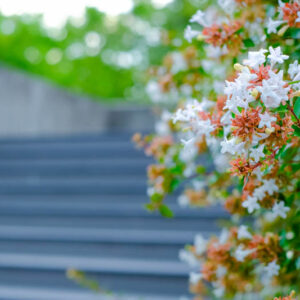
Abelia × grandiflora, or Glossy Abelia, is a long-blooming, semi-evergreen shrub prized for its arching form, fragrant flowers, and easy care. Thriving in sun or part shade, it’s perfect for hedges, foundations, borders, and pollinator gardens. A must-have for low-maintenance landscapes.
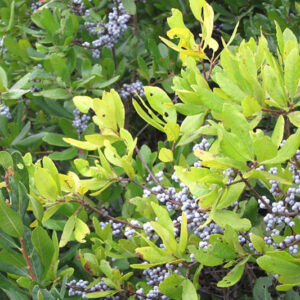
Myrica pensylvanica, or Northern Bayberry, is a hardy, salt-tolerant shrub with aromatic, glossy green leaves and waxy gray berries that persist through winter. Ideal for coastal gardens, erosion control, and wildlife habitats, this low-maintenance plant thrives in poor soils and provides year-round interest with its attractive foliage and berries.
Hardiness
3 - 7
Exposure
Full Sun, Partial Sun
Seasons
Spring (Early, Mid, Late), Summer (Early, Mid, Late), Fall
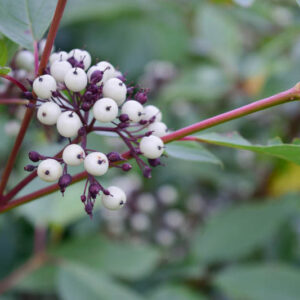
Red osier dogwood (Cornus sericea) is a fast growing, multi stemmed deciduous shrub prized for its red winter stems, creamy spring flower clusters, white berries for birds and rich fall color. Tough and adaptable, it thrives in moist to wet soil, rain gardens, and along ponds or streams in gardens.
Hardiness
2 - 7
Exposure
Full Sun, Partial Sun
Seasons
Spring (Early, Mid, Late), Summer (Early, Mid, Late), Fall, Winter
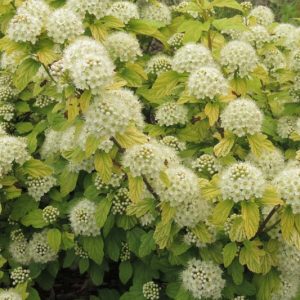
Physocarpus opulifolius is a fast-growing deciduous shrub with arching stems, frothy white spring flowers, colorful fall fruit, and peeling bark that glows in winter. Tough, drought tolerant, and wildlife-friendly, this native ninebark adds drama, texture, and year-round interest to lush hedges, mixed borders, modern naturalistic gardens and landscape designs.
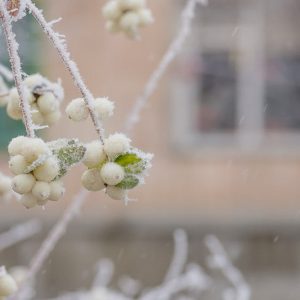
With its waxy, pure white berries, Symphoricarpos albus (Snowberry) is a resilient and adaptable deciduous shrub. In early summer, it produces clusters of small, bell-shaped white to pink flowers that attract butterflies and pollinators. These flowers give way to abundant snow-white berries that persist throughout winter, adding visual interest to the landscape.
Yucca gloriosa is an evergreen, architectural shrub that thrives in sun, sand, and drought. This Spanish dagger delivers bold, sculptural leaves and tall white flower spikes. Use Yucca gloriosa to anchor xeric borders, coastal gardens, and modern designs with long lasting, low maintenance impact in hot, dry, windy coastal climates.
Hardiness
6 - 11
Exposure
Full Sun, Partial Sun
Seasons
Spring (Early, Mid, Late), Summer (Early, Mid, Late), Fall, Winter
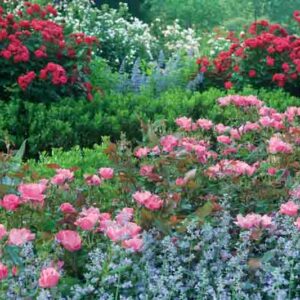
Knock-Out Roses are low-maintenance, disease-resistant shrub roses that bloom continuously from spring to frost. Known for their vibrant colors and self-cleaning flowers, they thrive in various climates and require minimal care. Perfect for borders, hedges, and containers, these hardy roses add lasting beauty to any landscape.
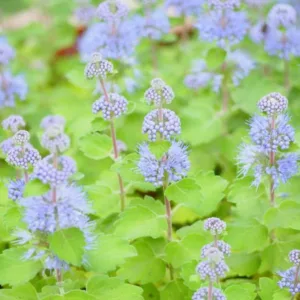
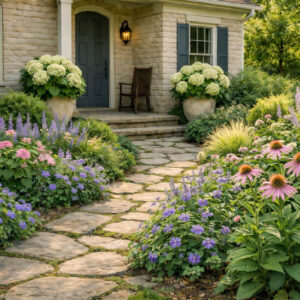
Caryopteris, known as Bluebeard, Blue Mist, or Blue Spirea, is a low-maintenance shrub renowned for its fragrant, true blue flowers blooming in late summer to fall. Attracting butterflies, hummingbirds, and beneficial insects, it offers color when most shrubs don’t. Aromatic leaves from spring to frost make it perfect for sunny gardens, small spaces, and containers. Plant multiple for a spectacular fall display.
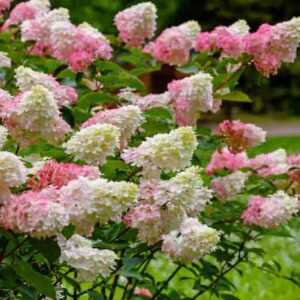
Native to China and Japan, Hydrangea paniculata (Panicle Hydrangea) is a deservedly popular deciduous shrub. Tough, cold-hardy, easy-care, long-lived, it is laden with large, conical, snowy flowers from midsummer to fall. Each lacy flower cluster is composed of small fertile flowers, and larger showy sterile blossoms that are subtended by showy petal-like sepals. As an added bonus, they change color as fall approaches, gradually turning pink, and ultimately brown.
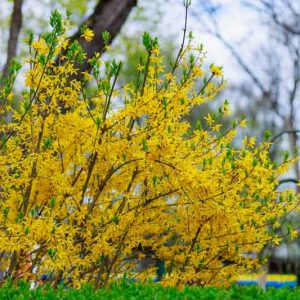
Forsythia is a deciduous shrub, renowned for its vibrant, golden-yellow flowers that bloom profusely in early spring, often before the foliage appears. The flowers densely cover the bare branches, presenting a striking appearance.
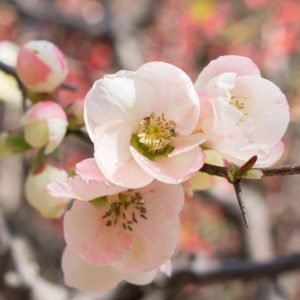
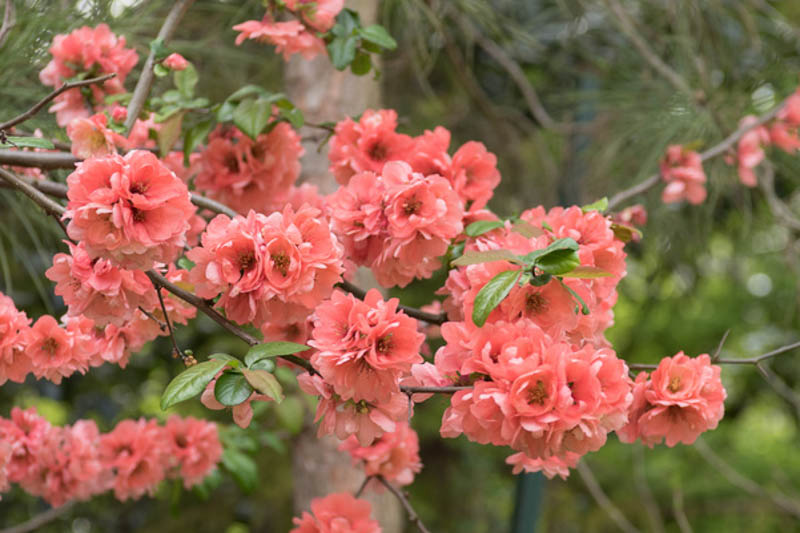
Chaenomeles, commonly known as Flowering Quince, is a deciduous shrub prized for its late winter to early spring blooms and ornamental fruits. With vibrant flowers in shades of red, pink, and white, this versatile plant adds beauty to gardens and attracts pollinators. It thrives in a variety of soil conditions and is low-maintenance.
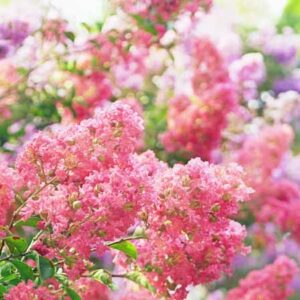
The Crepe Myrtle, renowned for its vibrant, ruffled summer blooms and striking, peeling bark, is a popular ornamental shrub or tree. Thriving in warm climates, it offers spectacular foliage color changes in autumn, making it a year-round focal point in gardens and landscapes with its elegant, multi-stemmed form.
Tip: Most shrubs labeled “full sun” need a minimum of 6 hours of direct sunlight daily. In Zone 7, 8+ hours promotes the strongest blooming and fruiting.
Why Choose These Full Sun Shrubs?
Unlike many non-native ornamentals that struggle with Zone 7’s temperature swings, these shrubs shine in sun-drenched locations. They offer strong structure, reliable seasonal color, and excellent ecological value with minimal water or fertilizer once established.
Climate adapted – These shrubs tolerate long, hot summers and winter cold snaps.
Low maintenance – Ideal for sustainable landscapes that require less water and care.
Wildlife benefits – Many provide nectar, pollen, berries, and nesting habitat.
Non-invasive options – Modern sterile cultivars prevent unwanted spreading.
Excellent for clay, sand, or mixed soils – Zone 7 includes all of these soil types.
Easy Design Recipes for Full Sun Zone 7 Gardens
Pollinator Paradise Border
Combine Caryopteris, Callicarpa, Ceanothus americanus, and Aronia melanocarpa for nonstop flowering and pollinator activity from spring through fall.
Four-Season Structure Hedge
Mix Viburnum prunifolium, Ilex verticillata, and Hydrangea paniculata to create an all-season privacy screen with flowers, berries, and fall color.
Hot, Dry Hillside Planting
Use Rhus aromatica, Potentilla fruticosa, Yucca filamentosa, and Cotinus for a drought-proof display on lean soils.
Sunny Bird Garden
Layer Aronia, Callicarpa, Ilex decidua, and Viburnum dentatum to provide berries from early fall through winter.
How to Plant and Care for Full Sun Shrubs
Zone 7 gardeners enjoy a long growing season, and establishing sun-loving shrubs is simple with the right preparation:
Loosen soil lightly to encourage root spread but preserve structure.
Water deeply in year one to develop long-term drought resistance.
Mulch with leaves, bark, or compost to moderate soil temperature.
Fertilize sparingly — many shrubs resent overfeeding.
Prune only as needed to maintain natural shape and flowering cycles.
The best shrubs for full sun in Zone 7 are those that tolerate heat, drought, and long periods of direct light. Top options include Viburnum dentatum, Hydrangea paniculata, Callicarpa, Caryopteris, Ceanothus americanus, Rhus aromatica, and Yucca species. These shrubs maintain color, structure, and health even in intense sun.
Which Zone 7 shrubs handle heat and drought the best?
The most drought-tolerant full-sun shrubs for Zone 7 include Rhus aromatica, Yucca filamentosa, Ceanothus americanus, Potentilla fruticosa, and Aronia species. These shrubs evolve deep root systems, require minimal watering once established, and stay attractive even in prolonged heat spells.
What full sun shrubs offer the most wildlife value in Zone 7?
Aronia, viburnums, Callicarpa, Ceanothus, and Ilex verticillata are exceptional wildlife shrubs. They provide nectar, pollen, berries, and cover for birds, bees, butterflies, and beneficial insects. Beautyberry and chokeberry are especially valued for their high-nutrition fruit.
Which shrubs provide four-season interest in sunny Zone 7 landscapes?
Hydrangea paniculata, Aronia melanocarpa, Rhus ‘Tiger Eyes,’ Yucca filamentosa, and Viburnum prunifolium each offer standout multi-season appeal, from spring blooms to summer berries, fall foliage, and winter structure. These shrubs anchor year-round garden design.
Are there full sun shrubs for Zone 7 that grow quickly?
Yes. Fast growers include Forsythia, Hydrangea paniculata, Abelia, Weigela, and some viburnums. These shrubs establish rapidly, fill space efficiently, and tolerate pruning well, making them ideal for hedges, screens, and rapid landscape impact.
Updated: December 2025 • Reviewed by Gardenia Editors
While every effort has been made to describe these plants accurately, please keep in mind that height, bloom time, and color may differ in various climates. The description of these plants has been written based on numerous outside resources.
Create a membership account to save your garden designs and to view them on any device.
Becoming a contributing member of Gardenia is easy and can be done in just a few minutes. If you
provide us with your name, email address and the payment of a modest $25 annual membership fee,
you will become a full member, enabling you to design and save up to 25 of your garden design
ideas.
Create a membership account to save your garden designs and to view them on any device.
Becoming a contributing member of Gardenia is easy and can be done in just a few minutes. If you
provide us with your name, email address and the payment of a modest $25 annual membership fee,
you will become a full member, enabling you to design and save up to 25 of your garden design
ideas.