Red Osier Dogwood, Red-Osier Dogwood, RedOsier Dogwood, Red Willow, Redstem Dogwood, Redtwig Dogwood, Red-Rood, American Dogwood, Creek Dogwood, Western Dogwood, Cornus stolonifera, Swida sericea
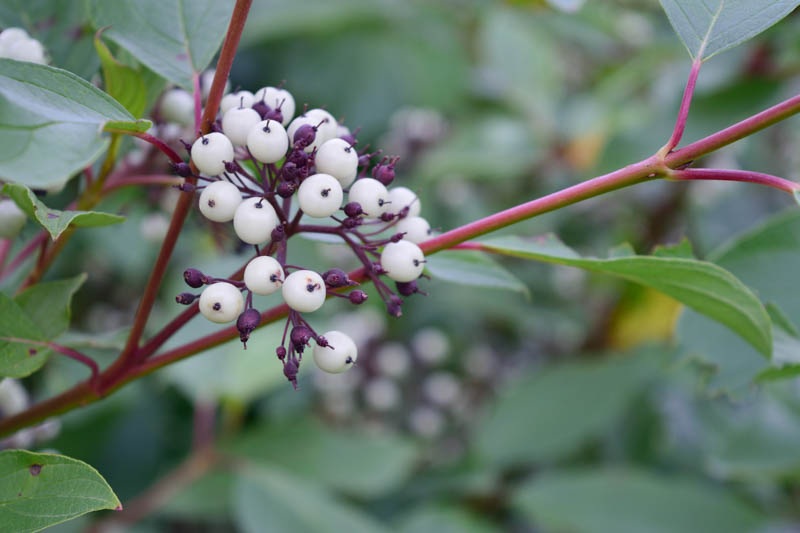
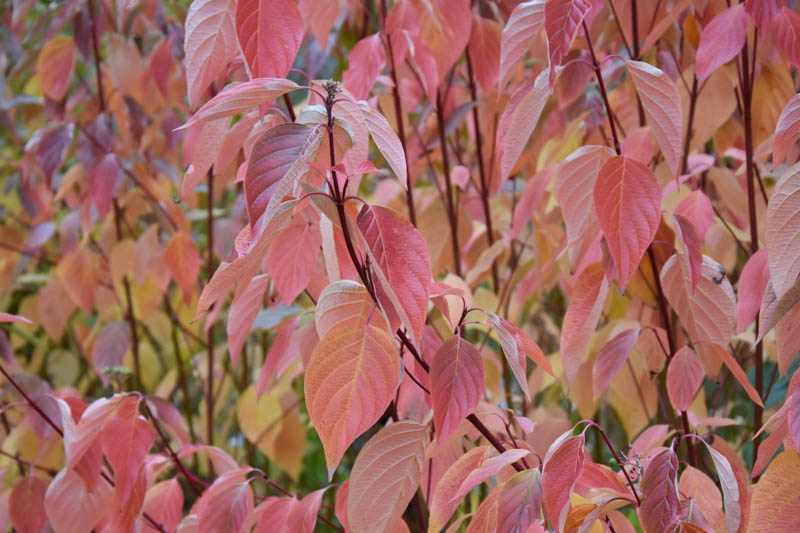
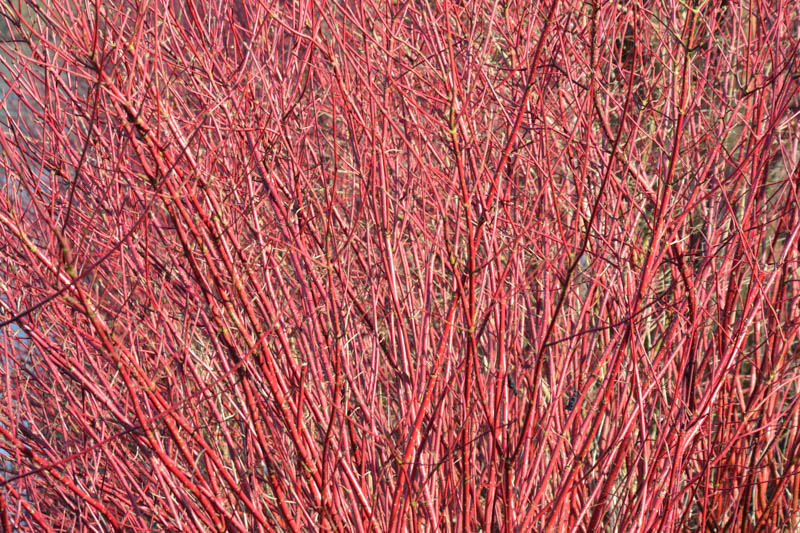
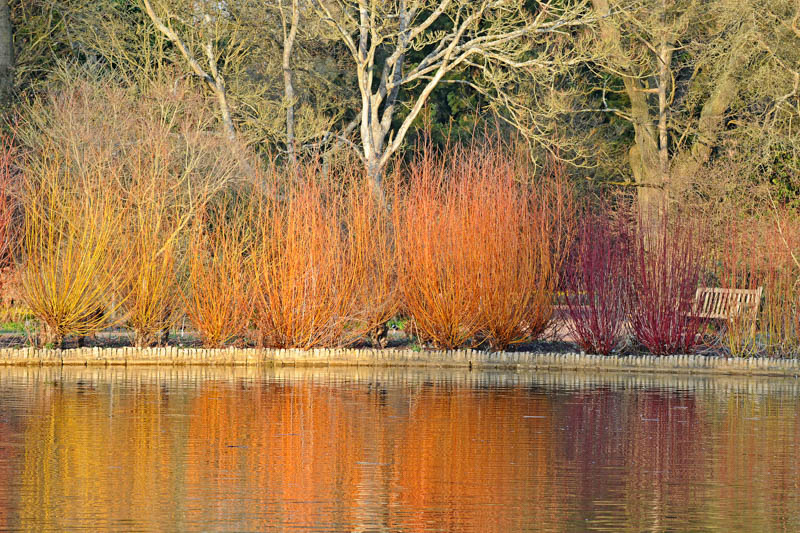


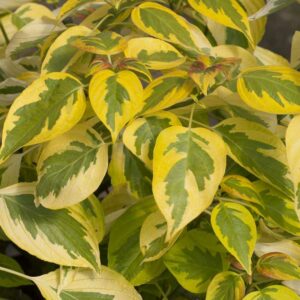
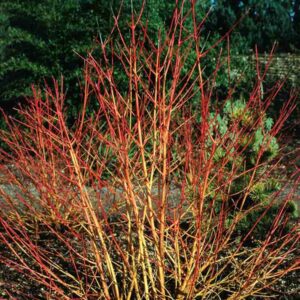
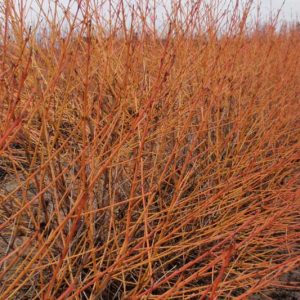
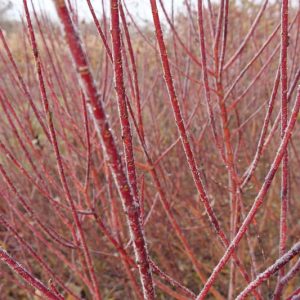
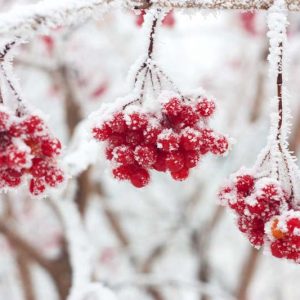
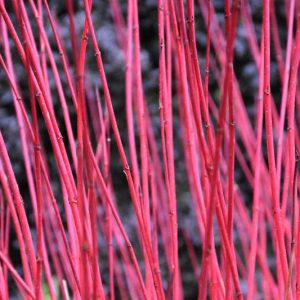
Adding a pop of vibrant color in the snowy, dull months of winter, Cornus sericea (Red Osier Dogwood) is a medium sized ornamental shrub with incredible appeal. Rapidly growing and adaptable to most soils – including wet soils – it offers multiple seasons of interest: stunning fall color, attractive white berries sometimes tinged with blue, vibrant red or golden stems, and in some cultivars, lovely variegated summer foliage. A spectacular addition to the garden for most of the year, Red Osier Dogwood definitely brings a WOW factor to any winter landscape.
Cornus sericea thrives in full sun to part shade and prefers organically rich, medium to wet soils that are kept evenly moist and well drained. It is not particularly fussy, handling clay and wetter spots that frustrate many shrubs. Use it in shrub borders, along ponds and streams, in rain gardens, or in naturalistic plantings where it can freely spread and form colorful thickets that support wildlife.
Summary: Multi stemmed, suckering deciduous shrub with an upright, spreading habit, fast growth, and spectacular winter stems in red or gold.
Use: Shrub borders, rain gardens, wet soils, naturalistic plantings, erosion control, streambanks, winter interest plantings, wildlife gardens.
Highlight: Vivid red or golden winter stems, flat topped clusters of creamy white spring flowers, showy white to blue tinged berries loved by birds, and colorful fall foliage.
Note: For the best winter stem color, new growth is key – regular pruning to encourage fresh shoots makes a big difference.
| Botanical Name | Cornus sericea (syn. Cornus stolonifera) |
|---|---|
| Family | Dogwood family (Cornaceae) |
| Common Names | Red Osier Dogwood, Redtwig Dogwood, Red Willow |
| Native Range | A species of dogwood native to much of North America (excluding the lower Midwest and deep South). Common along streams, wetlands, forest edges, and moist thickets. |
| Plant Type and Habit | Multi stemmed, suckering deciduous shrub with an upright, spreading habit, often forming colonies or thickets over time. |
| Hardiness (approx. USDA) | Zones 2 to 7. Very cold hardy but more disease prone in hot summer climates south of Zone 7. |
| Size | Grows rapidly to about 6 to 9 ft. high (180 to 270 cm) and 8 to 12 ft. across (240 to 360 cm), with many dwarf or compact cultivars also available. |
| Sun and Exposure | Performs best in full sun to part shade. Full sun gives the strongest stem color and densest growth. |
| Soil | Prefers organically rich, medium to wet soils that are kept evenly moist and well drained. Adaptable to a wide range of soils, including clay, as long as they do not dry out for long periods. |
| Seasonal Interest | Late spring clusters of creamy white flowers, white to blue tinged berries in summer, red purple fall foliage, and brilliant red or golden stems in fall and winter. |
| Primary Uses | Shrub borders, pond and stream edges, rain gardens, wet spots, naturalistic plantings, erosion control, and winter interest plantings. |
Cornus sericea is a multi stemmed, suckering deciduous shrub with an upright, spreading habit. Numerous stems radiate from the base, creating a dense framework that becomes especially eye catching once leaves drop and the colorful bark is fully exposed in fall and winter.
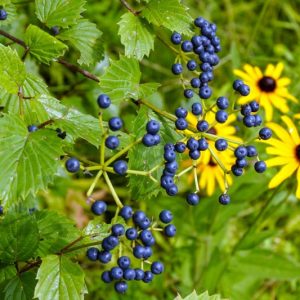
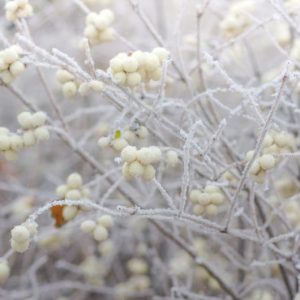
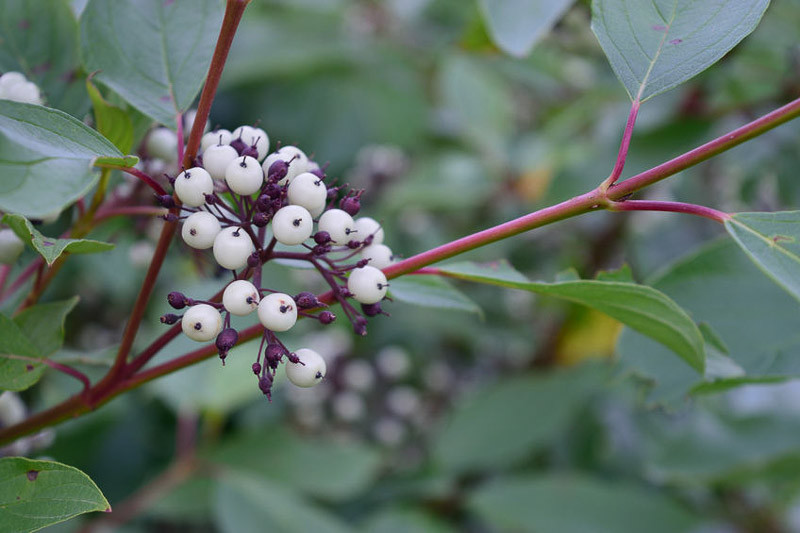
In late spring, flat topped clusters of tiny, creamy white flowers (about 2 in. or 5 cm across) appear on the tips of the branches. While not dramatically showy from a distance, they are fragrant, nectar rich, and attract happy butterflies and pollinators. These clusters give way to white berries often washed with blue that birds greedily devour as they ripen.
The summer foliage consists of ovate, medium to dark green leaves that give the shrub a full, leafy presence. In fall, they typically turn dull to rich red purple, echoing the color of the stems and adding yet another layer of seasonal interest.
Cornus sericea is a species of dogwood native to much of North America, especially in cooler regions, but absent from the lower Midwest and deep South. It naturally inhabits moist woods, streambanks, lake margins, swamps, and wet thickets, where it plays an important role in stabilizing soil and providing habitat for wildlife.
Red Osier Dogwood grows at a fast rate, typically reaching 6 to 9 ft. tall and 8 to 12 ft. wide. It spreads by root suckers, especially in suitable conditions. If you prefer a more compact clump, promptly remove unwanted suckers. If you have space and enjoy a naturalistic look, let it form thickets for maximum winter impact.
Flat topped clusters of creamy white blossoms appear in late spring and may bloom sporadically again in summer. The flowers are fragrant and attract pollinators, including butterflies and bees. As they fade, they develop into attractive clusters of white to bluish berries that stand out beautifully against the green foliage and red stems and are quickly discovered by birds.
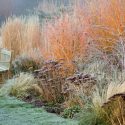
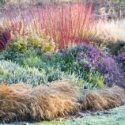
From spring through summer, the shrub is clothed in medium to dark green leaves. In fall, foliage often turns red purple before dropping to reveal the real stars – the stems. In winter, the numerous young stems glow in shades of bright red or, in some cultivars, warm gold, creating a dramatic contrast against snow, evergreen backgrounds, or dark fences.
Hardy in about USDA Zones 2 to 7, Cornus sericea is extremely cold tolerant and an excellent choice for northern gardens. In hot summer climates south of Zone 7, it can be more vulnerable to diseases and may look tired by late summer, so good siting and care are especially important.
Cornus sericea is remarkably versatile in the landscape:
The flowers, berries, and dense structure make Red Osier Dogwood a valuable plant for wildlife. Pollinators visit in spring, birds feast on the berries in summer and fall, and the twiggy framework offers cover and nesting sites. Paired with other native shrubs and perennials, it helps create a garden that is both beautiful and ecologically rich.
To learn more about designing with native plants, explore guides like Native Plants, Gorgeous Gardens: Start Here and Build a Native Garden That Thrives.
Easy to grow, easy to care for, and often deer resistant, Cornus sericea is a forgiving shrub for many gardeners. In areas with high deer or rabbit pressure, you may see some browsing on young shoots, especially in winter, so temporary protection can be helpful until plants are well established.
While Red Osier Dogwood is adaptable, it does best in medium to wet soils. Extended drought can lead to leaf scorch, weaker growth, and fewer berries. In dry climates or sandy soils, consider additional watering and deeper mulch.
Cornus sericea is generally considered non toxic to humans and pets, and its berries are important food for wildlife.
Within its native range, Red Osier Dogwood is not considered invasive, but it will spread through suckers to form colonies. Promptly remove unwanted shoots if you prefer a more contained shrub.
The key reasons to grow Cornus sericea (Red Osier Dogwood) include its four season ornamental appeal, fast growth, high wildlife value, and ability to thrive in medium to wet soils. Few shrubs combine such vivid red or golden winter stems, spring flowers, summer berries, and fall color with such toughness and adaptability.
If you enjoy gardening with plants that support wildlife and offer multiple seasons of interest, Red Osier Dogwood pairs wonderfully with other native shrubs, grasses, and perennials in borders, rain gardens, and naturalistic plantings.
Red Osier Dogwood prefers:
It is not a good choice for very dry, exposed sites unless irrigation or naturally moist conditions are available. In drier landscapes, position it in swales, near rain garden basins, or where runoff collects.
Cornus sericea is generally low maintenance once established, especially when planted in soils that stay evenly moist.
Red Osier Dogwood can be propagated both vegetatively and, less commonly, from seed.
Cornus sericea is generally a robust, easy care shrub when grown in appropriate conditions, but like other dogwoods, it can be susceptible to several pests and diseases, especially in hot, humid climates or under stress.
Aphids, scale insects, and other generalist pests may occasionally appear on stems or leaves. They usually cause only minor damage and can often be managed with cultural practices, a strong jet of water, or, if needed, organic controls such as insecticidal soap or horticultural oils.
Leaf spots, cankers, and other fungal issues are more likely in hot summer climates and in sites with poor air circulation or chronically stressed plants.
Cornus sericea, commonly called red osier or redtwig dogwood, is a fast growing, multi stemmed, suckering deciduous shrub native to much of North America. It is grown for its red or yellow winter stems, flat clusters of creamy white flowers, white berries, and colorful fall foliage.
Most forms of Cornus sericea grow about 6 to 9 feet tall and 8 to 12 feet wide, although some cultivars are smaller and some wild plants can be taller. It spreads gradually by suckers, forming dense clumps or thickets over time.
Cornus sericea performs best in full sun to part shade and in organically rich, medium to wet soils. It tolerates clay and periodically saturated conditions but struggles in very dry, sandy sites without supplemental moisture. Even, consistent moisture gives the best growth and stem color.
Red osier dogwood usually blooms in late spring, typically May to June, with flat topped clusters of small creamy white flowers. In favorable conditions it may flower lightly again in summer.
The white to bluish berries of Cornus sericea are important food for birds and wildlife, but they are generally considered bitter and unpalatable for people. They are not typically used as an edible fruit in home gardens.
Yes. The flowers attract bees and butterflies, the berries feed many bird species, and the dense branching provides nesting sites and cover. Cornus sericea is often recommended for habitat restoration and wildlife friendly landscaping along streams, ponds, and wetlands.
The brightest stem color appears on young stems. In early spring, either cut all stems to the ground every two to three years or remove one quarter to one third of the oldest stems annually. Both methods encourage fresh, vividly colored new growth.
Cornus sericea is native to much of North America and is not considered invasive within its natural range. However, it spreads by suckers and can form colonies, so gardeners who want a contained shrub should remove unwanted suckers regularly.
Cornus sericea is often described as moderately deer resistant. Deer and rabbits may browse young shoots, especially in winter when food is scarce, but the plant usually recovers well, and browsing pressure is often lower than on many other ornamental shrubs.
Cornus sericea is native to a broad band of northern and western North America and occurs in Alaska, much of the northern and interior western United States, and parts of the Northeast, Mid-Atlantic, and upper Midwest, while being largely absent from the southern Great Plains and the Southeast.
Cornus sericea is an excellent choice for rain gardens and wet soils. It naturally occurs in riparian zones, wetlands, and moist thickets, and is frequently used in bank stabilization and restoration plantings along streams, lakes, and drainage swales.
Updated: December 2025 • Reviewed by Gardenia Editors
| Hardiness |
2 - 7 |
|---|---|
| Heat Zones |
1 - 8 |
| Climate Zones | 1A, 1B, 2A, 2B, 3A, 3B, 4, 5, 6, 7, 8, 9, 14, 15, 16, 17, 18, 19, 20, 21, 22, 23, 24, A2, A3 |
| Plant Type | Shrubs |
| Plant Family | Cornaceae |
| Genus | Cornus |
| Common names | Dogwood, Redosier Dogwood |
| Exposure | Full Sun, Partial Sun |
| Season of Interest | Spring (Early, Mid, Late), Summer (Early, Mid, Late), Fall, Winter |
| Height | 6' - 9' (180cm - 270cm) |
| Spread | 8' - 12' (240cm - 3.7m) |
| Spacing | 96" - 144" (240cm - 3.7m) |
| Maintenance | Average |
| Water Needs | Average, High |
| Soil Type | Chalk, Clay, Loam, Sand |
| Soil pH | Acid, Alkaline, Neutral |
| Soil Drainage | Moist but Well-Drained, Moisture Retentive |
| Characteristics | Fragrant, Showy |
| Native Plants | United States, Pennsylvania, Rhode Island, Vermont, Connecticut, Delaware, Maine, Massachusetts, Maryland, New Hampshire, New Jersey, New York, California, Northeast, Midwest, Pacific Northwest, Southeast, Southwest, Rocky Mountains, Alaska, Illinois, Indiana, Iowa, Michigan, Minnesota, Nebraska, North Dakota, Ohio, South Dakota, Wisconsin, Idaho, Oregon, Washington, Virginia, West Virginia, Kentucky, Arizona, Nevada, New Mexico, Colorado, Montana, Utah, Wyoming |
| Tolerances | Deer, Clay Soil, Wet Soil, Heat, Wind, Fire, Erosion |
| Attracts | Bees, Butterflies, Birds |
| Garden Uses | Banks And Slopes, Beds And Borders, Hedges And Screens, Ponds And Streams, Rain Gardens |
| Garden Styles | City and Courtyard, Informal and Cottage, Prairie and Meadow, Traditional Garden |
| Toxic to Humans | No known toxicity |
| Toxic to Cats | No known toxicity |
| Toxic to Dogs | No known toxicity |
| Toxic to Horses | No known toxicity |


| Hardiness |
2 - 7 |
|---|---|
| Heat Zones |
1 - 8 |
| Climate Zones | 1A, 1B, 2A, 2B, 3A, 3B, 4, 5, 6, 7, 8, 9, 14, 15, 16, 17, 18, 19, 20, 21, 22, 23, 24, A2, A3 |
| Plant Type | Shrubs |
| Plant Family | Cornaceae |
| Genus | Cornus |
| Common names | Dogwood, Redosier Dogwood |
| Exposure | Full Sun, Partial Sun |
| Season of Interest | Spring (Early, Mid, Late), Summer (Early, Mid, Late), Fall, Winter |
| Height | 6' - 9' (180cm - 270cm) |
| Spread | 8' - 12' (240cm - 3.7m) |
| Spacing | 96" - 144" (240cm - 3.7m) |
| Maintenance | Average |
| Water Needs | Average, High |
| Soil Type | Chalk, Clay, Loam, Sand |
| Soil pH | Acid, Alkaline, Neutral |
| Soil Drainage | Moist but Well-Drained, Moisture Retentive |
| Characteristics | Fragrant, Showy |
| Native Plants | United States, Pennsylvania, Rhode Island, Vermont, Connecticut, Delaware, Maine, Massachusetts, Maryland, New Hampshire, New Jersey, New York, California, Northeast, Midwest, Pacific Northwest, Southeast, Southwest, Rocky Mountains, Alaska, Illinois, Indiana, Iowa, Michigan, Minnesota, Nebraska, North Dakota, Ohio, South Dakota, Wisconsin, Idaho, Oregon, Washington, Virginia, West Virginia, Kentucky, Arizona, Nevada, New Mexico, Colorado, Montana, Utah, Wyoming |
| Tolerances | Deer, Clay Soil, Wet Soil, Heat, Wind, Fire, Erosion |
| Attracts | Bees, Butterflies, Birds |
| Garden Uses | Banks And Slopes, Beds And Borders, Hedges And Screens, Ponds And Streams, Rain Gardens |
| Garden Styles | City and Courtyard, Informal and Cottage, Prairie and Meadow, Traditional Garden |
| Toxic to Humans | No known toxicity |
| Toxic to Cats | No known toxicity |
| Toxic to Dogs | No known toxicity |
| Toxic to Horses | No known toxicity |
How many Cornus sericea (Red Osier Dogwood) do I need for my garden?
| Plant | Quantity | |
|---|---|---|
| Cornus sericea (Red Osier Dogwood) | N/A | Buy Plants |
Create a membership account to save your garden designs and to view them on any device.
Becoming a contributing member of Gardenia is easy and can be done in just a few minutes. If you provide us with your name, email address and the payment of a modest $25 annual membership fee, you will become a full member, enabling you to design and save up to 25 of your garden design ideas.
Join now and start creating your dream garden!
Create a membership account to save your garden designs and to view them on any device.
Becoming a contributing member of Gardenia is easy and can be done in just a few minutes. If you provide us with your name, email address and the payment of a modest $25 annual membership fee, you will become a full member, enabling you to design and save up to 25 of your garden design ideas.
Join now and start creating your dream garden!