Create Your Garden

Native Garden Ideas – Best Native Plants for a Beautiful Yard

Find the best native plants, garden styles, and state lists to build a low-maintenance native garden that supports wildlife at home.
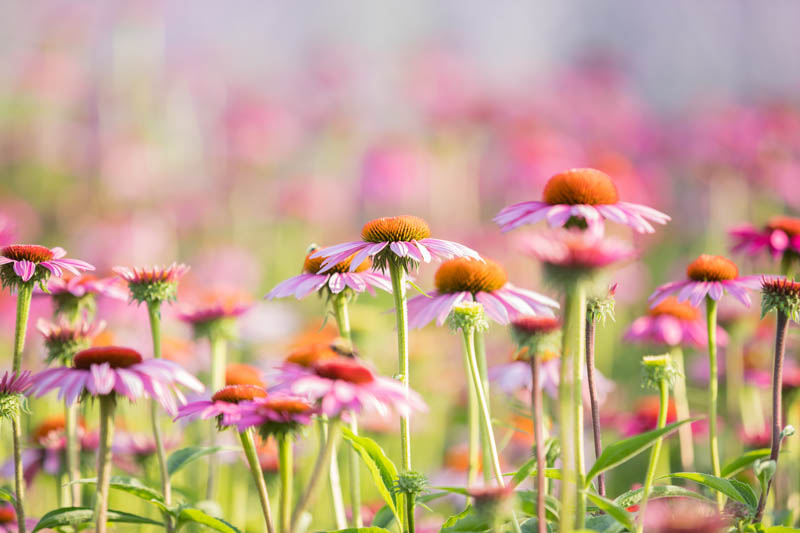
Native gardens, Native garden ideas, native garden design, echinacea, coneflower

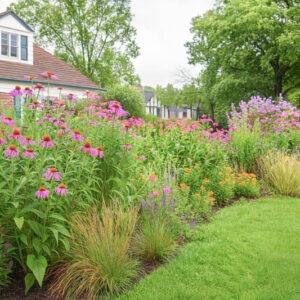
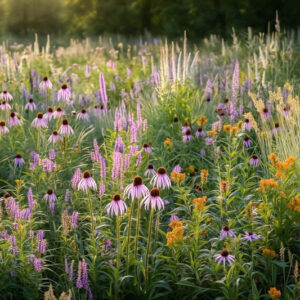
Create a native garden that looks beautiful, belongs to your region, and quietly works hard for wildlife, soil, and water. This guide walks you through what “native” really means, how to layer a native plant garden, simple design ideas, state-by-state native plant picks, and low-input care so your yard becomes a living piece of local habitat.

What is a native garden

A native garden is planted primarily with regionally native plants – species that evolved in your local climate, soil, and with your local wildlife. These plants form the backbone of healthy ecosystems and support native bees, butterflies, birds, and countless beneficial insects. A successful native garden offers four big things for wildlife: diverse food (nectar, pollen, seeds, berries), shelter and nesting sites, water, and year-round structure for cover and foraging.

In practice, a native garden might look like a sunny prairie-style border, a shady woodland understory, a rain garden along the driveway, or even a collection of large containers on a balcony. The common thread is this – the plants match your region, not just a catalog photo.

Quick Start – How to Build a Native Garden That Works

  • Start local: Prioritize plants native to your region and state. They are more likely to thrive with less water and fertilizer.
  • Think community, not specimens: Plant in drifts and layers so species work together and look intentional.
  • Cover all seasons: Choose native plants that flower and fruit from early spring through late fall with winter seedheads and stems for structure.
  • Match plant to place: Dry slope, clay low spot, shade under trees – native plants exist for each. Use your site as the design guide.
  • Skip the chemicals: Avoid synthetic fertilizers and pesticides where possible. Healthy native plant communities usually balance pests naturally.
  • Leave “messy” corners: A little leaf litter, hollow stems, fallen branches, and native grasses turn a pretty garden into real habitat.

🔎 Find regionally native plants

Best Native Plants By Layer

Think of your native garden like a mini ecosystem. Instead of isolated specimens, you are building a layered community – canopy, understory shrubs, perennials, grasses, and groundcovers that knit the soil and feed wildlife. Use native plant lists that fit your USDA hardiness zone and local ecoregion, then mix and match from these layers to create a resilient, low-maintenance native landscape.
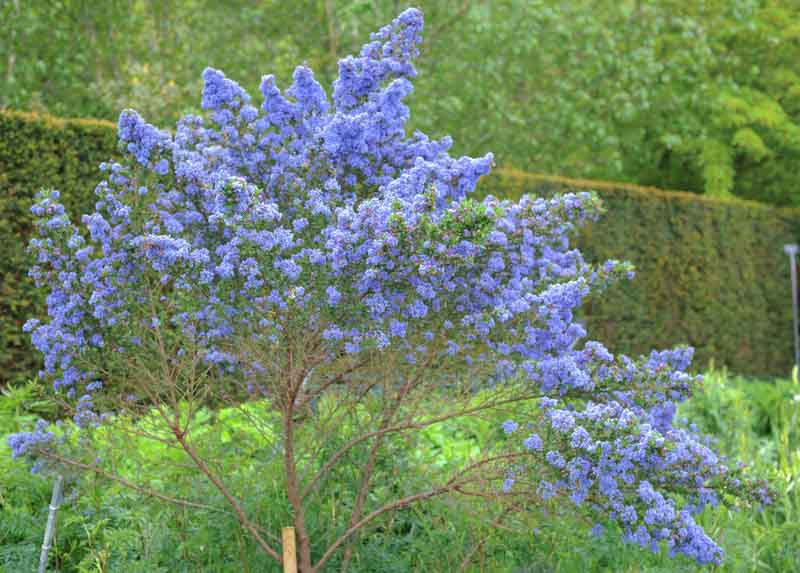
Ceanothus 'Puget Blue', California Lilac 'Puget Blue', blue flowers on a native shrub border

Flowering Shrubs and Small Trees – The Native Backbone

  • Ceanothus (California Lilac): West coast native evergreen that smothers itself in blue blossom, feeds early bees, and shrugs off drought once established.
  • Cornus sericea (Redtwig Dogwood): Spring flowers, summer berries, and flaming red winter stems give this wet soil tolerant shrub four season wildlife and design value.
  • Cercis canadensis (Eastern Redbud): A small scale native tree that bursts into pink pea flowers on bare branches and turns any front yard into a spring postcard.
  • Cornus florida (Flowering Dogwood): Classic understory tree with showy spring bracts, summer berries for birds, and glowing fall foliage that lights up dappled shade.
  • Amelanchier (Serviceberry): A true four season native: spring blossom for pollinators, sweet edible berries, brilliant fall color, and graceful winter silhouette.
  • Ribes (Currants and Gooseberries): Early blooming nectar lifeline for awakening pollinators with tart berries that feed both birds and adventurous gardeners.
  • Sambucus (Elderberry): Fast growing wildlife factory that offers frothy flower clusters, heavy fruit crops for birds, and lush foliage for screening.
  • Physocarpus opulifolius (Ninebark): Tough, drought tolerant native with spring pollinator blossom, exfoliating bark for winter texture, and foliage in colors from lime to deep burgundy.
  • Clethra alnifolia (Summersweet): Shade tolerant, moist soil loving shrub that perfumes the garden with summer blooms and hums with bees and butterflies.
  • Bayberry and wax myrtle: Evergreen coastal workhorses that shelter birds, handle wind and salt, and knit sandy soils into living green windbreaks.

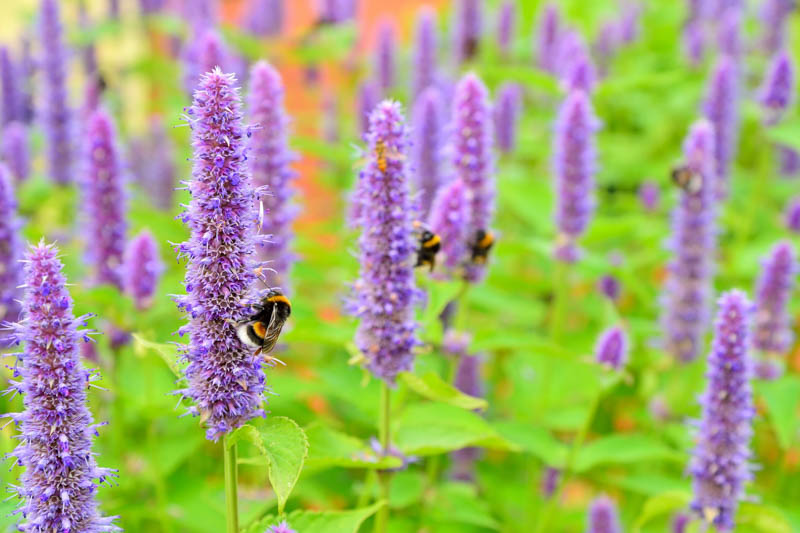
Bumblebee on native perennial flowers in a meadow style planting

Native Perennials – Color, Nectar, and Structure

  • Echinacea (Coneflower): Sun loving prairie classic with months of bee friendly blooms and seed packed cones that keep finches visiting all winter.
  • Rudbeckia (Black eyed Susans): Bright, bulletproof daisies that stitch borders together, shrug off heat, and act as long running nectar bars for pollinators.
  • Monarda (Bee Balm): Aromatic wildflower with firework blooms that pull in bees, butterflies, and hummingbirds while offering foliage great for bouquets and teas.
  • Asclepias (Milkweeds): The non-negotiable monarch host plant that also serves as a nectar magnet for a huge cast of native pollinators.
  • Solidago (Goldenrod): Late season nectar powerhouse that fuels butterflies and native bees when little else is in bloom and adds golden fall drama.
  • Asters (Symphyotrichum, Eurybia): Starry fall flowers that pair with goldenrod to create a native finale for pollinators and a soft haze of color in borders.
  • Eutrochium/Eupatorium (Joe Pye weed): Tall, architectural meadow giant crowned with mauve flower clouds that stop butterflies in their tracks.
  • Tiarella (Foam flower): Shade loving native groundcover with frothy spring flower spikes and patterned foliage perfect for soft woodland edges.
  • Vernonia (Ironweed): Vivid purple towers that bring late summer height, strong stems for structure, and a rich nectar source for migrating butterflies.
  • Penstemon (Beardtongue): Sun loving native spikes with tubular flowers sized for bees and hummingbirds, ideal in lean, well drained soils.

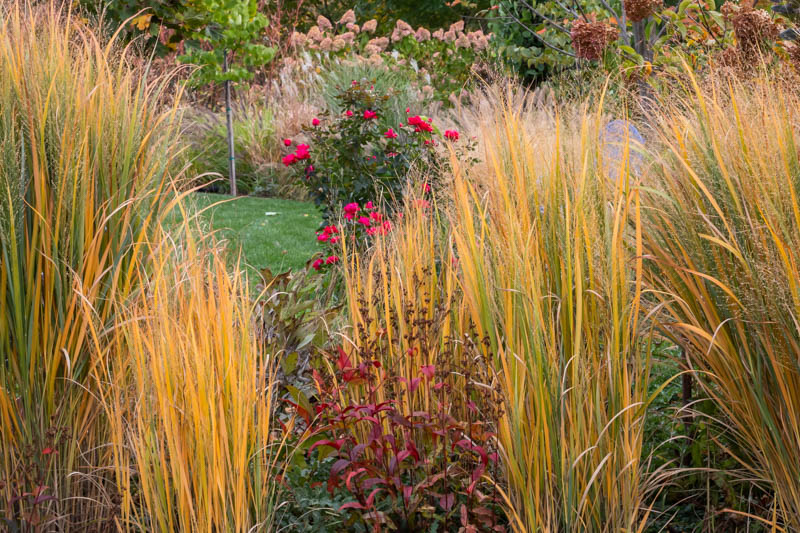
Panicum Virgatum, SwitchGrass, Switch grass, Wand Panic Grass

Native Grasses – Movement, Roots, and Nesting Cover

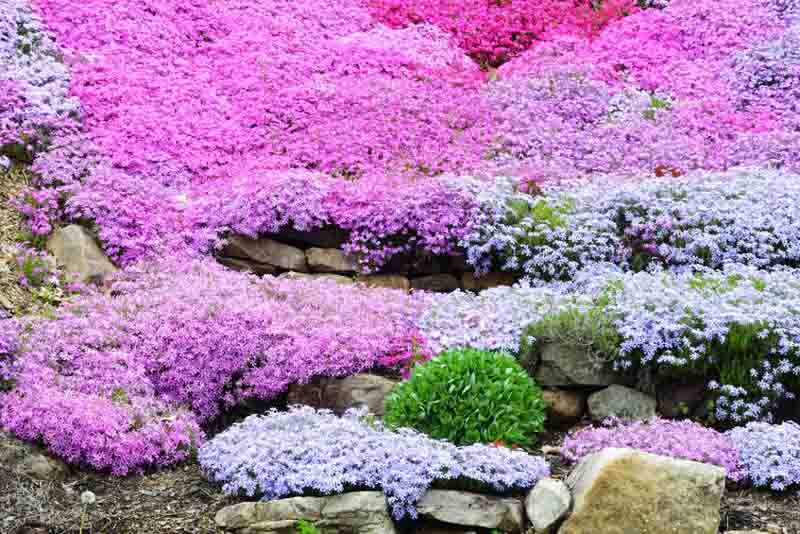
Creeping Phlox, Moss Phlox, Moss Pink, Mountain Phlox, Phlox subulata, white flowers, pink flowers, blue flowers, purple flowers, spring flowers, companion plants

Groundcovers and Native Lawn Alternatives

Native Garden Ideas

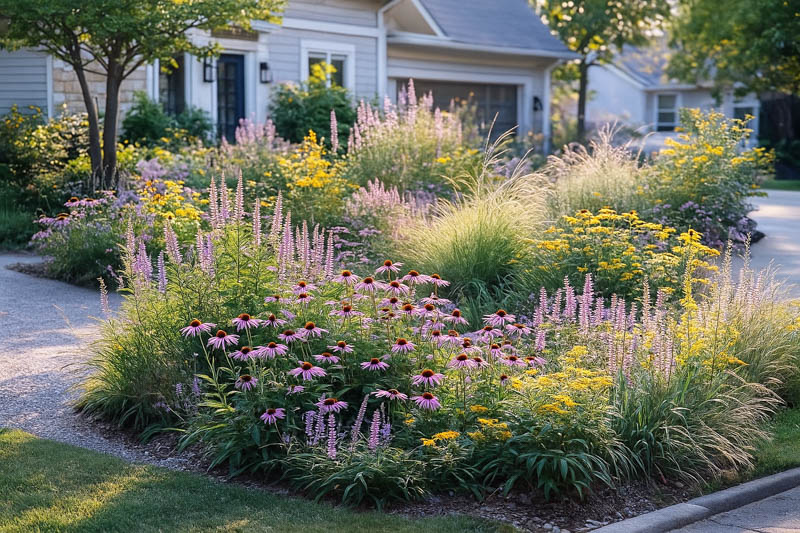
Front Yard Native Prairie Border

Native prairie for front-yard, Echinacea purpurea mingle with Veronicastrum, goldenrod, and switchgrass.

This border feels like a soft, living prairie—open, light-filled, and effortlessly dynamic. Instead of rigid beds or clipped shrubs, the planting moves like a breeze itself: drifts of native flowers shifting through warm sun, cool shadows, and the long arc of the seasons.

At its heart is Echinacea purpurea, the classic purple coneflower, rising in relaxed waves. Their rosy petals and deep orange cones create a gentle rhythm, echoed by taller spires of Veronicastrum virginicum that punctuate the border with pale lavender verticals. Together they bring structure without formality—just enough height to guide the eye, never so much that it feels staged.

Threaded through it all is Solidago rugosa, exploding in feathery gold lines that catch every ray of late-summer light. And knitting the whole planting together is the calm, shimmering presence of Panicum virgatum, an airy switchgrass whose fine seedheads glow at dawn and dusk. The result is a garden that is not just beautiful, but alive—buzzing with bees, shifting with wind, and standing strong through frost and snow.
  • Hardiness Zones: 5-8
  • Light: Full sun
  • Four-season beauty from seedheads, stems, and warm-season grasses
  • A magnet for bees, butterflies, and birds
  • An airy, open feel—never stiff or overdesigned
  • Ideal for front yards where you want beauty and ecological value
  • Scales easily from a small strip to an entire lot-edge prairie

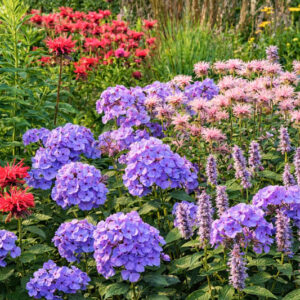
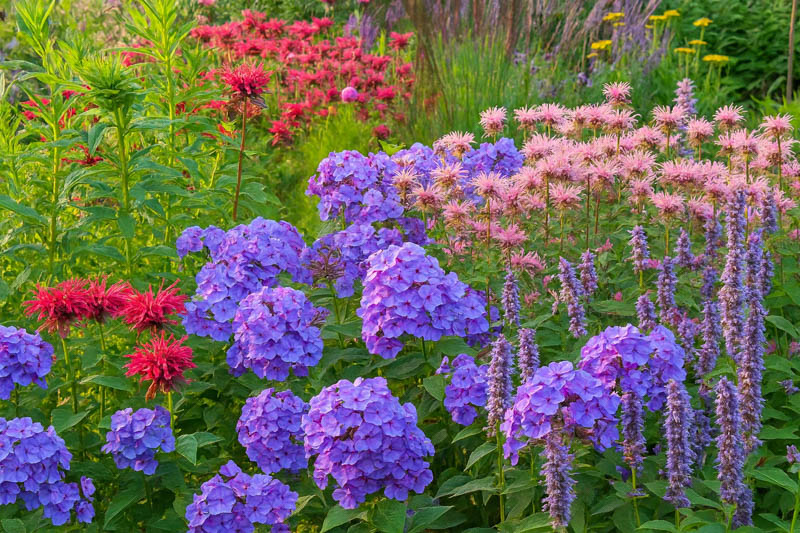
Summer Pollinator Border with Bee Balm, Garden Phlox, and Anise Hyssop

Summer Pollinator Border with Bee Balm, Garden Phlox, and Anise Hyssop, Monarda, Phlox paniculata, Agastache

This border bursts with color, fragrance, and life—a pollinator party that keeps buzzing all summer. Cool violet clusters of Phlox paniculata (Garden Phlox) glow at dusk, while Monarda ‘Beauty of Cobham’ and Monarda ‘Gardenview Scarlet’ ignite the scene in pink and red. Rising through the mix, Agastache foeniculum (Anise Hyssop) adds soft lavender spikes that sway in the breeze and perfume the air with a hint of anise.
  • Hardiness Zones: 4-8
  • Light: Full sun, Partial shade
  • Pollinator magnet—irresistible to bees, butterflies, and hummingbirds
  • Long bloom season from midsummer through fall
  • Fragrant and colorful mix that looks lush but needs little fuss
  • Thrives in full sun with average, well-drained soil
  • Layered height and movement create a natural, painterly look

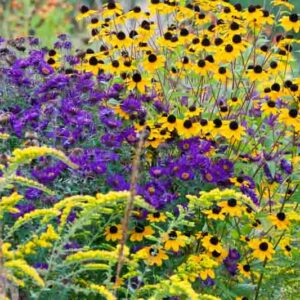
Fall Fireworks: Goldenrod, Rudbeckia & New England Aster

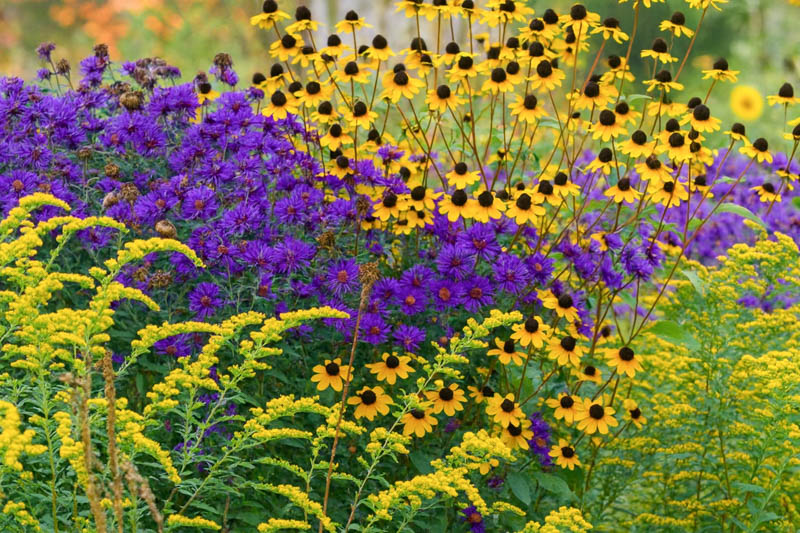
Fall native garden with Goldenrod (Solidago rugosa), Brown-Eyed Susan (Rudbeckia triloba) and New England Aster (Aster novae-angliae)

This late-season border lights up the garden just when you need it most—gold, amber, and royal purple in a joyful drift. Goldenrod (Solidago rugosa) and Brown-Eyed Susan (Rudbeckia triloba) pour on warm color, while New England Aster (Aster novae-angliae) floats in rich purple clouds that keep the party going into fall.
  • Hardiness Zones: 4-8
  • Light: Full sun
  • Pollinator powerhouse—nectar-rich blooms for butterflies, bees, and late-season migrants
  • Long show from late summer into fall, with seedheads for birds after bloom
  • Deer-resistant, tolerates short dry spells
  • Easy care in full sun and average, well-drained soil
  • Bold color harmony that reads naturalistic but looks designed

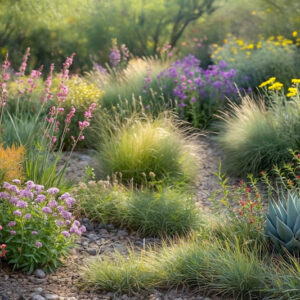
Hot Color, Cool Design: The Desert Pollinator Border

A colorful mix of heat-loving plants, Penstemon parryi, Hesperaloe parviflora, Red yucca, Salvia greggii, Autumn sage, Blue grama grass, Encelia farinosa, Brittlebush, Agave parryi – Parry’s agave

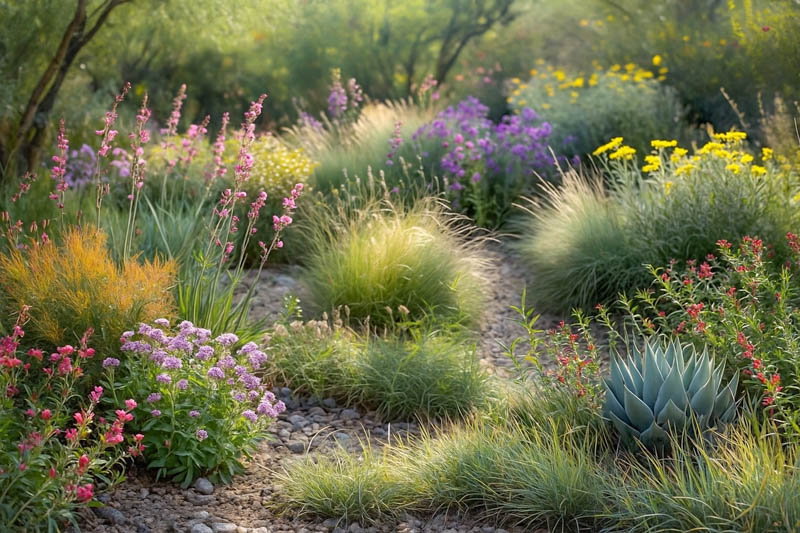
This garden feels like a living desert tapestry—bold, sculptural, and full of life. It blends silvery foliage, vivid blooms, and graceful grasses to create a resilient, low-water landscape that hums with color and movement.

Penstemon parryi (Parry’s Penstemon) paints spring with magenta-pink spires, while Hesperaloe parviflora (Red Yucca) sends up coral flower stalks that lure hummingbirds all summer. Salvia greggii (Autumn Sage) keeps the blooms going into fall with endless red and magenta blossoms. At ground level, Bouteloua gracilis (Blue Grama Grass) adds texture and motion, its eyelash seedheads dancing in the breeze. The silvery cushions of Encelia farinosa (Brittlebush) glow with yellow daisy flowers, and Agave parryi (Artichoke Agave) anchors the design with sculptural, evergreen presence.
  • Hardiness Zones: 8-9
  • Light: Full sun
  • Ultra drought-tolerant – thrives on sun, heat, and lean soil
  • Pollinator magnet for bees, butterflies, and hummingbirds
  • Four-season structure with evergreen agave and fine-textured grasses
  • Low-maintenance and deer-resistant planting
  • Perfect for xeriscapes, gravel gardens, and modern desert landscapes

Where Grasses Dance: A Midwestern Prairie Mix

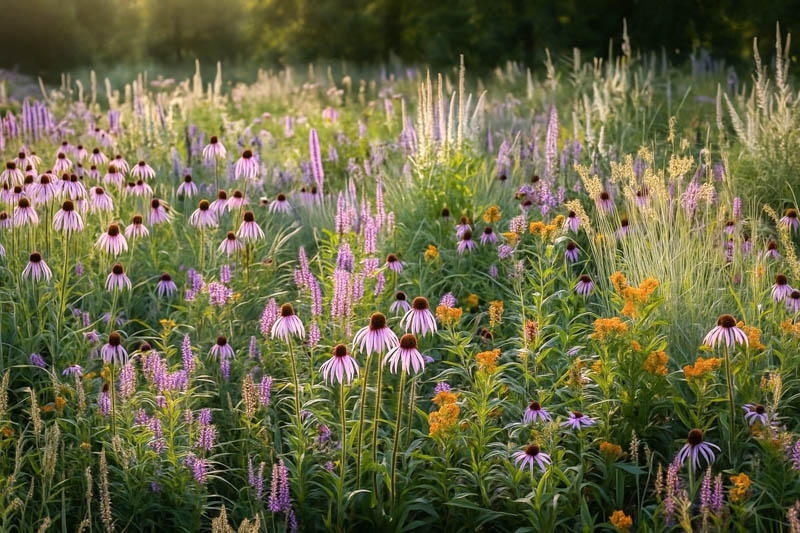
Native garden with echinacea pallida,Pale coneflower, Liatris pycnostachya,Prairie blazing star, Veronicastrum virginicum – Culver’s root, Schizachyrium scoparium, Little bluestem, Sporobolus heterolepis, Prairie dropseed, Asclepias tuberosa, Butterfly milkweed

This border captures the spirit of a Midwestern tallgrass prairie—airy, wild, and full of movement—while still offering beautiful structure through all four seasons. Soft pink spires of Echinacea pallida (Pale Purple Coneflower) mingle with the electric purple wands of Liatris pycnostachya (Prairie Blazing Star), rising above a mix of warm-season grasses. Salvia azurea threads through the planting with sky-blue blooms that sway in every breeze, while Schizachyrium scoparium (Little Bluestem) and Sporobolus heterolepis (Prairie Dropseed) add shimmering texture and stunning fall color. Asclepias tuberosa ties it all together with bold orange blooms that bring in butterflies by the dozens.
  • Hardiness Zones: 5-9
  • Light: Full sun
  • Deeply ecological – supports native bees, butterflies, and insects year-round
  • Four-season beauty with seedheads, grasses, and winter silhouettes
  • Drought-tolerant, low-maintenance, and adapted to hot summers + cold winters
  • Authentic prairie palette that thrives in open, sunny landscapes
  • Monarch-friendly thanks to Butterfly Milkweed

California Dry Garden: Native, Water-Wise Plants for Year-Round Beauty

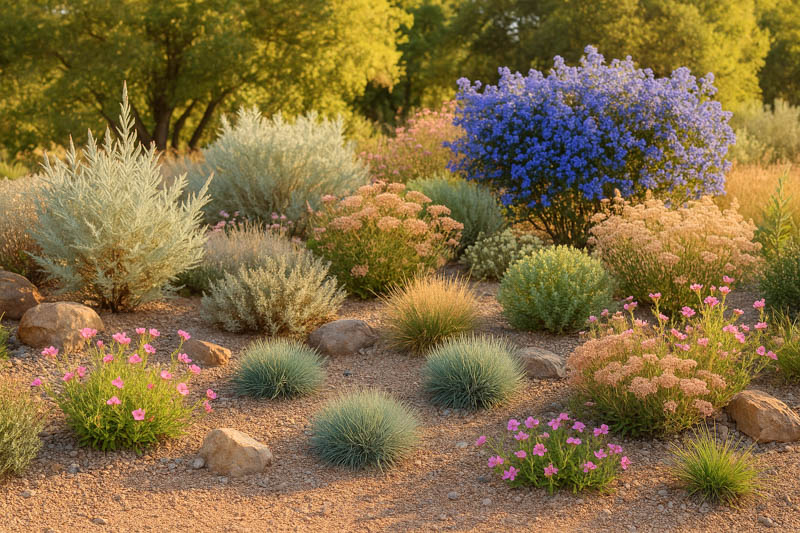
Native Garden, California Dry Garden, Salvia apiana, White sage,,Eriogonum fasciculatum, California buckwheat, Artemisia californica, California sagebrush, Festuca californica, California fescue,Ceanothus‘Concha’, oenothera speciosa, evening primrose

This California Dry Garden leans into the West’s rugged elegance—silvery foliage, sculptural forms, and soft bursts of seasonal color that laugh at long, dry summers. Upright Salvia apiana (White Sage) and feathery Artemisia californica (California Sagebrush) set the tone; Eriogonum fasciculatum (California Buckwheat) froths with cream-to-rust flowers; cool mounds of Festuca californica (California Fescue) add movement; Ceanothus ‘Concha’ flashes spring indigo; and Oenothera speciosa (Evening Primrose) threads in satiny pink for a wildflower feel.
  • Hardiness Zones: 8-9
  • Light: Full sun
  • Ultra–low water once established; thrives in lean, well-drained soils
  • Pollinator powerhouse (bees, butterflies, hummingbirds) + bird value from buckwheat seed
  • Evergreen structure and four-season interest (silvers, seedheads, spring bloom)
  • Heat, wind, and coast-friendly; perfect for Mediterranean/desert climates
  • Low maintenance – light post-bloom pruning keeps shapes crisp
  • Design note: Oenothera speciosa can spread—use edging, shear after first flush, or deadhead to keep it tidy

Pollinator Parade: Echinacea Meets Culver’s Root

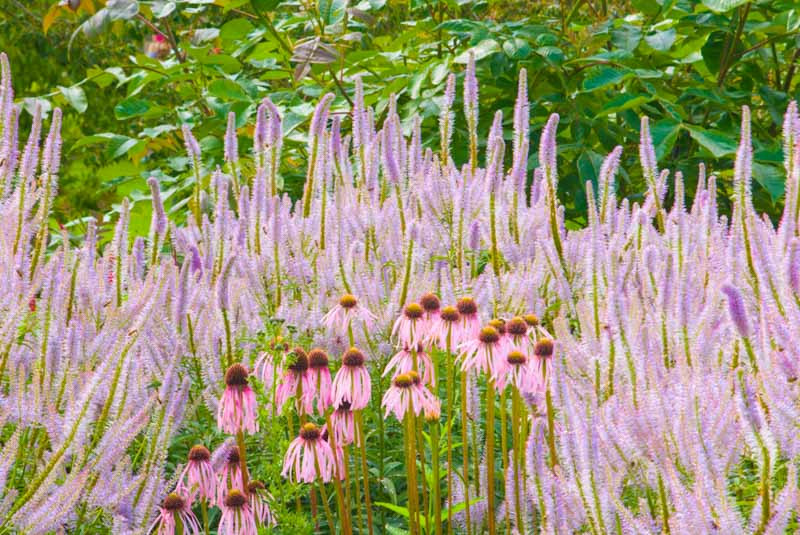
Pale purple coneflower Echinacea pallida with Veronicastrum virginicum in a pollinator meadow border

Think of this border as your elegantly effortless meadow – airy, graceful, and always alive with motion. Soft pink pale purple coneflowers (Echinacea pallida) float at the front while the tall spires of culver’s root (Veronicastrum virginicum) lift the eye and frame the scene. The look is light, naturalistic, and quietly dramatic – a long, rolling wave of color from mid to late summer.
  • Hardiness Zones: 5-8
  • Light: Full sun
  • Low-maintenance once established – easy care and reliable.
  • Blooms for months with layered height and structure.
  • Pollinator magnet for bees, butterflies, and hummingbirds.
  • Deer-resilient and great as long-lasting cut flowers.

Pollinator Drift: Asclepias, Agastache & Flowing Grasses

Native garden, prairie garden, milkweed, asclepias, hyssop, agastache, stipa, switchgrass

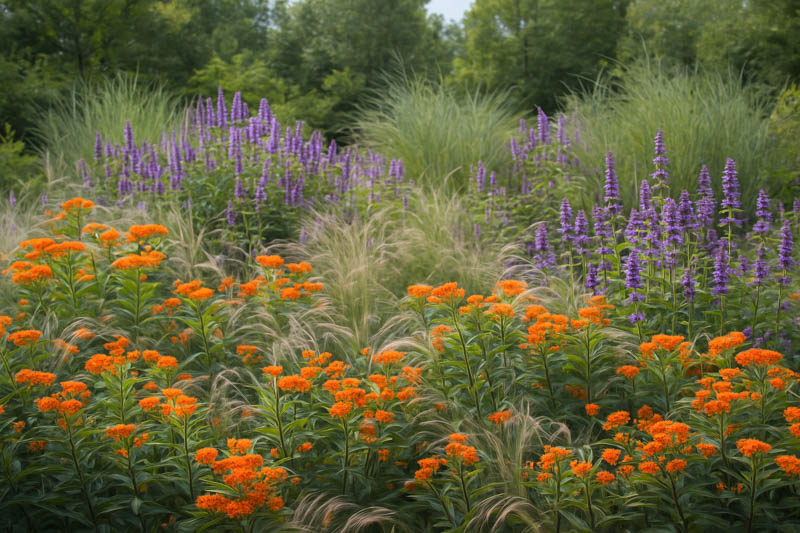
This Prairie-Inspired Pollinator Border balances color, texture, and movement in true naturalistic style. Bright orange clusters of Asclepias tuberosa (Butterfly Weed) and soft lavender spires of Agastache foeniculum (Anise Hyssop) hum with bees and butterflies all summer long. Threaded gracefully between them, Stipa tenuissima (Mexican Feather Grass) weaves a silvery haze that catches every breeze, softening the vibrant blooms. At the back, Panicum virgatum (Switchgrass) stands tall and structural, creating a layered effect that carries the border through autumn with graceful seedheads and warm fall color.

  • Hardiness Zones: 7-8
  • Light: Full sun
  • Four-season interest—blooms, movement, seedheads, and autumn hues
  • Pollinator paradise for bees, butterflies, and hummingbirds
  • Drought-tolerant and low-maintenance, perfect for sunny borders
  • Dynamic texture from fine grasses and bold flowers
  • Ecological and beautiful, offering structure and habitat year-round

Browse all our native garden ideas or jump straight into planning:

Input your hardiness zone, light, water, bloom season and other filters to find the right native plant palette for your yard.

Native Garden Recipe Cards

Front Yard Prairie Welcome

Echinacea, Black Eyed Susan, and Little Bluestem

Trade a strip of lawn for a compact native prairie border. Coneflowers, black eyed Susans, and little bluestem bring color, seed for birds, and almost year round texture.

  • Zones: 4 to 8
  • Light: Full sun
  • Soil: Average to lean, well drained
  • Why it works: Easy plants that are tall enough for impact but tidy enough for the front yard
  • Planting recipe for ~16 ft x 6 ft:
  • Spacing and layout: Stagger perennials on 18 inch centers, tuck grasses in repeated clumps for rhythm, keep lower plants at the sidewalk edge.
  • Irrigation: Deep soak through the first growing season, then water only during extended drought.
  • Care: Leave stems and seedheads for winter wildlife interest, then cut back in late winter before new growth appears.

Driveway Pollinator Strip

Butterfly Weed, Aromatic Aster, and Blue Grama

Turn a hot, narrow strip into a buzzing native pollinator buffet. Drought tough milkweed, aromatic asters, and blue grama thrive in reflected heat without constant watering.

  • Zones: 4 to 9
  • Light: Full sun to light afternoon shade
  • Soil: Lean to average, very well drained, on the dry side
  • Why it works: A flower packed band where every plant is heat and drought tolerant, so the strip stays attractive with minimal irrigation
  • Planting recipe for ~18 ft x 4 ft:
  • Spacing and layout: Drift each species in small groups so colors repeat along the strip, with grasses at the front and taller flowers stepping back from the pavement.
  • Irrigation: Drip line or soaker hose along the planting, watered deeply but infrequently in the first year, then only during extended drought.
  • Care: Cut flower stems back in late winter. Allow some seed to ripen for birds and self sown seedlings if you want a fuller look over time.

Native Rain Garden

Switchgrass, Joe Pye Weed, and Goldenrod

Capture roof runoff in a shallow swale planted with deep rooted natives that can take both wet feet after storms and drier spells in summer.

  • Zones: 4 to 8
  • Light: Full sun to light shade
  • Soil: Heavy or periodically wet soil that drains between storms
  • Why it works: Manages water while delivering butterflies, birds, and a soft meadow look
  • Planting recipe for ~20 ft x 8 ft basin:
  • Spacing and layout: Put the most flood tolerant plants in the center of the basin, with dropseed and goldenrod stepping up the side slopes.
  • Irrigation: Water regularly through the first year so deep roots form, then rely mostly on rainfall except during long droughts.
  • Care: Cut back in late winter, leaving some standing stems and seedheads until then for winter birds and beneficial insects.

Small Space Meadow

Penstemon, Prairie Dropseed, and Native Yarrow

Even a side yard can feel like a mini meadow. Use fine textured grasses with upright native flowers that read neat but still feel wild.

  • Zones: 4 to 8
  • Light: Full sun
  • Soil: Lean, well drained, low fertility is fine
  • Why it works: Low, flowing structure that is easy to maintain and friendly to neighbors and pollinators
  • Planting recipe for ~12 ft x 10 ft:
  • Spacing and layout: Create a loose grid at 18 inch centers, mixing grasses and flowers so no single species dominates.
  • Irrigation: Slow, deep watering every 5 to 7 days in the first summer, then only during extended dry periods.
  • Care: Once a year cut back in late winter or early spring, leaving some seedheads through winter if local ordinances allow.

Native Woodland Corner

Serviceberry, Foam Flower, and Pennsylvania Sedge

Turn a shady corner into a small woodland habitat with a native understory tree, spring wildflowers, and a soft, no mow sedge lawn.
  • Zones: 4 to 8
  • Light: Part shade to bright shade
  • Soil: Moist, humus rich, never waterlogged
  • Why it works: Layered native structure that looks refined and quietly supports birds and pollinators
  • Planting recipe for ~16 ft x 12 ft corner:
  • Spacing and layout: Serviceberry as the back corner anchor, then sweep sedge in broad drifts with pockets of foam flower clustered near paths.
  • Irrigation: Keep evenly moist during establishment, then water during long dry periods, especially for the young tree.
  • Care: Top dress yearly with shredded leaves, minimal pruning on serviceberry, and occasional division of foam flower as clumps expand.

Wildlife Focus – Pollinators, Birds, and Beyond

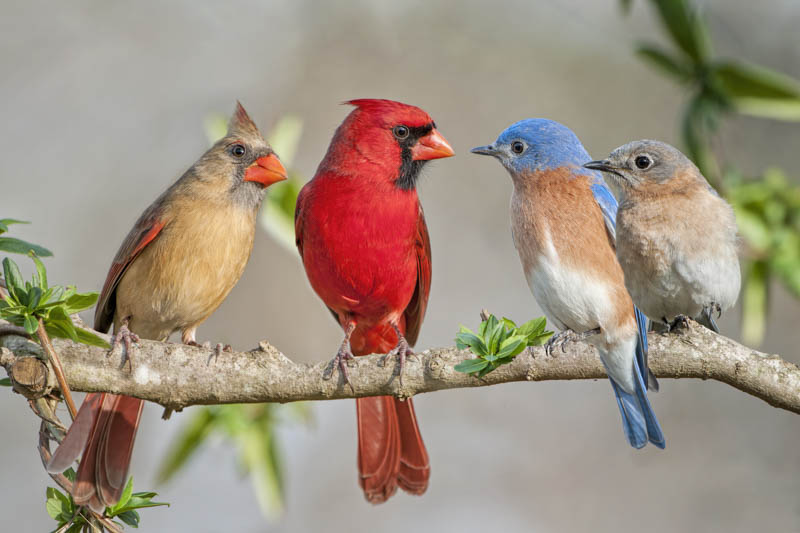
Cardinal Bird, Bluebird, Birds, Attract Birds

Top 10 Native Plants for Pollinators

Coneflower, bee balm, milkweed, black eyed Susan, blazing star, goldenrod, native asters, culvers root, anise hyssop, native salvias. For more ideas, explore wildlife friendly plants that attract bees, butterflies, and birds.

Top 10 Native Plants for Birds

Serviceberry, elderberry, native viburnums, dogwood, sumac, switchgrass, little bluestem, coneflowers, oxeye sunflower, goldenrod. Leave some seedheads standing through winter so birds can forage naturally. Expand your palette with bird-attracting trees and shrubs.

🔎 Find more native friendly plants with our Plant Finder

Habitat and Care Essentials for Native Gardens

  • Prioritize natives and use non native ornamentals as a small accent layer, not the main cast.
  • Pesticide free should be the default. Native gardens are designed to host insects. If treatment is unavoidable, use targeted, least toxic options at dusk.
  • Build healthy soil with compost, mulch from leaves, and minimal digging. Many native plants dislike heavy fertilizer.
  • Leave leaf litter and stems in parts of the garden to provide nesting and overwintering habitat for insects and small wildlife.
  • Water wisely: even drought tolerant natives need regular water during their first one or two seasons while roots establish.
  • Right plant – right place: cluster plants with similar sun and water needs together so care stays simple.
  • Seasonal care: cut back in late winter or very early spring instead of fall so overwintering insects can emerge.

Site Conditions and Native Garden Styles

Match plants to place using your USDA hardiness zone, sun exposure (full sun, part shade, shade), and soil type (clay, sand, loam, rocky). Look for drought tolerant natives, flood tolerant species for rain gardens, and note deer resistant and rabbit resistant options where browsing is an issue.

Native garden styles you can try: prairie meadow in full sun, woodland understory garden, coastal native border, rain garden, front yard native lawn alternative, mixed native hedge, container based native micro garden, xeriscape with regional natives, and pollinator friendly native borders that still read as “neat” to neighbors.

🔎 Find native plants by state

Frequently Asked Questions About Native Gardens

What is a native garden?

A native garden is a planting made primarily of plants that occur naturally in a specific region. These plants evolved with local climate, soils, wildlife, and ecological processes. Because of this, they generally need less irrigation and fertilizer and offer stronger habitat benefits than non-native ornamentals.

Why are native plants better for pollinators?

Native pollinators recognize and use native plants more effectively because they co-evolved with them. Native flowers provide nectar, pollen, and bloom timing that matches the life cycles of bees, butterflies, moths, and hummingbirds. Many insects, including most butterfly and moth caterpillars, rely on specific native host plants to complete their life cycle.

Do native plants really require less water and maintenance?

Once established, many native plants require less water, fertilizer, and mowing than traditional turf or exotic ornamentals. However, they still need proper establishment watering, correct siting, and seasonal cleanup. “Low-maintenance” does not mean “no maintenance”—but the long-term workload is typically much lower.

Will a native garden attract pests or look messy?

Native gardens do not attract more pests than conventional gardens. In fact, they often experience fewer outbreaks because they support natural predators and balanced ecosystems. Appearance depends on design: choosing appropriate heights, spacing, and structure can create a tidy, intentional look while still using native species.

Are all native plants drought tolerant?

No. “Native” does not automatically mean drought tolerant. Plants native to wetlands, floodplains, or humid forests may need consistent moisture. Always match plant choice to your site’s soil type, drainage, and rainfall patterns. A dry, sunny slope and a shaded wet ditch require different native species.

How long does a native garden take to establish?

Most native perennials take two to three years to reach full size. The first year focuses on root growth, the second year adds more top growth, and the third year brings mature height, bloom, and density. Grasses often fill in faster than wildflowers. Shrubs and trees follow longer establishment timelines.

Do native gardens increase property value?

Yes, when designed well. Research shows that landscapes with intentional structure—clear edges, layered planting, and year-round interest—are viewed as more attractive and sustainable. Native gardens reduce long-term water costs and maintenance, which many buyers value. Good design and clear maintenance reduce any perception of “messiness.”

Can I mix native and non-native plants?

Yes. Many gardeners combine mostly natives with a smaller portion of non-invasive ornamentals. The key is to avoid invasive species, maintain ecological value, and keep overall design consistent. A high percentage of natives ensures stronger support for wildlife and local ecosystems.

Will native plants spread too aggressively?

Some natives spread by rhizomes or seed. This behavior is natural and helpful in large meadows but may be too vigorous for small urban beds. Choosing clumping species or sterile cultivars, and using edging or annual cutbacks, prevents unwanted spreading.

Do I need to remove all my lawn?

No. Many people replace small portions of lawn—along sidewalks, near driveways, or in front borders—while keeping functional areas. Even converting 10–20% of a yard to native plants significantly increases pollinator and bird habitat.

How do I start a native garden on a budget?

start by removing small areas of lawn, using seed mixes for large sections, dividing mature native perennials, and joining local plant swaps. Plant in phases over several seasons. Native gardens become more affordable as they mature because plants can be divided and shared.

Are cultivars (“nativars”) as good as straight native species?

It depends. Many cultivars behave similarly to straight species and still support pollinators. However, some changes—especially double flowers, altered leaf color, or sterile forms—can reduce ecological value. When possible, choose cultivars that maintain the original flower form and bloom timing.

Should I leave stems standing over winter?

Yes. Standing stems and seedheads provide overwintering habitat for native bees, shelter for beneficial insects, and food for birds. Cut back in late winter or early spring when temperatures consistently rise above freezing. Leaving stems 6–12 inches tall supports cavity-nesting bees.

Can native gardens help with stormwater or drainage problems?

Yes. Many native plants have deep root systems that absorb water, stabilize soil, and slow runoff. Rain gardens, swales, and bioswales planted with moisture-tolerant natives are highly effective for managing stormwater on residential lots.

Next Step – Explore Native Garden Combinations

Use this native gardens hub as your launch pad, then explore curated plant combinations, state specific native lists, and design tools across Gardenia to build a garden that is beautiful, climate smart, and rooted in your local landscape.

Updated: November 2025 • Reviewed by Gardenia Editors

Guide Information

Plant Type Ornamental Grasses, Perennials, Shrubs, Trees
Genus Achillea, Amelanchier, Asclepias, Aster, Carex, Ceanothus, Cercis, Coreopsis, Echinacea, Eupatorium, Monarda, Panicum, Penstemon, Rudbeckia, Salvia, Schizachyrium, Solidago, Tiarella, Vernonia, Viburnum
Native Plants United States

Garden Examples

California Dry Garden: Native Plants for Year-Round Beauty
Front-Yard Prairie Drift: Airy Color, Native Texture
Pollinator Paradise Native Plant Garden
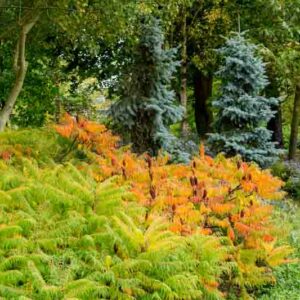
A Vibrant Native Garden with Staghorn Sumac and Arizona Cypress
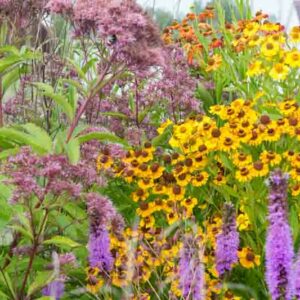
Native Garden Trio: Sneezeweed, Joe Pye Weed, and Liatris
Where Grasses Dance: A Midwestern Prairie Mix
Hot Color, Cool Design: The Desert Pollinator Border
Summer Pollinator Border with Bee Balm, Garden Phlox, and Hyssop
Native Plant Tree Bed
Native Plant Wildflower Meadow
Native Foundation Planting for Pollinators
Shady Fence Planting with Native Perennials
A Terrific Fall Border with Asters, Solidago and Rudbeckia

Recommended Guides

The Ultimate Guide to Native Plants for a Beautiful Garden
Native Oak Trees: A Must-Have for Your Landscape
40 Beautiful Native Shrubs for Shade
Native Viburnums: Ideal Shrubs for Your Garden
Plant Native Annual Flowers for a Vibrant Garden
Pretty Native American Roses
Top Hardy US Native Hibiscus Plants for Your Garden
Recommended Native Trees for Northern Virginia
Sun-Loving Native Trees for Central Florida
Shade-Loving Native Perennials for Central CA Foothills & Coastal Mountains
Georgia Sun-Loving Native Shrubs
Alabama Native Ferns
While every effort has been made to describe these plants accurately, please keep in mind that height, bloom time, and color may differ in various climates. The description of these plants has been written based on numerous outside resources.

Guide Information

Plant Type Ornamental Grasses, Perennials, Shrubs, Trees
Genus Achillea, Amelanchier, Asclepias, Aster, Carex, Ceanothus, Cercis, Coreopsis, Echinacea, Eupatorium, Monarda, Panicum, Penstemon, Rudbeckia, Salvia, Schizachyrium, Solidago, Tiarella, Vernonia, Viburnum
Native Plants United States
Guides with
United States

Related Items

Please Login to Proceed

You Have Reached The Free Limit, Please Subscribe to Proceed

Subscribe to Gardenia

To create additional collections, you must be a paid member of Gardenia
  • Add as many plants as you wish
  • Create and save up to 25 garden collections
Become a Member

Plant Added Successfully

Your garden is taking shape. Unlock full planning.

You’ve reached the free limit. Upgrade for $25/year to add as many plants as you wish and save up to 25 garden collections. Unlock Annual Membership

Update Your Credit
Card Information

Cancel

Create a New Collection

Sign Up to Our Newsletter

    You have been subscribed successfully

    Join Gardenia.net

    Create a membership account to save your garden designs and to view them on any device.

    Becoming a contributing member of Gardenia is easy and can be done in just a few minutes. If you provide us with your name, email address and the payment of a modest $25 annual membership fee, you will become a full member, enabling you to design and save up to 25 of your garden design ideas.

    Join now and start creating your dream garden!

    Join Gardenia.net

    Create a membership account to save your garden designs and to view them on any device.

    Becoming a contributing member of Gardenia is easy and can be done in just a few minutes. If you provide us with your name, email address and the payment of a modest $25 annual membership fee, you will become a full member, enabling you to design and save up to 25 of your garden design ideas.

    Join now and start creating your dream garden!
    Find your Hardiness Zone

    Find your Heat Zone

    Find your Climate Zone