Old-fashioned Weigela, Old Fashioned Weigela, Rose Weigela, Weigela, Weigelia
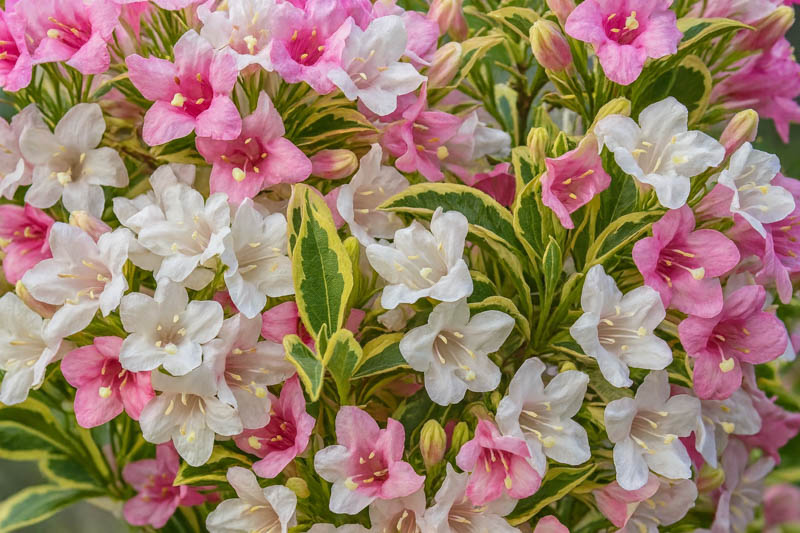


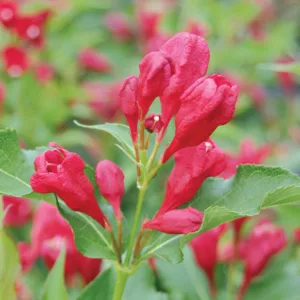
If you want a reliable flowering shrub that explodes with spring color, attracts hummingbirds and pollinators, and is easy to maintain in a sunny border, Weigela florida, commonly called simply Weigela, is a fantastic choice. This deciduous shrub is loved for its arching branches and its profusion of bell shaped, tubular flowers in shades of pink, red, and white that smother the stems in late spring.
Weigela is a classic garden shrub that looks just as good in modern landscapes as it does in cottage gardens. Give it full sun, average to moderately moist, well drained soil, and a bit of room to arch naturally, and you will be rewarded with abundant blooms, colorful foliage on many cultivars, and a steady stream of hummingbirds and bees.
Summary: Deciduous, multi stemmed flowering shrub with graceful, arching branches and masses of tubular blooms in spring and early summer. Many cultivars also offer colorful foliage for extra season long interest.
Use: Flower borders, foundation plantings, low hedges, mixed shrub borders, cottage gardens, and wildlife friendly plantings that need dependable color and structure.
Highlight: Heavy spring bloom with potential for light rebloom, excellent hummingbird and pollinator value, and an impressive choice of cultivars that feature variegated, burgundy, chartreuse, or dark purple foliage.
Note: Performs best in full sun with well drained soil. Tolerates light shade but flowering is reduced as shade increases.
| Botanical Name | Weigela florida |
|---|---|
| Family | Honeysuckle family (Caprifoliaceae) |
| Common Names | Weigela, old fashioned weigela |
| Native Range | Native to East Asia – mainly northern China, Korea, and Japan – where it grows on hillsides, thickets, and woodland edges. |
| Plant Type and Habit | Deciduous shrub with a rounded to vase shaped habit and arching or fountain like branches. Many cultivars stay compact, while older selections can form larger shrubs. |
| Hardiness (approx. USDA) | Typically hardy in about USDA Zones 4 to 8, depending on cultivar. Cold tolerant yet also well suited to many temperate climates. |
| Size | Species plants often grow 6 to 10 ft. tall (180 to 300 cm) and 9 to 12 ft. wide (270 to 360 cm). Modern compact cultivars may stay as small as 18 to 36 in. (45 to 90 cm). |
| Sun and Exposure | Full sun is best for maximum flowering and strong foliage color. Light shade is tolerated, but dense shade leads to fewer blooms and a leggy habit. |
| Soil | Prefers average, well drained garden soil with moderate moisture. Performs well in fertile loams, tolerates clay if drainage is reasonable, and appreciates slightly acidic to neutral pH. |
| Seasonal Interest | Abundant tubular flowers in late spring to early summer, often with a light rebloom, plus colorful foliage in many cultivars from spring through fall. |
| Primary Uses | Foundation plantings, shrub borders, mixed perennial borders, cottage gardens, low flowering hedges, containers (for dwarf cultivars), and pollinator gardens. |
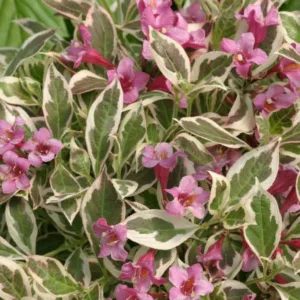
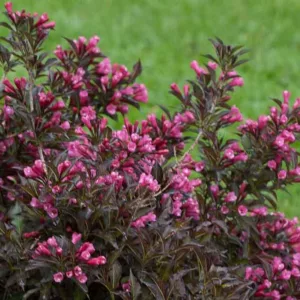
Weigela florida is a medium sized deciduous flowering shrub valued for its long, arching stems and abundant clusters of tubular blossoms. Leaves are oval to elliptic, 2 to 4 in. long (5 to 10 cm), typically medium green on the species, but often variegated, burgundy, or deep purple on modern cultivars.
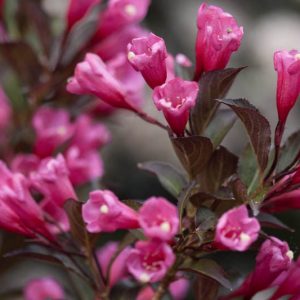
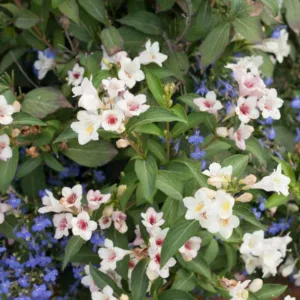
In late spring, Weigela bursts into bloom with clusters of bell or trumpet shaped flowers that line the stems. Flower colors range from soft blush pink to deep ruby red and pure white, depending on the variety. Many plants provide a second, lighter flush of blooms later in summer, especially if lightly pruned after the first display.
Weigela is native to East Asia, especially China, Korea, and Japan, where it grows in woodland edges, scrub, and open hillsides. It has been grown in Western gardens for well over a century and is now one of the classic spring flowering shrubs for temperate climates.
Plant Type and Habit: Weigela forms a rounded to vase shaped shrub with arching or fountain like branches. Growth is moderate, and plants fill in steadily over the first few years.
Traditional cultivars can reach 6 to 10 ft. tall, making them ideal for larger borders and informal hedges. Newer compact selections are bred to stay in the 2 to 4 ft. range, perfect for smaller gardens and containers. Most respond well to regular renewal pruning, which keeps them dense and covered in young flowering stems.
The flowers are the main show. Each tubular bloom is about 1 to 1.5 in. long (2.5 to 4 cm) and is carried in small clusters along the stems. Blossoms may be pink, rose, crimson, red, white, or bicolored, often with a softer throat that adds depth and detail.
Weigela typically blooms from late spring through early summer. Many modern cultivars are reblooming, offering a second flush of flowers in mid to late summer when conditions are good. Flowers are rich in nectar and eagerly visited by hummingbirds and bees.
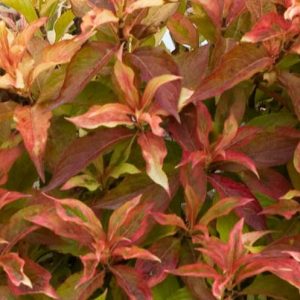
While the flowers steal the spotlight, foliage contributes a great deal of ornamental value. Depending on cultivar, leaves may be solid green, gold, chartreuse, variegated cream and green, or deep burgundy to nearly black. This makes Weigela a useful foliage plant even when it is not in bloom.
Fall color varies by variety and climate, but some cultivars develop attractive tones of bronze, burgundy, or yellow. Even in winter, the framework of arching stems can add structure to mixed borders and foundation plantings.
Weigela is generally hardy in about USDA Zones 4 to 8, with some varieties extending into Zone 9 in milder climates. It tolerates cold winters when planted in well drained soil and protected from harsh, drying winds.
You can use Weigela in a wide range of landscape situations:
Weigela flowers are excellent nectar sources for bees, butterflies, and hummingbirds. When in bloom, shrubs often buzz with activity and provide an important food resource in late spring and early summer.
The dense branching structure also offers shelter and occasional nesting sites for small birds, especially when shrubs are planted in groups or mixed hedges.
Weigela is often described as moderately resistant to deer, though hungry deer may sample new growth in areas with heavy browsing pressure. Rabbits may nibble young shoots as well. Temporary fencing or repellents can help protect young plants until they size up. Best Deer-Resistant Plants for Zone 8
Once established, Weigela is fairly tolerant of short dry periods, especially in heavier soils that retain some moisture. However, it will look and flower best with regular watering in prolonged drought, particularly in hot, sunny locations.
Weigela is not commonly listed as a highly toxic plant for people, pets, or livestock. As with most ornamental shrubs, it is still wise to discourage chewing or ingestion and to supervise pets and children in the garden.
Weigela is not typically considered invasive in most regions. It may self seed lightly, especially near established shrubs, but seedlings are usually easy to remove or transplant. Always check local guidance if you garden in sensitive ecosystems where non native shrubs are regulated.
The main reasons gardeners grow Weigela include its generous spring flowering display, attractive foliage on many cultivars, pollinator value, and overall low maintenance nature. It combines beautifully with roses, spireas, hydrangeas, ornamental grasses, and a wide range of perennials.
Weigela prefers:
Heavy clay can be improved with organic matter, while very sandy soils benefit from compost that helps retain moisture and nutrients.
Weigela is relatively low maintenance when planted in the right spot.
Weigela is straightforward to propagate:
Weigela is generally a healthy, reliable shrub with few serious problems when grown in appropriate conditions.
Common garden pests such as aphids, spider mites, or scale insects may occasionally appear, especially in hot, dry weather or on stressed plants. Good cultural care usually keeps issues minor.
Weigela has few significant disease issues. Possible problems include:
Poor flowering: Usually due to too much shade, heavy pruning at the wrong time, or lack of vigor. Move to a sunnier spot if needed, and remember to prune after flowering rather than in early spring.
Leggy growth: Often caused by shade or age. Regular renewal pruning and more sun will encourage a fuller, bushier habit.
Weigela florida is a deciduous flowering shrub in the honeysuckle family, grown for its arching branches and clusters of trumpet shaped pink, red, or white blooms. It is widely used in sunny borders, hedges, and foundation plantings for dependable spring color and pollinator appeal.
Yes. Weigela florida produces nectar rich tubular flowers that are highly attractive to hummingbirds, bees, and butterflies. When in full bloom, the shrub often hums with activity, making it an excellent choice for pollinator friendly gardens and mixed wildlife borders.
The species Weigela florida typically grows about 6 to 10 feet tall and 9 to 12 feet wide, forming a rounded to vase shaped shrub. Many modern cultivars are more compact, ranging from 18 inches to 4 feet tall, so gardeners can choose a size that fits their space.
Weigela florida performs best in full sun, with at least six hours of direct light each day. It will tolerate light shade, especially in hot climates, but shade reduces flowering and encourages a looser, leggier habit. For maximum blooms and foliage color, choose the sunniest spot you have.
Weigela florida is a deciduous flowering shrub that prefers average, well drained garden soil with moderate moisture. It grows well in fertile loam, tolerates some clay if drainage is acceptable, and does best in slightly acidic to neutral pH. Waterlogged or extremely dry soils will reduce performance.
Weigela florida blooms mainly on old wood, so prune just after the main spring flowering flush. Remove up to one third of the oldest stems at ground level and lightly shape the plant. This renewal pruning encourages fresh shoots that will carry next year’s flowers and keeps the shrub dense.
Many modern cultivars of Weigela florida offer light to moderate rebloom later in summer, especially if the shrub is deadheaded or lightly trimmed after the first flush. While the main display is in late spring, these reblooming selections extend the flowering season and provide longer interest in sunny borders.
Once established, Weigela florida is moderately drought tolerant and can handle short dry periods, particularly in heavier soils. However, it looks and flowers best with consistent moisture. Extended drought will reduce bloom production and may stress the plant, so supplemental watering is recommended during prolonged hot, dry weather.
Weigela florida is often described as moderately deer resistant rather than deer proof. Deer may browse tender new growth when hungry, and rabbits can nibble young stems. Protection with fencing or repellents is most important in the first few years, after which a mature shrub usually tolerates light browsing.
Yes. Compact cultivars of Weigela florida grow very well in large containers with drainage holes. Use a high quality potting mix, place the container in full sun, and water regularly. Container grown plants may need more frequent watering and occasional feeding, but they provide excellent color on patios and balconies.
Weigela florida is not widely listed as a highly toxic ornamental shrub. It is generally considered low risk in gardens. However, it is still best practice to discourage pets and children from chewing on any landscape plant and to consult a veterinarian or medical professional if significant ingestion occurs.
The main bloom period for Weigela florida is typically late spring to early summer, often lasting several weeks when conditions are good. Many newer cultivars provide a second, lighter flush of flowers later in the season, especially if the plant is healthy, well watered, and lightly pruned after flowering.
Updated: December 2025 • Reviewed by Gardenia Editors
| Hardiness |
4 - 8 |
|---|---|
| Heat Zones |
4 - 8 |
| Climate Zones | 1, 1A, 1B, 2, 2A, 2B, 3, 3A, 3B, 4, 5, 6, 7, 8, 9, 10, 11, 14, 15, 16, 17, 18, 19, 20, 21 |
| Plant Type | Shrubs |
| Plant Family | Caprifoliaceae |
| Genus | Weigela |
| Common names | Weigela |
| Exposure | Full Sun, Partial Sun |
| Season of Interest | Spring (Late), Summer (Early, Mid, Late) |
| Height | 6' - 10' (180cm - 3m) |
| Spread | 9' - 12' (270cm - 3.7m) |
| Spacing | 108" - 144" (270cm - 3.7m) |
| Maintenance | Low |
| Water Needs | Average |
| Soil Type | Chalk, Clay, Loam, Sand |
| Soil pH | Acid, Alkaline, Neutral |
| Soil Drainage | Moist but Well-Drained, Well-Drained |
| Characteristics | Showy |
| Tolerances | Deer, Clay Soil, Heat |
| Attracts | Bees, Butterflies, Hummingbirds |
| Garden Uses | Beds And Borders, Hedges And Screens, Patio And Containers |
| Garden Styles | City and Courtyard, Coastal Garden, Informal and Cottage, Traditional Garden |
| Toxic to Humans | No known toxicity |
| Toxic to Cats | No known toxicity |
| Toxic to Dogs | No known toxicity |
| Toxic to Horses | No known toxicity |


| Hardiness |
4 - 8 |
|---|---|
| Heat Zones |
4 - 8 |
| Climate Zones | 1, 1A, 1B, 2, 2A, 2B, 3, 3A, 3B, 4, 5, 6, 7, 8, 9, 10, 11, 14, 15, 16, 17, 18, 19, 20, 21 |
| Plant Type | Shrubs |
| Plant Family | Caprifoliaceae |
| Genus | Weigela |
| Common names | Weigela |
| Exposure | Full Sun, Partial Sun |
| Season of Interest | Spring (Late), Summer (Early, Mid, Late) |
| Height | 6' - 10' (180cm - 3m) |
| Spread | 9' - 12' (270cm - 3.7m) |
| Spacing | 108" - 144" (270cm - 3.7m) |
| Maintenance | Low |
| Water Needs | Average |
| Soil Type | Chalk, Clay, Loam, Sand |
| Soil pH | Acid, Alkaline, Neutral |
| Soil Drainage | Moist but Well-Drained, Well-Drained |
| Characteristics | Showy |
| Tolerances | Deer, Clay Soil, Heat |
| Attracts | Bees, Butterflies, Hummingbirds |
| Garden Uses | Beds And Borders, Hedges And Screens, Patio And Containers |
| Garden Styles | City and Courtyard, Coastal Garden, Informal and Cottage, Traditional Garden |
| Toxic to Humans | No known toxicity |
| Toxic to Cats | No known toxicity |
| Toxic to Dogs | No known toxicity |
| Toxic to Horses | No known toxicity |
How many Weigela florida (Weigela) do I need for my garden?
| Plant | Quantity | |
|---|---|---|
| Weigela florida (Weigela) | N/A | Buy Plants |
Create a membership account to save your garden designs and to view them on any device.
Becoming a contributing member of Gardenia is easy and can be done in just a few minutes. If you provide us with your name, email address and the payment of a modest $25 annual membership fee, you will become a full member, enabling you to design and save up to 25 of your garden design ideas.
Join now and start creating your dream garden!
Create a membership account to save your garden designs and to view them on any device.
Becoming a contributing member of Gardenia is easy and can be done in just a few minutes. If you provide us with your name, email address and the payment of a modest $25 annual membership fee, you will become a full member, enabling you to design and save up to 25 of your garden design ideas.
Join now and start creating your dream garden!