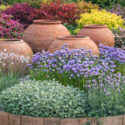
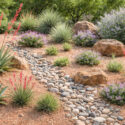
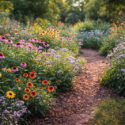
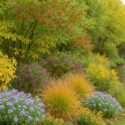
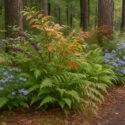
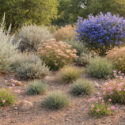
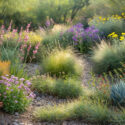
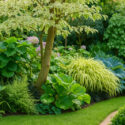
A relaxed wildflower border featuring Monarda, Mexican hat, blue sage, coneflowers, and native grasses—ideal for pollinators, birds, and dry, sunny sites.
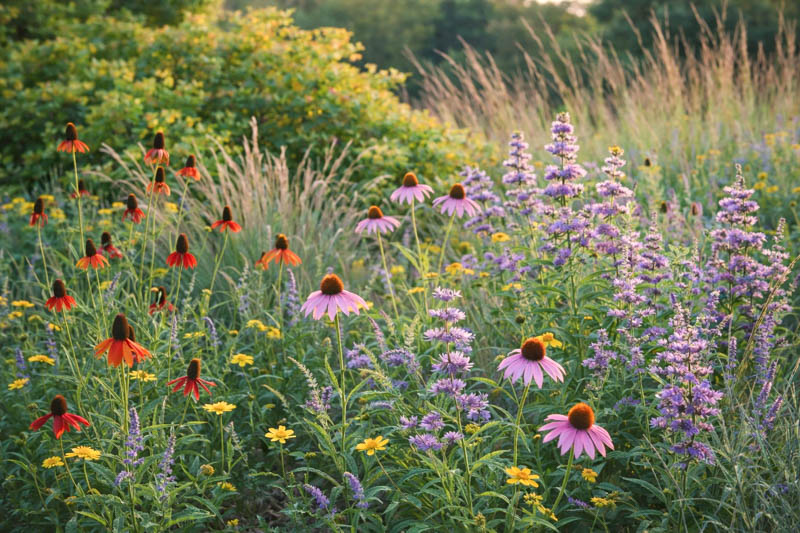


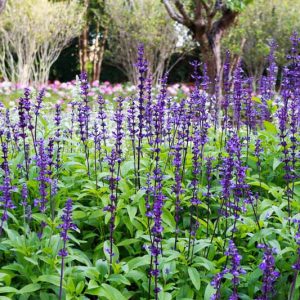
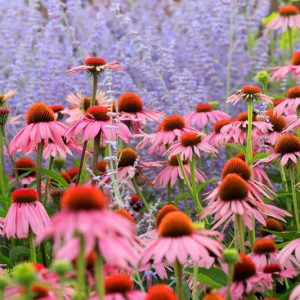
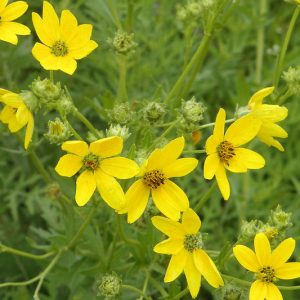
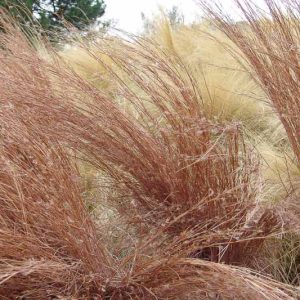
This “Monarda & Mexican Hat Texas Prairie Border” celebrates the loose, sun-soaked look of a natural wildflower meadow. Soft lavender towers of Monarda citriodora (Lemon Beebalm) float through the mid-ground, backed by warm copper tones of Schizachyrium scoparium (Little Bluestem) and mounded Rhus aromatica (Fragrant Sumac). Tall, dancing flowers of Ratibida columnifera (Mexican Hat) and airy clusters of Salvia farinacea (Mealy Blue Sage) weave between Echinacea and Engelmannia peristenia (Engelmann Daisy), creating a layered, movement-filled Texas prairie that glows in late-day light.
This relaxed, drought-tolerant Texas prairie border is built for full sun, wind, and lean soils. It offers long-blooming color from spring through fall, swaying grasses for texture, and rich nectar for native bees, butterflies, and hummingbirds. If you want a low-maintenance, wildlife-friendly planting that feels wild yet artfully composed, this mix delivers.
This “Monarda & Mexican Hat Texas Prairie Border” layers soft lavender spires, dancing prairie cones, drifts of blue sage, and warm-toned grasses into a sun-loving native planting. The effect is a glowing Texas prairie scene that moves with every breeze and teems with pollinators from late spring through fall.
| Hardiness |
8 |
|---|---|
| Exposure | Full Sun |
| Season of Interest | Spring (Mid, Late), Summer (Early, Mid, Late), Fall |
| Maintenance | Low |
| Water Needs | Low, Average |
| Soil Type | Loam, Sand |
| Soil pH | Alkaline, Neutral |
| Soil Drainage | Well-Drained |
| Characteristics | Cut Flowers, Fruit & Berries, Showy |
| Native Plants | United States, Kansas, Midwest, Nebraska, Southeast, Arkansas, Southwest, Texas, New Mexico, Oklahoma |
| Tolerances | Drought, Dry Soil |
| Attracts | Bees, Butterflies, Birds |
| Landscaping Ideas | Beds And Borders |
| Garden Styles | Informal and Cottage, Prairie and Meadow |
| Toxic to Humans | No known toxicity |
| Toxic to Cats | No known toxicity |
| Toxic to Dogs | No known toxicity |
| Toxic to Horses | No known toxicity |
| Hardiness |
8 |
|---|---|
| Exposure | Full Sun |
| Season of Interest | Spring (Mid, Late), Summer (Early, Mid, Late), Fall |
| Maintenance | Low |
| Water Needs | Low, Average |
| Soil Type | Loam, Sand |
| Soil pH | Alkaline, Neutral |
| Soil Drainage | Well-Drained |
| Characteristics | Cut Flowers, Fruit & Berries, Showy |
| Native Plants | United States, Kansas, Midwest, Nebraska, Southeast, Arkansas, Southwest, Texas, New Mexico, Oklahoma |
| Tolerances | Drought, Dry Soil |
| Attracts | Bees, Butterflies, Birds |
| Landscaping Ideas | Beds And Borders |
| Garden Styles | Informal and Cottage, Prairie and Meadow |
| Toxic to Humans | No known toxicity |
| Toxic to Cats | No known toxicity |
| Toxic to Dogs | No known toxicity |
| Toxic to Horses | No known toxicity |
Recreate this garden. Specify the percentages you would like to have of each plant and input the dimensions of your garden space.We'll give you a shopping list so you know how many plants you need.
| Plant | Quantity | |
|---|---|---|
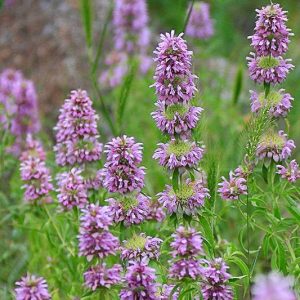
| Monarda citriodora (Lemon Bee Balm) | N/A | Buy Plants |
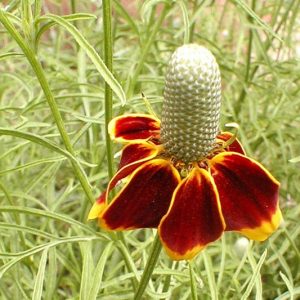
| Ratibida columnifera (Mexican Hat Plant) | N/A | Buy Plants |
| Salvia farinacea (Mealy Sage) | N/A | Buy Plants |
| Echinacea purpurea (Purple Coneflower) | N/A | Buy Plants |
| Engelmannia peristenia (Engelmann Daisy) | N/A | Buy Plants |
| Schizachyrium scoparium (Little Bluestem) | N/A | Buy Plants |
| Rhus aromatica (Fragrant Sumac) | N/A | Buy Plants |
Create a membership account to save your garden designs and to view them on any device.
Becoming a contributing member of Gardenia is easy and can be done in just a few minutes. If you provide us with your name, email address and the payment of a modest $25 annual membership fee, you will become a full member, enabling you to design and save up to 25 of your garden design ideas.
Join now and start creating your dream garden!
Create a membership account to save your garden designs and to view them on any device.
Becoming a contributing member of Gardenia is easy and can be done in just a few minutes. If you provide us with your name, email address and the payment of a modest $25 annual membership fee, you will become a full member, enabling you to design and save up to 25 of your garden design ideas.
Join now and start creating your dream garden!