Moundlily Yucca, Mound Lily Yucca, Soft-tipped Yucca, Spanish Dagger, Spanish Bayonet, Sea Islands Yucca, Roman Candle, Candle Yucca, Palm Lily, Tee Lily
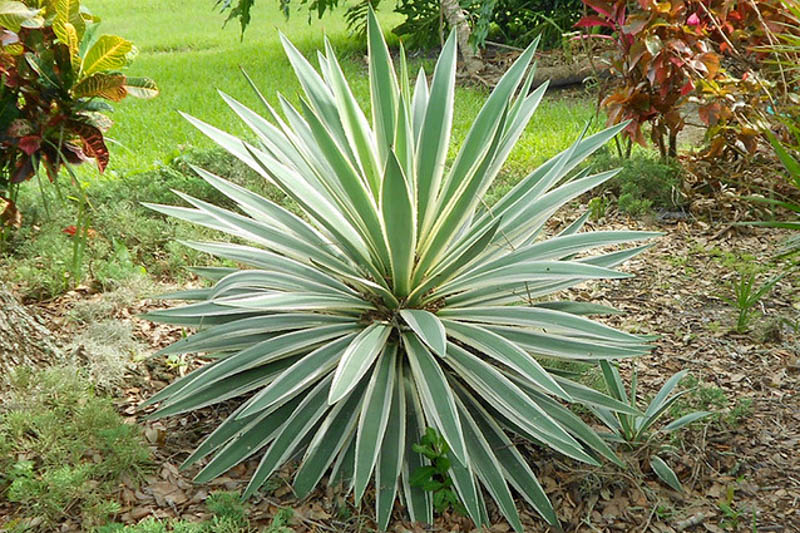


If you are dreaming of a plant that looks striking every single day of the year, Yucca gloriosa – often called Spanish Dagger – should be at the top of your list. With its sculptural silhouette, sword shaped evergreen leaves, and towering midsummer flower spikes, this yucca delivers instant drama. Hardy, drought tolerant, salt tolerant, and wonderfully low maintenance, it thrives where many ornamentals struggle – from hot, sandy coastal gardens to dry inland landscapes. Whether used as a standalone focal point or massed for desert inspired texture, Yucca gloriosa is a true powerhouse of bold form and year round beauty.
Yucca gloriosa grows best in full sun and prefers well drained, sandy, or gritty soils. Its remarkable tolerance for drought, salt spray, wind, and heat makes it a favorite for coastal landscapes, xeric plantings, rock gardens, and modern architectural designs. Plant it wherever you want bold structure, evergreen presence, and a reliable, low water accent.
Summary: A medium sized, evergreen structural shrub with a strong architectural presence, rigid sword shaped leaves, and dramatic tall flower spikes.
Use: Coastal gardens, xeric landscapes, rock gardens, architectural plantings, modern design, specimen plantings, containers.
Highlight: Show stopping creamy white, bell shaped flowers on towering summer spikes and evergreen form that provides year round texture.
Note: Exceptionally tolerant of drought, salt spray, heat, and wind. Perfect for low water landscapes.
| Botanical Name | Yucca gloriosa |
|---|---|
| Family | Asparagaceae |
| Common Names | Spanish Dagger – Mound Lilly Yucca – Tree Yucca |
| Native Range | Coastal regions of the Southeastern United States, especially dunes and sandy soils along the Atlantic coast. |
| Plant Type and Habit | Evergreen shrub or small tree with a single or multi trunk habit and stiff, upright, sword like leaves. |
| Hardiness – approx USDA | Zones 6 to 11. Very heat and drought tolerant; hardy into colder climates with good drainage. |
| Size | Grows about 2-4 ft. high and wide as a foliage mound, up to 10 ft. tall and 6-8 ft. wide with age; 8-15 ft. tall in bloom with flower stalks. |
| Sun and Exposure | Full sun is ideal for strong structure and flowering, though it tolerates light shade. |
| Soil | Thrives in well drained, sandy, or gritty soils. Avoid heavy or poorly drained sites. |
| Seasonal Interest | Evergreen foliage year round, dramatic creamy white blooms in summer, sculptural form in all seasons. |
| Primary Uses | Xeric gardens – modern landscapes – coastal gardens – architectural accents – rock gardens – specimen plantings – containers. |
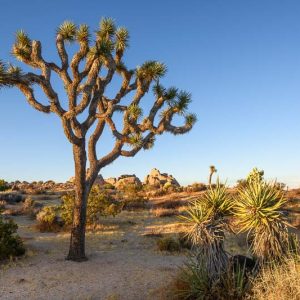
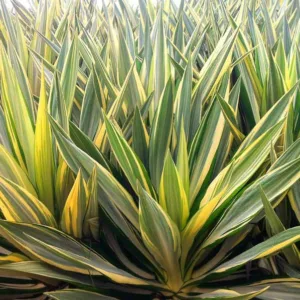
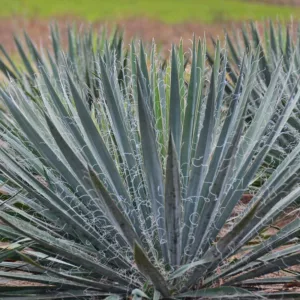
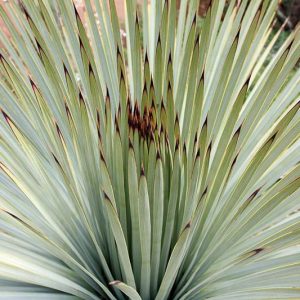
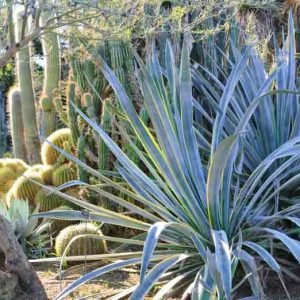
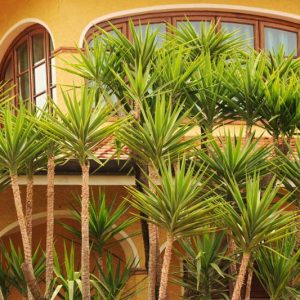
Yucca gloriosa is a striking evergreen shrub with a naturally architectural form. Its stiff, sword like leaves radiate outward from the trunk, creating a bold rosette that is beautiful on its own and even more dramatic when multiple trunks develop with age. The foliage ranges from blue green to bright green depending on the cultivar, and some selections add creamy yellow variegation for even more color.
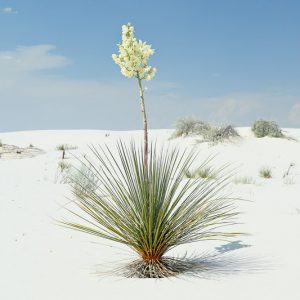
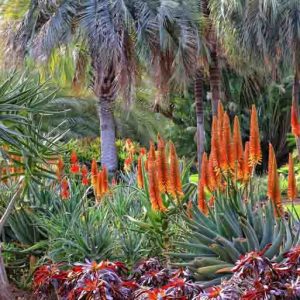
The true showstopper appears in mid to late summer, when mature plants send up tall flower stalks, often 4 to 6 ft above the foliage. These spikes are lined with large, waxy, bell shaped flowers, usually creamy white, that glow beautifully in evening light and draw both bees and moths.
Spanish Dagger is native to the sandy coastal plains of the Southeastern United States, especially the Atlantic coastline. Its natural habitats include dunes, open sandy woods, and scrubby maritime forests, which explains its excellent tolerance for salt spray – drought – and poor, dry soils.
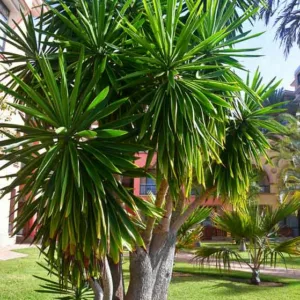
Yucca gloriosa grows gradually, forming a single trunk at first and producing additional branching stems as it matures. Over time, these create a rugged, sculptural silhouette that contributes strong vertical interest. Plants typically form a 2-4 ft evergreen foliage mound, but older plants may develop a tree-like trunk reaching 8-10 ft tall, with flower stalks extending total height to 8-15 ft. Spread ranges from 2-4 ft for young mounds to 6-8 ft or more as offsets develop.
The blooms of Spanish Dagger are one of its most dramatic features. In mid to late summer, mature plants send up towering stalks packed with flowers. These bell shaped blossoms are creamy white and slightly fragrant, opening gradually from the bottom of the spike upward. The blooms last for weeks, attracting pollinators and bringing elegance to hot season gardens.
Evergreen foliage is the hallmark of Yucca gloriosa. The leaves form strong upright fans that look stunning in every season. In winter, the rigid leaves hold their shape beautifully, even through wind and cold. Variegated cultivars like Yucca gloriosa Bright Star add warm tones of gold and cream for a year round glow. Because the plant maintains its form so well, it is a natural choice for creating backbone structure in low water or architectural landscapes.
Hardy in USDA Zones 6 to 11, Yucca gloriosa handles heat, humidity, salt, sandy soils, and drought with ease. In colder zones, excellent drainage is crucial to avoid winter rot. Spanish Dagger is especially valued in coastal zones because it thrives in wind and salt spray and stabilizes sandy soils.
Because of its strong structure and evergreen presence, Spanish Dagger works beautifully in many landscape styles:
The tall flower spikes of Yucca gloriosa attract a mix of pollinating insects, including bees and night visiting moths. Its thick foliage provides cover for small wildlife in open landscapes, and its drought tolerance makes it an excellent addition to ecological or climate resilient garden designs.
Yucca gloriosa is typically deer resistant thanks to its tough, fibrous foliage and sharp leaf tips.
Spanish Dagger is extremely drought tolerant once established. In fact, it can suffer if watered too frequently in poorly drained soil. Let the soil dry between waterings, especially in heavy or clay soils. In ideal dry or sandy sites, the plant performs beautifully with very little supplemental irrigation.
Like many yuccas, Yucca gloriosa contains saponins in its foliage, which can be mildly toxic if ingested by pets or livestock. Skin contact with leaf tips can irritate sensitive skin, so handle with care during maintenance.
Spanish Dagger is not considered invasive, but it does produce occasional offsets that form attractive clumps over time. These can be removed if you prefer a single trunked form.
The biggest reasons to grow Spanish Dagger include its evergreen structure – drought tolerance – coastal resilience – and dramatic summer blooms. Few plants offer such a strong combination of low water needs, high visual impact, and year round architectural form. Whether designing a seaside oasis or a contemporary garden, Yucca gloriosa delivers reliability and bold beauty.
Sharp drainage is essential. Spanish Dagger thrives where other shrubs fail. Ideal conditions include:
Avoid heavy clay or boggy sites, which can cause rot. If drainage is questionable, amend the soil heavily or plant on a mound.
Maintenance is wonderfully minimal:
Generally trouble free, though occasional pests may include:
These can be managed with horticultural oils or simple removal.
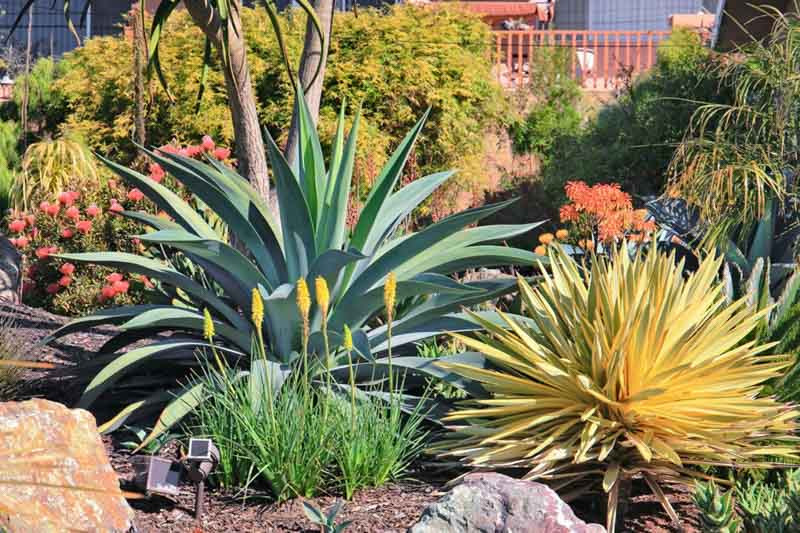
Yucca gloriosa typically forms a 2 to 4 foot tall evergreen mound, but older plants may develop a trunk that reaches up to 10 feet tall. When in bloom, flower spikes can extend the plant’s total height to 8 to 16 feet. Mature clumps usually spread 6 to 8 feet wide.
Yucca gloriosa is highly drought tolerant once established. It prefers infrequent, deep watering and performs best in dry, sandy, or well-drained soils. Overwatering can cause crown or root rot, especially in heavy or poorly drained soil.
Yucca gloriosa is generally considered deer resistant because its tough, fibrous, sword-shaped leaves are difficult for deer to eat. Although rare, hungry deer may occasionally sample new growth, but significant damage is uncommon.
Yucca gloriosa has sharp, pointed leaves that can cause injury on contact and should be planted away from walkways or play areas. The plant contains saponins, which can be toxic to pets if eaten, potentially causing vomiting or gastrointestinal irritation.
Yucca gloriosa grows best in full sun, but it can tolerate light or partial shade. In deeper shade, the plant may become leggy, produce fewer flowers, and lose its compact, architectural form.
Yucca gloriosa is a slow to moderate grower. It forms a stable mound over several years and may take many years to develop a trunk. Its steady growth rate makes it easy to maintain in both garden beds and containers.
Yucca gloriosa is hardy in USDA Zones 6 to 11 and can withstand cold winters when grown in well-drained soil. In wet or poorly drained sites, winter moisture rather than cold temperatures is the primary cause of plant failure.
Yes. Yucca gloriosa produces tall spikes of creamy white, bell-shaped flowers that attract bees, moths, and other pollinating insects. The blooms provide nectar and are especially appealing to nocturnal pollinators.
Yes. Yucca gloriosa performs well in large containers with excellent drainage. It prefers gritty or sandy soil mixes, full sun exposure, and minimal watering once established in the pot.
Yucca gloriosa may fail to bloom if it is too young, growing in too much shade, or experiencing root stress from excess moisture. Mature plants in full sun with well-drained soil are the most likely to flower consistently.
Updated: December 2025 • Reviewed by Gardenia Editors
| Hardiness |
6 - 11 |
|---|---|
| Heat Zones |
7 - 12 |
| Climate Zones | 7, 8, 9, 12, 13, 14, 15, 16, 17, 18, 19, 20, 21, 22, 23, 24 |
| Plant Type | Cactus & Succulents, Shrubs |
| Plant Family | Asparagaceae |
| Genus | Yucca |
| Common names | Spanish Dagger, Yucca |
| Exposure | Full Sun, Partial Sun |
| Season of Interest | Spring (Early, Mid, Late), Summer (Early, Mid, Late), Fall, Winter |
| Height | 2' - 15' (60cm - 4.6m) |
| Spread | 2' - 8' (60cm - 240cm) |
| Spacing | 72" - 96" (180cm - 240cm) |
| Maintenance | Low |
| Water Needs | Low |
| Soil Type | Chalk, Loam, Sand |
| Soil pH | Acid, Alkaline, Neutral |
| Soil Drainage | Well-Drained |
| Characteristics | Showy, Evergreen |
| Native Plants | United States, Southeast, Louisiana, Mississippi, North Carolina, South Carolina, Virginia, Alabama, Florida, Georgia |
| Tolerances | Drought, Deer, Salt, Rabbit, Dry Soil, Rocky Soil, Heat, Fire |
| Garden Uses | Beds And Borders, Patio And Containers |
| Garden Styles | City and Courtyard, Gravel and Rock Garden, Informal and Cottage, Mediterranean Garden |
| Toxic to Humans | No known toxicity |
| Toxic to Cats | Toxic |
| Toxic to Dogs | Toxic |
| Toxic to Horses | Toxic |


| Hardiness |
6 - 11 |
|---|---|
| Heat Zones |
7 - 12 |
| Climate Zones | 7, 8, 9, 12, 13, 14, 15, 16, 17, 18, 19, 20, 21, 22, 23, 24 |
| Plant Type | Cactus & Succulents, Shrubs |
| Plant Family | Asparagaceae |
| Genus | Yucca |
| Common names | Spanish Dagger, Yucca |
| Exposure | Full Sun, Partial Sun |
| Season of Interest | Spring (Early, Mid, Late), Summer (Early, Mid, Late), Fall, Winter |
| Height | 2' - 15' (60cm - 4.6m) |
| Spread | 2' - 8' (60cm - 240cm) |
| Spacing | 72" - 96" (180cm - 240cm) |
| Maintenance | Low |
| Water Needs | Low |
| Soil Type | Chalk, Loam, Sand |
| Soil pH | Acid, Alkaline, Neutral |
| Soil Drainage | Well-Drained |
| Characteristics | Showy, Evergreen |
| Native Plants | United States, Southeast, Louisiana, Mississippi, North Carolina, South Carolina, Virginia, Alabama, Florida, Georgia |
| Tolerances | Drought, Deer, Salt, Rabbit, Dry Soil, Rocky Soil, Heat, Fire |
| Garden Uses | Beds And Borders, Patio And Containers |
| Garden Styles | City and Courtyard, Gravel and Rock Garden, Informal and Cottage, Mediterranean Garden |
| Toxic to Humans | No known toxicity |
| Toxic to Cats | Toxic |
| Toxic to Dogs | Toxic |
| Toxic to Horses | Toxic |
How many Yucca gloriosa (Spanish Dagger) do I need for my garden?
| Plant | Quantity | |
|---|---|---|
| Yucca gloriosa (Spanish Dagger) | N/A | Buy Plants |
Create a membership account to save your garden designs and to view them on any device.
Becoming a contributing member of Gardenia is easy and can be done in just a few minutes. If you provide us with your name, email address and the payment of a modest $25 annual membership fee, you will become a full member, enabling you to design and save up to 25 of your garden design ideas.
Join now and start creating your dream garden!
Create a membership account to save your garden designs and to view them on any device.
Becoming a contributing member of Gardenia is easy and can be done in just a few minutes. If you provide us with your name, email address and the payment of a modest $25 annual membership fee, you will become a full member, enabling you to design and save up to 25 of your garden design ideas.
Join now and start creating your dream garden!