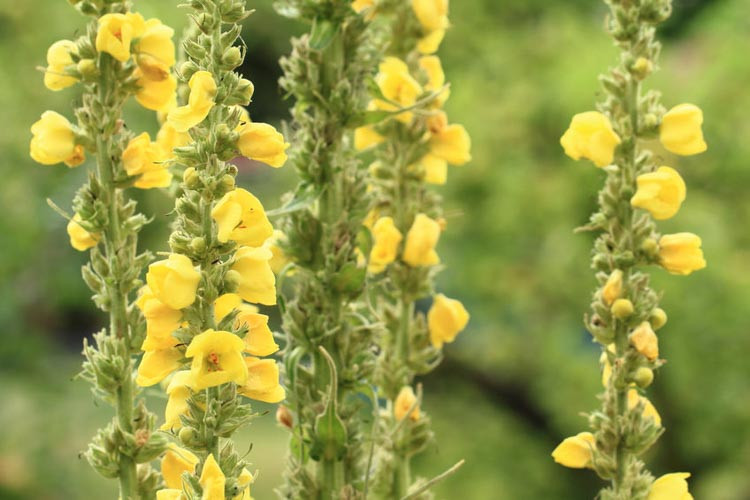
Verbascum (Mullein)
Verbascum, known to gardeners as mullein, is a genus of over 300 species celebrated for their bold, architectural beauty and resilience in challenging gardens. Whether you’re drawn to their towering spires of blooms, rosettes of silvery foliage, or impressive drought tolerance, there’s a Verbascum for almost any sunny spot.
One of the showiest examples is the giant silver mullein (Verbascum bombyciferum). Its felted, silvery leaves and striking yellow flowers make it a standout in wild, gravel, and prairie gardens. If you want a moth magnet for your beds or borders, consider dark mullein (Verbascum nigrum), which features golden-yellow flowers with dramatic purple stamens: a beacon for bees, birds, and butterflies all summer long.
The most famous member of this family is great mullein (Verbascum thapsus). With its towering spikes and fuzzy leaves, it’s a familiar sight on roadsides, meadows, and sunny cottage gardens. Beyond its beauty, great mullein has long been valued in traditional herbal medicine for supporting respiratory wellness and soothing the skin.
Most verbascums prefer full sun, well-drained soil, and thrive on neglect—making them ideal for xeriscapes, pollinator patches, or wild gardens. Many self-sow, ensuring pops of color year after year with minimal work from you. If you’d like to support native biodiversity, or are concerned about plant invasiveness, check out these native plant alternatives to great mullein—perfect for eco-friendly gardening.
From soft-leaved biennials to dazzling summer perennials, Verbascum is as functional as it is beautiful: tough, pollinator-friendly, yet always ready to surprise you with spikes of color even in the leanest corners of your landscape.