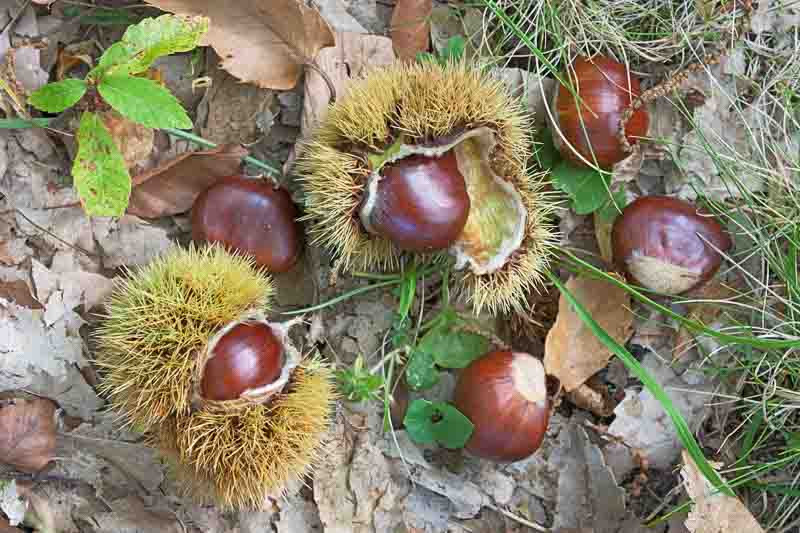
Castanea (Chestnut)
The humble chestnut is making a quiet but powerful comeback—and for good reason. Long overshadowed by flashier nuts like Brazil nuts, cashews, and pistachios, chestnuts are finally being recognized for their sweet flavor, nutritional benefits, and landscape value. If you think of chestnuts only as a holiday roast, it’s time to dig deeper into the world of Castanea.
The genus Castanea includes several beautiful and useful species. The once-mighty American chestnut (Castanea dentata) was nearly wiped out by blight, but efforts to restore it are gaining ground. The classic European chestnut (Castanea sativa) has been loved for centuries in roasted snacks and sweet desserts. The cold-hardy Chinese chestnut (Castanea mollissima) is disease-resistant and dependable, while the Japanese chestnut (Castanea crenata) offers large, sweet nuts and stunning ornamental value.
Unlike oily nuts like pecans, walnuts, or macadamias, chestnuts are low in fat and rich in fiber, vitamin C, and complex carbs. Think of them as the potato of the nut world—satisfying, hearty, and incredibly versatile.
Want a nut tree that doubles as a shade tree, feeds the squirrels, and puts delicious food on your table? Chestnuts check all the boxes. They’re perfect for roasting, mashing, pureeing, or baking—and they even work in savory stuffings and sweet pastries. Pair them in your garden with hazelnuts or even peanuts for a full-on nut haven.
So whether you’re after flavor, sustainability, or fall nostalgia, it’s time to give Castanea another look.