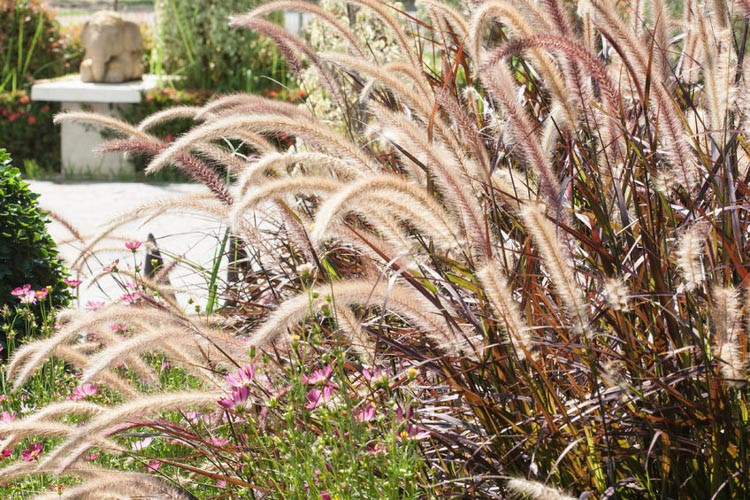
Pennisetum (Fountain Grass)
Pennisetum (fountain grass) is that effortless “movement maker” every sunny garden craves. In summer, arching leaves toss in the breeze while fuzzy bottlebrush plumes catch the light like sparklers. The show keeps going into fall as the seed heads dry to warm creams and roses—beautiful in the border, irresistible in a vase, and eye candy in containers, gravel gardens, or mixed meadows.
Why you’ll love it
- Long season drama: Plumes appear for months, then stand through winter for four-season interest.
- Drought & heat savvy: Once established, most cultivars sip water and shrug off scorching sidewalks and reflected heat. How to Build a Beautiful Drought Tolerant Garden
- Sizes & colors for every spot: From compact ‘Hameln’ to statuesque forms, with green, burgundy, or smoky foliage.
- Wildlife value: Seed heads feed birds; the swaying tufts provide shelter and texture in habitat plantings.
- Low maintenance: Little feeding, minimal staking—just a yearly cutback in late winter and you’re done.
Good to know (potential drawbacks)
- Choose wisely: Some species—especially Pennisetum setaceum—are invasive or restricted in parts of the U.S. and beyond. Opt for P. alopecuroides selections (e.g., ‘Hameln’, ‘Little Bunny’) or locally recommended sterile cultivars, and always check regional guidance.
- Sun & drainage are non-negotiable: Shade or soggy soil leads to flop and crown rot. Plant in full sun with well-drained soil.
- Cold limits: In cooler zones some types behave like annuals or need winter protection. Leave foliage standing for insulation; cut back to a few inches just before spring growth.
- Self-seeding: Certain varieties can scatter. Deadhead if you want a tidier look or to prevent volunteers.
- Fire-wise care: In fire-prone regions, remove dried foliage before fire season and space plants sensibly.
Design tip: Pair fountain grass with salvia, echinacea, agastache, lavender, and seed-heads from yarrow for a drought-tolerant, pollinator-rich planting that glows morning and evening.