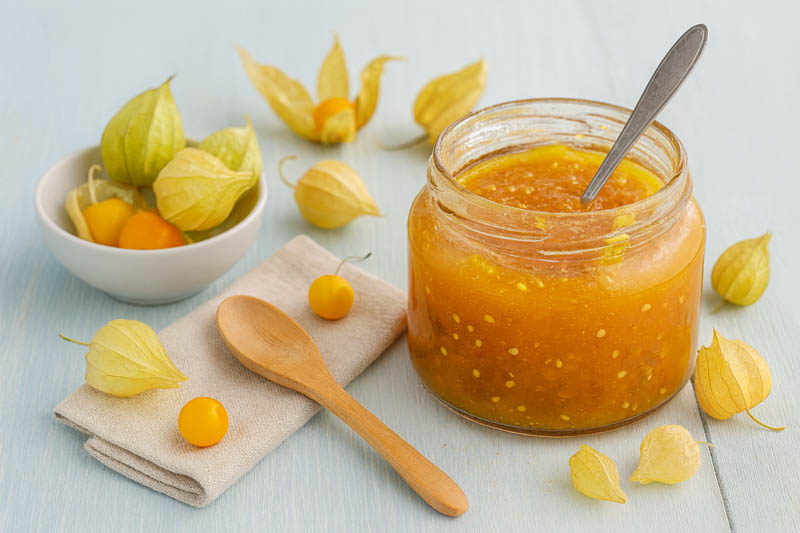
Physalis (Ground Cherry)
Meet Physalis, the nightshade genus famous for berries that ripen inside papery, lantern-like husks. You’ll see it in two worlds at once: the kitchen (edible species) and the flower border (ornamental showpieces). In the kitchen, favorites include tropical-leaning cape gooseberry (P. peruviana), salsa-ready tomatillo (P. philadelphica), and candy-sweet ground cherry (P. pruinosa). For pure glow, gardeners love Chinese lantern (P. alkekengi)—grown mostly for its luminous orange husks.
Culture is pleasantly simple: full sun, warm weather, and loose, well-drained soil with compost. In most regions they’re grown as warm-season annuals; in frost-free climates, cape gooseberry behaves like a tender perennial. Start seeds indoors 6–8 weeks before last frost and transplant after nights hold at 50°F/10°C or warmer. Plants range from compact mounds (ground cherries) to upright 3–5+ ft shrubs (cape gooseberry). Tomatillos are airy, and you’ll usually get better yields by planting two for reliable fruit set. Containers work beautifully—think 7–10 gallons, steady moisture, and a simple cage to keep fruit off the soil.
Harvest cues differ by species: ground cherries often drop in their husks when perfectly ripe; tomatillos fill and stretch the husk while still attached; cape gooseberries turn deep golden inside a tan, papery lantern. Store fruit in husk, cool and dry; refrigerate husked berries briefly. In the kitchen, ground cherries shine in pies, jams, and salads; cape gooseberries make brilliant sauces and garnishes; tomatillos anchor salsa verde and sheet-pan roasts. Safety note: enjoy ripe fruit only—husks, leaves, and unripe green berries aren’t edible.
Ready to dig deeper—photos, cultivars, and care by species? Explore the full Physalis genus overview and plan your own lantern-lit harvest.