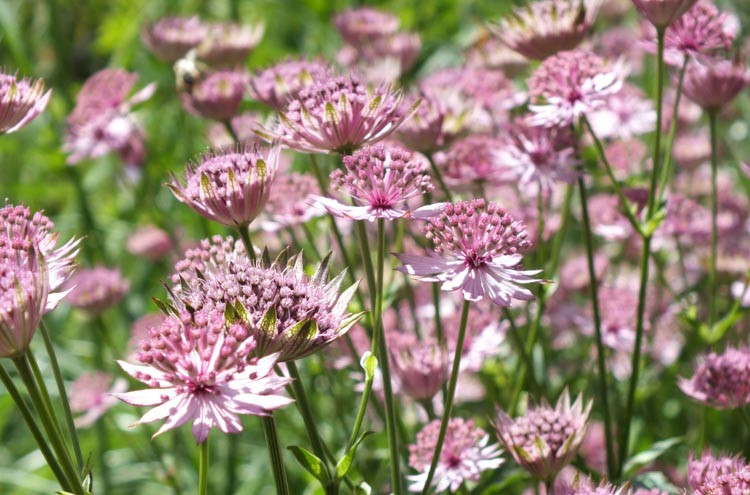
Astrantia (Masterwort)
If you love romantic, slightly wild looking flowers, Astrantia (often called masterwort) is one to put high on your list. Native to woodlands and meadows in Europe and Western Asia, these perennials produce intricate, starburst blooms that look like tiny fireworks frozen in time. Each flower is actually a cluster of tiny florets surrounded by a ruff of papery bracts, giving them that delicate, lacy look gardeners obsess over.
Astrantia thrives in cool to mild climates and is happiest in partial shade with soil that stays evenly moist but not boggy. Think dappled light under trees, the east side of a house, or a spot where the afternoon sun is filtered. In richer, humus rich soil, clumps slowly expand and send up a succession of flowers from late spring into mid or even late summer.
Why Grow Astrantia?
- Long flowering season: Many varieties bloom on and off for weeks, especially if you deadhead spent stems. Some will even rebloom later in the season.
- Brilliant for pollinators: Those little starry flower clusters are nectar rich, attracting bees, hoverflies, and other beneficial insects.
- Perfect for part shade: Astrantia shines where many traditional cottage perennials sulk. It bridges sunny borders and shadier woodland edges beautifully. Shade Garden – Best Plants, Design Recipes, Care Essentials
- Excellent cut flowers: The stems are naturally elegant, and the flowers last surprisingly well in the vase. They can also be dried for long lasting arrangements.
- Soft structure and texture: The finely cut foliage and airy flower stems weave beautifully through hostas, ferns, roses, and grasses without ever looking stiff.
In terms of care, Astrantia is refreshingly low drama. Keep the soil from baking dry, top dress with compost or leaf mold once a year, and divide mature clumps every few years if they get crowded. In return, you get months of gentle color and movement – a quiet, shimmering presence that makes everything around it look more refined.