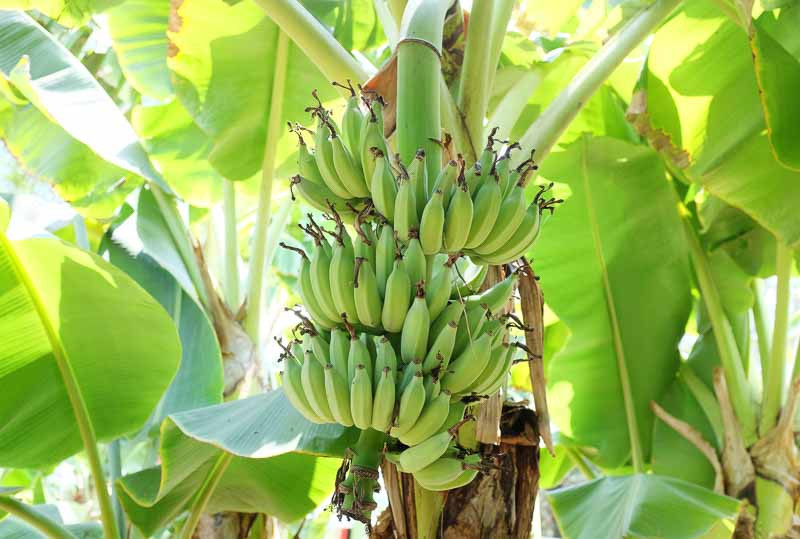
Musa (Banana)
Bananas aren’t trees at all—they’re giant herbs with a leaf-built pseudostem, and their fruit is, botanically, a berry. Curious? Start here: why bananas are berries. Most dessert types trace to Musa acuminata, while cooking bananas/plantains are traditionally grouped as Musa × paradisiaca. If you grow your own, you’ll love mastering countertop ripening tricks: ripen bananas fast or slow.
Pick your vibe:
- Dwarf Cavendish — compact, classic dessert banana for patios and warm zones.
- M. acuminata ‘Zebrina’ — green leaves splashed with red, fabulous as an ornamental.
- ‘Blue Java’ (Blue Banana) — custardy texture, pale bluish peel when immature.
- Musa basjoo — the go-to cold-hardy ornamental; stunning leaves in temperate gardens.
- Musa ornata & M. coccinea — showy flowers; great for tropical drama.
- M. velutina — the eye-catching pink banana (ornamental fruit).
Grower basics: Full sun, rich moisture-retentive soil, and generous mulch are your best friends. Bananas are heavy feeders—use compost and balanced fertilizers “little and often.” Wondering about internet hacks? Read the science before you stash peels: banana peel fertilizer—does it really work?
Climate & winter: In warm, frost-free zones, you can stagger stems for near year-round fruiting. In cooler regions, grow compact types in containers and protect crowns before freezes. Dial in what’s realistic where you live with this handy guide: can bananas survive your winter?
Pro tip: Make your planting look (and perform) like a resort by pairing bananas with bold-leaved companions and nectar magnets—ideas here: smart tropical companion plants. Whether you’re chasing smoothies, shade, or pure spectacle, there’s a Musa for the moment—and a trick for ripening the week’s bunch just right.