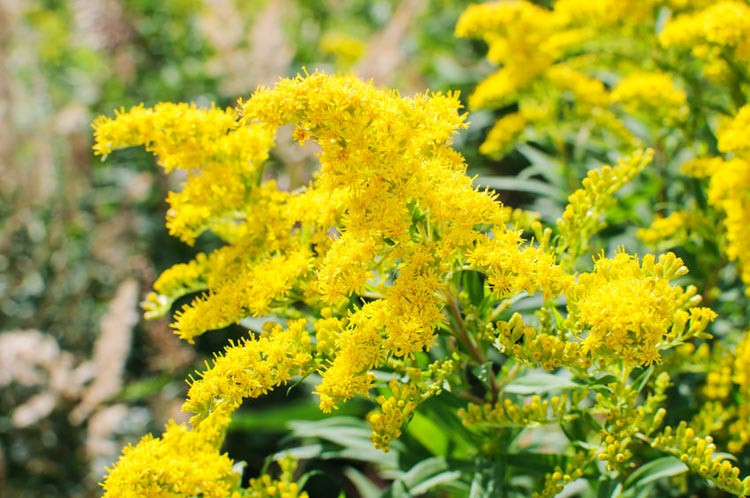
Solidago (Goldenrod)
Solidago, better known as goldenrod, is that brilliant late season glow your pollinator garden has been waiting for. If your beds start to fade in late summer, goldenrod steps in with streams of warm yellow and a crowd of grateful insects. It is tough, generous, and so much more interesting than its weedy reputation suggests.
The first thing to know: goldenrod is not the one causing your fall allergies. Ragweed is usually the culprit. Solidago has heavier, sticky pollen that clings to visiting bees and butterflies instead of drifting through the air. So when you plant it, you are not inviting sneezes. You are inviting life.
Watch a clump of Solidago on a sunny afternoon and you will see why it matters. Native bees, honey bees, hoverflies, beetles, and migrating butterflies all crowd the tiny flowers for nectar and pollen when many other blooms are exhausted. That late season fuel helps pollinators finish nesting, raise final broods, and prepare for migration or winter. Discover How you can Create a Thriving Pollinator Haven in your Own Backyard
In the garden, Solidago is surprisingly flexible. There are compact, well mannered native species that stay tidy in front yards and more robust types that work beautifully in meadows, slopes, or naturalized borders. They thrive in full sun, handle lean soils, and once established, shrug off drought. Minimal fuss, maximum payoff.
For a vibrant, layered look, weave goldenrod among asters, liatris, coneflowers, and native grasses. The gold against purple and deep green is unforgettable. Leave some seed heads standing through winter so birds can forage and the stalks can shelter beneficial insects.
Add Solidago to your planting plan and your garden will shine right when pollinators need support the most.