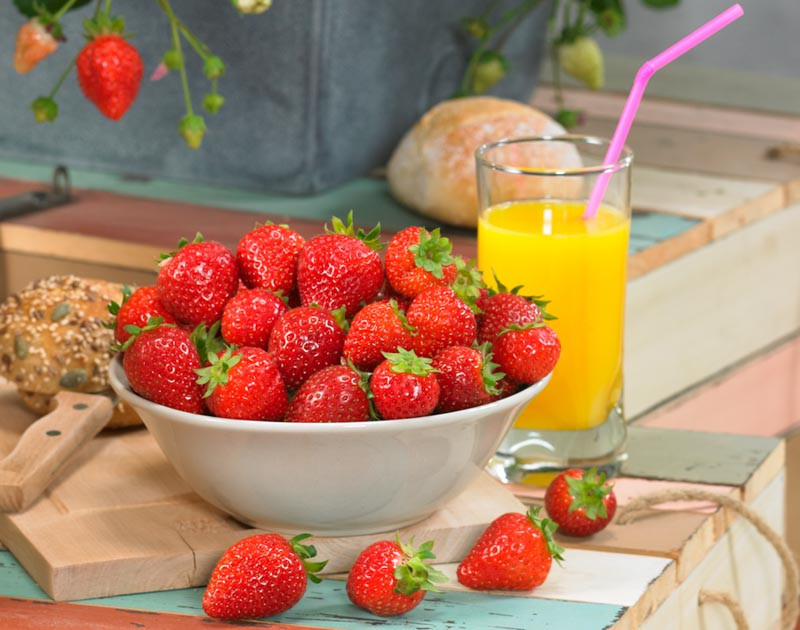
Fragaria (Strawberry)
Fragaria is the berry patch of your dreams—the botanical genus behind the strawberries you snack on and the charming wildlings carpeting forest edges. Today’s garden strawberry, Fragaria × ananassa, is a historic hybrid of two wild parents: the North American Fragaria virginiana and the Pacific-coast Fragaria chiloensis. You’ll also meet the petite, aromatic woodland strawberry, Fragaria vesca, beloved for flavor that belies its size.
Strawberries are low, runner-forming perennials. They spread by stolons, set white spring blossoms, and produce “berries” that are technically aggregate accessory fruits—the crunchy “seeds” on the outside are achenes. Most modern varieties are self-fertile.
Growing basics: Give plants full sun (6–8+ hours), rich, well-drained soil, and slightly acidic pH. Mulch with clean straw or pine needles to keep fruit clean and moisture steady. Water at the soil level (drip or soaker) to reduce gray mold. In colder zones, winter-mulch crowns after the ground cools.
Types: June-bearing (one big crop), everbearing (two lighter flushes), and day-neutral (on-and-off all season).
Spacing: 12–18 in (30–45 cm) between plants; allow runners in “matted rows” or clip them in “hill” systems for larger fruit.
Care: Renovate June-bearers after harvest; pick frequently; chill fruit quickly for best texture and flavor.
Ready to choose cultivars? Browse Gardenia’s roundups for climate-wise picks and kitchen goals: Strawberries — Benefits, Uses, Varieties & Care and Most Popular Strawberry Varieties.
Wild vs. “strawberry tree”: Don’t be fooled at the nursery—Arbutus unedo (strawberry tree) is a lovely landscape shrub with red, bumpy fruits, but it isn’t a Fragaria and won’t replace your dessert berries.
Whether you’re tucking a few day-neutrals into a patio pot or planting a backyard row, Fragaria rewards steady care with bowls of sun-sweet fruit—and the kind of garden moments you’ll remember.