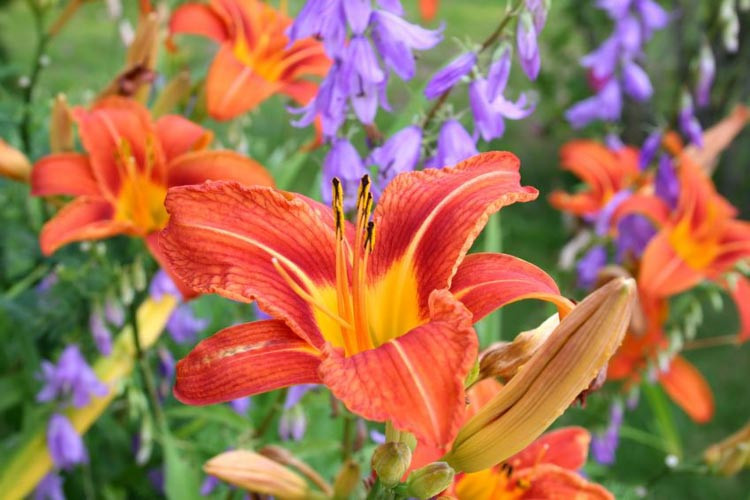
Hemerocallis (Daylily)
Hemerocallis (Daylily): How to Choose and Grow the Best Daylilies
Hemerocallis, commonly called daylilies, are colorful, adaptable perennials prized for their long summer display and enormous choice of flower colors, forms, and sizes. Each flower typically lasts just one day, but established plants produce many buds over several weeks. Choose varieties for their size, bloom season, reblooming habit, and garden performance – not flower color alone.
Choose Daylilies for Your Garden
For reliable performers, explore Gardenia’s top daylilies or choose dwarf daylilies for edging and smaller spaces. For a longer flowering season, combine early, midseason, and late-blooming daylilies. Add reblooming daylilies when you want repeat color from the same plants.
Plant, Care for, and Keep Daylilies Blooming
Daylilies generally flower best with plenty of sun, well-drained soil, and adequate moisture. Avoid planting the crown too deeply and give clumps room to expand. Follow the complete daylily growing guide, learn how to keep daylilies blooming longer, and see when to divide daylilies or cut them back.
Solve Daylily Problems and Plan Better Plantings
If plants produce leaves but few flowers, check sunlight, crowding, planting depth, water, and fertilizer. See why daylilies are not blooming and Gardenia’s guide to yellow leaves, spots, and other daylily problems. To make plantings more attractive throughout the season, pair them with these great companion plants for daylilies.
Good to Know Before You Plant
Daylilies are not true lilies. Learn how to tell a daylily from a true lily. Daylilies are also toxic to cats; read about daylily toxicity and what to do after exposure. In North America, gardeners may also wish to replace the spreading orange daylily, Hemerocallis fulva, with these native plant alternatives.