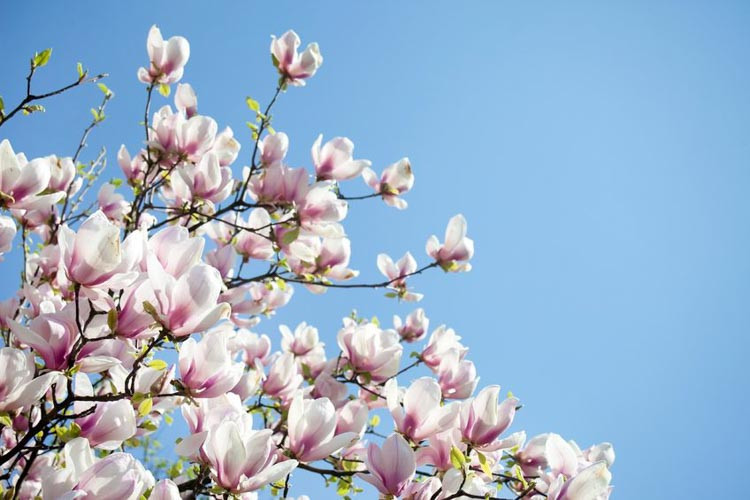
Magnolia
Few trees make a statement quite like the Magnolia. With over 200 species, these magnificent trees and shrubs can be evergreen or deciduous, towering giants or petite garden companions. Native to Asia and the Americas, magnolia trees have been inspiring poets, gardeners, and nature lovers for centuries. They’re more than just plants—they’re living legends in bloom.
Flowers: The real showstopper? Their flowers. Magnolia flowers can be pure white, romantic pink, regal purple, or even golden yellow. Some bloom as early as late winter, others in mid-summer, but all share one trait: they look like something out of a fairytale. Many carry a sweet, lemony fragrance that drifts through the garden on warm evenings.
Foliage: Beyond the blooms, magnolias are known for their glossy, oversized leaves. On species like the Southern magnolia, the undersides are coated in a coppery fuzz, giving them an extra ornamental flair.
Bloom time & Size: Early risers in the plant world, magnolias often announce spring before other trees wake up. Depending on the species, they can be as compact as a flowering shrub—perfect for small gardens—or as majestic as an 80-foot shade tree dominating the landscape.
Popular Species: Favorites include the iconic Southern Magnolia, the delicate Star Magnolia, the romantic Saucer Magnolia, and the graceful Sweetbay Magnolia. There are even breathtaking yellow magnolias for a sunny twist!
Care & Culture: Surprisingly, magnolias are low-maintenance. They thrive in full sun to partial shade with well-drained soil, and once established, they ask for little more than admiration. If you’re curious about all the different varieties, check out popular types of magnolia trees and read tips on how to grow and care for them successfully.
Elegant, fragrant, and endlessly versatile, the magnolia tree isn’t just a plant—it’s a piece of living history, ready to bring beauty and grace to any garden.