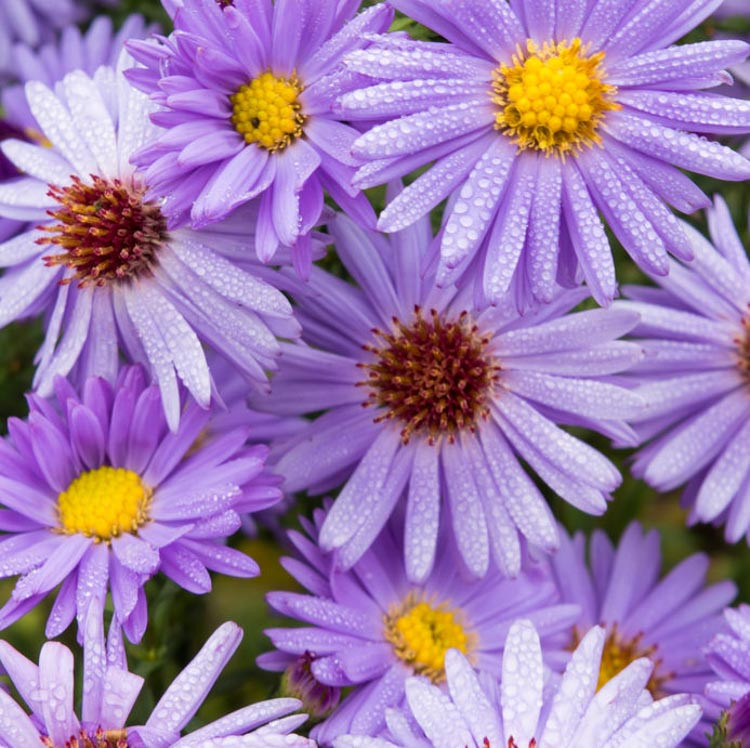
Aster
Asters are perennials known for their daisy-like flowers that bloom late in the year, providing a significant source of color in gardens when many other flowers have faded. They are native to various regions across the Northern Hemisphere, including North America, Europe, and Asia. Native Plants, Gorgeous Gardens: Start Here
Size: The growth habit of asters can vary widely, with species ranging from compact, mounding forms to upright, spreading varieties. Their size can differ dramatically, with some dwarf varieties only reaching a few inches tall and others, like the tall New England aster, growing up to 6 feet (1.8 meters).
Flowers: Aster flowers are renowned for their vibrant hues of purple, blue, pink, red, and white, typically with yellow centers. These blossoms, which bloom from late summer into fall, are a late-season source of nectar for butterflies and bees, making asters an excellent plant for supporting pollinators. Discover How you can Create a Thriving Pollinator Haven in your Own Backyard
Hardiness: Asters are hardy in USDA zones 3-8, though this can vary slightly depending on the species.
Uses: They are used in various garden settings, including borders, cottage gardens, wildflower meadows, and butterfly gardens. Asters also make excellent cut flowers.
Deer: While asters are generally not toxic to humans or pets, they’re not usually a favorite of deer, which tend to avoid them due to their slightly bitter taste. However, rabbits might nibble on them.
A key fact about asters is their importance in the ecosystem, providing late-season food for pollinators. Additionally, their ability to bloom when many other flowers have stopped makes them a crucial part of a succession planting strategy, ensuring that your garden remains vibrant and colorful well into the fall.