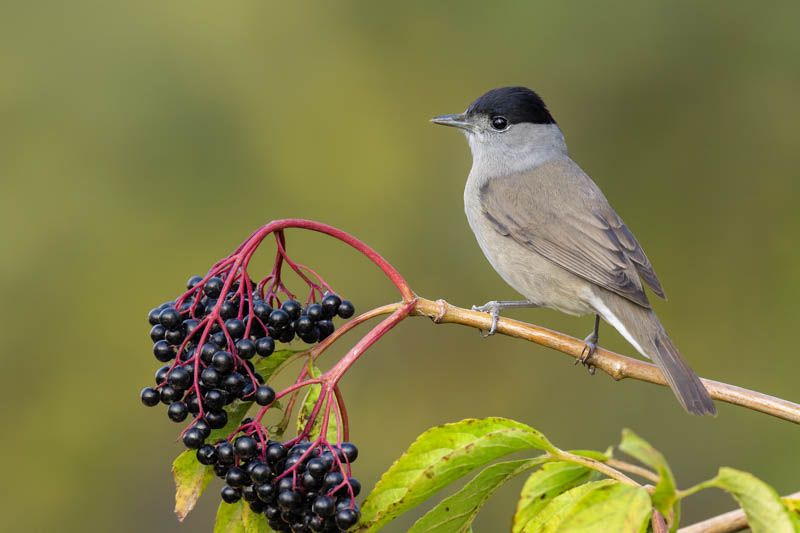
Sambucus (Elderberry)
Meet the generous shrub that gives you two harvests and a ton of garden charm. Elderberries (Sambucus) bloom with perfumed, creamy umbels in late spring and follow up with dusky, jewel-toned berries in late summer. They’re fantastic for wildlife, beautiful in borders, and—when handled properly—delicious in the kitchen.
Start with the right species: American elderberry (S. canadensis) is a productive, cold-tolerant favorite; European black elderberry (S. nigra) brings edible fruit and striking foliage—think ‘Black Beauty’ and ‘Black Lace’. In the West, the handsome, tree-like blue elderberry (S. cerulea) carries a natural waxy “bloom” that makes ripe fruit look blue. Reserve red elderberry (S. racemosa) for wildlife gardens—it’s a bird magnet, not a kitchen staple.
Grow it: Full sun to light shade; rich, moist, well-drained soil. Mulch to hold moisture.
Prune it: In late winter, remove dead wood and a share of the oldest canes to renew growth.
Fruit set: You’ll usually get bigger crops with two compatible varieties planted nearby.
Kitchen basics: Use ripe berries from culinary species and cook them before eating—great for syrup, jam, juice, and tea. Curious about timing? Here’s how to choose between harvesting elderflowers vs. elderberries. Love floral drinks? Elderflowers shine in cordials and spritzers (see edible flowers for cocktails).
Beyond the pantry, Sambucus is a wildlife all-star—ideal in hedges and habitat plantings that attract birds and pollinators. Whether you want a bold, purple-leaf specimen or a productive berry hedge, elderberry delivers beauty, biodiversity, and real kitchen value—all from one easygoing plant.