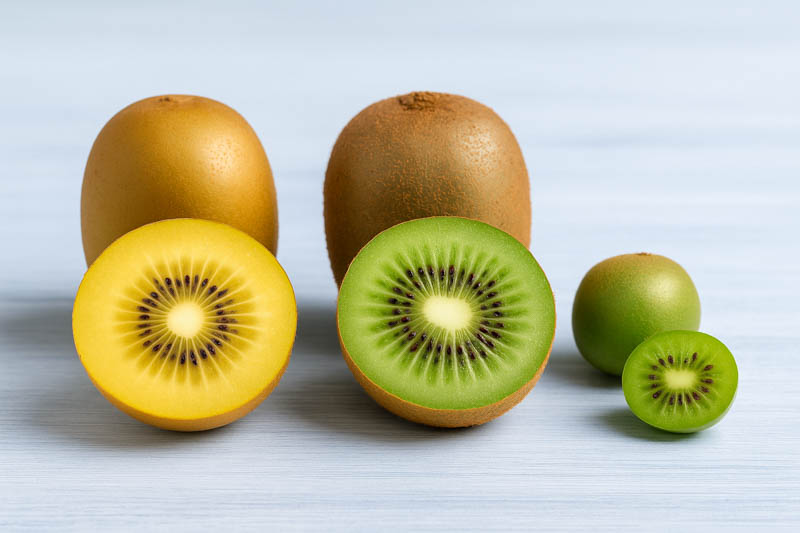
Actinidia (Kiwi)
Meet Actinidia—the kiwi clan. This genus includes vigorous, twining vines prized for luscious fruit and, in some species, show-stopping foliage. If you’ve ever sliced a kiwi or admired a pergola cloaked in glossy leaves, you’ve met an Actinidia.
For classic store kiwis, start with Actinidia deliciosa, the fuzzy, tangy green type. Craving honeyed, low-acid fruit and bronzy, smoother skin? That’s Actinidia chinensis, the “golden” kiwi. Gardening in colder regions? Actinidia arguta (hardy kiwi, aka kiwiberry) delivers pop-in-your-mouth, smooth-skinned berries on vines that shrug off real winter. Prefer foliage fireworks? Actinidia kolomikta splashes leaves with pink and white, while Actinidia polygama (“silver vine”) frosts them in shimmering white and is famously fascinating to some cats.
All are fast growers, so give them a sturdy trellis, T-bar, or pergola, plus full sun and well-drained, fertile soil. Typical climate lanes: A. arguta excels in colder zones; A. deliciosa suits temperate areas; A. chinensis thrives where seasons are long and warm. Microclimate matters—shelter from harsh wind, avoid frost pockets, and mulch to keep roots evenly moist.
Pollination is key. Most Actinidia are dioecious, meaning separate male and female plants; plan roughly one male for six to eight females and match bloom timing. A popular exception is ‘Issai’ (an arguta selection) that’s partially self-fertile, though yields still improve with a nearby male. Flowers open late spring; fruit ripens from late summer into fall depending on species and site. Many kiwis finish ripening off the vine, which is handy before an early frost.
Prune in winter to shape the framework and renew fruiting wood; summer tip-prune to tame vigor and boost light and airflow. Pick promptly—wildlife adores ripe fruit. In a few Northeastern regions, hardy kiwi can behave aggressively; check local guidance before planting and keep prunings out of natural areas.
Ready to choose your star? Explore fruiting and ornamental options here.