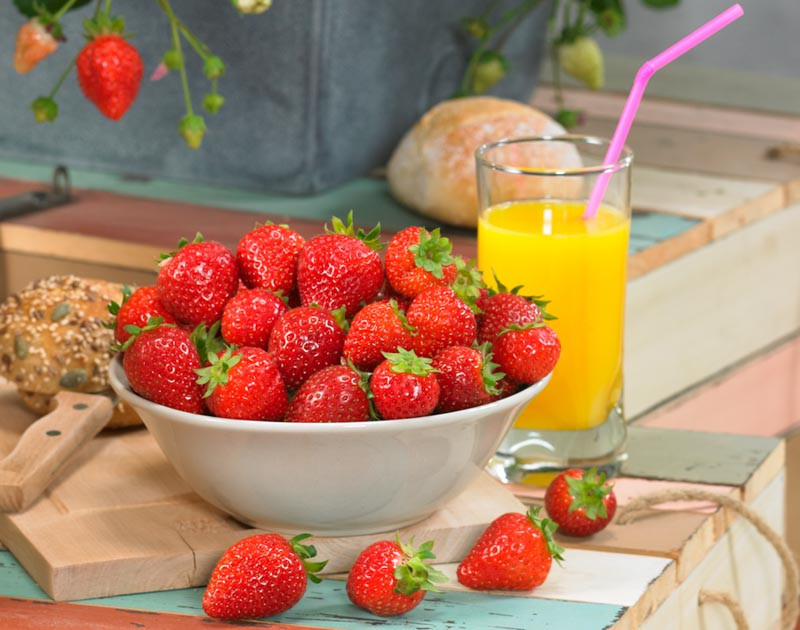
Fragaria (Strawberry) - Guides
Want bowls of sun-sweet strawberries from your own garden? The genus Fragaria is wonderfully forgiving if you set it up right. Start with full sun (6–8+ hours) and a fertile, well-drained soil—slightly acidic is best (roughly pH 5.8–6.5). Plant crowns exactly at soil level (leaves above, roots below), add clean straw or pine-needle mulch, and water steadily at the soil line.
Pick the Right Type: For nonstop fruit, choose day-neutral or everbearing modern garden strawberries (Fragaria × ananassa). If you love one big canning burst, go June-bearing. For species charm, try coastal, tough Fragaria chiloensis, tiny-but-intense alpine F. vesca, or vigorous North American F. virginiana (one parent of today’s garden berry). Not sure where to start? Browse this helpful overview: Strawberries — benefits, uses, varieties & care and this roundup of gardener favorites: Most Popular Strawberry Varieties.
Planting & Care, Simplified
- Spacing: Matted row (June-bearers) 18 in apart; hill system (day-neutral/everbearing) 12–15 in and clip runners.
- Water: About 1–1.5 in/week via drip or soaker; keep foliage dry to limit gray mold.
- Feeding: Mix in compost at planting; avoid heavy nitrogen that makes leaves, not fruit.
- Protection: Net against birds as berries color; pick every day or two in peak.
- Renovate: After June-bearer harvest, thin and refresh rows to restore vigor.
Common Pitfalls (and Easy Wins): Small or misshapen berries usually trace to uneven moisture, hot spells, or poor pollination in cool/wet bloom—steady watering and airflow help. Slugs and snails? Use clean mulch, evening hand-picks, and garden sanitation. Most strawberries are self-fertile; mixing cultivars mainly extends the harvest window.
One last note: The “strawberry tree” in landscapes is Arbutus unedo—a charming fruiting shrub, but not a Fragaria. Plant the right berry, prep the bed once, and you’ll be snacking from spring to frost.