Create Your Garden

Growing Strawberries in Containers

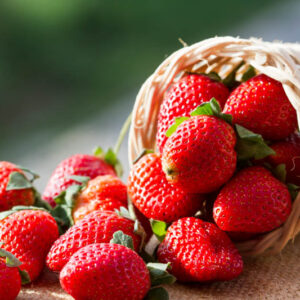
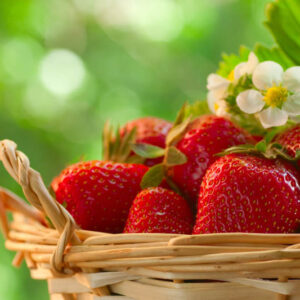
Strawberries don’t need a field to shine—pots, hanging baskets, and patio planters can brim with sweet red fruit. With the right mix, steady watering, and sunshine, you’ll enjoy berries steps from your door.
Strawberry, Strawberries, Strawberry plant, Fragaria x anassa

Growing Strawberries in Containers Made Simple

If you have sun, you can have strawberries—no yard required. Patios, balconies, stoops, fire escapes, even bright front steps can produce weeks and months of sweet bowls when you plant in pots. This guide walks you through the whole container journey, from choosing the right varieties to potting mix recipes, watering tricks, troubleshooting, and an easy care calendar. We’ll also point you to helpful pages on types, companions, and common problems so you can go deeper whenever you like.
Quick Facts — Strawberries in Containers

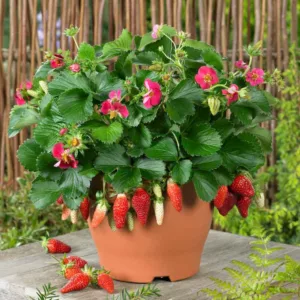
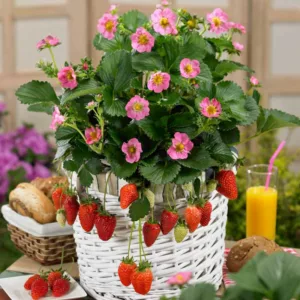
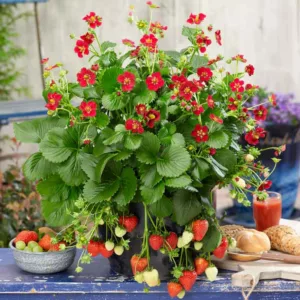
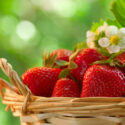
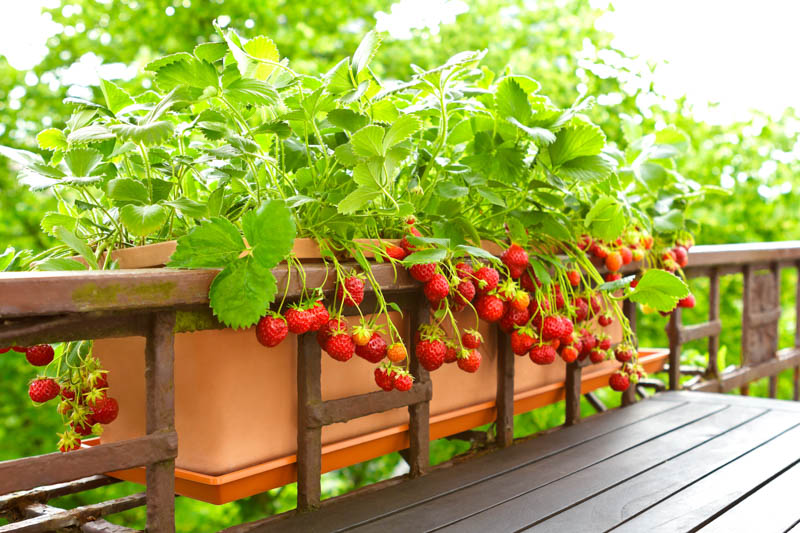
Strawberries growing in containers on a sunny patio

Container strawberries thrive with sun, rich well-drained mix, and steady moisture. Day-neutral and everbearing types give the longest season; alpines add perfume and charm to edges and baskets. Keep crowns level with the soil, water at the base, refresh mulch, and feed lightly. Pinch most runners in year one for better fruit.

Topic Details
Best container types 12–16 in pots for single plants; 18–24 in bowls for 3 plants; tiered towers/hanging baskets for small spaces
Sun & exposure 6–8+ hours full sun; provide light afternoon shade in hot summers
Potting mix Peat- or coco-based soilless mix with compost and perlite; pH ~6.0–6.8; excellent drainage
Watering target Even moisture, typically daily in heat; aim for ~1–1.5 in equivalent per week; drip/soaker preferred
Feeding Light, regular: compost at planting; low-dose organic feed every 3–4 weeks in season
Best types for pots Day-neutral and everbearing garden strawberries; alpine Fragaria vesca for edging and baskets
Care (Quick)
  • Set crowns at soil level; mulch lightly to keep fruit clean.
  • Water at the base; avoid wetting flowers and fruit to reduce gray mold.
  • Feed modestly; too much nitrogen dilutes flavor.
  • Pinch most runners the first year; let a few root in year two to replace older crowns.

Why Containers Are Brilliant for Strawberries

Containers let you curate perfect strawberry conditions without reshaping your yard. You control drainage, soil fertility, and spacing. You can move pots to chase sun or dodge hail. You’ll harvest at standing height, keep slugs at bay, and outmaneuver birds with netting or a quick relocation to a sheltered spot. And if you love variety, pots make it easy to grow several types side-by-side for different flavors and harvest windows—think a day-neutral like Albion, another like Seascape, an everbearer (Ozark Beauty), and a petite alpine mix for garnish magic.
Strawberry, Strawberries, Strawberry plant, Fragaria x anassa

Picking the Right Strawberry for Pots

Day-Neutral and Everbearing Garden Strawberries

These deliver frequent fruit in warm weather and usually produce fewer rampant runners than classic June-bearers—great for tidy pots. Day-neutrals thrive in consistent container care: steady moisture, light feeding, frequent picking.

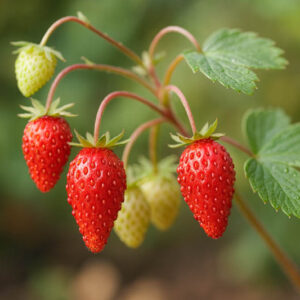
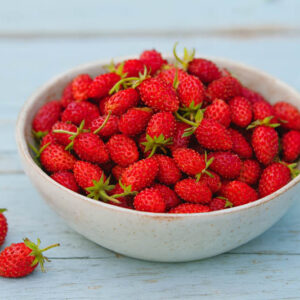
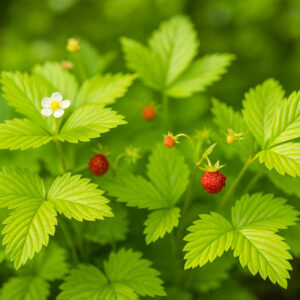
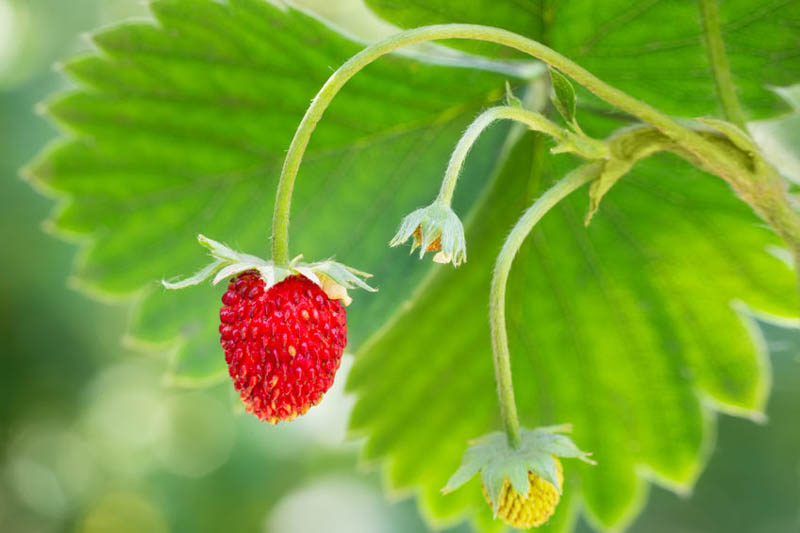
Alpine Strawberries (Fragaria vesca)

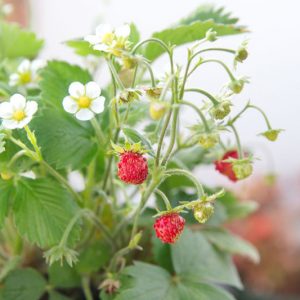
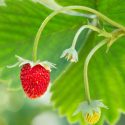
For window boxes, edging bowls, and hanging baskets, alpines are stars. They’re usually runnerless, compact, and aromatic, with repeated small flushes from spring to fall. Explore red and yellow selections on the species page: Fragaria vesca.

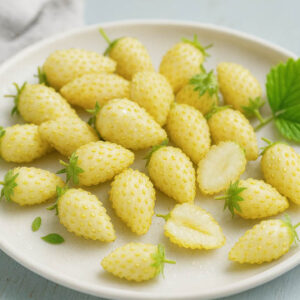
Pineberries (White-to-Blush Fruit)

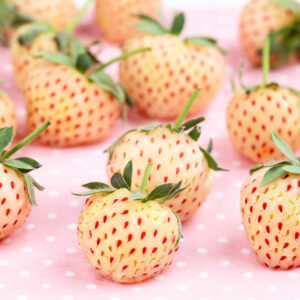
Pineberries behave like regular garden strawberries but bring a novelty flavor and color. Ripe fruit looks ivory to lightly blushed and smells fragrant. Learn more here: Pineberry — Uses & Care.

What about June-Bearers?

You can grow June-bearers in pots, but they run more and deliver one big crop. If your dream is a shortcake party and freezer bags all at once, a large trough or raised bed is easier; otherwise, be prepared to corral runners in containers.
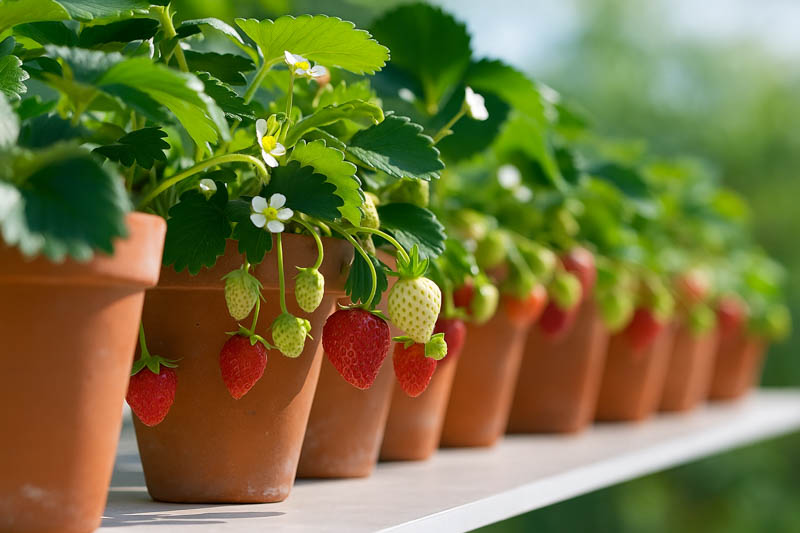
Strawberry growing in pots

Container Size, Shape, and Material

  • Single plant pots: 12–16 in (30–40 cm) diameter with at least as much depth. This gives roots room and stabilizes moisture.
  • Bowls & troughs: 18–24 in (45–60 cm) wide bowls or 24–36 in (60–90 cm) long troughs work beautifully for 3–5 plants with airflow.
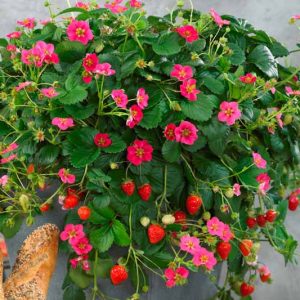
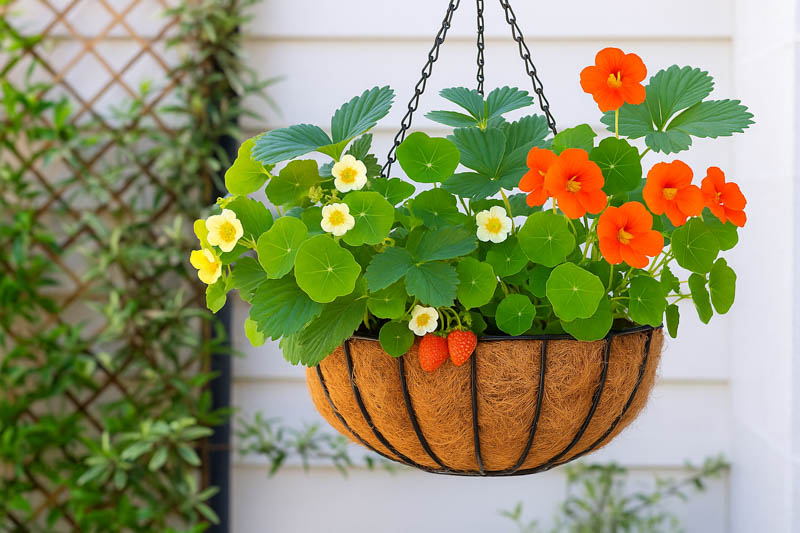
  • Hanging baskets: 12–14 in baskets fit 2–3 plants; pick trailing forms or alpines so fruit dangles clean.
  • Strawberry towers/pocket planters: Great for small footprints; irrigation consistency is the trick. Use drip spikes or water slowly so all tiers drink.
  • Materials: Glazed ceramic and food-grade plastic retain moisture; terra-cotta breathes (cool roots, but dries fast); fabric pots drain vigorously and keep roots oxygenated—water more often.
  • Drainage is non-negotiable: Ensure multiple holes; elevate containers on feet or bricks so water exits freely.

Potting Mix Recipe (Simple and Reliable)

Strawberries love rich, well-drained media that stays evenly moist but never swampy. Avoid garden soil in pots—it compacts and drains poorly.

  • Base: 60% high-quality peat- or coco-coir–based soilless mix
  • Structure: 20% fine compost (well-finished)
  • Drainage: 20% perlite or pumice
  • Optional flavor boost: A handful of worm castings per plant at the root zone
  • Target pH: ~6.0–6.8; most bagged mixes land here

Mix thoroughly. Pre-moisten until it feels like a wrung-out sponge before planting.
Planting Strawberries, Strawberries in Container

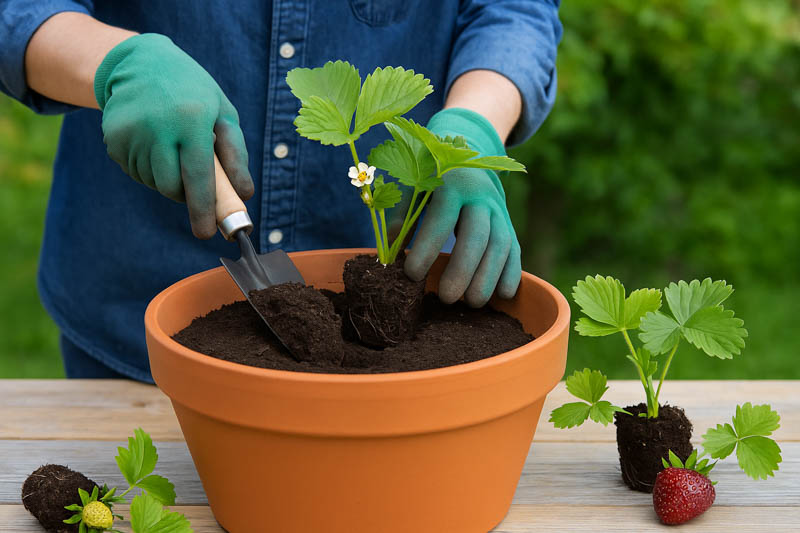
Planting Step-by-Step

  1. Soak bare-root crowns for 20–30 minutes in room-temperature water.

    Potted starts just need a good pre-water.

  2. Fill your pot with pre-moistened mix, leaving space so the crown sits level with the final surface.

  3. Set the crown at soil level

    That junction of roots and leaves should neither be buried (rot risk) nor high (drying out).

  4. Firm gently, water slowly to settle, and top with a thin mulch (clean straw, pine needles, or shredded leaves) to keep fruit clean.

  5. Add a label with variety and planting date

    You’ll thank yourself later.

Light, Temperature, and Microclimate

Give 6–8+ hours of direct sun for the sweetest berries. On blazing balconies, gentle afternoon shade preserves firmness and reduces sunscald. Strawberries grow best when days are mild and nights cool—most types slow or pause when temperatures regularly spike. If your site routinely exceeds mid-80s°F, add evaporative cooling tricks: deep morning water, bright but thin mulch, and moving pots a few feet back from heat-reflective walls.

Watering That Works (and Doesn’t Make Mold)

  • Water deeply when the top inch of mix is dry. In heat, that’s often daily; in spring/fall, every 2–3 days.
  • Use drip, a watering wand, or a slow pour at the base to keep flowers and fruit dry—this greatly reduces gray mold.
  • Lift the pot: a suddenly lightweight container needs water; a consistently heavy one may be waterlogged (improve drainage and reduce frequency).
  • Morning is best—leaves can dry quickly if splashed, and plants face the day hydrated.

Feeding for Flavor (Not Just Leaves)

Overfeeding, especially with nitrogen, makes lush leaves and bland berries. Aim for frequent, gentle nutrition.

  • At planting: mix compost into the potting media and add a small amount of balanced organic fertilizer (follow label, err low).
  • In season: low-dose liquid feed or top-dress with compost every 3–4 weeks for day-neutrals/everbearers; June-bearers need less once they’re done.
  • Stop heavy feeding late in the season so new growth can harden before cold.

Mulch and Surface Care

Mulch is your friend. It buffers moisture, keeps fruit clean, and discourages soil splash. In pots, use a thin, airy layer so the crown can breathe. Refresh midseason if it compacts. If you’re in slug-prone areas, pine needles are less inviting than soft straw.

Runner Management in Containers

Runners are baby plants on cords—adorable, but in pots they quickly crowd and steal energy from fruit.
  • Year one: Pinch most runners so plants build strong crowns and fruit steadily.
  • Year two: Let a few runners root into small nursery pots; use them to replace older plants at season’s end.
  • For tidy bowls and baskets, snip runners as they appear unless you deliberately want a replacement plant.

Strawberries in Container, Strawberry companion Plants

Pollination: Usually Self-Fertile, Always Better with Bees

Strawberries are self-fertile, but bee and hoverfly visits make fuller berries. Add low, nectar-rich companions near pots: thyme, chives, or a little strip of alyssum. On breezy balconies with few insects, a quick morning tap on pot rims or a gentle brush across blossoms can help shake pollen loose.

Companions for Container Strawberries

Pair strawberries with small, non-competitive plants that attract beneficials and stay neat.
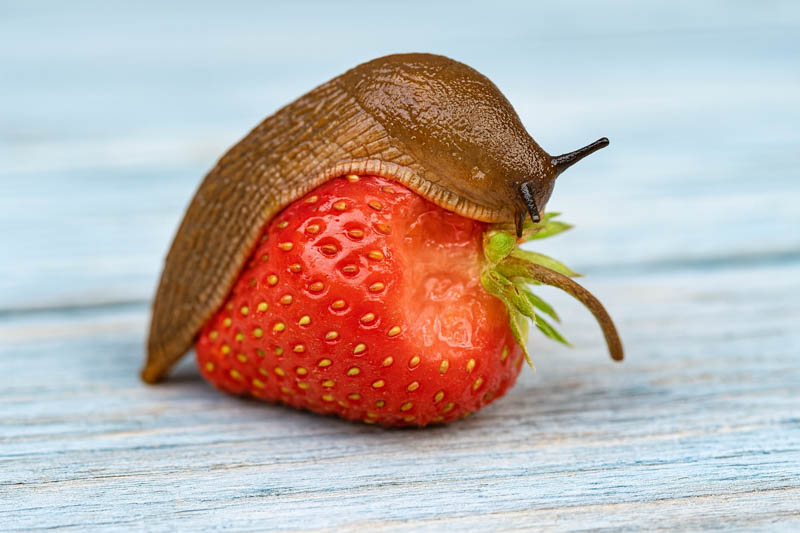
Slug eating a strawberry

Pests and Problems in Pots

Containers dodge many soil issues, but a few visitors still try their luck.

  • Slugs/snails: Elevate pots, keep rims clean, hand-pick in the morning. Copper tape on raised shelves can help.
  • Aphids and spider mites: Flare under heat and drought. Keep moisture steady, mist-rinse aphids early, and support beneficial insects with companion flowers.
  • Gray mold: Improve airflow, mulch lightly, water at the base, pick promptly, and remove soft fruit immediately.
  • Birds: Drape lightweight netting over a simple hoop, or move baskets under an eave a day before ripening.

Climate & Overwintering Containers

Strawberries are hardy, but roots in pots feel colder than roots in the ground. Plan a little winter strategy by zone.
  • Zones 7–9: Many day-neutrals and alpines winter on the patio with a deep mulch over the crown once the soil cools. Keep pots off saturated ground.
  • Zones 4–6: After the first hard frosts, move pots against a wall, cluster together, and insulate with leaves or straw. You can tuck pots in an unheated garage or shed where temperatures hover just below 40–45°F. Water lightly once a month if the mix is bone-dry.
  • Very cold snaps: Wrap containers with burlap or frost cloth. Avoid sunny thaws followed by deep freezes, which heave crowns—consistent cold is safer than freeze–thaw cycles.

Strawberry Picking, Strawberry, Strawberries, Strawberry Harvest, Fragaria x anassa

Harvest, Storage, and Simple Kitchen Wins

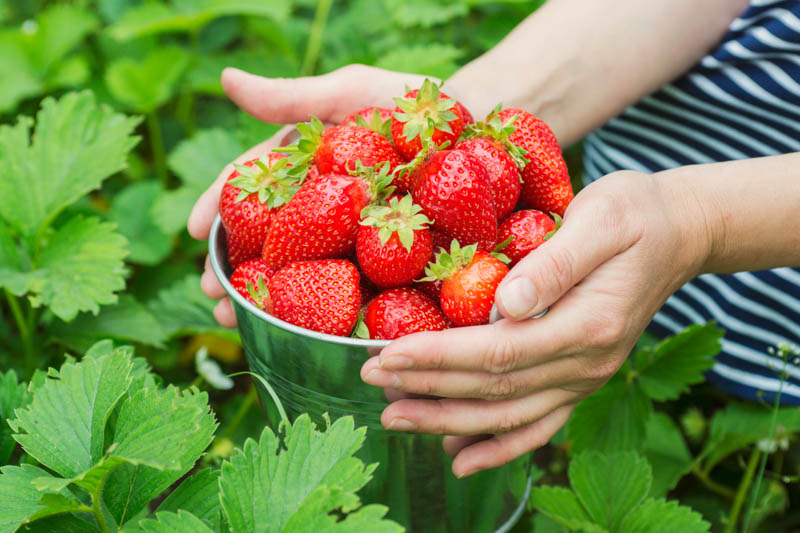
  • Pick when berries are fully colored to the shoulders and fragrant. They do not sweeten off the plant.
  • Morning harvesting gives you firm, cool fruit. Slip berries into the shade right away.
  • Short storage: a paper-towel-lined container in the fridge for 2–3 days. Don’t wash until serving.
  • Speedy dessert: sliced berries, a teaspoon of sugar, and a squeeze of lemon over yogurt or shortcake. For a glam moment, blend a quick coulis and drizzle on anything creamy.

Design Ideas for Small Spaces

  • Window box duo: One box of day-neutrals for steady snacks, one box of alpines for perfume and garnish.
  • Hanging basket bar: 2–3 baskets with different varieties—an Albion for size, a pineberry for novelty, and an alpine for aroma.
  • Strawberry tower: A vertical planter with integrated drip emitters; stir in a few trailing thyme plugs for pollinators and beauty.

Troubleshooting (Fast Fixes)

  • Tiny, seedy berries: Usually heat/drought stress or low light. Increase morning water, provide afternoon shade, and feed lightly. Ensure at least 6 hours of direct sun.
  • Mushy berries: Overwatering or hot, humid spells. Improve airflow, water in the morning only, harvest a touch earlier, and cool fruit promptly.
  • Lots of leaves, few berries: Too much nitrogen or too little sun. Shift to lower-n feeds and relocate to a brighter spot.
  • Plants “stalling” in midsummer heat: Offer dappled afternoon shade and maintain steady moisture. Production resumes as nights cool.

Care Calendar for Containers

Season Tasks
Late winter–early spring Refresh potting mix (partial or full), top-dress with compost, set drip/soaker, plant new crowns or replace oldest plants
Spring–early summer Mulch lightly, water evenly, feed low-dose every 3–4 weeks, pick at full color, remove soft fruit promptly
Midsummer Add afternoon shade if scorching, maintain moisture, pinch runners to keep pots productive
Fall Root a few runners in small pots to replace aging plants, tidy foliage, light compost top-dress
Winter Cluster pots, insulate, or move to an unheated shelter; water sparingly to prevent desiccation

Choosing Varieties by Taste and Use

  • Classic dessert, steady snacking: Day-neutrals like Albion or Seascape.
  • Perfumed garnishes and kid-friendly nibbling: Alpines (F. vesca).
  • Conversation starter: Pineberries in a mixed bowl.

Curious about the broader strawberry world? Explore types and care here: Strawberries — Benefits, Uses, Varieties & Care. Interested in the wild parents of modern strawberries? Read about Fragaria chiloensis (beach strawberry) and Fragaria virginiana (scarlet strawberry).

Frequently Asked Questions

How many plants per pot?

One plant in a 12–16 in pot; three in an 18–24 in bowl; two or three in a 12–14 in hanging basket. More plants = more crowding and smaller berries.

Do I need to replace the soil every year?

Refresh at least the top third each spring with fresh mix and compost. Replace completely every 2–3 years or when drainage declines.

Can I keep strawberries indoors?

They need strong sun and cool nights. A very bright sunroom with supplemental light may work, but outdoor containers usually yield far better.

Do I have to net containers?

Not always. Hanging baskets close to the house often avoid damage. If birds are bold, a lightweight net over a simple hoop solves it.

My day-neutral stopped in the heat—did I do something wrong?

No. Many pause flowering in extreme heat. Keep moisture steady and provide afternoon shade; they’ll resume as nights cool.


A One-Page Checklist (Clip-and-Grow)

  • Pick day-neutral or everbearing types for long container seasons; add an alpine or pineberry for fun.
  • Use a 12–16 in pot per plant (or 18–24 in bowl for three); guarantee strong drainage.
  • Fill with soilless mix + compost + perlite; set crowns at soil level; mulch lightly.
  • Full sun with light afternoon shade in hot climates; water deeply at the base.
  • Feed lightly every 3–4 weeks in season; pinch runners in year one.
  • Harvest at full color and fragrance; cool promptly; don’t wash until serving.
  • Overwinter by clustering and insulating pots or moving them to an unheated shelter.

With a few handsome pots, a bag of good mix, and a couple of well-chosen varieties, you can turn any sunny corner into a strawberry patch that delivers from late spring into fall. Keep the crowns at the right height, the soil evenly moist, and your scissors ready for the occasional runner—and you’ll be spooning ruby slices over breakfast long after the market berries fade. Happy growing.


References & Further Reading (Research-Based)

Updated: September 16, 2025 • Reviewed by Gardenia Editors

Guide Information

Hardiness 4 - 9
Plant Type Fruits, Perennials
Plant Family Rosaceae
Genus Fragaria
Season of Interest Spring (Late), Summer (Early, Mid, Late), Fall
Characteristics Semi-Evergreen, Fruit & Berries
Landscaping Ideas Beds And Borders, Hanging Baskets, Patio And Containers
Garden Styles City and Courtyard, Informal and Cottage

Best Strawberry Plant Types for Your Garden

Fragaria x ananassa ‘Albion’ (Day Neutral Strawberry)
Fragaria x ananassa ‘Seascape’ (Day Neutral Strawberry)
Fragaria ‘Fort Laramie’ (Everbearing Strawberry)
Fragaria ‘Ozark Beauty’ (Everbearing Strawberry)
Fragaria × ananassa ‘Tristan’ (Everbearing Strawberry)
Fragaria × ananassa ‘Gasana’ (Everbearing Strawberry)
Fragaria × ananassa ‘Ruby Ann’ (Everbearing Strawberry)
Fragaria × ananassa ‘Toscana’ (Everbearing Strawberry)
Fragaria × ananassa ‘Berried Treasure Pink’ (Everbearing Strawberry)
Fragaria × ananassa ‘Quinault’ (Everbearing Strawberry)
Fragaria x ananassa ‘Tristar’ (Everbearing Strawberry)
Fragaria vesca (Wild Strawberry)
Fragaria vesca ‘Mara des Bois’ (Wild Strawberry)
Fragaria vesca ‘Mignonette’ (Wild Strawberry)
Fragaria vesca ‘Alexandria’ (Wild Strawberry)
Fragaria vesca ‘Golden Alexandria’ (Wild Strawberry)
Fragaria vesca ‘Yellow Wonder’ (Wild Strawberry)
Fragaria x ananassa Pineberry

Recommended Companion Plants

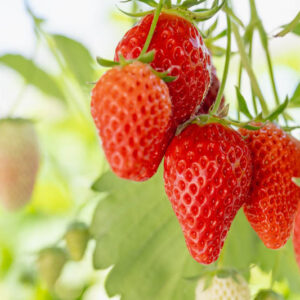
Fragaria x ananassa (Strawberries)
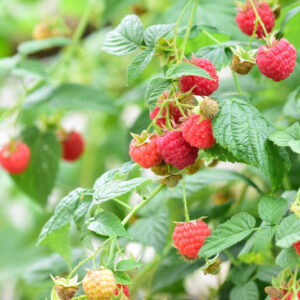
Rubus idaeus (Raspberries)
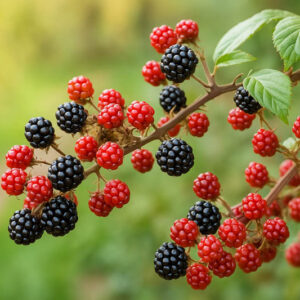
Rubus fruticosus agg. (Blackberries)

Recommended Guides

Best Strawberry Companion Plants (and Ones to Avoid)
Strawberry Types: Choose the Right Variety
Peppers That Thrive in Containers, Pots, and Tiny Gardens
Beautiful Palm Trees and Cycads for your Containers
Miniature and Very Small Hostas for Gardens and Containers
13 Types of Chrysanthemum for a splash of fall color in gardens and containers
Pretty Sedges for your Containers
Great Japanese Maples for Containers
Pretty Clematis for your Containers
Compare All Fragaria (Strawberry)
Compare Now
While every effort has been made to describe these plants accurately, please keep in mind that height, bloom time, and color may differ in various climates. The description of these plants has been written based on numerous outside resources.

Guide Information

Hardiness 4 - 9
Plant Type Fruits, Perennials
Plant Family Rosaceae
Genus Fragaria
Season of Interest Spring (Late), Summer (Early, Mid, Late), Fall
Characteristics Semi-Evergreen, Fruit & Berries
Landscaping Ideas Beds And Borders, Hanging Baskets, Patio And Containers
Garden Styles City and Courtyard, Informal and Cottage
Compare All Fragaria (Strawberry)
Compare Now

Related Items

Please Login to Proceed

You Have Reached The Free Limit, Please Subscribe to Proceed

Subscribe to Gardenia

To create additional collections, you must be a paid member of Gardenia
  • Add as many plants as you wish
  • Create and save up to 25 garden collections
Become a Member

Plant Added Successfully

Your garden is taking shape. Unlock full planning.

You’ve reached the free limit. Upgrade for $25/year to add as many plants as you wish and save up to 25 garden collections. Unlock Annual Membership

Update Your Credit
Card Information

Cancel

Create a New Collection

Sign Up to Our Newsletter

    You have been subscribed successfully

    Join Gardenia.net

    Create a membership account to save your garden designs and to view them on any device.

    Becoming a contributing member of Gardenia is easy and can be done in just a few minutes. If you provide us with your name, email address and the payment of a modest $25 annual membership fee, you will become a full member, enabling you to design and save up to 25 of your garden design ideas.

    Join now and start creating your dream garden!

    Join Gardenia.net

    Create a membership account to save your garden designs and to view them on any device.

    Becoming a contributing member of Gardenia is easy and can be done in just a few minutes. If you provide us with your name, email address and the payment of a modest $25 annual membership fee, you will become a full member, enabling you to design and save up to 25 of your garden design ideas.

    Join now and start creating your dream garden!

    Find your Hardiness Zone

    Find your Heat Zone

    Find your Climate Zone