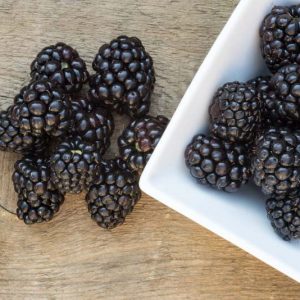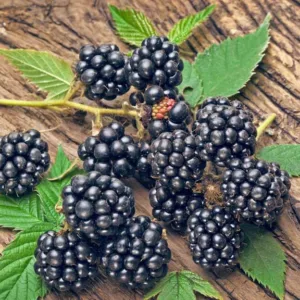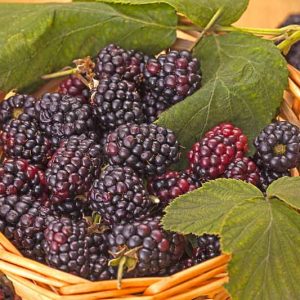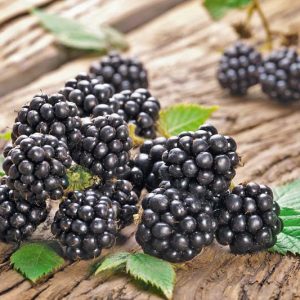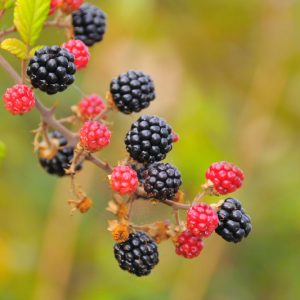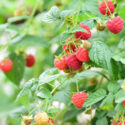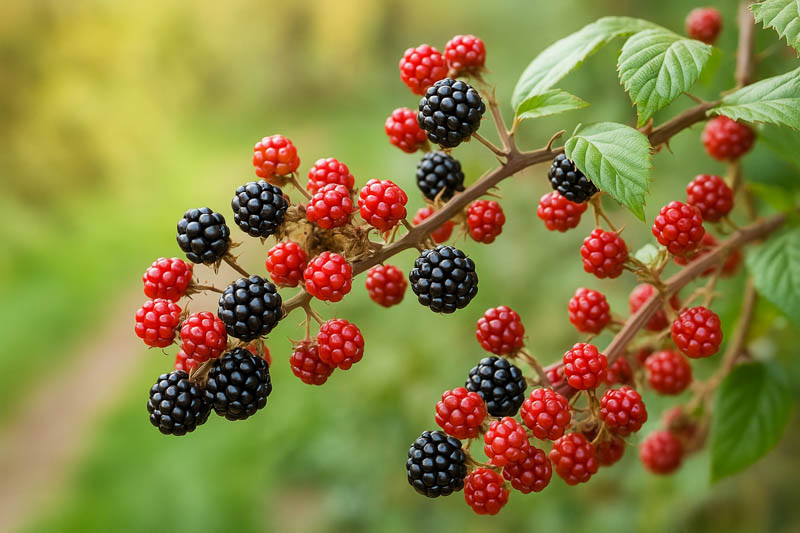
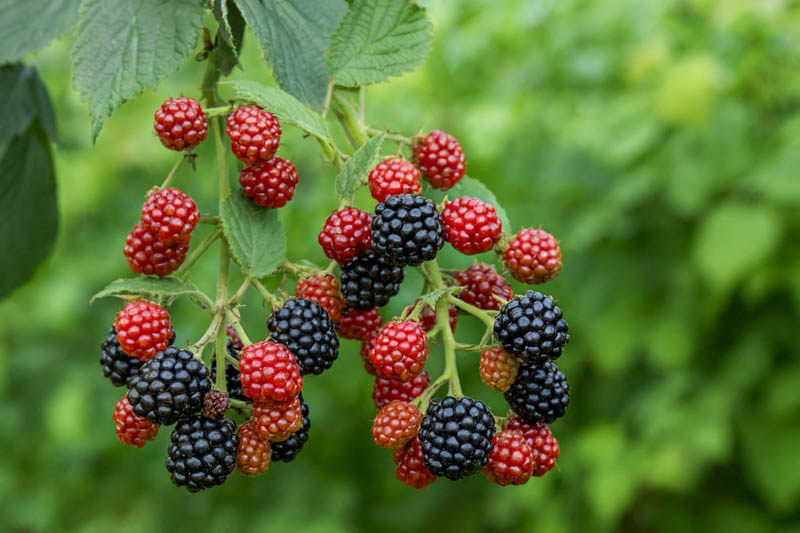



Summary: Vigorous brambles that deliver sweet-tart clusters on second-year canes (floricanes); some modern cultivars fruit on first-year primocanes, too. Thornless selections tame the wild, while trailing types shine on fences and trellises. See the full guide: Blackberry — Uses, Varieties & Care.
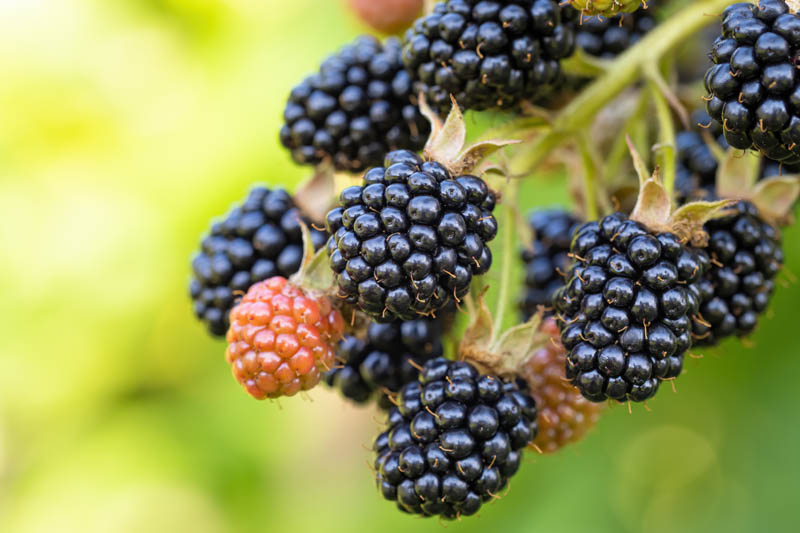
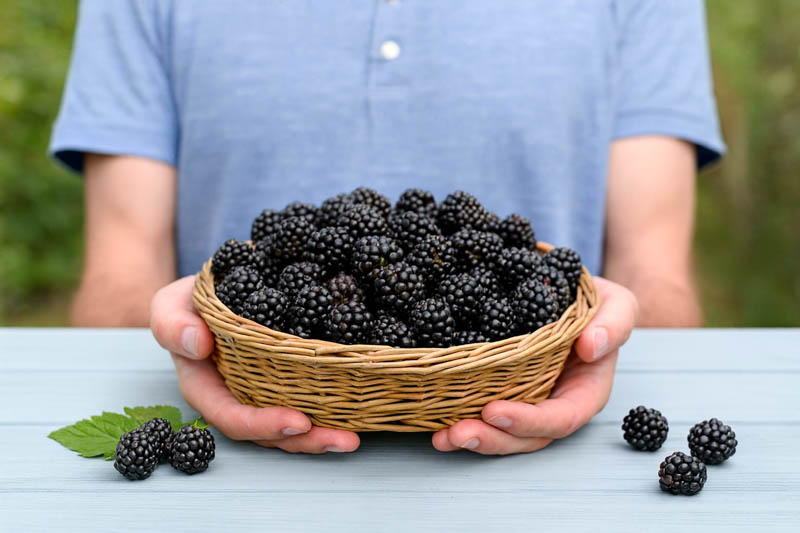
Taste: Juicy, winey-sweet with foresty spice.
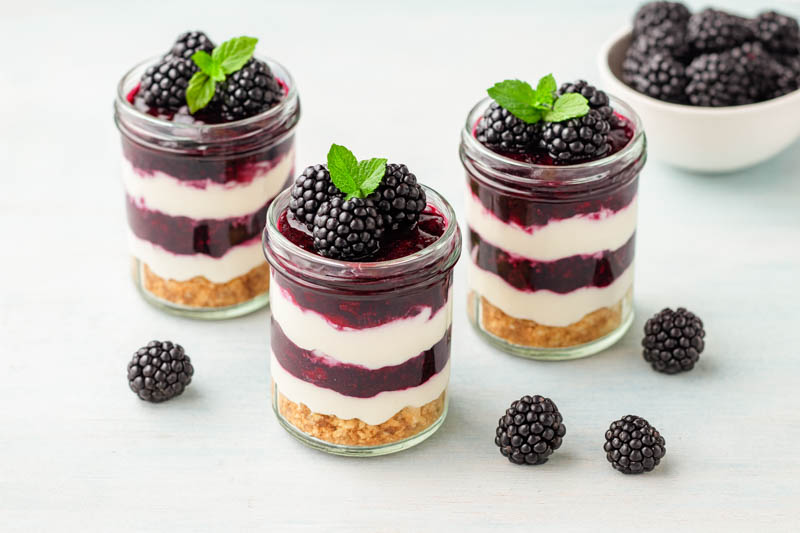
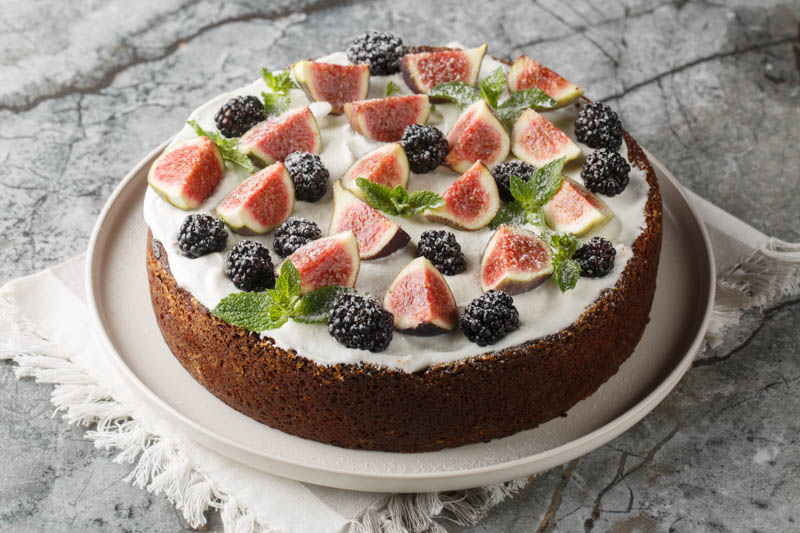
Use: Fresh eating, blackberry jam, pie, crumble, cobbler, compote, syrups, vinegars, and homemade blackberry brandy.
Safety: Fruit edible; many types are thorny—gloves recommended.
| Botanical Name | Rubus fruticosus aggregate (species complex & hybrids) |
|---|---|
| Family | Rosaceae (Rose family) |
| Common Names | Blackberry, Bramble, Brambleberry, European Blackberry, Common Blackberry, Shrub Blackberry, Dewberry (sometimes) |
| Native Range | Europe & Western Asia; widely naturalized in North America, Australia, and New Zealand |
| Plant Type & Habit | Deciduous bramble; arching, erect, or trailing canes; spreads by suckers and tip-layering (type-dependent) |
| Hardiness (USDA) | Generally 5–9 (varies by cultivar; a few to 4; primocane types favor warmer zones) |
| Size | Canes 3–10 ft (1–3 m); spread 3–10 ft (1–3 m) with age |
| Sun & Exposure | Full sun (6–8 hrs); light afternoon shade in hot-summer climates |
| Soil | Fertile, well-drained loam; slightly acidic–neutral (pH ~5.5–7.0); raised rows aid drainage |
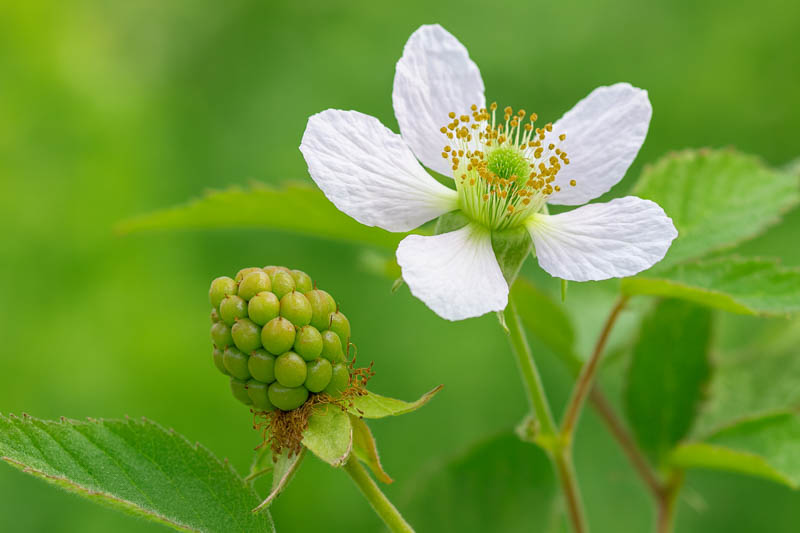
| Bloom & Fruit | White to blush flowers in late spring; berries ripen early–late summer by region/cultivar |
| Fruit Seasons | Floricane types: One main summer crop on 2nd-year canes. Primocane-fruiting: Late-summer to fall on current-year canes (e.g., ‘Prime-Ark’ series); optional spring crop if canes overwinter. |
| Wildlife | Abundant nectar for pollinators; fruit relished by birds & small mammals; thickets provide cover |
| Toxicity | Fruit edible and safe; leaves sometimes used for mild teas (use moderation; seek guidance during pregnancy) |
| Invasiveness | Vigorous; contain with edging, pruning, and trellising; check local guidance |
| Primary Uses | Fresh bowls, blackberry jam, pie/crumble/cobbler, blackberry compote, syrups, vinegars, and blackberry brandy |
If you’ve ever wandered home with purple fingertips and a grin you can’t hide, you already speak blackberry. This guide is your friendly, no-fluff roadmap—from picking the right type and trellising like a pro to pruning without panic, dodging pests, and turning bowlfuls into pie, jam, cobbler, and compote. Ready?
Blackberries belong to Genus Rubus (the brambles), which also includes red raspberries (R. idaeus) and the deeply aromatic black raspberry (R. occidentalis). “Rubus fruticosus agg.” signals a group of closely related blackberry species and hybrids. For a quick overview of uses, types, and care, start with our dedicated page: Blackberry — Uses, Varieties & Care.
| Category | Why choose it | Example Cultivars |
|---|---|---|
| Erect | Sturdy, upright canes; easy picking; good for small gardens. | ‘Navaho’, ‘Arapaho’, ‘Apache’ (mostly thornless) |
| Semi-erect | Heavy yields; responds well to two-wire trellis. | ‘Triple Crown’, ‘Chester Thornless’, ‘Natchez’ |
| Trailing | Fence/trellis required; superb dessert quality in many regions. | ‘Marion’, ‘Olallie’, ‘Logan’, ‘Tayberry’ (hybrids) |
| Primocane-fruiting | Late summer–fall harvest on current-year canes; simplest pruning (mow). | ‘Prime-Ark® Freedom’, ‘Prime-Ark® Traveler’ |
| Thornless | Kid-friendly, easy harvesting and tying. | ‘Chester Thornless’, ‘Triple Crown’, ‘Navaho’ |
Want a flavor tour? Regional blackberry royalty includes marionberry (PNW) and boysenberry (California)—technically hybrids, but beloved in blackberry kitchens.
For most home gardens, two stout end posts with two or three parallel wires (≈24/36/48 inches high) is perfect. Tie canes loosely with soft ties. Trailing types weave beautifully along a fence; primocane-fruiting types do great on a straightforward two-wire setup.
Pruning is just matching actions to cane age—once you see it, you can’t unsee it.
Floricane (traditional) blackberries
Primocane-fruiting blackberries — one-crop method (easiest)
Two-crop option: Leave primocanes after fall harvest for a smaller spring crop on lower nodes the next year; then remove them and let the new canes carry fall.
No yard? No problem—compact, thornless, or primocane types thrive in large planters.
Blackberry blossoms are bee magnets, but the right neighbors supercharge fruit set and keep pests guessing.
Airflow, sanitation, and steady moisture solve most bramble problems. Here’s your short list with deep dives:
| Season | Tasks |
|---|---|
| Late winter (dormant) | Choose pruning strategy (floricane vs. primocane one-crop). Remove dead/spent canes. Repair trellis. Add compost; renew mulch. |
| Spring | Tie new canes; thin for spacing; set drip/soaker; watch for aphids; keep rows narrow (18–24 in). |
| Early–mid summer | Harvest floricane crop; remove fruited canes promptly; manage weeds; scout SWD as temps rise. |
| Late summer–fall | Harvest primocane crop every 1–2 days; chill fruit promptly; maintain airflow by tying and light thinning. |
| Fall | Sanitize dropped fruit/leaves; top up mulch; note which cultivars performed best for next year. |
| Anytime | Keep crowns visible; keep mulch off canes; re-tie after storms; spot-remove diseased canes. |
Wildlife: Blackberry hedges hum with life—flowers feed pollinators; thickets shelter small birds; ripe fruit is irresistible to robins and thrushes. If your breakfast plans collide with theirs, netting right as berries blush keeps the peace.
Toxicity & Pets: The fruit is edible and beloved. Leaves see light use in herbal teas; as with any herb, practice moderation and seek medical guidance during pregnancy. Small servings of fruit are generally safe for dogs; avoid sugar-laden blackberry products.
Yes. Most cultivated blackberries are self-fertile; a second variety can boost yield slightly and spread harvest but isn’t required for fruit set.
Floricane types bear in early to mid-summer on second-year canes. Primocane-fruiting types ripen late summer into fall on the current year’s canes (plus an optional small spring crop if those canes overwinter).
Modern thornless selections are excellent. Connoisseurs may chase the ‘spice’ of some thorny types, but garden favorites like ‘Triple Crown’ and ‘Chester Thornless’ deliver terrific flavor.
Choose a primocane-fruiting variety and mow all canes to the ground in late winter. You’ll enjoy one generous fall crop on new canes—clean and easy.
Common causes: drought during fruit swell, inadequate sunlight, old/overcrowded canes, or poor pollination. Water evenly, thin hard, and keep canes tied into the light.
Yes—use a 15–25+ gallon pot, a thornless or primocane variety, a sturdy trellis, rich high-drainage mix, and steady watering.
Crowns and roots can remain productive 10–15+ years with good renewal pruning and care; individual canes live two seasons.
They can spread by suckers and tip-layering. Choose garden cultivars, install edging, prune spent canes promptly, and remove wanderers.
Quick wins: stovetop blackberry compote, skillet crumble, a tiny jar of jam, or freeze in batches until you have a pie’s worth.
Final word: Give blackberries sun, drainage, and a simple trellis. Prune to the cane calendar. Mulch, water steady, pick often. Do that, and the only real “problem” you’ll have is deciding between pie, crumble, cobbler, jam—or all of the above.
| Hardiness |
4 - 9 |
|---|---|
| Plant Type | Fruits, Shrubs |
| Plant Family | Rosaceae |
| Genus | Rubus |
| Common names | Blackberry |
| Exposure | Full Sun, Partial Sun |
| Season of Interest | Summer (Early, Mid, Late), Fall |
| Height | 3' - 10' (90cm - 3m) |
| Spread | 3' - 10' (90cm - 3m) |
| Spacing | 36" - 72" (90cm - 180cm) |
| Maintenance | Average |
| Water Needs | Average |
| Soil Type | Chalk, Clay, Loam, Sand |
| Soil pH | Acid, Neutral |
| Soil Drainage | Moist but Well-Drained, Well-Drained |
| Characteristics | Showy, Fruit & Berries |
| Native Plants | United Kingdom |
| Attracts | Bees, Butterflies, Birds |
| Toxic to Humans | No known toxicity |
| Toxic to Cats | No known toxicity |
| Toxic to Dogs | No known toxicity |
| Toxic to Horses | No known toxicity |
| Hardiness |
4 - 9 |
|---|---|
| Plant Type | Fruits, Shrubs |
| Plant Family | Rosaceae |
| Genus | Rubus |
| Common names | Blackberry |
| Exposure | Full Sun, Partial Sun |
| Season of Interest | Summer (Early, Mid, Late), Fall |
| Height | 3' - 10' (90cm - 3m) |
| Spread | 3' - 10' (90cm - 3m) |
| Spacing | 36" - 72" (90cm - 180cm) |
| Maintenance | Average |
| Water Needs | Average |
| Soil Type | Chalk, Clay, Loam, Sand |
| Soil pH | Acid, Neutral |
| Soil Drainage | Moist but Well-Drained, Well-Drained |
| Characteristics | Showy, Fruit & Berries |
| Native Plants | United Kingdom |
| Attracts | Bees, Butterflies, Birds |
| Toxic to Humans | No known toxicity |
| Toxic to Cats | No known toxicity |
| Toxic to Dogs | No known toxicity |
| Toxic to Horses | No known toxicity |
Create a membership account to save your garden designs and to view them on any device.
Becoming a contributing member of Gardenia is easy and can be done in just a few minutes. If you provide us with your name, email address and the payment of a modest $25 annual membership fee, you will become a full member, enabling you to design and save up to 25 of your garden design ideas.
Join now and start creating your dream garden!
Create a membership account to save your garden designs and to view them on any device.
Becoming a contributing member of Gardenia is easy and can be done in just a few minutes. If you provide us with your name, email address and the payment of a modest $25 annual membership fee, you will become a full member, enabling you to design and save up to 25 of your garden design ideas.
Join now and start creating your dream garden!