

Why create this garden
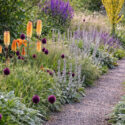
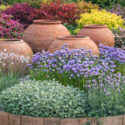
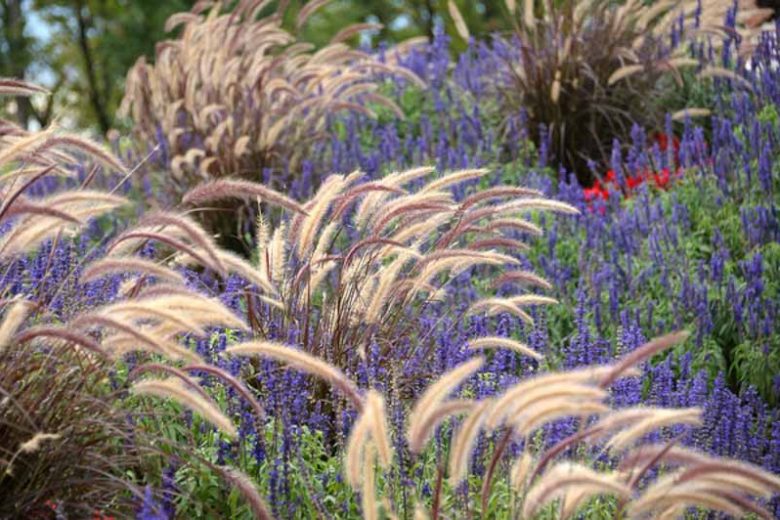
If you want a long-lasting, low-care display that looks polished and modern, this duo is an ideal choice. Both plants thrive in full sun, handle heat and drought once established, and ask for very little maintenance. Salvia farinacea brings steady blooms and pollinator activity, while Purple Fountain Grass supplies structure and graceful motion.
Drought-tolerant does not mean no-water. Water both plants regularly their first season. After establishment, water deeply and less often so roots chase moisture down. How to Build a Beautiful Drought Tolerant Garden
Key plants and their roles
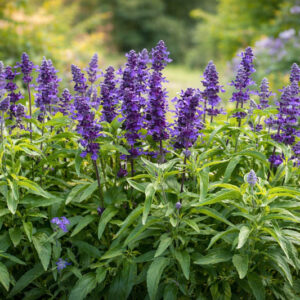
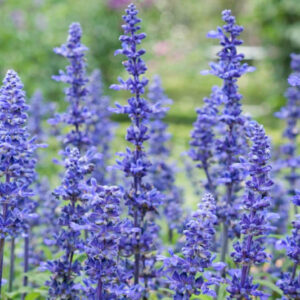
Salvia farinacea (Mealy-Cup Sage)
- Plant type: Tender herbaceous perennial, often grown as an annual.
- Native range: Central and southwestern United States and Mexico.
- Role in the garden: Spires of purple-blue flowers add vertical accents and long-lasting color. A magnet for bees, butterflies, and other pollinators, it turns your border into a lively feeding station. Compact, reliable, and ideal for repeating to create rhythm.
- Drought performance: Moderately drought-tolerant once established; responds best to deep, infrequent watering and sharp drainage. In containers, expect more frequent water.
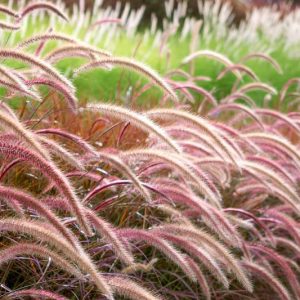
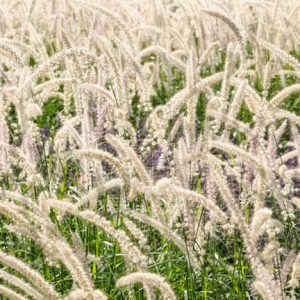
Pennisetum setaceum (Purple Fountain Grass)
- Plant type: Warm-season perennial grass, often grown as an annual in cooler climates.
- Native range: Regions of Africa and southwestern Asia.
- Role in the garden: Arching foliage and soft, foxtail plumes bring movement, volume, and a rich contrast to upright salvias. Frames beds and paths beautifully and glows in evening light.
- Drought performance: Very heat- and drought-tolerant once established, especially in reflected-heat sites. Needs full sun and well-drained soil.
Planting tips
- Sunlight: Full sun is essential for strong color and sturdy growth.
- Soil: Well-drained soils are non-negotiable. Lean or sandy conditions are ideal; avoid soggy sites.
- Establishment: Water regularly the first season to build deep roots; mulch 2 inches, keeping mulch off crowns.
- Watering rhythm after establishment: In hot, dry weather, water deeply every 10–14 days; lengthen the interval if your soil holds moisture well.
- Maintenance: Deadhead Salvia to extend flowering. Shear lightly if plants tire in midsummer. Grow both as annuals where winters are cold, or lift and overwinter containers.
This stylish pairing offers bold color, soft motion, and pollinator appeal with minimal effort, giving your summer garden a vibrant, textural edge. Discover How you can Create a Thriving Pollinator Haven in your Own Backyard