Wild Strawberry 'Golden Alexandria', Alpine Strawberry 'Golden Alexandria', Fraise Des Bois 'Golden Alexandria', Wood Strawberry 'Golden Alexandria'
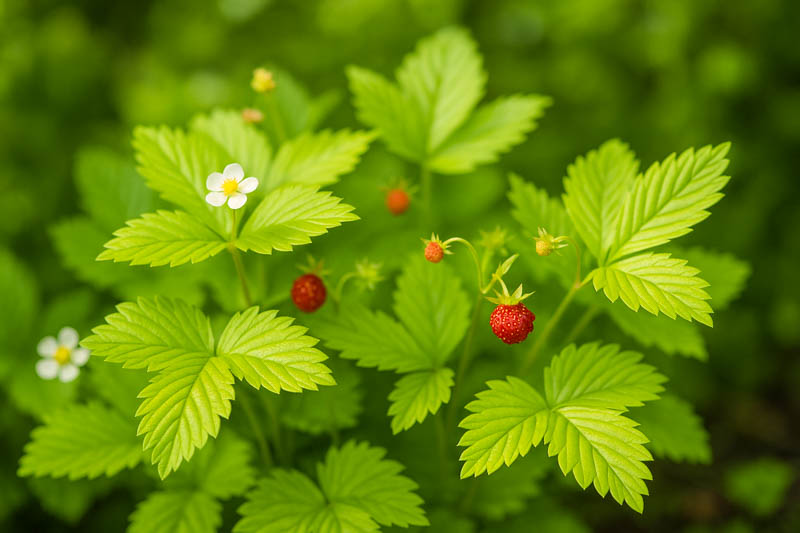
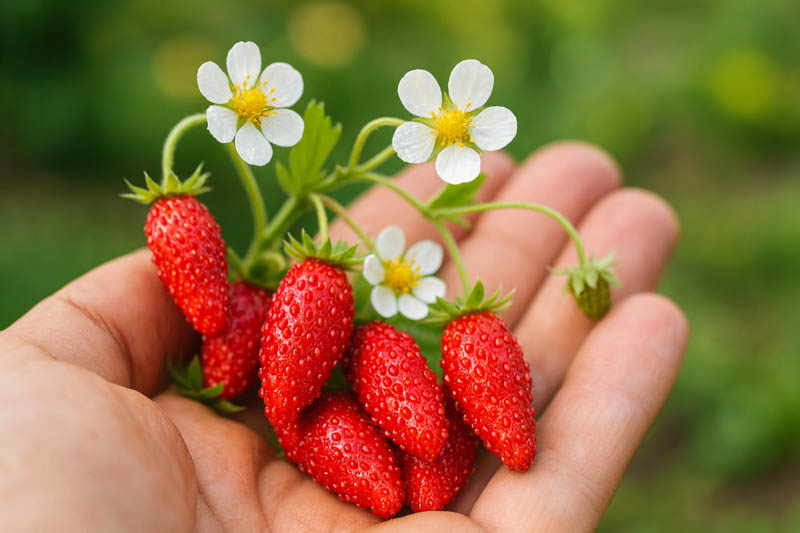


Summary: ‘Golden Alexandria’ is a wild strawberry with luminous chartreuse foliage and sweet, bite-size red berries. It’s compact and typically runnerless, so it behaves beautifully in borders, containers, and as an edible groundcover that lights up shade. Day-neutral plants fruit in repeated waves from summer into fall.
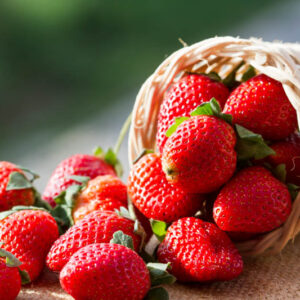
Taste: Very sweet, aromatic, classic wild-strawberry flavor.
Use: Edible edging, rock and woodland gardens, patio pots, garnish, small-batch preserves.
Safety: Fully edible; same allergy considerations as other strawberries.
| Botanical Name | Fragaria vesca ‘Golden Alexandria’ |
|---|---|
| Family | Rosaceae (Rose family) |
| Common Names | Golden alpine strawberry, Wild strawberry, Woodland strawberry |
| Plant Type & Habit | Compact herbaceous perennial; clumping, usually runnerless; tidy mounds |
| Hardiness (USDA) | Generally Zones 5–9 (mulch crowns in colder areas) |
| Size | Height 8-10 in (20-25 cm); spread 12-15 in (30-37 cm) per crown; berries to ~1 in (3 cm) |
| Sun & Exposure | Best foliage color in bright morning sun with afternoon shade; tolerates partial shade; protect from harsh midafternoon sun to prevent scorch |
| Soil | Rich, well-drained, evenly moist; ideal pH ~6.0–6.8; mulch to keep fruit clean |
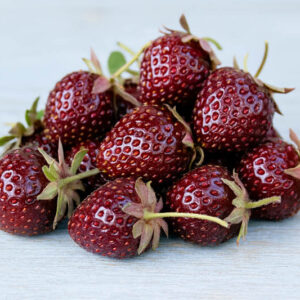
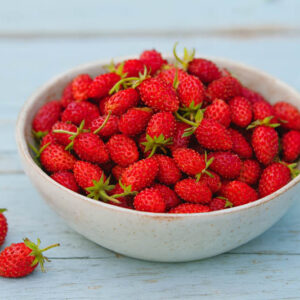
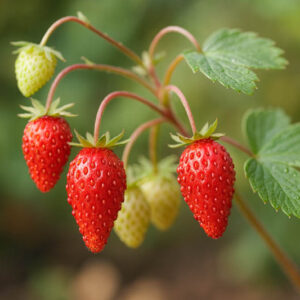
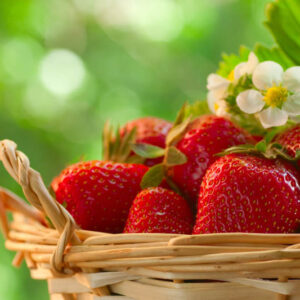
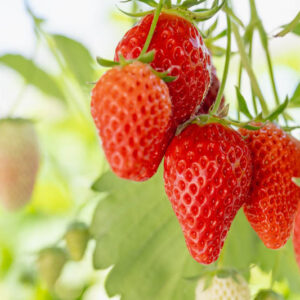
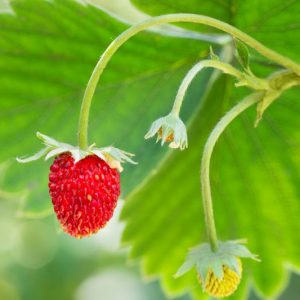
| Bloom & Fruit | White flowers; deep red, elongated berries with strong aroma (aggregate accessory fruits with achenes on the surface) |
| Season | Day-neutral; harvest in waves from summer into fall (may pause in extreme heat) |
| Pollination | Self-fertile; bee activity improves fruit size and fill |
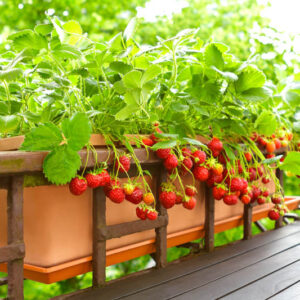
| Primary Uses | Edible edging, woodland paths, mixed containers, hanging baskets, color-contrast groundcover |
Imagine the look on visitors’ faces when your “groundcover” flashes sunny chartreuse leaves dotted with ruby fruits. ‘Golden Alexandria’ is a mood-lifter—a true edible ornamental. It keeps the perfume and sweetness of classic wild strawberries, but the foliage brings a designer’s touch to shady edges, patio pots, and pathside ribbons. Because plants are typically runnerless, they stay where you place them, producing repeated handfuls of berries from summer through fall without trying to take over the bed.
‘Golden Alexandria’ belongs to Fragaria vesca, the dainty wild strawberry native across Europe and beyond. It’s a day-neutral wild selection that trades supersized fruit for frequency, fragrance, and finesse—plus that luminous chartreuse foliage. The gold color is brightest in bright but gentle light; deep shade softens leaves toward lime green, while harsh midday sun can scorch the leaf margins. In other words, treat it like a shade-loving variegate: morning sun, dappled afternoons, and steady moisture are the sweet spot.
| Feature | F. vesca ‘Golden Alexandria’ (Wild/Alpine) | F. × ananassa (Garden) |
|---|---|---|
| Fruit size | Small, elongated, intensely aromatic | Medium to very large, broad range of textures |
| Bearing habit | Day-neutral; repeated waves summer–fall (heat may pause) | June-bearing, everbearing, or day-neutral types |
| Growth habit | Compact, typically runnerless clumps | Vigorous; many send runners |
| Best uses | Edging, shade-brightening groundcover, containers | High-yield beds for fresh eating and preserving |
| Ornamental value | High—showy golden leaves + red fruit | Moderate—mostly green foliage |
Like other alpines, the berries deliver vitamin C, fiber, and a bouquet of aromatic compounds that make simple dishes taste special. A handful perfumes yogurt or panna cotta, muddles beautifully into lemonade or spritzes, and turns into vivid syrups or coulis. The edible flowers lend a delicate strawberry note to salads, ice cubes, and garnishes—great for brunch boards and summer drinks.
Pick when berries are fully colored and detach with a gentle tug. Morning harvests are most fragrant. Chill promptly and enjoy within a couple of days for best texture. ‘Golden Alexandria’ excels fresh, but it also makes dazzling small-batch jam, quick syrups for pancakes or cocktails, and delicate dried chips for tea blends. Pro tip: a few berries on a cheese plate sing against creamy goat cheese and a drizzle of honey.
Ideal for Zones 5–8. In cold regions, mulch crowns after the soil cools for winter, then pull mulch back at first spring growth. In hot regions, afternoon shade and steady moisture prevent leaf scorch and fruit stall. Because the foliage is bright, berries can be more visible to birds than on green-leaved types—netting may be helpful in heavy-pressure areas.
Wild strawberries are generally resilient when grown with airflow and clean mulch. Keep an eye on familiar issues:
Play up the gold foliage by pairing with deep purples and cool blues. Think burgundy Heuchera, purple basil, or violet violas, with a drift of white alyssum at the path’s edge. The contrast makes the berries pop—and the pollinators happy. For crop neighbors, gentle companions are best. See Best Strawberry Companion Plants (and Ones to Avoid) for a full rundown.
| Season | Tasks |
|---|---|
| Late winter–early spring | Stratify and sow seeds indoors (optional); divide vigorous clumps; top-dress with compost; set drip or soaker lines |
| Spring–early summer | Mulch lightly; maintain even moisture; begin regular picking as berries color |
| Midsummer | Provide afternoon shade in hot spells; expect a brief pause in extreme heat; clip tired leaves after heavy flush; refresh mulch |
| Fall | Enjoy final harvests; tidy foliage; thin or divide crowded clumps; top-dress with compost |
| Winter | Mulch crowns after soil cools in cold climates; pull mulch back at first spring growth |
The best gold shows in bright, gentle light. Deep shade softens leaves to lime; harsh midday sun can scorch. Morning sun with afternoon shade is ideal.
Typically yes. Plants form neat clumps without sending runners, which keeps maintenance low and makes them perfect for edging and containers.
Many strains come true from seed. Cold-stratify 3–4 weeks, then provide bright light and 65–75°F. Germination can take several weeks; first fruit often arrives the first fall from an early sowing.
No. ‘Golden Alexandria’ is self-fertile. Bee activity still improves fruit size and shape.
Sometimes, yes—the contrast can be eye-catching. In high-pressure areas, drape light netting as fruit begins to color.
Plant a ribbon of ‘Golden Alexandria’ where you walk every day. The golden leaves will catch your eye, the scent will slow your step, and those tiny red jewels will remind you why homegrown strawberries taste like summer itself—one luminous handful at a time.
| Hardiness |
5 - 9 |
|---|---|
| Heat Zones |
1 - 8 |
| Climate Zones | 2, 2B, 3, 3A, 3B, 4, 5, 6, 7, 8, 9, 14, 15, 16, 17, 18, 19, 20, 21, 22, 23, 24, H2 |
| Plant Type | Fruits |
| Plant Family | Rosaceae |
| Genus | Fragaria |
| Common names | Strawberry, Wild Strawberry |
| Exposure | Full Sun, Partial Sun |
| Season of Interest | Spring (Late), Summer (Early, Mid, Late) |
| Height | 8" - 10" (20cm - 25cm) |
| Spread | 1' - 2' (30cm - 60cm) |
| Spacing | 10" - 12" (25cm - 30cm) |
| Maintenance | Average |
| Water Needs | Average |
| Soil Type | Clay, Loam, Sand |
| Soil pH | Acid, Neutral |
| Soil Drainage | Moist but Well-Drained |
| Characteristics | Semi-Evergreen, Fruit & Berries |
| Tolerances | Heat, Fire |
| Attracts | Bees, Birds |
| Garden Uses | Edging, Ground Covers, Patio And Containers |
| Garden Styles | Informal and Cottage |
| Toxic to Humans | No known toxicity |
| Toxic to Cats | Not toxic |
| Toxic to Dogs | Not toxic |
| Toxic to Horses | Not toxic |


| Hardiness |
5 - 9 |
|---|---|
| Heat Zones |
1 - 8 |
| Climate Zones | 2, 2B, 3, 3A, 3B, 4, 5, 6, 7, 8, 9, 14, 15, 16, 17, 18, 19, 20, 21, 22, 23, 24, H2 |
| Plant Type | Fruits |
| Plant Family | Rosaceae |
| Genus | Fragaria |
| Common names | Strawberry, Wild Strawberry |
| Exposure | Full Sun, Partial Sun |
| Season of Interest | Spring (Late), Summer (Early, Mid, Late) |
| Height | 8" - 10" (20cm - 25cm) |
| Spread | 1' - 2' (30cm - 60cm) |
| Spacing | 10" - 12" (25cm - 30cm) |
| Maintenance | Average |
| Water Needs | Average |
| Soil Type | Clay, Loam, Sand |
| Soil pH | Acid, Neutral |
| Soil Drainage | Moist but Well-Drained |
| Characteristics | Semi-Evergreen, Fruit & Berries |
| Tolerances | Heat, Fire |
| Attracts | Bees, Birds |
| Garden Uses | Edging, Ground Covers, Patio And Containers |
| Garden Styles | Informal and Cottage |
| Toxic to Humans | No known toxicity |
| Toxic to Cats | Not toxic |
| Toxic to Dogs | Not toxic |
| Toxic to Horses | Not toxic |
How many Fragaria vesca ‘Golden Alexandria’ (Wild Strawberry) do I need for my garden?
| Plant | Quantity | |
|---|---|---|
| Fragaria vesca ‘Golden Alexandria’ (Wild Strawberry) | N/A | Buy Plants |
Create a membership account to save your garden designs and to view them on any device.
Becoming a contributing member of Gardenia is easy and can be done in just a few minutes. If you provide us with your name, email address and the payment of a modest $25 annual membership fee, you will become a full member, enabling you to design and save up to 25 of your garden design ideas.
Join now and start creating your dream garden!
Create a membership account to save your garden designs and to view them on any device.
Becoming a contributing member of Gardenia is easy and can be done in just a few minutes. If you provide us with your name, email address and the payment of a modest $25 annual membership fee, you will become a full member, enabling you to design and save up to 25 of your garden design ideas.
Join now and start creating your dream garden!