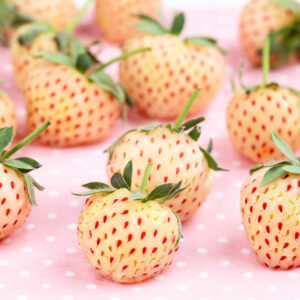
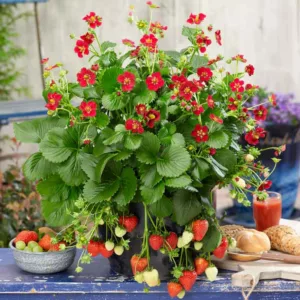
Wild Strawberry 'Alexandria', Alpine Strawberry 'Alexandria', Fraise Des Bois 'Alexandria', Wood Strawberry 'Alexandria'
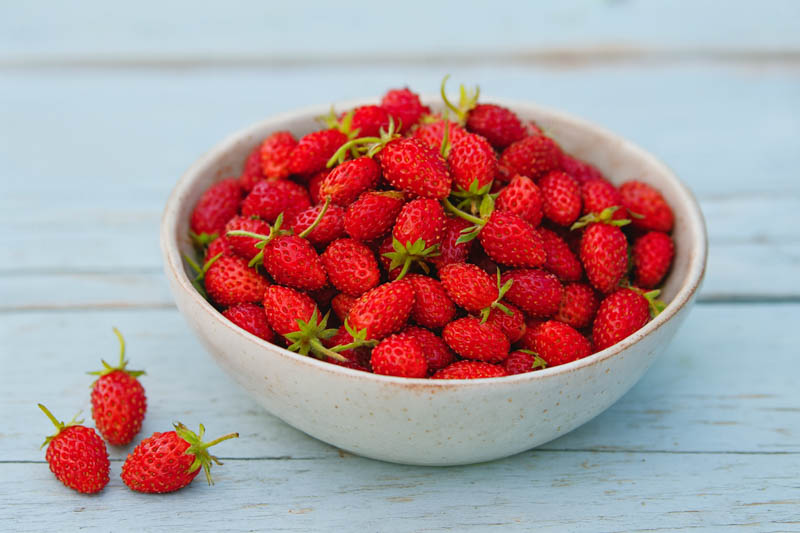
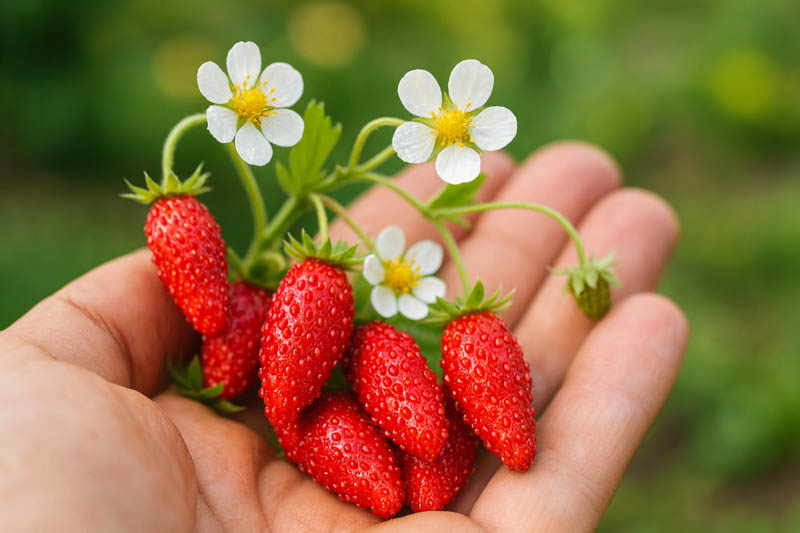


Summary: ‘Alexandria’ is a beloved wild strawberry that packs vivid, candy-sweet flavor into jewel-red, bite-size fruit. Compact, runnerless plants stay where you put them and fruit repeatedly from midsummer into fall in beds, rock gardens, and containers.
Taste: Very sweet, aromatic, classic wild-strawberry notes.
Use: Fresh nibbling, garnishes, tarts, small-batch jam, syrups, tea, and kid-friendly snacks.
Safety: Edible; same allergy considerations as other strawberries.
| Botanical Name | Fragaria vesca ‘Alexandria’ |
|---|---|
| Family | Rosaceae (Rose family) |
| Common Names | Alpine strawberry, Wild strawberry, Woodland strawberry |
| Plant Type and Habit | Compact herbaceous perennial; clumping, runnerless; tidy mounds for edging and pots |
| Hardiness (USDA) | Zones 5–8; mulch crowns well for winter in cold regions |
| Size | Height 8–10 in (20–25 cm); spread 14–18 in (35–45 cm) per crown; berries to about 1 in (3 cm) |
| Sun and Exposure | Full sun for best fruit; in hot regions provide afternoon shade |
| Soil | Well-drained loam rich in organic matter; ideal pH 6.5–6.8; keep evenly moist and mulched |
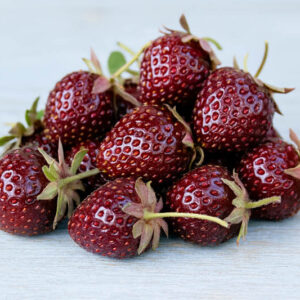
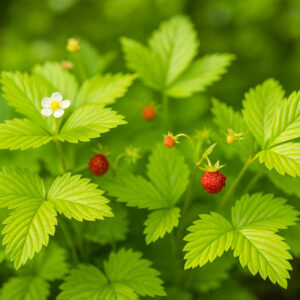
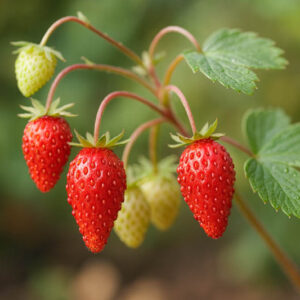
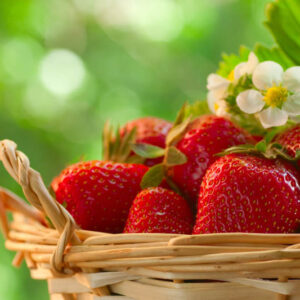
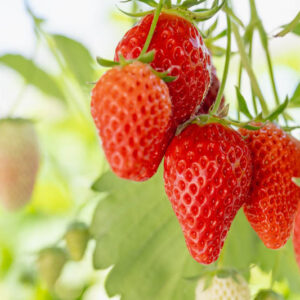
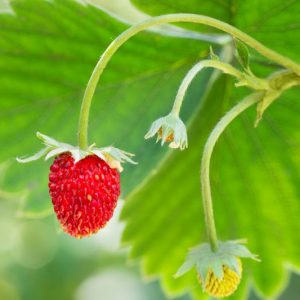
| Bloom and Fruit | White blossoms; deep red, elongated berries with strong aroma |
| Season | Day-neutral; harvest midsummer through October; may rest in peak heat |
| From Seed | Often fruits the first fall from a late-winter sowing; otherwise by the second spring |
| Pollination | Self-fertile; bees boost size and uniformity |
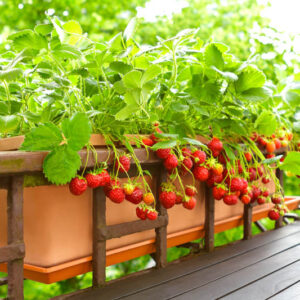
| Primary Uses | Rock gardens, along walkways, window boxes, hanging baskets, edging, children’s gardens |
‘Alexandria’ is the wild or alpine strawberry that wins hearts fast. The fruit is tiny by supermarket standards, sure, but each berry is a flavor firework. You’ll catch yourself detouring past the bed to see what’s blushing, then popping a few warm berries like candy. The plants behave beautifully in tight spaces, they don’t run all over, and they look good doing it, which makes them a dream for paths, pots, and patio edges.
‘Alexandria’ belongs to the species Fragaria vesca, the dainty wild strawberry native across Europe and beyond. As a day-neutral wild selection, it trades supersized fruit for a longer season and concentrated flavor. Plants stay runnerless, forming tidy mounds instead of sprawling mats. Compared with some other wild strawberries, ‘Alexandria’ is a bit less cold-hardy and heat-tolerant, so it appreciates winter mulch in cold zones and a touch of shade during high summer in hot regions. Start from seed and you can see your first handful of berries the first fall, with a bigger show the following spring.
| Feature | F. vesca ‘Alexandria’ (Wild) | F. × ananassa (Garden) |
|---|---|---|
| Fruit size | Small, elongated, intensely sweet | Medium to very large, wide flavor range |
| Bearing habit | Day-neutral; midsummer–fall with heat pause possible | June-bearing, everbearing, or day-neutral |
| Growth habit | Compact, runnerless clumps | Vigorous, many send runners |
| Best uses | Edging, containers, garnishes | Large harvests, preserving |
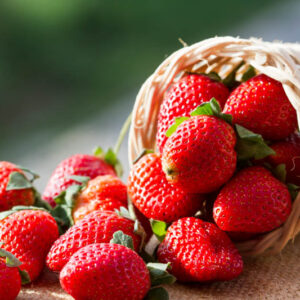
These petite berries deliver vitamin C, fiber, and antioxidant compounds in a fragrant package. Because ‘Alexandria’ fruits are small and highly aromatic, a handful goes a long way. Scatter them over panna cotta or yogurt, muddle with mint for lemonade, simmer into syrups, or dry a few for delicate tea blends. Edible flowers lend a mild strawberry flavor to salads and drinks.
Pick when berries are fully colored, glossy, and detach with a gentle tug. Morning harvests are most fragrant. Chill promptly and enjoy within a couple of days for best texture. These berries shine fresh but also excel in small-batch jam, quick syrups, and as a finishing flourish on tarts, cheesecakes, and cocktails. Flowers are edible and bring a whisper of strawberry to salads and desserts.
Ideal for zones 5–8. In cold climates, mulch crowns well after the soil cools for winter. In hot regions, a bit of afternoon shade and steady moisture keep plants productive. Compared with some alpines, ‘Alexandria’ is less extreme-cold or extreme-heat tolerant, so those simple tweaks make a big difference.
Like many wild strawberry selections, ‘Alexandria’ shows good general disease resistance when grown with air circulation and clean mulch. Still, keep an eye on the usual suspects.
| Season | Tasks |
|---|---|
| Late winter to early spring | Stratify and sow seeds; prepare beds with compost; divide and replant clumps; set drip or soaker lines |
| Spring to early summer | Mulch lightly; maintain even moisture; begin regular picking as berries color |
| Midsummer | Expect a brief pause in extreme heat; provide shade cloth if needed; refresh mulch; clip tired leaves after flush |
| Fall | Enjoy final harvests; tidy foliage; thin or divide crowded clumps; top-dress with compost |
| Winter | Mulch crowns after soil cools in cold climates; pull mulch back at first spring growth |
Yes. Plants form neat clumps without sending out runners, which keeps maintenance low and makes them perfect for edging and containers.
With a late-winter sowing and a short chill period, many gardeners see a light crop by the first fall. The second spring brings heavier picking.
It’s happiest in zones 5–8. Provide afternoon shade and steady moisture in hot regions, and mulch crowns well for winter in colder areas.
No. ‘Alexandria’ is self-fertile, though bee activity improves size and shape.
Like many alpines, ‘Alexandria’ has good general resistance when grown with airflow, clean mulch, and even moisture.
Plant a ribbon of ‘Alexandria’ where you pass every day. You’ll find yourself scanning for those tiny red gems, plucking a few on the way to the door, and remembering why homegrown strawberries taste like summer itself. Small fruit, big joy. That is the alpine promise.
| Hardiness |
5 - 8 |
|---|---|
| Heat Zones |
1 - 8 |
| Climate Zones | 2, 2B, 3, 3A, 3B, 4, 5, 6, 7, 8, 9, 14, 15, 16, 17, 18, 19, 20, 21, 22, 23, 24, H2 |
| Plant Type | Fruits |
| Plant Family | Rosaceae |
| Genus | Fragaria |
| Common names | Strawberry, Wild Strawberry |
| Exposure | Full Sun, Partial Sun |
| Season of Interest | Spring (Late), Summer (Early, Mid, Late) |
| Height | 8" - 10" (20cm - 25cm) |
| Spread | 1' - 2' (30cm - 60cm) |
| Spacing | 10" - 12" (25cm - 30cm) |
| Maintenance | Average |
| Water Needs | Average |
| Soil Type | Clay, Loam, Sand |
| Soil pH | Acid, Neutral |
| Soil Drainage | Moist but Well-Drained |
| Characteristics | Semi-Evergreen, Fruit & Berries |
| Tolerances | Heat, Fire |
| Attracts | Bees, Birds |
| Garden Uses | Edging, Ground Covers, Patio And Containers |
| Garden Styles | Informal and Cottage |
| Toxic to Humans | No known toxicity |
| Toxic to Cats | Not toxic |
| Toxic to Dogs | Not toxic |
| Toxic to Horses | Not toxic |


| Hardiness |
5 - 8 |
|---|---|
| Heat Zones |
1 - 8 |
| Climate Zones | 2, 2B, 3, 3A, 3B, 4, 5, 6, 7, 8, 9, 14, 15, 16, 17, 18, 19, 20, 21, 22, 23, 24, H2 |
| Plant Type | Fruits |
| Plant Family | Rosaceae |
| Genus | Fragaria |
| Common names | Strawberry, Wild Strawberry |
| Exposure | Full Sun, Partial Sun |
| Season of Interest | Spring (Late), Summer (Early, Mid, Late) |
| Height | 8" - 10" (20cm - 25cm) |
| Spread | 1' - 2' (30cm - 60cm) |
| Spacing | 10" - 12" (25cm - 30cm) |
| Maintenance | Average |
| Water Needs | Average |
| Soil Type | Clay, Loam, Sand |
| Soil pH | Acid, Neutral |
| Soil Drainage | Moist but Well-Drained |
| Characteristics | Semi-Evergreen, Fruit & Berries |
| Tolerances | Heat, Fire |
| Attracts | Bees, Birds |
| Garden Uses | Edging, Ground Covers, Patio And Containers |
| Garden Styles | Informal and Cottage |
| Toxic to Humans | No known toxicity |
| Toxic to Cats | Not toxic |
| Toxic to Dogs | Not toxic |
| Toxic to Horses | Not toxic |
How many Fragaria vesca ‘Alexandria’ (Wild Strawberry) do I need for my garden?
| Plant | Quantity | |
|---|---|---|
| Fragaria vesca ‘Alexandria’ (Wild Strawberry) | N/A | Buy Plants |
Create a membership account to save your garden designs and to view them on any device.
Becoming a contributing member of Gardenia is easy and can be done in just a few minutes. If you provide us with your name, email address and the payment of a modest $25 annual membership fee, you will become a full member, enabling you to design and save up to 25 of your garden design ideas.
Join now and start creating your dream garden!
Create a membership account to save your garden designs and to view them on any device.
Becoming a contributing member of Gardenia is easy and can be done in just a few minutes. If you provide us with your name, email address and the payment of a modest $25 annual membership fee, you will become a full member, enabling you to design and save up to 25 of your garden design ideas.
Join now and start creating your dream garden!