Create Your Garden

36 Drought Tolerant Grasses to Grow. Save Water, Add Wow

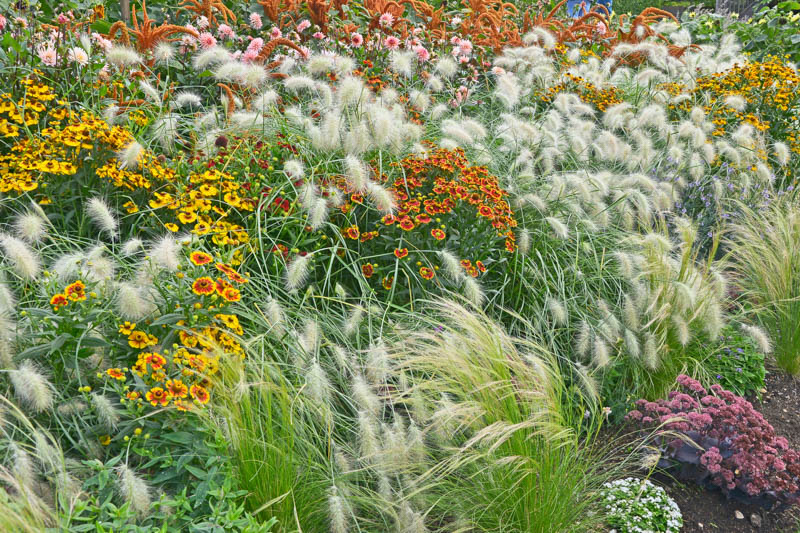
From blue grama to pink muhly, meet drought tolerant grasses that thrive with little water and big style. Your border, upgraded.
Drought, Drought tolerant grasses, Drought tolerant plants, Drought tolerant garden

36 Drought-Tolerant Grasses For Movement, Texture, And Low-Water Ease

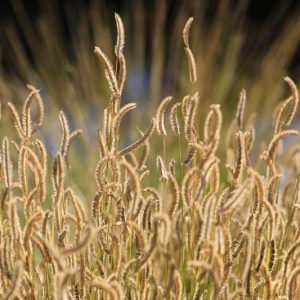
Water-wise does not mean sparse or stiff. Ornamental grasses turn dry spells into design opportunities. Plant once, water deeply while they settle in, then enjoy rippling texture, luminous seedheads, and four-season structure with little fuss. This guide gathers standout drought-tolerant grasses plus practical, real-world tips that keep them happy in lean conditions.

Why Choose Drought-Tolerant Grasses

Perennials bring flowers, but grasses bring rhythm. They frame borders, knit planting beds together, and stay good-looking through heat, wind, and long gaps between rain. Drought-tolerant grasses are built to sip water slowly, ride out stress, and bounce back fast after a soak. Think of them as your garden’s metronome and backbone in one.

  • Lower water use – deep or fibrous roots cruise through dry spells once established.
  • Less upkeep – no weekly deadheading and minimal staking.
  • Design impact – motion, light-catching plumes, and bold clumps that read from a distance.
  • Habitat value – nectar-adjacent support for pollinators, seeds for birds, and shelter for beneficials.
Good to know
Even the toughest grass needs steady moisture in the first season. After the roots dive, you can cut the irrigation way back.

What Makes A Grass Drought Tolerant

Dryland grasses keep their cool with clever adaptations. When you spot these traits, you are already choosing winners for thirsty sites.

  • Leaf smarts – narrow blades reduce surface area, blue or silver waxes reflect the sun, and vertical leaves shed heat.
  • Root systems – deep taproots or dense fibrous mats find and store moisture that shallow roots miss.
  • Built-in brakes – many grasses slow growth in peak heat, then surge after summer storms.
  • Stems that stand – tough culms handle wind and do not flop when watering is light.
  • Seedhead strategy – airy panicles and plumes still look great if bloom is modest during drought.
Quick cue
Blue, gray, or rolling blades often signal drought savvy. If the foliage feels wiry or narrow, that is another good sign.

Guide Information

Plant Type Ornamental Grasses
Tolerance Drought

36 Drought-Tolerant Grasses To Trust

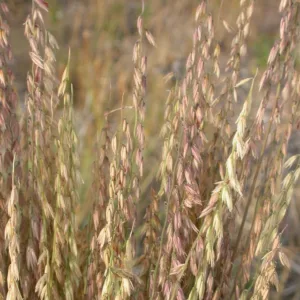
Bouteloua gracilis (Blue Grama)
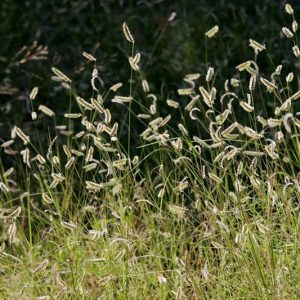
Bouteloua curtipendula (Side-Oats Grama)
Bouteloua hirsuta (Hairy Grama)
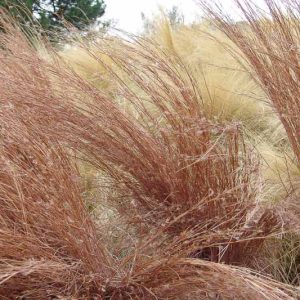
Schizachyrium scoparium (Little Bluestem)
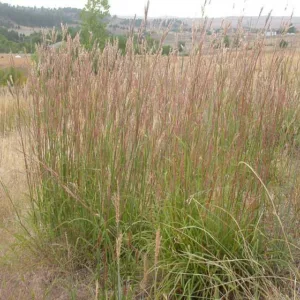
Andropogon gerardii (Big Bluestem)
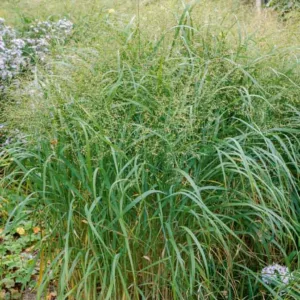
Panicum virgatum (Switchgrass)
Sporobolus heterolepis (Prairie Dropseed)
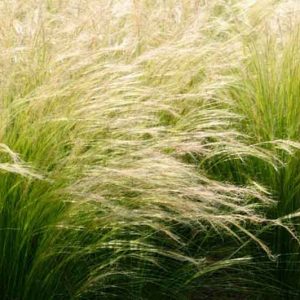
Stipa tenuissima (Mexican Feather Grass)
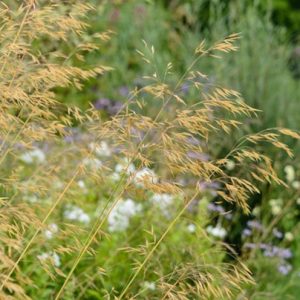
Stipa gigantea (Golden Oats)
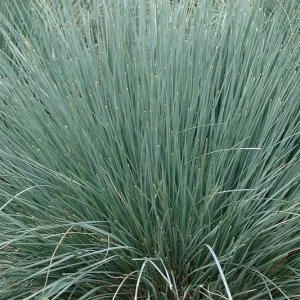
Helictotrichon sempervirens (Blue Oat Grass)
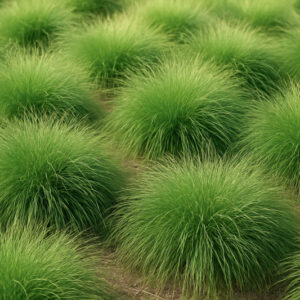
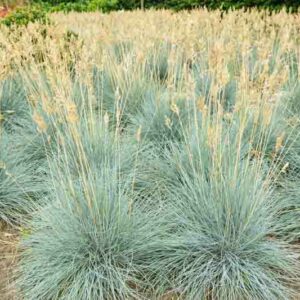
Festuca glauca ‘Elijah Blue’ (Blue Fescue)
Festuca mairei (Atlas Fescue)
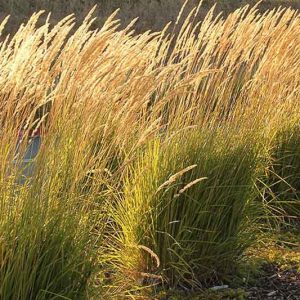
Calamagrostis x acutiflora ‘Karl Foerster’ (Feather Reed Grass)
Pennisetum alopecuroides (Fountain Grass)
Pennisetum orientale (Oriental Fountain Grass)
Muhlenbergia capillaris (Pink Muhly Grass)
Muhlenbergia rigens (Deer Grass)
Eragrostis spectabilis (Purple Love Grass)
Koeleria macrantha (Prairie Junegrass)
Leymus arenarius (Blue Lyme Grass)
Melica californica (California Melic Grass)
Deschampsia cespitosa (Tufted Hair Grass)
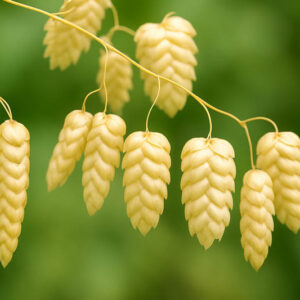
Briza media (Quaking Grass)
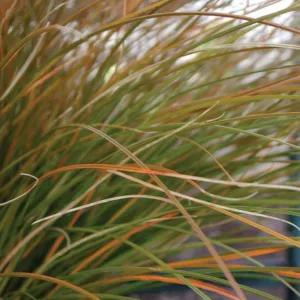
Carex testacea (New Zealand Hair Sedge)
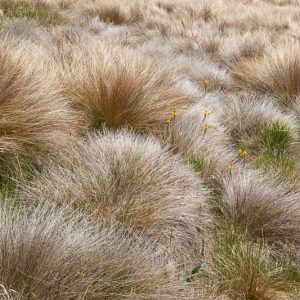
Chionochloa rubra (Red Tussock Grass)
Molinia caerulea subsp. arundinacea (Moor Grass)
Ophiopogon japonicus (Mondo Grass)
Pennisetum setaceum ‘Rubrum’ (Purple Fountain Grass)
Pennisetum villosum (Feathertop Grass)
Sorghastrum nutans (Indian Grass)
Stipa arundinacea (New Zealand Wind Grass)
Stipa barbata (Silver Feather Grass)
Stipa calamagrostis (Spear Grass)
Stipa ichu (Peruvian Feather Grass)
Uniola paniculata (Sea Oats)
Miscanthus sinensis (Chinese Silver Grass)

Quick Compare: Drought-Tolerant Grasses By Need

Need Great Grasses Notes
Hot full sun Little Bluestem, Blue Grama, Switchgrass Lean soil and drainage keep clumps upright and colorful.
Architectural plumes Golden Oats, Feather Reed GrassChinese Silver Grass* *Check regional rules or sterile selections where invasiveness is a concern.
Coastal wind and salt American Beach Grass, Sea Oats, Bitter Switchgrass Thrives in sandy soils and sea breeze exposure.
Wildlife friendly Prairie Dropseed, Switchgrass, Big Bluestem Seeds feed birds, and clumps shelter beneficial insects.
Light shade or open woodland California Melic Grass, Atlas Fescue Accepts dappled sun if soil drains well.
Containers and courtyards Hardy Fountain Grass*, Blue Fescue, Mexican Feather Grass* Gritty potting mix and excellent drainage. *Check local advisories for planting restrictions.
Four-season structure Feather Reed Grass, Blue Oat Grass, Prairie Dropseed, Stands through winter and catches rime or light snow beautifully.

Regionality matters: Drought in the Southwest is different from drought in the Northeast. Match choices to your USDA zone, soil, and local guidance, and always verify regional restrictions before planting.
Cool-season vs warm-season:
Cool-season grasses (e.g., Calamagrostis, Helictotrichon) green up early and flower in late spring, then idle through peak heat; warm-season grasses (e.g., Panicum, Schizachyrium, Muhlenbergia, Pennisetum) wake later, color up with heat, and carry the show from midsummer into fall.

Discover more drought-tolerant plants with our Plant Finder

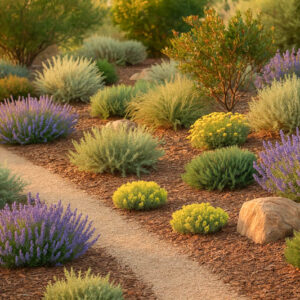
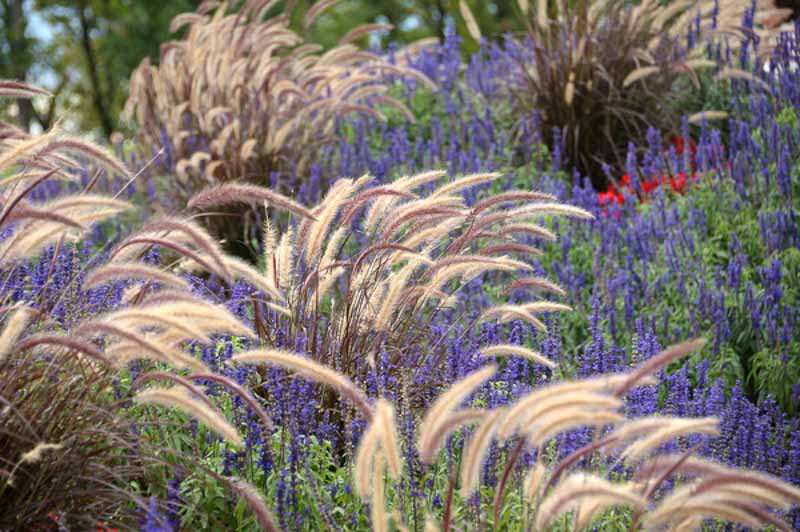
Water-wise border with salvia and grassesWater-wise border: Salvia & Fountain Grass

Site, Soil, And Planting For Success

Drought-tolerant does not mean drought-immune. A little prep up front buys a lot of forgiveness later.

  • Sun – most drought-hardy grasses want 6 or more hours of direct light.
  • Drainage – free-draining soil is nonnegotiable. Raise beds or add grit where water lingers.
  • Soil prep – loosen wide and plant slightly high. Amend only if the soil is truly poor, so you do not create a bathtub.
  • Planting depth – set crowns level with the nursery soil line. Burying crowns invites rot.
  • Water in – drench thoroughly at planting to settle soil around roots.
Soil pH note:
Most ornamental grasses tolerate a broad pH (≈6.0–7.8), but extremes wash out color and vigor—high pH can dull blue tones; very acidic soils can stunt growth. Adjust gently (lime or sulfur) or choose species adapted to your native pH. Blue-toned grasses keep color best in slightly alkaline to neutral soil with sharp drainage.
Establishment rule of thumb

Year 1 – deep and infrequent watering. Year 2 – cut frequency in half. Year 3 – water only during extended droughts.

Watering And Mulch Strategies

Your goal is deep roots, not pampered surface growth. That means long, infrequent soakings and mulch that moderates heat without smothering crowns.

  • Deep soaks – apply water slowly at the dripline so moisture penetrates 8 to 12 inches.
  • Spacing – give clumps room to breathe. Crowded plantings dry out faster and flop.
  • Mulch smart – gravel, crushed rock, or a thin layer of coarse organic mulch. Keep 3 to 4 inches away from crowns.
  • Timing – water early morning to reduce loss to evaporation.
  • Check by hand – dig a small test hole to confirm moisture depth rather than guessing from the surface.

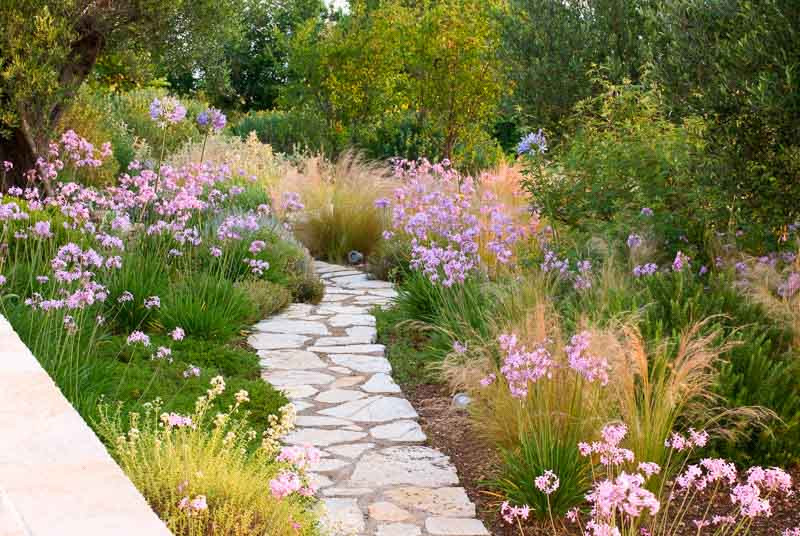
Garden Ideas, Landscaping Ideas, Drought Tolerant plants, Full sun plants, Mediterranean path, Mediterranean garden, Low water garden, Stipa tenuissima, Tubalghia violence, Society GarlicSociety Garlic, Mexican Feather Grass

Designing With Drought-Tolerant Grasses

Lean conditions are a design opportunity. Grasses earn their keep with motion, shadow play, and seedheads that glow at sunset.

  • Layer heights – low mounds in front, mid-height drama in the middle, tall screens at the back.
  • Palette – silvers and blue greens pair beautifully with tawny golds and burgundy accents.
  • Contrast – mix fine hair-like blades with bold clumps for a designer look.
  • Rhythm – repeat your best workhorses every 4 to 8 feet to pull the eye through the space.
  • Companions – weave in drought-tolerant perennials for seasonal color around the grasses’ bones.
Pollinator bonus

Grasses provide nesting material and structure, while nearby dry-garden perennials carry nectar. Together, they make a resilient habitat.

Smart Combinations That Thrive On Less Water

  • Prairie glow – Panicum virgatum with Echinacea and Rudbeckia for long bloom and gold fall color.
  • Silver and sky – Helictotrichon sempervirens with Perovskia atriplicifolia and Nepeta.
  • Feather and flame – Stipa gigantea behind Gaillardia and Hylotelephium for late summer punch.
  • Coastal tough – Leymus arenarius with Achillea and Santolina along hot drives and paths.
  • Soft movement – Muhlenbergia capillaris with Salvia greggii and small Agave for contrast.

Regional Notes And Cautions

  • Hardiness – confirm USDA zone before planting. What thrives in Zone 9 may sulk in Zone 5.
  • Invasiveness – some species spread aggressively in certain regions. Choose sterile cultivars or regionally approved species.
  • Coastal exposure – favor leathery or wiry foliage that shrugs off salt and wind.
  • Wildfire areas – follow local defensible-space guidelines, keep grasses well spaced, and deadhead/dethatch away from structures.
  • Wildlife – drought-tolerant does not equal deer-resistant. Expect sampling and design accordingly.
Native-alternative swap:
Where Miscanthus or Pennisetum setaceum are restricted, choose regionally native look-alikes: Panicum virgatum (switchgrass), Sporobolus heterolepis (prairie dropseed), Schizachyrium scoparium (little bluestem), Muhlenbergia (capillaris or lindheimeri), or Bouteloua (gracilis/curtipendula). For coastal sand-binders, prefer Ammophila breviligulata over Leymus arenarius.

Care And Maintenance Calendar

  • Late winter to early spring – cut back cool-season grasses before new growth. Warm-season types can wait until they show green at the base.
  • Late spring – deep soak if the season runs unusually dry. Top up gravel or coarse mulch.
  • Summer – water deeply during extended droughts. Resist the urge to overfertilize.
  • Fall – leave plumes for birds and winter drama. Stake only if necessary.
  • Winter – observe wind and drainage patterns. Plan moves in the spring if a site proves harsher than expected.
Cutback tip

Bundle clumps with twine before shearing. It is faster, cleaner, and protects new growth at the base.

Troubleshooting Dry-Garden Grasses

  • Flopping – too much fertility or shade. Reduce nitrogen and increase sun.
  • Yellowing blades – overwatering or poor drainage is likely. Improve aeration and water less often.
  • Weak color – many warm-season grasses color up with heat and lean soil. Be patient and avoid rich compost.
  • No plumes – cut back at the wrong time or too much shade. Learn if your grass is a cool or warm season and prune accordingly. Cool-season grasses (Calamagrostis, Helictotrichon) start early; cut back in late winter. Warm-season grasses (Panicum, Schizachyrium, Muhlenbergia) green up later; cut back just before new growth.
  • Winter heave – frost can lift crowns in wet soils. Refirm in early spring and add grit for drainage.
Plant once, edit later

Even with careful planning, a grass may reveal new preferences after a season. Shift underperformers in early fall or early spring rather than fighting the site.

Simple Steps To Start Today

  • Map full sun zones, hottest reflected heat, and any dry shade pockets.
  • Choose two structural grasses and one airy accent to repeat in a rhythm.
  • Prepare wide planting holes, set crowns high, and water in thoroughly.
  • Mulch with gravel or coarse chips and set a deep soak schedule.
  • Relax. You built a border that still looks alive when the weather does not.

Frequently Asked Questions

Do drought-tolerant grasses still need watering?

Yes, during the first growing season, while establishing roots. After that, most only need deep watering during extreme heat or very long dry spells. “Drought-tolerant” means low water, not zero water.

What are some easy drought-tolerant grasses for beginners?

Great starters include blue fescue, Mexican feather grass, little bluestem, pink muhly grass, prairie dropseed, and fountain grass. They are tough, adaptable, and low-maintenance.

Do drought-tolerant grasses stay green all year?

Some do, some do not. Many are deciduous and turn golden in winter for a beautiful texture. For evergreen options, try blue fescue, Atlas fescue, Helictotrichon (blue oat grass), or certain fountain grasses in warm zones.

Can drought-tolerant grasses grow in clay soil?

A few can with help. Improve drainage by planting slightly high, adding grit or compost, and avoiding soggy spots. Switchgrass or little bluestem handle clay better than most.

Can drought-tolerant grasses survive cold winters?

Many are very cold-hardy. Little bluestem, switchgrass, prairie dropseed, and Miscanthus thrive in Zones 4 to 5. Always check the USDA zone before planting.

Should I cut back drought-tolerant grasses?

Yes, most ornamental grasses benefit from a yearly cutback. Trim deciduous types in late winter or early spring before new growth. Evergreen types can be gently combed to remove dead blades.

Do drought-tolerant grasses spread or become invasive?

Some clump neatly, others spread by seed or rhizomes. Research your species before planting. Avoid invasive types in your region and choose sterile or well-behaved cultivars.

Can I grow drought-tolerant grasses in containers?

Absolutely. Choose compact varieties like blue fescue, dwarf fountain grass, or Mexican feather grass. Use a gritty, well-drained mix and water deeply, then allow to dry between waterings.

Are drought-tolerant grasses good for wildlife?

Yes. They provide seeds for birds, shelter for beneficial insects, and movement that attracts pollinators. Some, like switchgrass and prairie dropseed, support native ecosystems.

Wrap Up

Drought-tolerant grasses give you structure, movement, and glow for very little water. Choose the right species for your region, plant high in well-drained soil, water deeply the first season, and let their natural strengths do the rest. When heat rises and rain takes a vacation, your borders will still look composed, textural, and alive.

Updated: October 2025 • For gardeners who love beauty and hate babysitting

Drought-Tolerant Roses: The Best Low-Water Rose Bushes for Your Garden
How Drought-Tolerant is Hydrangea?
Drought Tolerant Palm Trees and Cycads
Highly Drought Tolerant plants for your Florida Native Garden
Desert Shrubs: Essential Plants for Dry Gardens
Desert Flowers: Bringing Color to Dry Gardens
North Carolina Native Trees for Dry Sites
North Carolina Native Shrubs for Dry Sites
Mid-Atlantic Gardening: Great Perennials for Dry Soil
Great North American Plants for Dry Soils in New England
Great Shrubs for Dry Soils in New England
Great Perennials as Companion Plants for Your Succulents
The Ultimate Guide to Drought-Tolerant Plants for a Beautiful Garden
Drought-Tolerant Trees That Thrive On Little Water
66 Drought-Tolerant Ground Covers for Low-Water Landscapes
42 Low-Water Annuals That Bloom for Months
45 Drought-Tolerant Flower Bulbs for Effortless, Low-Water Color
36 Drought Tolerant Grasses to Grow. Save Water, Add Wow
48 Perennials That Survive Drought (and Still Look Amazing)
42 Shrubs That Survive Drought (and Still Look Amazing)
The Ultimate Guide to Deer-Resistant Plants for a Beautiful Garden
While every effort has been made to describe these plants accurately, please keep in mind that height, bloom time, and color may differ in various climates. The description of these plants has been written based on numerous outside resources.

Guide Information

Plant Type Ornamental Grasses
Tolerance Drought

Related Items

Please Login to Proceed

You Have Reached The Free Limit, Please Subscribe to Proceed

Subscribe to Gardenia

To create additional collections, you must be a paid member of Gardenia
  • Add as many plants as you wish
  • Create and save up to 25 garden collections
Become a Member

Plant Added Successfully

Your garden is taking shape. Unlock full planning.

You’ve reached the free limit. Upgrade for $25/year to add as many plants as you wish and save up to 25 garden collections. Unlock Annual Membership

Update Your Credit
Card Information

Cancel

Create a New Collection

Sign Up to Our Newsletter

    You have been subscribed successfully

    Join Gardenia.net

    Create a membership account to save your garden designs and to view them on any device.

    Becoming a contributing member of Gardenia is easy and can be done in just a few minutes. If you provide us with your name, email address and the payment of a modest $25 annual membership fee, you will become a full member, enabling you to design and save up to 25 of your garden design ideas.

    Join now and start creating your dream garden!

    Join Gardenia.net

    Create a membership account to save your garden designs and to view them on any device.

    Becoming a contributing member of Gardenia is easy and can be done in just a few minutes. If you provide us with your name, email address and the payment of a modest $25 annual membership fee, you will become a full member, enabling you to design and save up to 25 of your garden design ideas.

    Join now and start creating your dream garden!
    Find your Hardiness Zone

    Find your Heat Zone

    Find your Climate Zone