Feather Reed Grass ‘Karl Foerster’, Karl Foerster Feather Reed Grass, Karl Foerster Grass, Calamagrostis arundinacea ‘Karl Foerster’, Calamagrostis ‘Stricta’

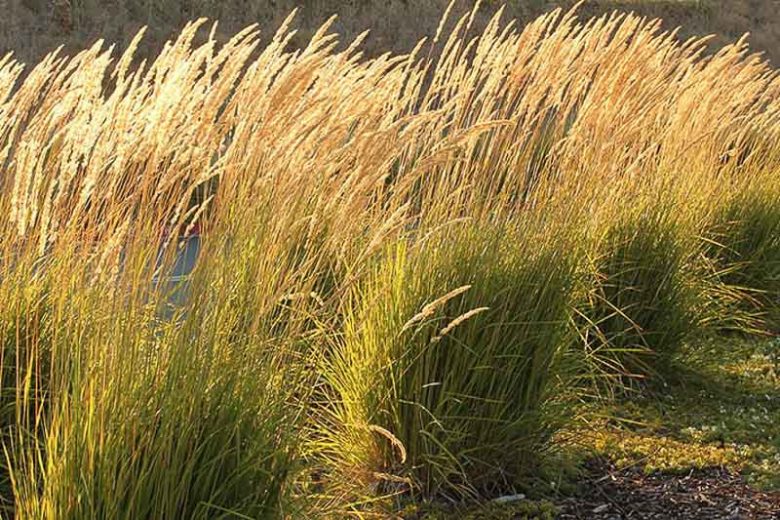
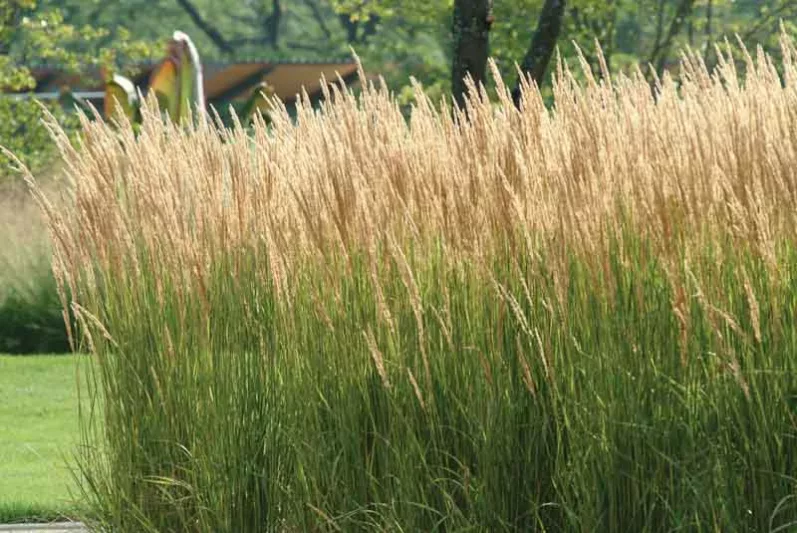
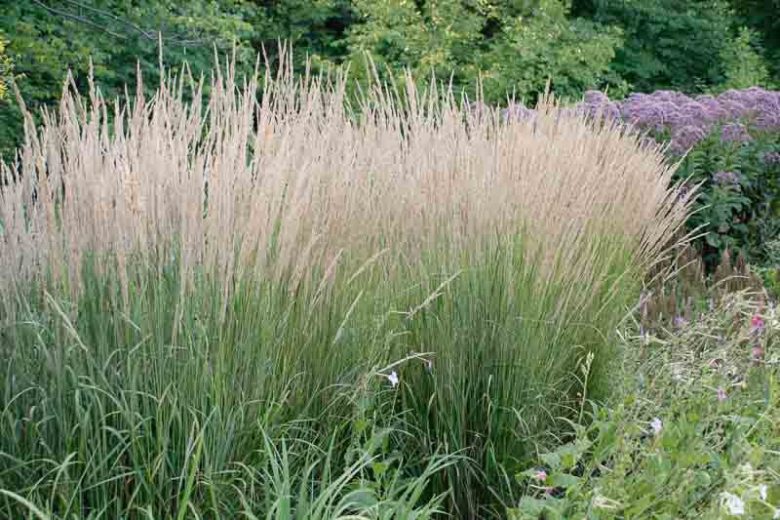
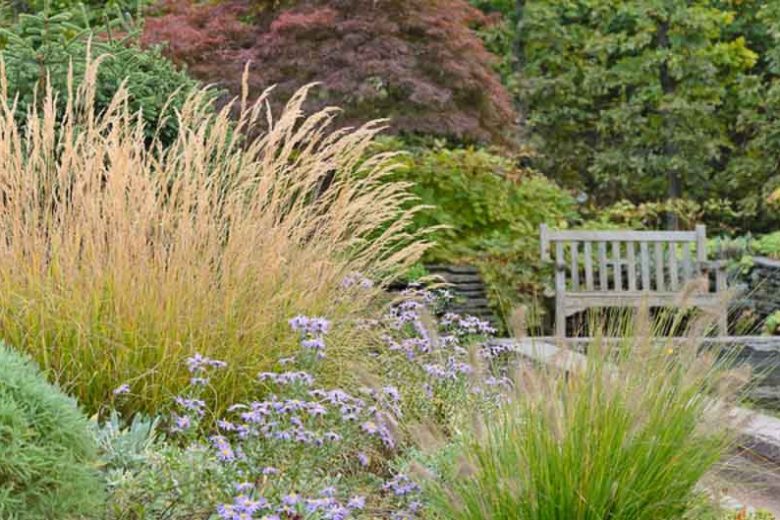
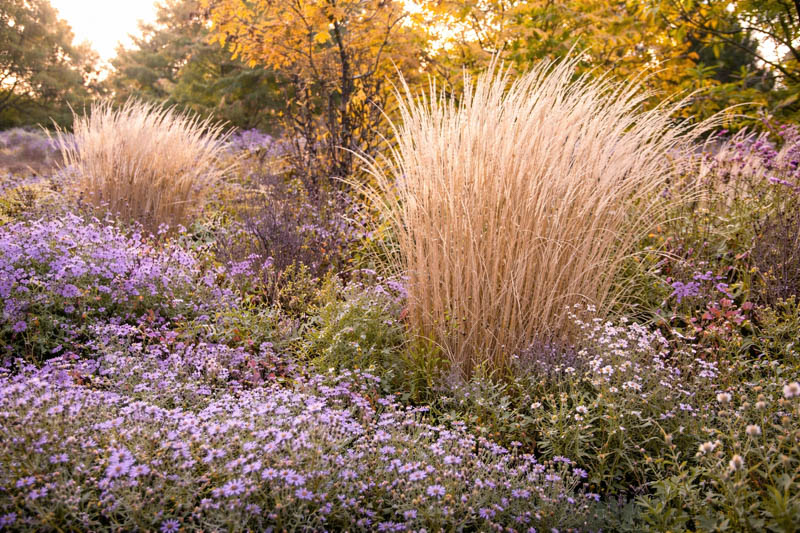
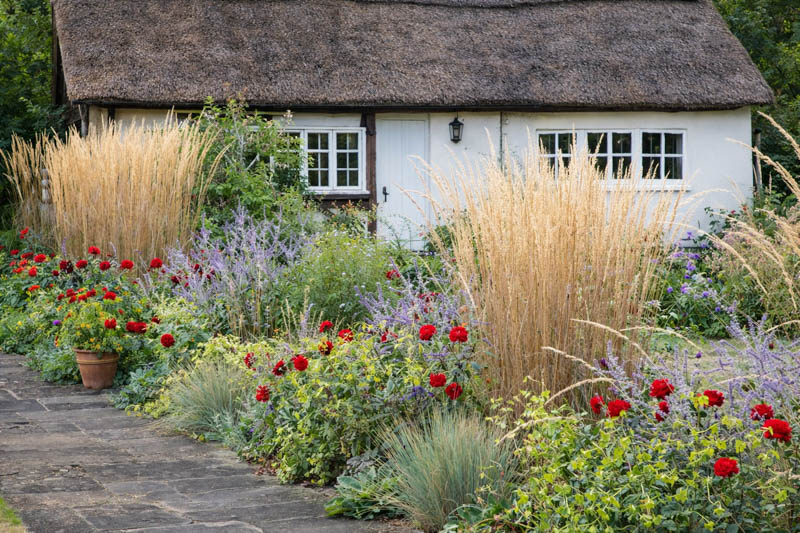
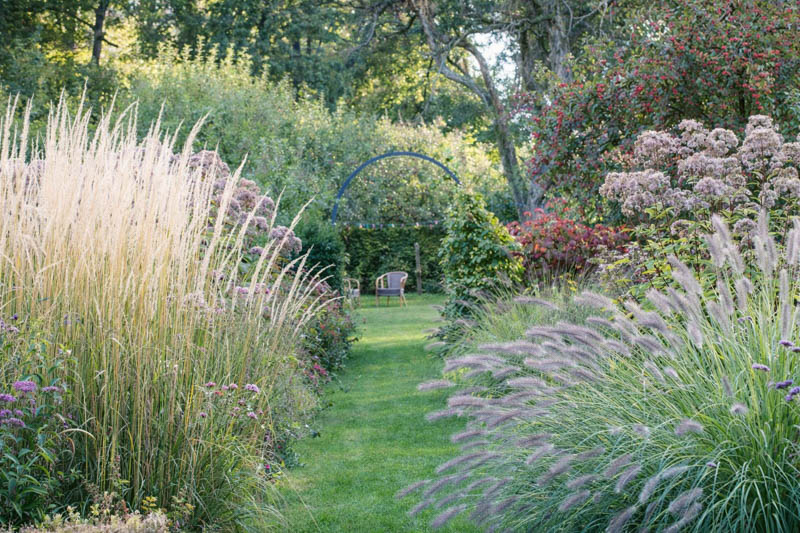
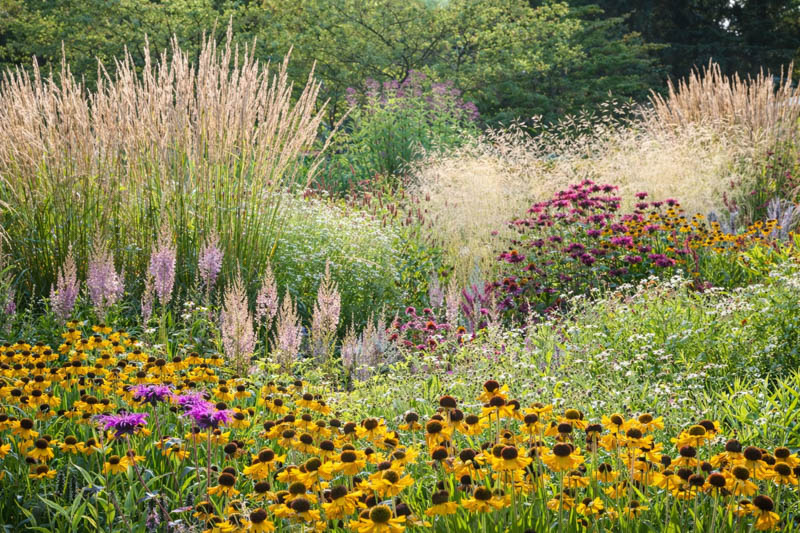


Calamagrostis x acutiflora ‘Karl Foerster’ is the ornamental grass people recommend when you say, “I want something elegant, upright, and basically foolproof.” It brings crisp architecture to borders, screens, and mixed plantings with narrow green blades and tall, feathery plumes that catch light like they were made for golden-hour photos. If your garden needs vertical interest without taking up much room, this is the classic solution.
Fast-growing, reliable, and genuinely low maintenance, ‘Karl Foerster’ thrives in full sun to part shade, tolerates heavy clay, and becomes drought tolerant once established. It also tends to be deer and rabbit resistant, which is a very practical kind of beauty. (And while it is not a nectar plant for bees, butterflies, or hummingbirds, it can still support garden life by offering shelter and movement, and it is known to attract birds.)
Summary: Award-winning, cool-season clump-forming ornamental grass with narrow green foliage and upright, feathery flower plumes that mature to warm tan and often persist into winter.
Use: Perfect for perennial borders, modern plantings, cottage gardens, prairie-style designs, screens, and narrow spaces where you want clean vertical lines.
Highlight: Multi-season interest – fresh spring growth, summer plumes, fall color, and winter structure.
Note: Best in full sun in average to moist soil. Tolerates clay and becomes drought tolerant once established. Typically does not self-seed because the seeds are sterile.
| Botanical Name | Calamagrostis x acutiflora ‘Karl Foerster’ |
|---|---|
| Family | Grass family (Poaceae) |
| Common Names | Feather Reed Grass, Reed Grass |
| Native Range | This plant is a garden hybrid (Calamagrostis x acutiflora) rather than a wild species. |
| Plant Type and Habit | Cool-season, clump-forming ornamental grass with strongly upright flower stems |
| Hardiness (approx. USDA) | Hardy in USDA Zones 4-8 (best performance where winters are cool to cold; less reliable in hot, frost‑free climates) |
| Height | 3-6 ft. (90-180 cm) |
| Spread | 1-2 ft. (30-60 cm) |
| Spacing | 18-24 in. (45-60 cm) |
| Sun and Exposure | Best in full sun; part shade tolerated |
| Soil | Average, medium to wet, moist but well-drained soil; excellent clay tolerance |
| Seasonal Interest | Early summer to fall, with seed heads that often persist through winter |
| Flower / Plume Color | Pinkish-purple plumes maturing to narrow golden-tan seed heads |
| Foliage Color | Deep green, narrow, lustrous leaves (often turning yellow-gold in fall) |
| Fragrance | None |
| Drought Tolerant | Yes (once established) |
| Heat Tolerant | Moderate (best with consistent moisture in hot regions) |
| Black Walnut Tolerant | Yes |
| Pollution Tolerant | Yes |
| Nectar / Pollen | Not a primary nectar plant |
| Attracts | Birds |
| Deer / Rabbit | Often considered deer and rabbit resistant |
| Toxicity | Generally considered non-toxic |
| Invasive Status | Not considered invasive; typically does not self-seed (sterile seed) |
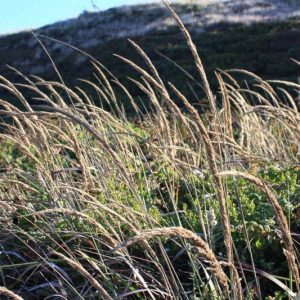
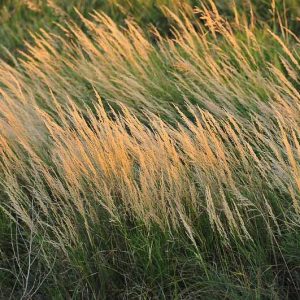
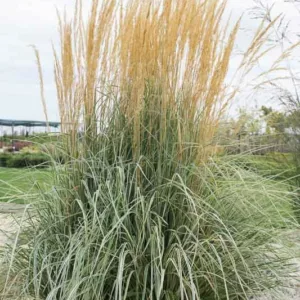
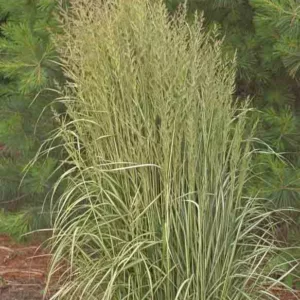
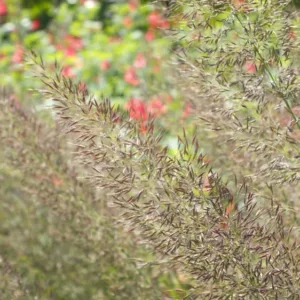
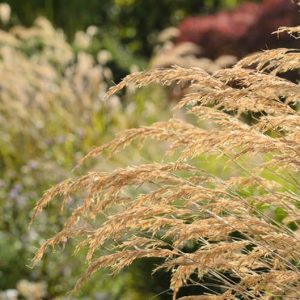
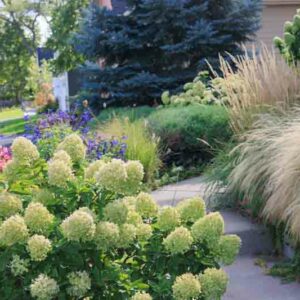
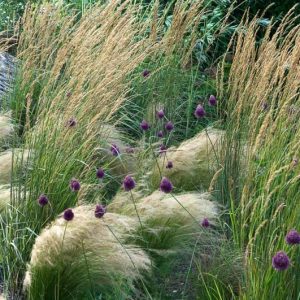
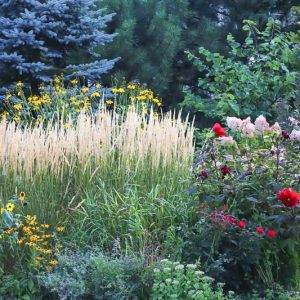
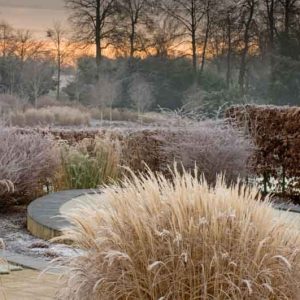
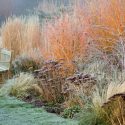
‘Karl Foerster’ is a narrow, upright ornamental grass with a famously tidy silhouette. It forms a tight clump of deep green, arching leaves (usually 2-3 ft tall), then sends up slender flowering stems that can reach 3-6 ft. The plumes start out pinkish-purple and airy, then narrow and mature into golden-tan seed heads that hold their shape for months. The overall effect is clean, architectural, and surprisingly dramatic – especially when backlit.
Calamagrostis x acutiflora is a hybrid reed grass used widely in gardens. ‘Karl Foerster’ is a cultivar selected for its strong vertical growth and consistent performance, so it is best described as garden-origin rather than a wild native plant.
This is a true clump-former, meaning it stays where you plant it and expands gradually rather than running. In most gardens it creates a narrow footprint (often around 18 in wide), which is exactly why designers love it for tight borders, modern courtyards, and places where you want height without bulk. It is fast-growing in cool weather (spring and early fall), and it stands remarkably straight when grown in sun and not overfed.
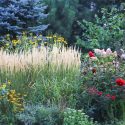
Flowering typically begins in early summer and carries into fall. The plumes start with a soft pinkish-purple cast, then age to wheat-like tan. One of the big selling points is longevity: the seed heads hold well, often persisting into winter without collapsing.
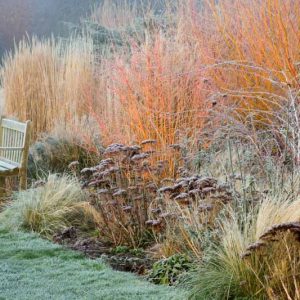
Foliage emerges early (a cool-season advantage), stays fresh green through summer in average moisture, and often turns yellow-gold in fall. In winter, the dried stems and seed heads provide structure, sound (hello, wind music), and texture that makes snow and frost look even better. Many gardeners leave it standing until late winter for maximum winter interest.
‘Karl Foerster’ is a standout performer and widely recognized for garden value. It is the recipient of the prestigious Award of Garden Merit of the Royal Horticultural Society and was named 2001 Perennial Plant of the Year.
Calamagrostis x acutiflora ‘Karl Foerster’ is generally hardy in about USDA Zones 4-8. In cold climates, the top growth dries and stands through winter; in spring, it resprouts reliably from the crown. In milder climates, it may look present for much of the year, but it still benefits from an annual cutback before new growth.
While ‘Karl Foerster’ is not grown for nectar, it contributes to the garden ecosystem in other ways: it adds habitat structure, movement, and seasonal cover. Birds are often attracted to grasses for shelter and garden texture. It is wind‑pollinated, not a nectar or pollen resource for bees and butterflies. For dedicated pollinator planting, pair it with nectar-rich perennials nearby to support bees, butterflies, and hummingbirds.
‘Karl Foerster’ is widely regarded as rabbit and deer-resistant. As always, no plant is completely immune when wildlife pressure is high, but serious browsing is uncommon.
Once established, this grass is drought tolerant. For the best height and plume quality, provide occasional deep watering during extended heat or drought, especially in sandy soils or containers.
Calamagrostis x acutiflora ‘Karl Foerster’ is generally considered non-toxic to humans and pets. It is grown as an ornamental landscape plant. As with all garden plants, discourage chewing or ingestion.
‘Karl Foerster’ is not considered invasive and is valued for being well-behaved. It forms clumps and typically does not self-seed in gardens because its seeds are sterile.
Less is more. Heavy fertilizer can push lush growth that is softer and more likely to lean. A light compost top-dressing in spring is usually sufficient. If your soil is very lean, a small amount of balanced fertilizer in spring can help, but avoid overdoing it.
This is generally a trouble-free ornamental grass. In stressed or crowded conditions, you may occasionally see minor issues like aphids on tender new growth, but serious pest damage is uncommon.
Yes – it can help with light to moderate erosion control on gentle slopes. As a clump-forming grass, its dense roots hold soil best when planted in groups, but it is not a primary solution for steep banks or heavy runoff.
No – it is clump-forming, not running. It widens slowly over time, stays where you plant it, and is easy to manage by division.
Typically no. It is widely grown because it is well-behaved and usually does not self-seed in gardens since the seed is considered sterile.
Cut it back in late winter or very early spring, just before new growth starts. Leaving stems standing through winter adds structure and protects the crown.
Full sun is best for the most upright habit and the best plumes. It tolerates part shade, but plants may be looser and bloom less.
It typically reaches 3-6 ft tall in bloom, with a narrow clump about 1-2 ft wide. It gives height without taking up much ground space.
Yes – once established, it is drought tolerant. For the best plume quality, water deeply during prolonged drought or extreme heat.
It performs best in average soil with medium moisture, but it is adaptable and notably tolerant of clay. Moist but well-drained conditions are ideal.
Yes – it tolerates medium to wet soils better than many ornamental grasses. Avoid permanently waterlogged sites for best long-term health.
Not fully. It is a cool-season grass that often holds its upright stems and seed heads through winter, but new green growth resumes in spring.
Yes – it can grow well in large containers with consistent watering and good drainage. Choose a heavy pot to prevent tipping because the plant gets tall.
A common spacing is 18-24 inches apart. This gives airflow, keeps the clumps tidy, and creates a strong vertical rhythm when planted in drifts.
Flopping is usually caused by too much shade, rich soil, or excess fertilizer. Move it to more sun and reduce feeding to restore strong, upright stems.
The main task is a once-a-year cutback in late winter or early spring. Otherwise, it is one of the most low-maintenance ornamental grasses you can plant.
Royal Horticultural Society (RHS) – Award of Garden Merit listing for Calamagrostis x acutiflora ‘Karl Foerster’
Missouri Botanical Garden Plant Finder – cultural guidance and growth notes for Calamagrostis x acutiflora ‘Karl Foerster’
Updated: January 2026 – Reviewed by Gardenia Editors
| Hardiness |
4 - 8 |
|---|---|
| Heat Zones |
1 - 9 |
| Climate Zones | 2B, 3, 3A, 3B, 4, 5, 6, 7, 8, 9, 10, 11, 12, 13, 14, 15, 16, 17, 18, 19, 20, 21, 22, 23, 24 |
| Plant Type | Ornamental Grasses |
| Plant Family | Poaceae |
| Genus | Calamagrostis |
| Common names | Feather Reed Grass, Reed Grass |
| Exposure | Full Sun, Partial Sun |
| Season of Interest | Spring (Early, Mid, Late), Summer (Early, Mid, Late), Fall |
| Height | 3' - 6' (90cm - 180cm) |
| Spread | 1' - 2' (30cm - 60cm) |
| Spacing | 18" - 24" (50cm - 60cm) |
| Maintenance | Low |
| Water Needs | Average |
| Soil Type | Chalk, Clay, Loam, Sand |
| Soil pH | Acid, Alkaline, Neutral |
| Soil Drainage | Moist but Well-Drained, Well-Drained |
| Characteristics | Dried Arrangements, Cut Flowers, Plant of Merit, Showy |
| Tolerances | Drought, Deer, Rabbit, Wet Soil, Heat |
| Attracts | Birds |
| Garden Uses | Banks And Slopes, Beds And Borders, Hedges And Screens, Patio And Containers |
| Garden Styles | Informal and Cottage, Modern Garden, Prairie and Meadow |
| Toxic to Humans | No known toxicity |
| Toxic to Cats | No known toxicity |
| Toxic to Dogs | No known toxicity |
| Toxic to Horses | No known toxicity |


| Hardiness |
4 - 8 |
|---|---|
| Heat Zones |
1 - 9 |
| Climate Zones | 2B, 3, 3A, 3B, 4, 5, 6, 7, 8, 9, 10, 11, 12, 13, 14, 15, 16, 17, 18, 19, 20, 21, 22, 23, 24 |
| Plant Type | Ornamental Grasses |
| Plant Family | Poaceae |
| Genus | Calamagrostis |
| Common names | Feather Reed Grass, Reed Grass |
| Exposure | Full Sun, Partial Sun |
| Season of Interest | Spring (Early, Mid, Late), Summer (Early, Mid, Late), Fall |
| Height | 3' - 6' (90cm - 180cm) |
| Spread | 1' - 2' (30cm - 60cm) |
| Spacing | 18" - 24" (50cm - 60cm) |
| Maintenance | Low |
| Water Needs | Average |
| Soil Type | Chalk, Clay, Loam, Sand |
| Soil pH | Acid, Alkaline, Neutral |
| Soil Drainage | Moist but Well-Drained, Well-Drained |
| Characteristics | Dried Arrangements, Cut Flowers, Plant of Merit, Showy |
| Tolerances | Drought, Deer, Rabbit, Wet Soil, Heat |
| Attracts | Birds |
| Garden Uses | Banks And Slopes, Beds And Borders, Hedges And Screens, Patio And Containers |
| Garden Styles | Informal and Cottage, Modern Garden, Prairie and Meadow |
| Toxic to Humans | No known toxicity |
| Toxic to Cats | No known toxicity |
| Toxic to Dogs | No known toxicity |
| Toxic to Horses | No known toxicity |
How many Calamagrostis x acutiflora ‘Karl Foerster’ (Feather Reed Grass) do I need for my garden?
| Plant | Quantity | |
|---|---|---|
| Calamagrostis x acutiflora ‘Karl Foerster’ (Feather Reed Grass) | N/A | Buy Plants |
Create a membership account to save your garden designs and to view them on any device.
Becoming a contributing member of Gardenia is easy and can be done in just a few minutes. If you provide us with your name, email address and the payment of a modest $25 annual membership fee, you will become a full member, enabling you to design and save up to 25 of your garden design ideas.
Join now and start creating your dream garden!
Create a membership account to save your garden designs and to view them on any device.
Becoming a contributing member of Gardenia is easy and can be done in just a few minutes. If you provide us with your name, email address and the payment of a modest $25 annual membership fee, you will become a full member, enabling you to design and save up to 25 of your garden design ideas.
Join now and start creating your dream garden!