Pink Muhly Grass, Gulf Muhly, Hair-Awn Muhly, Hairy-Awn Muhly, Hair Grass, Pink Muhly
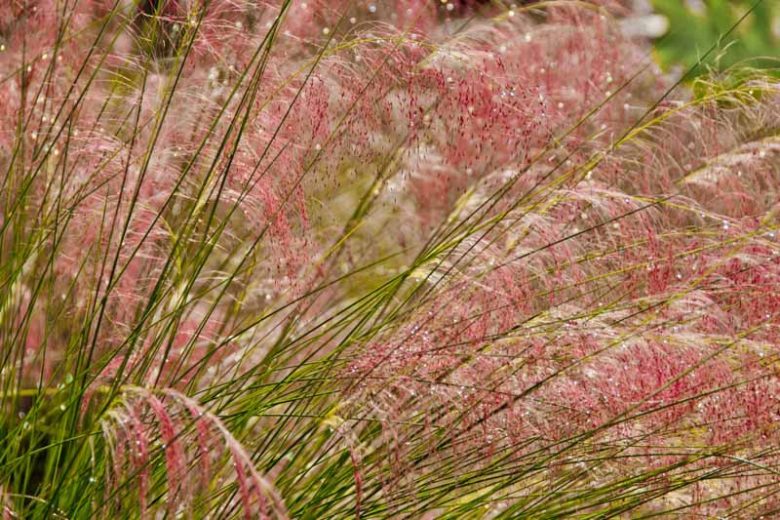
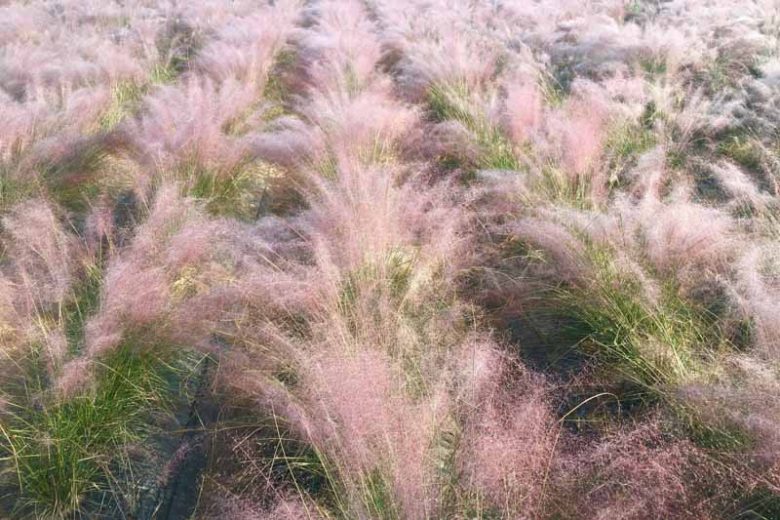
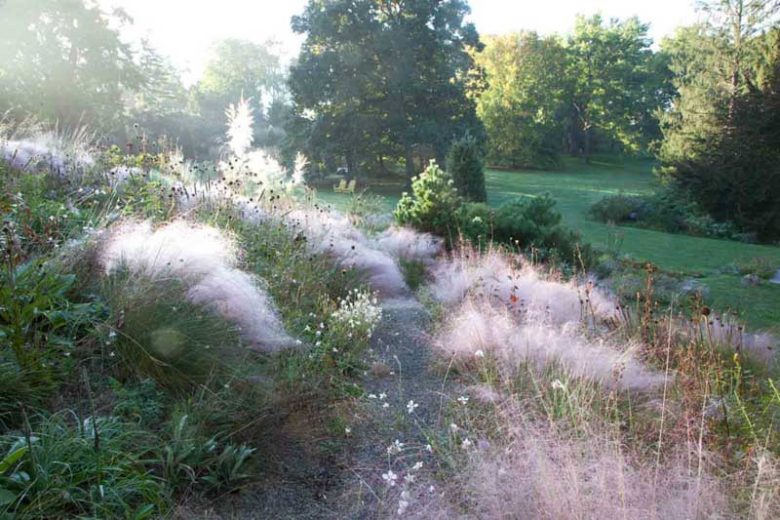
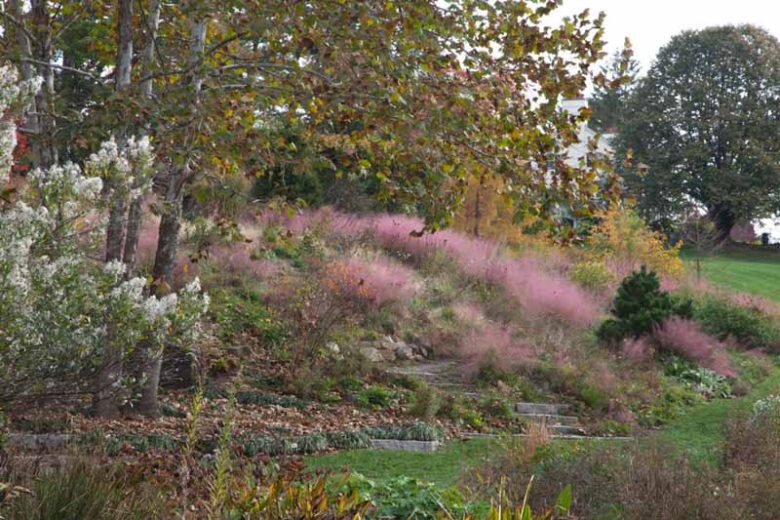


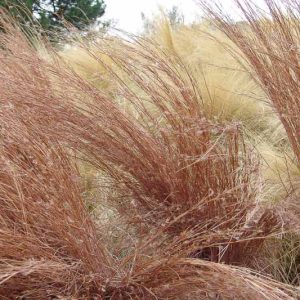
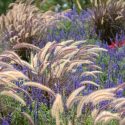
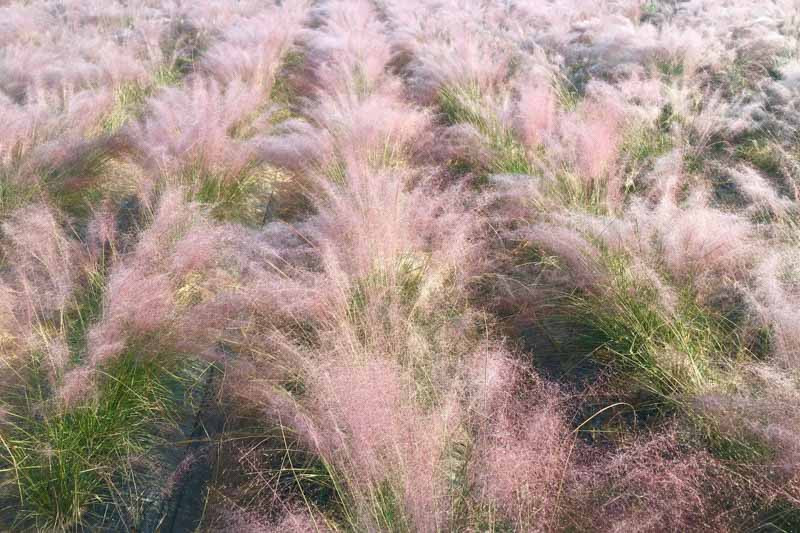
If you’re searching for a show stopping ornamental grass that brings movement, color, and late season magic to your landscape, Muhlenbergia capillaris, commonly known as Pink Muhly Grass, is a breathtaking choice. This warm season perennial grass erupts into billowing clouds of pink in fall, creating a cotton candy haze that shimmers in sunlight and glows at sunrise and sunset.
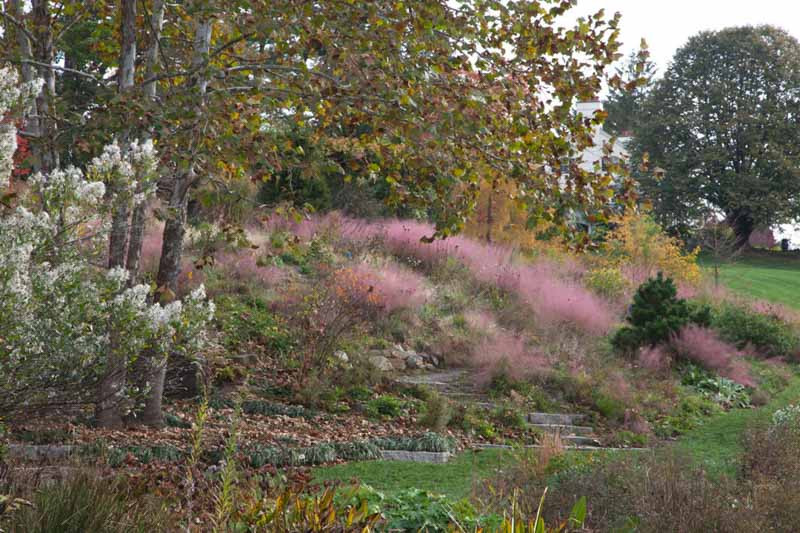
Beautiful yet surprisingly tough, Pink Muhly Grass thrives in full sun, heat, drought, sandy soils, rocky soils, and coastal conditions, making it one of the most adaptable ornamental grasses for modern gardens. Whether you plant it in sweeping drifts, add it as a focal point in borders, or tuck it into xeric meadows, it brings instant elegance with almost no maintenance. This native grass proves that sustainable landscaping can still be stunning.
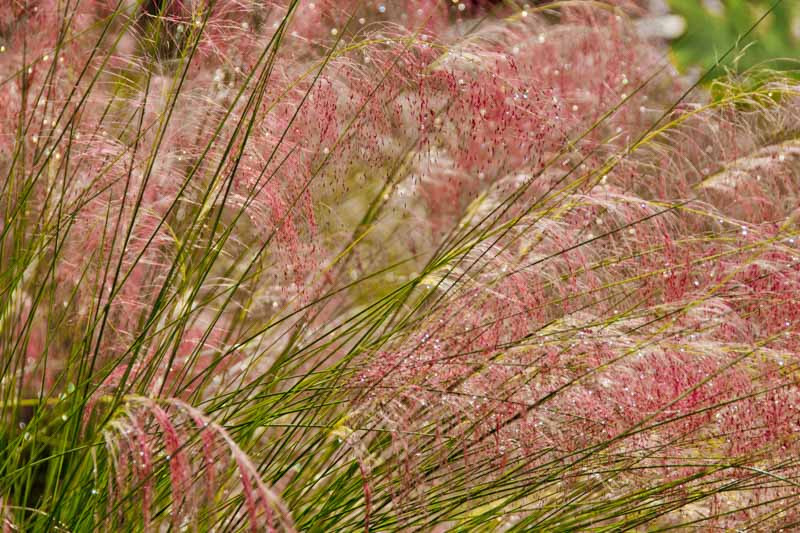
Summary: Warm season, clump forming perennial grass producing spectacular clouds of airy pink to pinkish red flower panicles in fall above fine textured, deep green foliage.
Use: Beds and borders, rock gardens, xeriscapes, coastal gardens, prairie and meadow plantings, mass plantings, erosion control.
Highlight: One of the most ornamental native grasses, valued for its dramatic pink plumes, drought tolerance, wildlife support, and ultra low maintenance.
Note: Thrives in lean soils and hot, dry locations — an effortless performer with high visual impact.
| Botanical Name | Muhlenbergia capillaris |
|---|---|
| Family | Poaceae (Grass family) |
| Common Names | Pink Muhly Grass, Hairawn Muhly |
| Native Range | Native to the western-central and southeastern United States, including Texas, the Carolinas, and Florida. |
| Plant Type and Habit | Perennial ornamental grass with a fountain forming, clump habit and upright, arching flower stems. |
| Hardiness (approx. USDA) | Generally hardy in USDA Zones 5 to 9, with best performance in Zones 6 to 9. |
| Size | Typically grows 3 ft. tall and wide (90 cm), with flower plumes that may extend the height. |
| Sun and Exposure | Full sun is essential for the best bloom color and density. Tolerates light shade. |
| Soil | Prefers sandy or rocky, well drained soils. Thrives in low fertility sites and tolerates drought, salt, and poor soils. |
| Seasonal Interest | Billowing pink plumes in fall, attractive tan seed heads into winter, lush green foliage in summer. |
| Primary Uses | Coastal gardens, cottage gardens, rock gardens, xeriscapes, meadows, mass plantings, foundation borders. |
Muhlenbergia capillaris is a warm season, clump forming perennial grass known for its airy, cotton candy pink flower plumes that appear from early to late fall. These soft, cloudlike inflorescences can be half the length of the entire plant and sway gracefully in the breeze, creating mesmerizing movement and color.
The foliage is composed of fine, deep green blades that form a neat, rounded mound through spring and summer. As autumn arrives, tall wiry stems rise above the base, opening into dramatic, shimmering seed heads that hold their pink tone for weeks before fading to a delicate tan.
This species is native to the western-central and southeastern United States, thriving naturally in coastal plains, prairies, sandy soils, and open woodlands. Its love of heat, sun, and low fertility soils makes it a top candidate for sustainable and xeric landscaping.
Pink Muhly forms dense, tidy clumps that remain attractive all season. It reaches about 3 ft. tall and wide, and its upright yet fountainlike structure gives it a graceful silhouette. It does not spread aggressively, making it easy to maintain and suitable for formal, naturalistic, or mixed planting styles.
This grass is all about the flowers! From early to mid fall, Pink Muhly erupts into large, airy sprays of bright pink to pinkish red plumes. These clouds appear to glow when backlit by the sun, adding a magical ambiance to gardens, pathways, and meadows.
The plumes persist for weeks, gradually transitioning to soft tan seed heads that remain visually appealing into winter.
During the growing season, Pink Muhly forms a tidy, fine textured mound of green foliage that complements perennials, shrubs, and other grasses. The foliage stays lush through summer, providing contrast and structure. In winter, its dried seed heads add subtle texture to dormant landscapes.
Muhlenbergia capillaris is hardy in approximately USDA Zones 5 to 9, though winter performance varies slightly by region. In colder zones, it may benefit from light mulching to protect its crown.
You can use Pink Muhly Grass in a wide variety of design styles:
Pink Muhly Grass offers habitat and food for birds, beneficial insects, and small animals. Its seeds attract birds, while its clumping habit provides shelter and nest building material.
This plant is considered deer-resistant thanks to its tough, wiry foliage. Although no plant is completely deer proof, Pink Muhly is rarely bothered by browsing animals. Ultimate Guide to Deer-Resistant Plants: Strategies, Lists & Zone Picks
As a native warm season grass, Pink Muhly is highly drought-tolerant once established. It thrives in hot, dry conditions and actually prefers soils that are lean, sandy, and fast draining. It’s an excellent fit for drought tolerant landscapes and xeriscapes.
Non toxic: Pink Muhly Grass is generally considered safe for humans and pets, making it an excellent choice for family friendly gardens.
Muhlenbergia capillaris is not considered invasive. It grows in tight clumps and spreads slowly by seed without becoming aggressive.
Key benefits of growing Pink Muhly Grass include its:
It’s an ideal landscape grass for creating atmosphere, movement, and late season drama.
Pink Muhly prefers:
It excels in tough locations where many perennials struggle.
Pink Muhly Grass is notably trouble free, but here are a few potential issues:
Pests are uncommon, but occasional outbreaks of aphids or grasshoppers may occur. Control measures are rarely needed.
The most common problem is root rot due to poorly drained soil. Ensure the plant is never waterlogged.
Pink Muhly Grass (Muhlenbergia capillaris) is a warm-season perennial ornamental grass known for its airy, cotton-candy-like pink plumes that appear in fall. It forms clumping, fountain-shaped mounds of fine-textured green foliage and is valued for its drought tolerance, low maintenance, and high ornamental impact.
Pink Muhly Grass typically blooms from early fall through late fall. In most regions, peak color appears in September and October. The plumes start bright pink to pinkish-red and gradually fade to tan as winter approaches.
Pink Muhly Grass generally reaches about 3 feet tall and 3 feet wide. The flower plumes can extend the height slightly beyond 3 feet, giving the plant a soft, cloudlike appearance in bloom.
Pink Muhly Grass thrives in full sun and well-drained soil, especially sandy or rocky soils. It prefers low fertility conditions and is highly tolerant of heat, drought, wind, humidity, and salt. It performs best in USDA Zones 5 to 9.
Yes. Pink Muhly Grass requires full sun for the strongest color and best flowering. It can tolerate light shade, but shaded plants often produce fewer or weaker plumes.
Yes. Once established, Pink Muhly Grass is highly drought tolerant. It prefers deep, infrequent watering and struggles in consistently wet or poorly drained soil.
Poor blooming is usually caused by insufficient sunlight, overly rich or moist soil, poor drainage, or heavy fertilization. Plants that are too young may also bloom weakly during their first year.
Pink Muhly Grass grows in tight clumps and does not spread aggressively. It may produce seeds, but it is not considered invasive and rarely self-seeds excessively in managed landscapes.
Yes. Pink Muhly Grass can be grown successfully in large, well-draining containers. Ensure the pot has drainage holes and avoid overwatering. Container-grown plants may need more frequent watering than those in the ground.
Early browning can result from overwatering, poor drainage, crown rot, extreme heat stress, or root damage. It is normal for the foliage to brown naturally in winter.
USDA Natural Resources Conservation Service – Plants Database – Muhlenbergia capillaris
https://plants.usda.gov/home/plantProfile?symbol=MUCA2
University of Florida IFAS Extension – Pink Muhly Grass
https://gardeningsolutions.ifas.ufl.edu/plants/ornamentals/pink-muhly-grass.html
Texas A&M AgriLife Extension – Ornamental Grasses for Texas
https://aggie-horticulture.tamu.edu/ornamentals/natives/
Updated: December 2025 • Reviewed by Gardenia Editors
| Hardiness |
5 - 9 |
|---|---|
| Heat Zones |
3 - 12 |
| Climate Zones | 4, 5, 6, 7, 8, 9, 10, 11, 12, 13, 14, 15, 16, 17, 18, 19, 20, 21, 22, 23, 24 |
| Plant Type | Ornamental Grasses |
| Plant Family | Poaceae |
| Common names | Gulf Muhly, Muhly Grass, Pink Muhly Grass |
| Exposure | Full Sun |
| Season of Interest | Fall, Winter |
| Height | 2' - 3' (60cm - 90cm) |
| Spread | 2' - 3' (60cm - 90cm) |
| Spacing | 36" (90cm) |
| Maintenance | Low |
| Water Needs | Low, Average |
| Soil Type | Clay, Loam, Sand |
| Soil pH | Acid, Alkaline, Neutral |
| Soil Drainage | Moist but Well-Drained, Well-Drained |
| Characteristics | Dried Arrangements, Cut Flowers, Showy |
| Native Plants | United States, Northeast, Pennsylvania, Connecticut, Delaware, Massachusetts, Maryland, New Jersey, New York, Illinois, Indiana, Kansas, Midwest, Missouri, Ohio, Southeast, Louisiana, Mississippi, North Carolina, South Carolina, Tennessee, Virginia, West Virginia, Alabama, Arkansas, Florida, Georgia, Kentucky, Southwest, Texas, Oklahoma |
| Tolerances | Drought, Deer, Salt, Dry Soil, Heat, Black Walnut, Poor Soil, Humidity, Erosion |
| Garden Uses | Beds And Borders, Rain Gardens |
| Garden Styles | Coastal Garden, Informal and Cottage, Mediterranean Garden, Prairie and Meadow |
| Toxic to Humans | No known toxicity |
| Toxic to Cats | No known toxicity |
| Toxic to Dogs | No known toxicity |
| Toxic to Horses | No known toxicity |


| Hardiness |
5 - 9 |
|---|---|
| Heat Zones |
3 - 12 |
| Climate Zones | 4, 5, 6, 7, 8, 9, 10, 11, 12, 13, 14, 15, 16, 17, 18, 19, 20, 21, 22, 23, 24 |
| Plant Type | Ornamental Grasses |
| Plant Family | Poaceae |
| Common names | Gulf Muhly, Muhly Grass, Pink Muhly Grass |
| Exposure | Full Sun |
| Season of Interest | Fall, Winter |
| Height | 2' - 3' (60cm - 90cm) |
| Spread | 2' - 3' (60cm - 90cm) |
| Spacing | 36" (90cm) |
| Maintenance | Low |
| Water Needs | Low, Average |
| Soil Type | Clay, Loam, Sand |
| Soil pH | Acid, Alkaline, Neutral |
| Soil Drainage | Moist but Well-Drained, Well-Drained |
| Characteristics | Dried Arrangements, Cut Flowers, Showy |
| Native Plants | United States, Northeast, Pennsylvania, Connecticut, Delaware, Massachusetts, Maryland, New Jersey, New York, Illinois, Indiana, Kansas, Midwest, Missouri, Ohio, Southeast, Louisiana, Mississippi, North Carolina, South Carolina, Tennessee, Virginia, West Virginia, Alabama, Arkansas, Florida, Georgia, Kentucky, Southwest, Texas, Oklahoma |
| Tolerances | Drought, Deer, Salt, Dry Soil, Heat, Black Walnut, Poor Soil, Humidity, Erosion |
| Garden Uses | Beds And Borders, Rain Gardens |
| Garden Styles | Coastal Garden, Informal and Cottage, Mediterranean Garden, Prairie and Meadow |
| Toxic to Humans | No known toxicity |
| Toxic to Cats | No known toxicity |
| Toxic to Dogs | No known toxicity |
| Toxic to Horses | No known toxicity |
How many Muhlenbergia capillaris (Pink Muhly Grass) do I need for my garden?
| Plant | Quantity | |
|---|---|---|
| Muhlenbergia capillaris (Pink Muhly Grass) | N/A | Buy Plants |
Create a membership account to save your garden designs and to view them on any device.
Becoming a contributing member of Gardenia is easy and can be done in just a few minutes. If you provide us with your name, email address and the payment of a modest $25 annual membership fee, you will become a full member, enabling you to design and save up to 25 of your garden design ideas.
Join now and start creating your dream garden!
Create a membership account to save your garden designs and to view them on any device.
Becoming a contributing member of Gardenia is easy and can be done in just a few minutes. If you provide us with your name, email address and the payment of a modest $25 annual membership fee, you will become a full member, enabling you to design and save up to 25 of your garden design ideas.
Join now and start creating your dream garden!