Blue Java banana, Blue banana, Ice Cream banana, Vanilla banana, Hawaiian banana, Ney Mannan, Krie, Cenizo
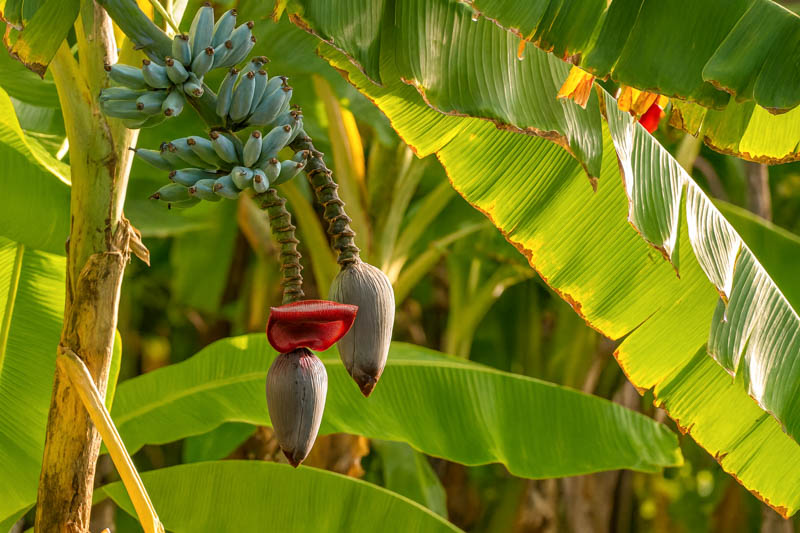
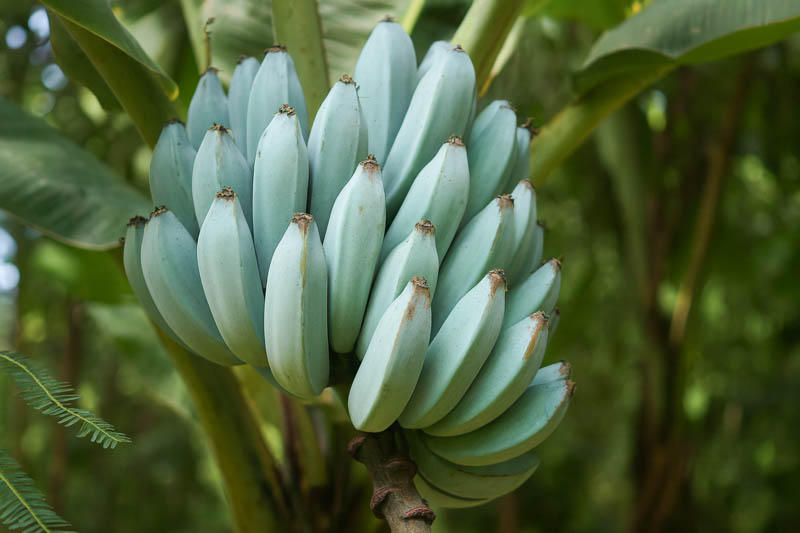
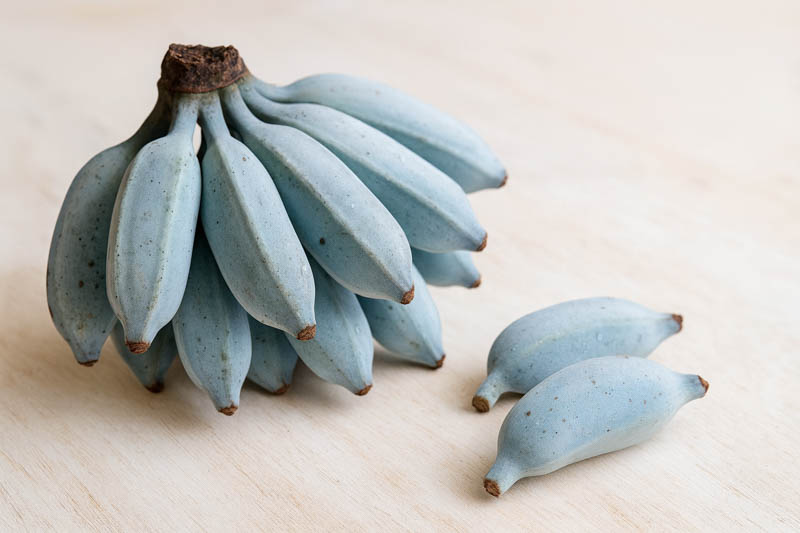


Summary: The famed Blue Banana whose young fruit wears a pale, powdery blue. Ripe, it’s creamy and dessert-sweet, which is why gardeners call it the Ice Cream Banana.
Taste: Custardy, mellow-sweet, with a hint of vanilla and a soft, ice-cream-like texture when fully ripe.
Use: Fresh eating, smoothies, freezing into “nice cream,” baking, leaf-wrapped steaming, tropical focal point in the landscape.
Growing Note: An ABB-group hybrid that is tougher than many dessert bananas. Likes heat, moisture, and rich, well-drained soil; more wind tolerant than most.
| Botanical Name | Musa acuminata × balbisiana (ABB Group) ‘Blue Java’ |
|---|---|
| Family | Musaceae |
| Common Names | Blue Banana, Blue Java Banana, Ice Cream Banana; sometimes sold as ‘Hawaiian Blue’ or ‘Cenizo’ in regional trade |
| Plant Type & Habit | Herbaceous perennial with a pseudostem; clumping via underground rhizome (“mat”) |
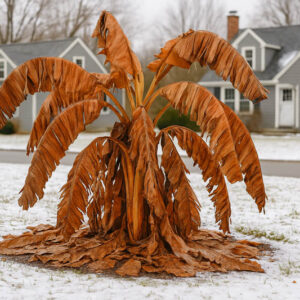
| Hardiness (USDA) | Best fruiting in Zones 10–11. Can be grown in warm 9b with protection. Leaves collapse near 28–30°F; pseudostems may overwinter in mild/wrapped sites; rhizomes often survive brief light freezes with dry mulch. |
| Size | 12–18 ft (3.6–5.5 m) typical; can reach 20+ ft in tropical heat; 8–12 ft in large containers |
| Sun & Exposure | Full sun (6–8+ hrs). Light afternoon shade helps in hot, arid sites. |
| Soil | Deep, rich, and well drained yet moisture retentive; pH ~5.5–7.0; loves organic matter and consistent watering |
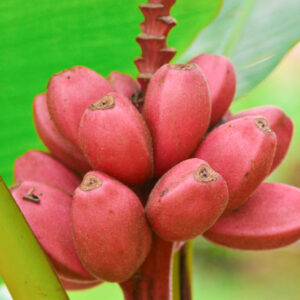
| Bloom & Fruit | Powdery blue immature fruit turns light yellow at ripeness; parthenocarpic, seedless fruit; blooms when mature size is reached, independent of day length |
| Pruning | Remove ragged leaves; after harvest, cut the spent pseudostem to soil level; keep one fruiting stem plus 1–2 strong pups |
| Primary Uses | Fresh dessert fruit, smoothies, “ice cream” from frozen slices, leaf wrapping/serving, tropical statement plant |
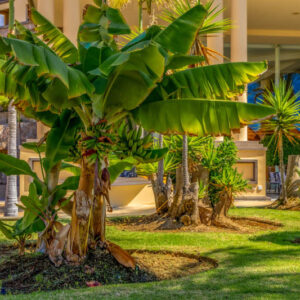
Meet the photogenic dessert banana that trends on garden feeds every summer: the Blue Java Banana. When fruit is young, the peel looks dusted with a soft teal-blue bloom, hence Blue Banana. Let it ripen and you get that spoonable, mellow-sweet texture that inspired the nickname Ice Cream Banana. The plant is equally striking, carrying broad, slightly glaucous leaves on a sturdy, wind-tolerant frame.
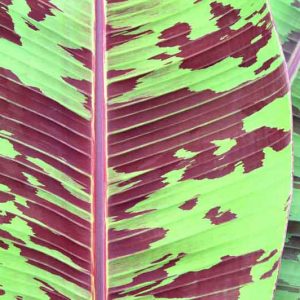
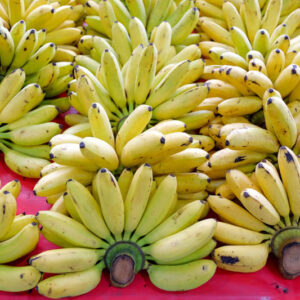
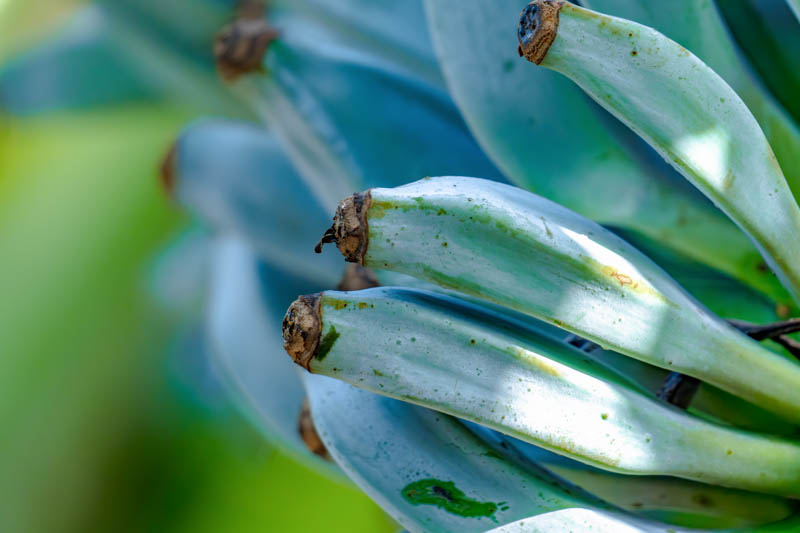
‘Blue Java’ belongs to the ABB group, blending sweetness from Musa acuminata with the starchier vigor of M. balbisiana. Leaves often show a subtle silvery cast, and the plant builds a stout pseudostem that handles wind better than many dessert bananas. Immature fruit is the giveaway: a powdery, bluish bloom that gradually fades as the peel turns pale yellow at eating stage.
In the kitchen, fully ripe Blue Java is all about that creamy mouthfeel. Freeze slices and blitz them and you’ll see why it’s branded the Ice Cream Banana. The flavor is gentle and vanilla-like rather than acidic or tropical-tangy.
Blue Java’s lineage traces to Southeast Asian banana diversity, where farmers and selection gave rise to the ABB cooking-dessert spectrum. From there, it spread via the Pacific into places like Hawaii and across tropical gardens worldwide. In home landscapes, it’s grown more for dessert fruit and dramatic looks than for commercial shipping.
Given warmth and water, Blue Java is speedy. Expect a new leaf about every week in peak summer. A vigorous pup often flags and blooms in roughly 9–15 months, then needs several more months for fruit to size and fill. Each pseudostem fruits once, then retires; select a successor pup to keep the mat productive.
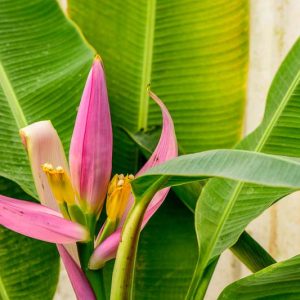
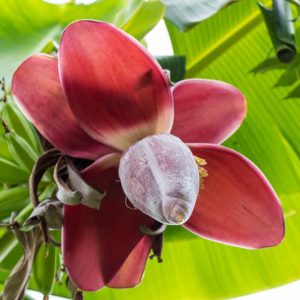
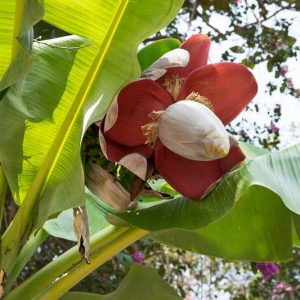
Blue Java blooms when its pseudostem is mature, not on a calendar. Purple bracts lift to reveal hands of bluish baby fruit that slowly lengthen and fatten.
| Time to first bloom from a strong pup | About 9–15 months in warm, well-fed conditions |
| Flower → harvest (tropical heat) | Roughly 3–5 months |
| Flower → harvest (cooler nights) | About 5–7+ months; may need microclimate help in 9b |
| Typical fruit size | 6–9 in (15–23 cm) fingers, thicker than Cavendish |
Flavor roadmap: At first, the fruit is firm and mildly starchy. As it ripens to pale yellow, the texture turns soft and custardy with a vanilla note. For that classic “ice cream” vibe, freeze very ripe slices and blend smooth; it needs no dairy.
Blue Java can live happily in big pots, especially in climates where winters bite.
| Task | Notes |
|---|---|
| Choose a warm, wind-sheltered full-sun site. | South or west walls are perfect fruit-ripening partners. |
| Amend generously with compost; mound in clay. | Keep the crown at soil level for drainage. |
| Water deeply to settle, then mulch wide. | Aim for a 3–4 in mulch ring; keep off the pseudostem itself. |
| Feed little-and-often during warm growth. | Light, regular feedings beat heavy spikes. |
| Limit each mat to 1 fruiting stem + 1–2 pups. | Stake bunches as they size to prevent lean-over. |
When to cut: Fingers look full and rounded, ridge angles smoothed, the final hand has sized, and the male tip beyond it has finished. Support the bunch, cut cleanly, and move it to a cool, airy place to finish ripening. Separate hands to stagger ripeness through the week.
Divide sturdy pups with their own roots from a healthy clump. Slice cleanly with a sanitized spade and replant immediately into warm, moist, well-prepared soil or a roomy container. Many nurseries sell tissue-cultured Blue Java plants for uniformity and cleanliness.
Blue Java is generally robust, especially with airflow and tidy ground, but keep an eye out for the classics:
Mislabels happen. Namwa (ABB, often sold as ‘Ice Cream’ by mistake) has many smaller, very sweet fingers on big bunches. Blue Java tends to produce fewer, thicker fingers that show a distinct bluish bloom when immature and ripen to a pale, matte yellow. If your “blue” never looked blue and the fruit are smaller but numerous, you may have Namwa. The good news: both are delicious.
Ripe Blue Java is soft, custardy, and mellow-sweet. Many tasters pick up a vanilla note, and frozen slices blend into a dessert that feels like soft-serve—hence the nickname Ice Cream Banana.
No. The blue tone is on immature fruit. As it ripens, the peel turns pale to light yellow; judge ripeness by fullness of the fingers and a slight give.
It’s tougher than many dessert bananas but still tropical. Leaves collapse near 28–30°F; with dry mulch, rhizomes often ride out brief chills better than Cavendish. Reliable fruiting still prefers Zones 10–11.
About 12–18 ft in gardens, up to 20+ ft in tropical heat. In large containers it’s usually 8–12 ft.
Yes—start with 20–30 gallons and a chunky, draining mix. Give full sun, regular watering, and light, frequent feeding. Roll under cover before cold.
From a strong pup, bloom in roughly 9–15 months, then 3–6 months to harvest depending on heat. In marginal climates, use microclimates to finish.
Updated: September 12, 2025 • Reviewed by Gardenia Editors
| Hardiness |
9 - 11 |
|---|---|
| Plant Type | Fruits, Perennials |
| Plant Family | Musaceae |
| Genus | Musa |
| Common names | Banana |
| Exposure | Full Sun |
| Season of Interest | Spring (Early, Mid, Late), Summer (Early, Mid, Late), Fall, Winter |
| Height | 12' - 20' (3.7m - 6.1m) |
| Spread | 8' - 12' (240cm - 3.7m) |
| Spacing | 96" - 144" (240cm - 3.7m) |
| Maintenance | Average |
| Water Needs | Average |
| Soil Type | Chalk, Clay, Loam, Sand |
| Soil pH | Acid, Alkaline, Neutral |
| Soil Drainage | Moist but Well-Drained, Well-Drained |
| Characteristics | Showy, Evergreen, Fruit & Berries |
| Garden Uses | Patio And Containers |
| Garden Styles | Mediterranean Garden |
| Toxic to Humans | No known toxicity |
| Toxic to Cats | Not toxic |
| Toxic to Dogs | Not toxic |
| Toxic to Horses | Not toxic |


| Hardiness |
9 - 11 |
|---|---|
| Plant Type | Fruits, Perennials |
| Plant Family | Musaceae |
| Genus | Musa |
| Common names | Banana |
| Exposure | Full Sun |
| Season of Interest | Spring (Early, Mid, Late), Summer (Early, Mid, Late), Fall, Winter |
| Height | 12' - 20' (3.7m - 6.1m) |
| Spread | 8' - 12' (240cm - 3.7m) |
| Spacing | 96" - 144" (240cm - 3.7m) |
| Maintenance | Average |
| Water Needs | Average |
| Soil Type | Chalk, Clay, Loam, Sand |
| Soil pH | Acid, Alkaline, Neutral |
| Soil Drainage | Moist but Well-Drained, Well-Drained |
| Characteristics | Showy, Evergreen, Fruit & Berries |
| Garden Uses | Patio And Containers |
| Garden Styles | Mediterranean Garden |
| Toxic to Humans | No known toxicity |
| Toxic to Cats | Not toxic |
| Toxic to Dogs | Not toxic |
| Toxic to Horses | Not toxic |
How many Musa acuminata x balbisiana ‘Blue Java’ (Blue Banana) do I need for my garden?
| Plant | Quantity | |
|---|---|---|
| Musa acuminata x balbisiana ‘Blue Java’ (Blue Banana) | N/A | Buy Plants |
Create a membership account to save your garden designs and to view them on any device.
Becoming a contributing member of Gardenia is easy and can be done in just a few minutes. If you provide us with your name, email address and the payment of a modest $25 annual membership fee, you will become a full member, enabling you to design and save up to 25 of your garden design ideas.
Join now and start creating your dream garden!
Create a membership account to save your garden designs and to view them on any device.
Becoming a contributing member of Gardenia is easy and can be done in just a few minutes. If you provide us with your name, email address and the payment of a modest $25 annual membership fee, you will become a full member, enabling you to design and save up to 25 of your garden design ideas.
Join now and start creating your dream garden!